As someone who's spent countless hours perfecting recipes and, let's be honest, cleaning up kitchen disasters, I understand the allure of an oven liner. The promise of effortlessly wiping away baked-on grime sounds like a dream. But the burning question that often sparks debate in culinary circles, and a topic I’ve researched extensively and encountered firsthand, is this: are oven liners safe? The straightforward answer is, generally yes, but with critical caveats that every home cook needs to understand. It’s not just about tossing one in; it’s about knowing the material, your oven, and how to use them correctly to avoid turning a convenience into a potential hazard.
Understanding Oven Liners: Types and Materials
When we talk about oven liners, we’re typically referring to a few distinct materials, each with its own characteristics and safety considerations. My journey through various kitchen gadgets has shown me that understanding these differences is paramount to making an informed choice.
Silicone Liners
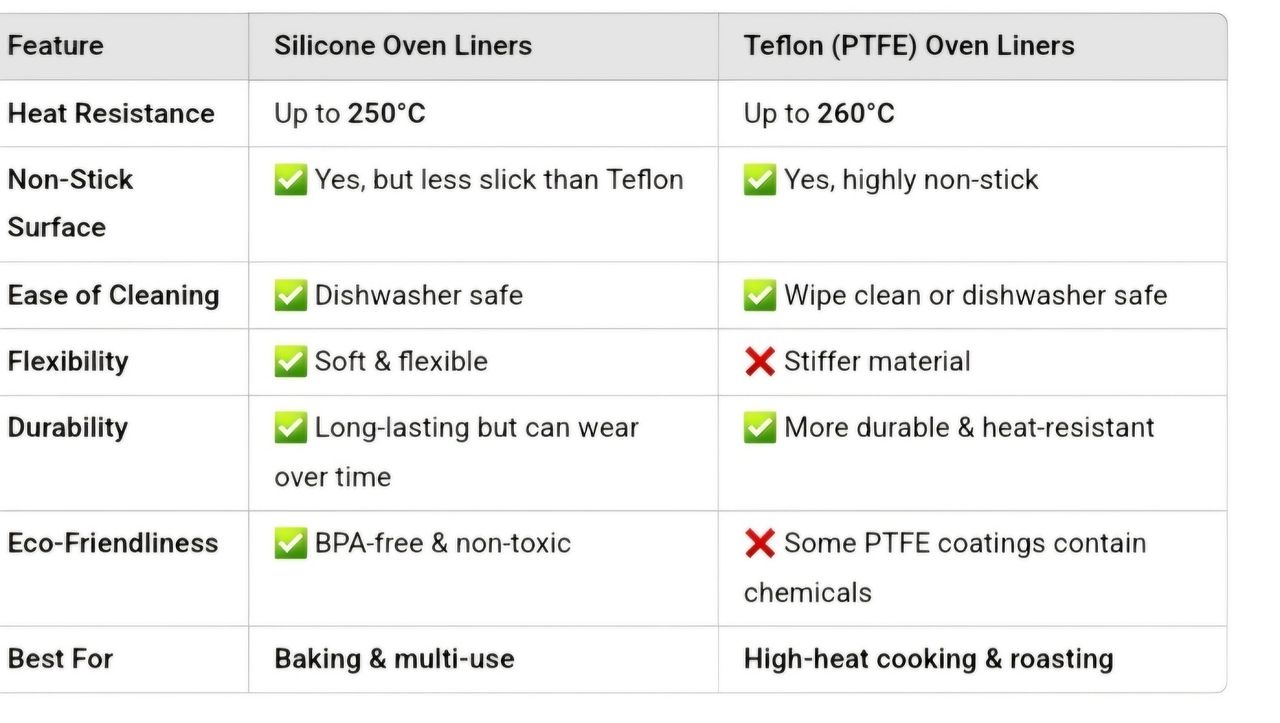
Silicone oven liners are popular for their flexibility and non-stick properties. They are often heralded as a "greener" option because they are reusable and don't contain some of the chemicals associated with other non-stick coatings. From personal experience, these are fantastic for general baking and roasting at moderate temperatures. I've found them incredibly easy to clean, often just needing a quick rinse or a spin in the dishwasher.
- Pros: Highly flexible, excellent non-stick, generally considered food-safe, dishwasher-safe, reusable.
- Cons: Typically have a lower maximum temperature rating than PTFE liners, can sometimes impart a slight odor when new, can feel a bit flimsy.
- Heat Limits: Most silicone liners are safe up to 400-500°F (204-260°C). Always check the specific product's rating.
PTFE/Teflon-Coated Liners
These are perhaps the most common type, usually made from fiberglass fabric coated with polytetrafluoroethylene (PTFE), often marketed under brand names like Teflon. They are super thin, durable, and offer superior non-stick performance, which is a huge plus when you’re dealing with sticky pies or bubbling casseroles. I’ve relied on these for years for routine oven use, appreciating how they catch drips without fuss.
- Pros: Very thin and lightweight, highly effective non-stick, very durable, often rated for higher temperatures.
- Cons: Can release fumes if overheated, which can be harmful to pets (especially birds), and there have been past concerns about PFOA/PFOS (though most modern liners are PFOA/PFOS-free).
- Heat Limits: Many PTFE-coated liners are rated for temperatures up to 500°F (260°C) or even 550°F (288°C). Again, checking the specific product details is crucial.
Aluminum Foil
While not a dedicated "liner," many people use aluminum foil as a makeshift solution for drips. I admit, I've done it in a pinch! However, this is where things get tricky, and where "are oven liners safe" becomes a much more nuanced question. Placing foil directly on the oven bottom, especially in newer ovens, can cause serious issues with heat distribution and even damage the oven's enamel or heating elements.
- Pros: Readily available, inexpensive, disposable.
- Cons: Can block heat circulation, reflects heat back unevenly, can melt onto the oven bottom, not suitable for direct placement on elements or vents.
- Heat Limits: Aluminum foil is safe for oven temperatures, but its placement is the primary concern, not its melting point under normal baking conditions.

The Science Behind Oven Liner Safety
The safety of oven liners isn't just about the material; it delves into the physics and chemistry of what happens inside a hot oven. Understanding these principles has helped me troubleshoot and ensure safe practices in my own kitchen.
Heat Resistance and Thermal Degradation
Every material has a temperature threshold. When an oven liner, whether silicone or PTFE, exceeds its rated maximum temperature, it can undergo thermal degradation. For silicone, this might mean becoming brittle or developing a strong, off-putting odor. For PTFE, the concern is more serious. Above certain temperatures (typically around 500-600°F or 260-315°C), PTFE can start to break down and release fumes. These fumes are generally harmless to humans in well-ventilated spaces but can be highly toxic to birds, causing respiratory distress or even death. This is a critical point that anyone with feathered friends needs to be aware of. My personal rule of thumb: if you smell anything unusual, turn off the oven and ventilate immediately.
Chemical Considerations
Modern oven liners, particularly those made with PTFE, are generally manufactured without PFOA (perfluorooctanoic acid) and PFOS (perfluorooctanesulfonic acid), which were chemicals previously used in some non-stick coatings and had environmental and health concerns. Reputable brands ensure their products meet current safety standards, making are oven liners safe a question of good manufacturing practices as well as proper use. Silicone liners are made from silicon, oxygen, carbon, and hydrogen, and are considered inert and stable at typical cooking temperatures, meaning they don't leach chemicals into food.
Ventilation and Air Circulation
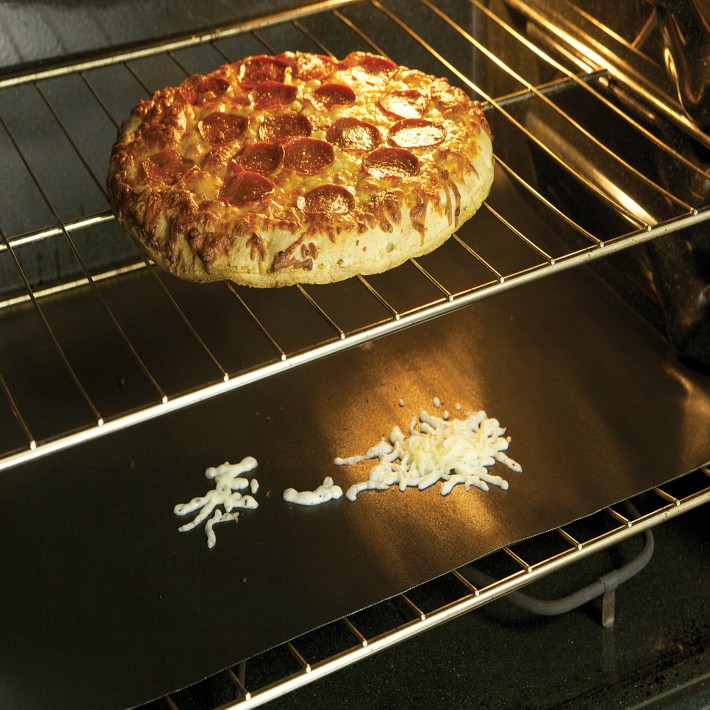
Ovens are designed for specific airflow patterns to ensure even heating. Placing a liner improperly, especially on the very bottom of the oven and particularly in models with hidden heating elements or bottom vents, can disrupt this airflow. This can lead to uneven cooking, but more critically, it can trap heat, potentially damaging the oven's components or even causing the liner itself to overheat beyond its safe limits. I once saw a friend's oven with a distorted liner stuck to the bottom, a clear sign of improper placement and excessive heat buildup.
When "Are Oven Liners Safe?" Becomes "Are Oven Liners Not Safe?"
It's crucial to understand the scenarios where an oven liner can go from a helpful tool to a hazard. My experience has taught me that overlooking these details can lead to inconvenience, expense, or even danger.
High-Temperature Ovens: Broiling and Self-Cleaning Cycles
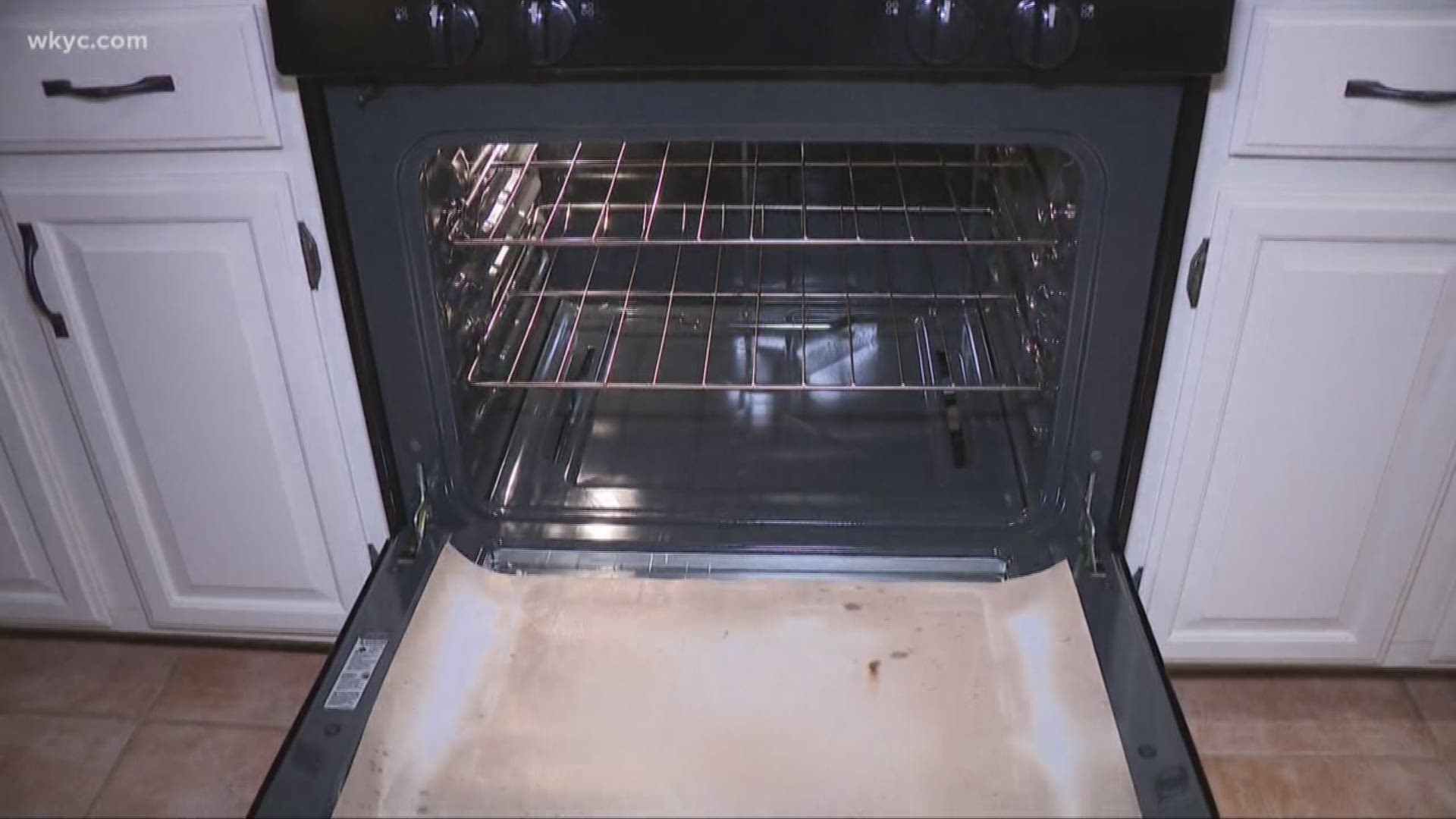
This is arguably the most common mistake I've seen. Many modern ovens feature a broiler function that can reach extremely high temperatures, far exceeding the typical safe limits for most liners. Similarly, the self-cleaning cycle operates at temperatures often ranging from 800-1000°F (427-538°C), designed to incinerate food debris. Absolutely no oven liner is safe during a self-cleaning cycle. Failure to remove it will almost certainly result in a melted, fused mess at the bottom of your oven, often requiring professional service to remove and potentially damaging the oven's interior. I've heard horror stories, and personally witnessed a friend's panic after forgetting to remove a liner before self-cleaning – it was a real struggle to chip off the melted plastic! Always, always remove liners before these high-heat functions.
Placement Issues: Blocking Vents, Touching Elements
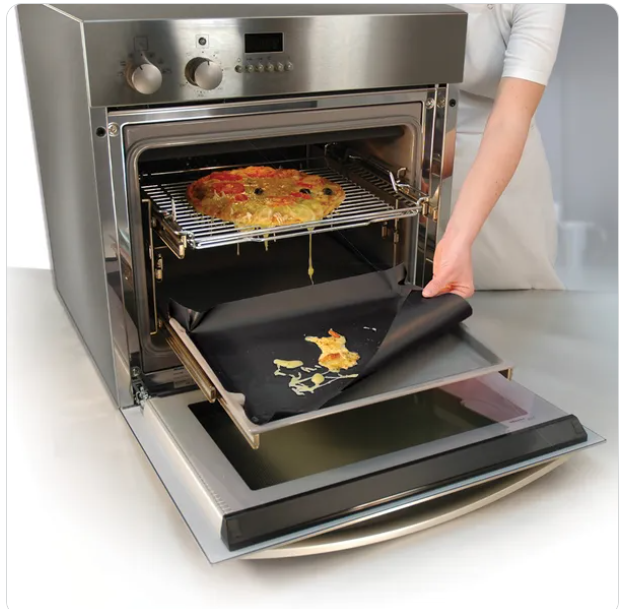
As mentioned earlier, improper placement is a major concern. Never place an oven liner directly on the heating element at the bottom of your oven. In ovens with a visible lower heating element, this is obvious. However, many modern ovens have a hidden heating element beneath the oven floor. Placing a liner directly on this floor can trap heat, interfere with temperature sensors, and lead to overheating and damage. Always use the bottom rack or ensure the liner is elevated and not blocking any vents. My best advice is to place it on the lowest rack, not directly on the oven floor itself, even if the liner instructions say it's okay for the bottom. This small adjustment can significantly improve safety.
Damaged Liners: When to Replace
Just like any kitchen tool, oven liners have a lifespan. Scratches, tears, or signs of wear can compromise their non-stick coating and structural integrity. A damaged PTFE liner, for instance, might be more prone to flaking or less resistant to high temperatures. A torn silicone liner won't catch spills effectively. Regularly inspect your liners. If they show any signs of significant damage, it's time to replace them. Ignoring these signs negates the very purpose of having a liner and could even introduce small particles into your food if the coating degrades.
Making an Informed Choice: Tips for Safe Usage
Ensuring are oven liners safe for your kitchen means taking proactive steps. These are the principles I apply in my own home, based on years of cooking and testing various products.
- Always Check Manufacturer's Instructions for Both the Liner and the Oven: This is non-negotiable. The liner's packaging will specify its maximum temperature rating. Your oven's manual will have guidelines on what can and cannot be placed on the oven floor. Some oven manufacturers explicitly state that nothing should be placed on the bottom of the oven due to hidden heating elements or vent design. Read both carefully.
- Understand Your Oven's Maximum Temperature: Know your appliance. If your oven's maximum temperature is 550°F and your liner is rated for 500°F, you risk melting the liner if you use the oven at its highest setting. Always choose a liner with a temperature rating that comfortably exceeds your typical cooking needs, and certainly below your oven's absolute maximum.
- Proper Placement (Bottom Rack, Not Directly on Element/Vent): For optimal safety, I always recommend placing the liner on the lowest oven rack, rather than directly on the oven floor, especially in newer ovens with hidden elements or bottom vents. This ensures proper air circulation and prevents trapped heat. Never place it so it touches the heating elements or blocks any vent openings.
- Maintenance and Inspection: Make it a habit to inspect your oven liner regularly. Look for any signs of damage like melting, tears, excessive scratching, or bubbling. If you spot any, it's time for a replacement. A well-maintained liner is a safe liner.
- My Go-To Strategies: For everyday baking, I favor a high-quality silicone liner placed on the lowest rack. For recipes that require higher temperatures, I either rely on regular cleaning or place a piece of parchment paper on a baking sheet underneath the item to catch drips, avoiding direct contact with the oven floor entirely. This balanced approach helps me keep my oven clean without compromising safety.

Alternative Solutions for a Clean Oven
While oven liners are convenient, they're not the only way to keep your oven sparkling. Sometimes, the simplest solutions are the best, and avoiding the "are oven liners safe" debate altogether can be a relief.
- Regular Wiping and Spot Cleaning: This might sound obvious, but consistent, light cleaning after each use can prevent major build-ups. A quick wipe-down with a damp cloth after the oven has cooled significantly can save you hours of scrubbing later. I make it a habit to glance inside after cooking; if there’s a fresh spill, I tackle it right away.
- Baking Soda and Vinegar: This classic, natural cleaning duo is incredibly effective for baked-on messes. Sprinkle baking soda generously over the soiled areas, spray with vinegar to create a paste, let it sit overnight, and then scrub away the softened grime. It's elbow grease-intensive, but chemical-free and safe for almost all oven interiors.
- Parchment Paper and Baking Sheets for Spills: For items prone to bubbling over or dripping, simply placing a baking sheet or a sheet of parchment paper underneath the baking dish can catch most spills. This is a temporary, disposable solution that avoids any concerns about oven liner materials or heat limits, especially when you're roasting a juicy chicken or a bubbling fruit pie.
Frequently Asked Questions
Are oven liners safe for self-cleaning ovens?
No, oven liners are absolutely not safe for self-cleaning ovens during the self-cleaning cycle. The temperatures reached during this cycle (often 800-1000°F) are far too high for any oven liner material, which will melt, fuse to the oven, and release hazardous fumes. Always remove oven liners before initiating a self-cleaning cycle.
Can oven liners catch fire?
While it's rare for an oven liner to spontaneously catch fire under normal operating temperatures, overheating a liner beyond its maximum temperature rating can cause it to degrade, smoke, and potentially ignite, especially if it's in direct contact with a heating element or if flammable food debris has accumulated on it. Using them correctly and within their temperature limits is key.
What temperature can oven liners withstand?
The temperature an oven liner can withstand depends entirely on its material. Silicone liners typically tolerate up to 400-500°F (204-260°C). PTFE-coated liners often have higher ratings, up to 500-550°F (260-288°C). Always check the specific manufacturer's instructions on the product packaging for precise temperature limits.
How often should I replace my oven liner?
The lifespan of an oven liner varies based on usage and quality. Generally, if you notice any signs of wear, tear, melting, bubbling, or if the non-stick coating is severely scratched or flaking, it's time to replace it. For regular use, inspecting it every few months and replacing it annually or biannually is a good practice to ensure optimal performance and safety.
Are silicone oven liners better than PTFE ones?
"Better" depends on your priorities. Silicone liners are generally considered very safe, flexible, and eco-friendlier, but often have lower temperature limits. PTFE liners offer superior non-stick properties and higher temperature tolerance, but require more caution regarding overheating fumes and placement. Both are excellent if used correctly according to their specific guidelines.
Conclusion
Navigating the world of kitchen gadgets means understanding their nuances, and the question of "are oven liners safe" is a perfect example. While they can be incredibly helpful for keeping your oven clean, their safety is conditional on understanding the material, your oven's features, and proper usage. By choosing the right type of liner for your needs, diligently checking temperature ratings, ensuring correct placement, and maintaining them well, you can absolutely enjoy the convenience they offer without compromising safety.
Don't let the fear of a messy oven deter you from experimenting in the kitchen, nor let the promise of easy cleanup lead you astray. Take a moment to read those instructions, assess your oven, and select a liner that fits your cooking habits. Or, consider exploring the natural cleaning alternatives if that feels more aligned with your comfort level. The goal is always a happy, healthy, and hazard-free kitchen, so choose wisely and bake on! If you have any personal experiences or tips with oven liners, feel free to share them in the comments below – we're all learning together!