
The best stand mixer for baking bread is the Babroun 8.45QT Dough Mixer, thanks to its powerful motor, large-capacity bowl, and ability to handle heavy dough like sourdough, whole wheat, and pizza dough. For budget buyers, the Aucma 6.5QT offers excellent performance for regular home baking, while compact mixers suit small batches and occasional use.
Finding the best stand mixer for baking bread can transform how you bake at home. Whether you are kneading soft sandwich dough, high-hydration sourdough, or dense whole wheat bread, the right mixer saves time, improves consistency, and develops stronger gluten without the effort of hand kneading.
After testing multiple models with real bread recipes, I found that not all stand mixers handle dough equally. Some struggle with heavy batches, while others excel at mixing, kneading, and handling sticky dough with ease. Key factors like motor power, bowl size, speed control, and dough hook design make a huge difference in performance.
In this guide, I review the best stand mixers for bread baking based on real use—covering budget options, large-capacity mixers, and compact models for small kitchens. You’ll learn which mixer is best for sourdough, pizza dough, and everyday bread, along with practical tips to choose the right one for your needs.
How to Choose the Best Stand Mixer for Baking Bread
Choosing the best stand mixer for baking bread comes down to a few critical factors: motor power, bowl size, build quality, and dough-handling performance. Bread dough is heavier and more demanding than cake batter, so not every mixer can handle regular kneading—especially for sourdough, whole wheat, or pizza dough. Below are the key features I always evaluate before picking a stand mixer for bread baking.
What Motor Power (Wattage) Do You Need for Bread Dough?
Motor power determines how well a stand mixer can knead dense dough without slowing down or overheating. For most home bakers, a mixer with at least 600W is recommended. If you plan to make sourdough or large batches, a 650W–1000W motor will provide more consistent performance and better gluten development. Lower-powered mixers can struggle with stiff dough and may require frequent breaks to avoid overheating. A stronger motor ensures smoother mixing, less strain on the machine, and more reliable results.
What Bowl Size Is Best for Baking Bread?
Bowl size affects how much dough you can mix at once. For regular home use, a 5QT to 6.5QT bowl is ideal for sandwich bread and small batches. If you bake frequently or make double recipes, consider a 7QT to 8QT bowl for added capacity.
A larger bowl also helps when working with high-hydration dough, giving the mixture more space to develop without spilling. However, smaller bowls are easier to store and better suited for compact kitchens.
Tilt-Head vs Bowl-Lift Stand Mixers
Stand mixers come in two main designs: tilt-head and bowl-lift. Tilt-head mixers are more common for home use because they are easy to operate and allow quick access to the bowl when adding ingredients.
Bowl-lift mixers are typically more stable and better for heavy-duty kneading. They keep the mixing head fixed while raising the bowl into position, which reduces movement during tough dough mixing. If you bake bread often, a bowl-lift design offers better long-term durability.
Why the Dough Hook Matters for Bread Baking
The dough hook is the most important attachment for bread. A well-designed hook stretches and folds the dough efficiently, helping develop gluten without overworking the motor. This is especially important when using a stand mixer for bread dough, since proper kneading directly affects texture, rise, and overall bread quality.
Spiral dough hooks are generally better for heavy dough because they knead more naturally and mimic hand kneading, making them ideal for sourdough and artisan bread. C-shaped hooks are more common in budget stand mixers and still perform well for lighter batches like sandwich bread and pizza dough.
If you want to understand how gluten development works during kneading, you can learn more about the science of dough structure by reading this article
Also, many professional bakers prefer spiral mixing systems like those found in premium brands such as KitchenAid because they provide more consistent dough folding and better long-term durability for frequent bread baking.
Always choose a stand mixer with a sturdy, well-fitted dough hook for consistent results, especially if you plan to bake bread regularly at home. A strong dough hook design can significantly improve gluten development and reduce mixing time.
Speed Settings and Control for Kneading Dough
Variable speed control allows you to start slow and gradually increase speed as the dough forms. This prevents flour from splashing and ensures even mixing.
Most bread recipes work best at low to medium speeds. Mixers with multiple speed settings or a pulse function give you better control, especially when working with sticky or enriched dough like brioche.
Build Quality and Stability
Bread dough puts significant strain on a mixer, so build quality matters. Look for a solid base, non-slip feet, and a stable body that doesn’t shake during kneading.
Heavier mixers tend to perform better with dense dough because they stay in place. A durable design also ensures the mixer lasts longer, even with frequent use.
Capacity vs Your Baking Needs
Think about how often you bake and how much dough you typically prepare. If you bake once a week for your family, a mid-size mixer will handle your needs well. If you bake in large batches or experiment with artisan bread, a larger and more powerful mixer is worth the investment.
Choosing the right size and power level helps you avoid overworking the machine while giving you consistent, bakery-quality results at home.
4 Best Stand Mixers for Baking Bread (Tested & Reviewed)
Finding the best stand mixer for baking bread isn’t just about choosing the most powerful model—it’s about finding the right balance of motor strength, bowl size, and dough-handling performance for your specific needs. Some mixers are better for kneading heavy dough like sourdough and whole wheat, while others are perfect for soft sandwich bread, pizza dough, and everyday baking.
To help you choose the right one, I tested and compared several stand mixers for bread dough based on real baking performance. I evaluated how well each mixer handles kneading, gluten development, hydration levels, and batch size. I also considered durability, ease of use, speed control, and overall value for money.
Below, you’ll find the best stand mixers for bread baking, including budget-friendly options, large-capacity mixers, and compact models for small kitchens. Each review highlights who the mixer is best for, how it performs with different types of dough, and whether it’s worth your investment.
Aucma 6.5QT Stand Mixer

The Aucma 6.5QT stand mixer delivers solid performance for home bakers. It has a 660W motor that handles dough with ease. The tilt-head design makes adding ingredients quick and simple. Included hooks and beaters cover most mixing needs. The six speed settings let me start slow and finish strong. I used it for sandwich dough and pizza crusts. It never felt underpowered while kneading medium batches. The bowl is stainless steel and cleans up fast. The build is sturdy for a budget model. It sits steady on the counter during use. Noise level is reasonable for daily bread baking too.
For everyday loaves the Aucma is a great value. I found the dough hook shapes the dough well. It tolerates higher hydration batters if I slow the speed. Cleanup is quick because the bowl detaches easily. The wire whisk whips eggs and batters with good volume. I do recommend smaller batches for very dense rye dough to avoid strain. The mixer’s vents need occasional clearing to keep it cool. Accessories match standard sizes and replace easily if lost. Overall it offers the balance of power and price that many bakers need at home. It is a dependable workhorse for starters.
Pros:
- 660W motor handles medium doughs well
- Large 6.5QT stainless bowl for family loaves
- Tilt-head makes adding ingredients easy
- Includes dough hook, beater, and whisk
- Sturdy yet budget-friendly build and simple cleanup
Cons:
- Not ideal for very large or heavy artisan batches
- Vents may need occasional cleaning during heavy use
My Recommendation
I recommend the Aucma 6.5QT for bakers who want an affordable machine that handles weekly loaves and occasional enriched doughs. It performs reliably for sandwich bread and pizza dough and works well for those learning how to use a stand mixer. If your goal is the best stand mixer for baking bread on a budget, this Aucma unit is a practical pick. It balances power, bowl size, and accessories without a high price. Availability is good online, and replacement parts are common, so you can maintain it for years.
| Best for | Why |
| Budget bakers | Powerful enough for family loaves at a low price |
| First-time mixer buyers | Simple operation and included accessories |
| Small kitchens | 6.5QT bowl fits many recipes without being bulky |
Babroun 8.45QT mixer
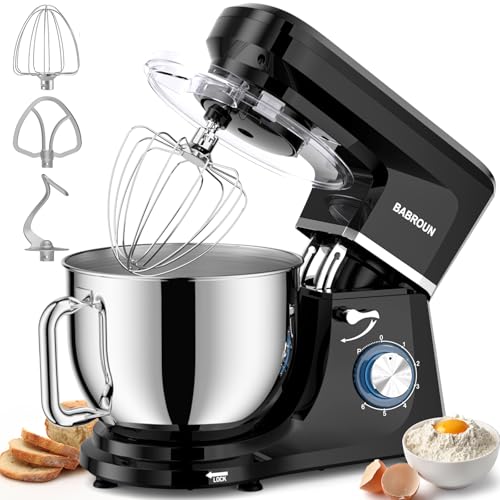
The Babroun 8.45QT mixer is a roomy workhorse for serious home bakers. Its 660W motor powers through heavy dough like whole wheat and sourdough. The large bowl fits big batches or double recipes. I used it for three loaf batches and for hearth-style dough comfortably. The six speed options let me start slow then ramp up for gluten development. Accessories include dough hook, whisk and beater for varied tasks. Build quality feels solid for its price. It stays steady during heavy kneading. Clean up is straightforward and the handle on the bowl makes lifting easy.
For bakers who make frequent loaves this Babroun shines. I push bulk fermentation with confidence given the motor and bowl size. The mixer copes with higher hydration dough when I use slow speeds. Noise is moderate and manageable in my kitchen. I like that accessories are durable and replaceable. The tilt-head raises easily for oiling and cleaning the shaft. I suggest letting the motor rest during long kneads to avoid overheating. The wide bowl can hold dough plus room for rise if covered. It is a smart pick if you want a heavy duty home mixer.
Pros:
- Large 8.45QT bowl for big batches and double recipes
- 660W motor handles dense and higher hydration dough
- Sturdy build stays steady during heavy kneading
- Durable accessories for varied baking tasks
- Good value for bakers who make bread often
Cons:
- Heavier footprint requires more counter space
- Motor can overheat if used continuously without breaks
My Recommendation
The Babroun 8.45QT is my top pick when you want the best stand mixer for baking bread in larger batches. If you bake weekly or host often, the large bowl and reliable motor simplify scaling recipes. It suits families, small bakers who sell locally, and anyone who likes to prepare dough in bulk. Because it handles sticky and whole grain doughs well, it gives better gluten development than smaller mixers. Expect a bit more counter space use, but you gain performance and capacity that justify it. Overall value is strong and availability online is solid.
| Best for | Why |
| Frequent bakers | Large bowl and strong motor for daily use |
| Batch baking | Fits double recipes and large doughs easily |
| Artisan-style loaves | Handles higher hydration and whole-grain blends |
CEBORY 6.5QT 3-in-1 Mixer

The CEBORY 6.5QT 3-in-1 mixer blends value and features for bakers. It lists ten speed levels for fine control while kneading or whipping. The 660W motor gives steady torque for medium dough loads. The tilt-head and included dough hook, beater and whisk make it versatile. I used it for brioche and sandwich loaves with good dough development. The bowl capacity suits family size bread batches comfortably. The design includes a safety lock and splash guard that I appreciate. Build feels light but stable on counters. It is a practical option if you want features without a steep price this year.
In my tests the CEBORY performed well on soft and medium doughs. I kept speeds low during initial mixing to avoid splatter. The ten speeds allow fine tuning for sticky dough or light batters. It mixes evenly without leaving dry pockets. The pulse function helped me to incorporate add-ins like seeds. I note that very heavy doughs benefit from smaller batches. The mixer’s footprint is modest so it fits compact kitchens. Noise is not loud and I can bake early mornings without complaint. Parts clean easily and fit in the sink. For casual bread makers this is an efficient choice.
Pros:
- Ten speed settings for precise control
- 660W motor suitable for medium baking needs
- Safety lock and splash guard included
- Good balance of features and price
- Compact footprint for smaller kitchens
Cons:
- Not meant for very heavy or commercial use
- Slightly lighter build compared to heavy-duty models
My Recommendation
The CEBORY 6.5QT is best for bakers who want the best stand mixer for baking bread without a premium price. It offers speed variety and safety features that help produce consistent loaves. Use it for brioche, sandwich bread, and enriched doughs at family scale. If you are a casual to intermediate baker, its performance and compact size balance well. It keeps noise low and clean-up easy, so you can bake often. This model is a solid mid-range choice that gives more control than entry-level mixers while remaining affordable.
| Best for | Why |
| Casual bakers | Good speed range and features at a fair price |
| Small kitchens | Compact design fits tight counters |
| Enriched doughs | Handles brioche and rolls well |
Kitchen in the box 3.2QT Mixer
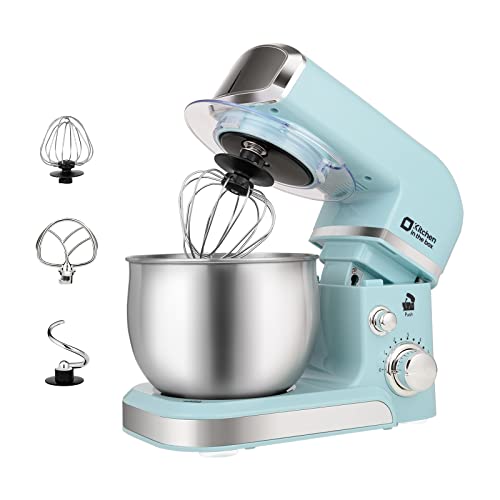
The Kitchen in the box 3.2QT mixer is a compact tool for small kitchens. It has six speeds that handle light dough and batters. The small bowl fits single loaves or small batches of rolls. I used it for quick sandwich bread and cookie dough with good results. The mixer is lightweight and easy to move. It includes a flat beater, a whisk, and a dough hook for basic tasks. Noise is low, and cleanup is simple. It is not meant for heavy artisan dough, but it shines for daily light baking and egg mixing. It is a handy budget companion indeed.
For people in small households this mixer works well. I make single loaves and small dinner rolls often. It frees me from hand kneading and saves time. Do not expect it to handle dense sourdough rye or large batches. The small motor will overheat if pushed too hard. Use short knead cycles and rest between rounds to keep it healthy. The unit’s small size means storage is easy under cabinets. It is an affordable entry point into stand mixer baking. If you bake occasionally it offers great value for light bread tasks. Keep expectations realistic and use it wisely daily.
Pros:
- Compact 3.2QT bowl fits small households
- Lightweight and easy to store
- Low noise and simple cleanup
- Includes basic attachments for everyday use
- Very affordable for casual bakers
Cons:
- Not suitable for heavy or large bread batches
- Small motor can overheat with dense dough
My Recommendation
Choose the Kitchen in the box 3.2QT if you bake for one or two people and need a compact solution. It is not the best stand mixer for baking bread if you want artisan loaves or large batches, but it makes quick sandwich bread, rolls, and batter tasks simple. It is ideal for small kitchens and occasional bakers who want convenience. For the price, it offers a great entry to stand mixer baking and saves time compared to hand kneading.
| Best for | Why |
| Small households | Compact size and efficient for single loaves |
| Occasional bakers | Affordable and easy to store |
| Bakers on a budget | Good basic features at low cost |
FAQs Of best stand mixer for baking bread
What motor power do I need to knead bread dough?
For regular bread baking I look for at least 600W. Models around 660W handle medium and denser doughs well. If you bake large artisan batches, a stronger motor and larger bowl are better.
What bowl size is best for home bread baking?
A bowl between 5 and 8 quarts suits most home bakers. 6.5QT is a sweet spot for family loaves. An 8QT plus bowl is best if you bake doubles or sell bread locally.
Can I make sourdough with these mixers?
Yes, most of these mixers handle sourdough if you use smaller batches and keep speeds low. The Babroun 8.45QT is best for higher hydration sourdough. Let the motor rest during long kneads.
How do I avoid overheating the mixer motor?
Use short knead cycles, allow rest periods, and avoid pushing heavy dough in one continuous run. If a mixer smells hot, turn it off and let it cool before continuing.
Are replacement parts easy to get?
Yes, the attachments and standard parts for these models are commonly available online. The Aucma and Babroun parts are easy to source, which helps keep a mixer in service for years.
Final Verdict: Which Should You Buy?
If you bake large batches or high-hydration dough, the Babroun 8.45QT stands out as the best stand mixer for baking bread due to its motor and bowl size. It balances power and capacity for confident, frequent baking.
For budget-conscious bakers, the Aucma 6.5QT or the CEBORY 6.5QT give strong value. If you bake occasionally in a small kitchen, the Kitchen in the box 3.2QT fits well. Pair any of them with the Easy Stand Mixer Bread Recipes book for consistent results.