
Quick answer: The Circulon Nonstick Roasting Pan is my top pick for roast beef.
I live in the US, in Denver, and I’ve spent years dialing in roast beef for family dinners, holiday feasts, and slow Sunday suppers. I’ve learned the hard way that a dull, warped, or thin roasting pan can turn a promising cut into an unevenly cooked, dry disappointment. A solid roasting pan solves heat distribution, drip collection, rack stability, and cleanup—everything that matters when you want a perfect crust and juicy interior. In this guide I’ll walk you through the best roasting pan for roast beef, show the strengths and limits of five solid options, and help you pick the one that fits your routine, oven, and budget.
Circulon Nonstick Roaster 17×13

The Circulon Nonstick Roasting Pan is a large 17 x 13 inch roaster built for serious home cooks. I’ve used it for prime rib and large sirloins and found it holds steady under heavy roasts. The heavy gauge aluminum core offers even heat with less hot spotting than thin pans. The nonstick interior helps me lift the roast and transfer drippings for gravy without wrecking the crust. The included rack keeps meat elevated so air circulates and fat drains away. Handles stay cool enough to grab with oven mitts.
Cleanup with this pan is straightforward. I deglaze right in the pan and the nonstick surface resists stubborn bits. It’s sturdy enough to use on the stovetop for making pan sauce after roasting. The knock against it is that prolonged high heat can shorten nonstick life, so I avoid broiling at very high temps. For most roast beef recipes up to 450°F it performs well and gives consistent browning and juices for carving.
Pros:
- Large surface area fits big roasts and easy to basting
- Nonstick finish simplifies cleanup and drippings transfer
- Even heat distribution reduces hot spots
- Included rack elevates meat for better air circulation
- Sturdy handles and stovetop-safe for pan sauces
Cons:
- Nonstick can wear if used at very high broil temperatures
- Aluminum core may warp if exposed to sudden extreme heat changes
- Heavier than budget pans—takes more storage space
My Recommendation
I recommend the Circulon Nonstick Roasting Pan when you regularly roast large cuts of beef and value easy cleanup. Its size and nonstick surface make it ideal for family dinners or holiday prime rib. I find it especially good if you like a reliable sear-to-roast workflow: sear on the stovetop, then finish in the oven without transferring to another vessel. That steady heat and integrated rack lead to a crisp exterior and juicy center.
Best for the home cook who wants consistent results without fuss. It gives the best roasting pan for roast beef balance between size, heat control, and cleanup. It suits cooks who roast monthly or more often and who prefer a pan that does a little of everything: searing, roasting, and making sauce. Availability is solid online and it represents strong value for performance.
| Best for | Why |
|---|---|
| Large family roasts | 17 x 13 size fits big cuts and seasonal meals |
| Easy cleanup cooks | Nonstick surface simplifies washing and sauce work |
| Versatile cooks | Stovetop-safe for searing and finishing sauces |
Amazon Basics Stainless 16″

The Amazon Basics Stainless Steel Roasting Pan offers a classic, no-nonsense approach. I trust stainless steel when I want long-term durability and an easy transition to pan sauces. This 16-inch pan comes with a rack and feels solid under heavy roasts. Stainless steel won’t react with acidic juices, so marinades and wine-based deglazes stay true to flavor. The pan’s straight sides give space for aromatics and drippings, and it tolerates higher oven temps without concerns about coating breakdown.
One key difference versus nonstick is cleanup. I sometimes have to soak to lift stuck-on bits, but that also means I never worry about scraping or scratching a coating. If you like achieving deep fond for a pan sauce, stainless is a top choice. It’s also dishwasher safe, though I recommend hand washing to extend sheen. For roast beef, this pan provides reliable heat retention and a professional feel that I appreciate after years of testing.
Pros:
- Durable stainless steel resists staining and scratching
- Higher oven temp tolerance—safe for intense roasting
- Great for forming fond and making pan sauces
- Classic look suitable for serving at table
- Solid handles for easy transfer of heavy roasts
Cons:
- Food can stick—requires soaking or scrubbing for cleanup
- Not nonstick—may need more oil for easy release
- Heavier than aluminum models
My Recommendation
I recommend the Amazon Basics Stainless Steel Roasting Pan for cooks who put flavor first. If you love making pan sauce from fond and you roast often, stainless steel helps you build deeper, more complex flavors for roast beef. I reach for this pan when I plan a high-temperature roast or when I want the pan to double as a presentation piece. It’s a dependable, long-lasting tool that I can use for years without coating concerns.
Use it if you value durability and classic heat retention. The pan earns its spot as a contender for the best roasting pan for roast beef because it supports high-heat searing and sauce-making without worrying about surface wear. It’s an affordable option for cooks who want the stainless-steel feel without a steep price.
| Best for | Why |
|---|---|
| Flavor-focused cooks | Stainless steel builds better fond for sauces |
| High-heat roasters | Tolerates high oven temps without coating issues |
| Long-term use | Durable construction for frequent roasting |
Certified Angus Beef Roaster

The Certified Angus Beef Roasting Pan is built with heavy-duty nonstick and a wire rack specifically designed for large cuts and reverse searing. I used this pan in a reverse sear test and found it excellent at holding juices while allowing air to circulate for even low-and-slow cooking. The nonstick surface is robust and made for heavy use; it releases the meat cleanly and speeds cleanup. It handles a range of cooking methods and makes carving straightforward because the roast keeps its shape.
What sets this pan apart is how it supports reverse searing: I can cook at low temperature on the rack, then transfer to a very hot oven or stovetop for the final crust without losing pan stability. The depth captures drippings for gravy, and the nonstick finish lowers cleanup friction. I recommend it if you favor low-and-slow or reverse-sear techniques for roast beef and want a pan designed for that workflow.
Pros:
- Heavy-duty nonstick suited for frequent roasting
- Wire rack designed to support reverse searing
- Deep walls catch drippings for gravy-making
- Durable construction for consistent performance
- Good for both low-and-slow and finishing sears
Cons:
- Nonstick still sensitive to metal utensils
- May be pricier than basic pans
- Heavier to store and handle full roasts
My Recommendation
I recommend the Certified Angus Beef Roasting Pan if you use reverse sear or low-temperature methods regularly. I chose this pan for tests where precise airflow and rack stability mattered the most. It handles long cooks at low temps and then takes a final blast of heat to build a perfect crust. For a roast beef enthusiast who treats texture and crust as top priorities, this pan often produces superior results.
Choose this if you roast premium beef and need predictable performance. It is one of the best roasting pan for roast beef options when you want the flexibility to do both slow cooking and aggressive searing. The pan’s heavy-duty build and purpose-built rack offer great value for cooks who push techniques beyond basic roasting.
| Best for | Why |
|---|---|
| Reverse-sear cooks | Rack design supports even low-temp cooking |
| Texture-focused roasts | Holds shape and supports high-temperature finishing |
| Frequent entertainers | Durable nonstick cuts cleanup time |
Chicago Metallic Roast Pan 13×9
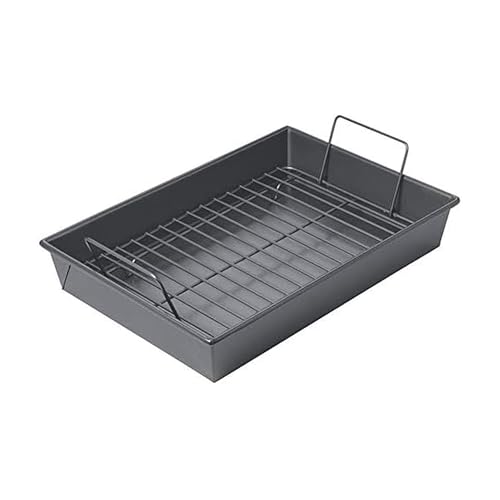
The Chicago Metallic 13 x 9 roast pan is compact and professional in build. I recommend it for cooks who don’t regularly roast extra-large cuts but still want quality results. The non-stick rack and pan combination is optimized for smaller roasts, brisket halves, or pot-roast-style cooking. Its compact size heats quickly and helps deliver crisp edges on smaller roasts. I found it useful for weeknight meals when I roast a smaller sirloin or top round for sandwiches.
This pan is also a good backup or travel-friendly option because it stores easily. The nonstick finish makes cleanup fast, but I still avoid harsh metal tools. While it won’t replace a giant holiday roaster, it’s ideal for targeted tasks: small roasts, vegetables, and sauce-making in a pan that’s easy to handle and move from oven to table.
Pros:
- Compact size for smaller roasts and easier storage
- Nonstick rack and pan simplify cleanup
- Heats quickly for faster cooks
- Professional build quality for everyday use
- Great for multiuse beyond just beef roasting
Cons:
- Too small for large holiday cuts
- Nonstick lifespan depends on care and temperature
- Not ideal for large gatherings without multiple pans
My Recommendation
I recommend the Chicago Metallic Roast Pan for cooks who roast smaller cuts of beef or who need a second pan for mid-sized meals. I use this pan for weeknight roast beef that feeds three to four people. Its nimble size lets me get a crisp edge and rapid heat recovery when I open the oven. For those who want a reliable, everyday pan, this fits the bill.
This pan works well if you’re after a practical, smaller option instead of a full-sized roaster. It’s one of the contenders for the best roasting pan for roast beef when you don’t need the biggest pan in the kitchen. It’s affordable, effective, and well suited to cooks who prioritize convenience and storage.
| Best for | Why |
|---|---|
| Small household roasts | Compact size fits modest cuts and limited ovens |
| Easy storage | Small footprint for tight kitchens |
| Everyday cooking | Quick preheat and convenient cleanup |
E-far Stainless Roaster 16 x 11.5

The E-far 16 x 11.5 stainless steel turkey roaster includes both V-shaped and flat racks for flexibility. I like the V-rack for smaller roasts because it keeps round cuts stable, and the flat rack helps for turkeys or larger loins. The heavy-duty stainless body gives excellent heat retention, and the pan depth handles significant drippings—useful when you’re making gravy for roast beef. It’s dishwasher safe but shines after a hand wash and polish.
This roaster’s versatility makes it a perennial choice for cooks who alternate between poultry, pork, and beef. The dual racks mean you can choose stability or drainage depending on the cut. I use it when I want a pan that’s ready for anything. For roast beef specifically, the V-shaped rack helps steady cylindrical cuts for even browning and carving.
Pros:
- Dual racks (V-shaped and flat) increase versatility
- Heavy-duty stainless steel for long life
- Deep pan captures drippings for gravy
- Dishwasher-safe; robust for frequent use
- Sturdy handles for confident lifting
Cons:
- Larger and heavier to store
- Stainless surface requires elbow grease for baked-on bits
- Racks add complexity to storage and washing
My Recommendation
I recommend the E-far 16 x 11.5 Stainless Roaster for cooks who switch between meats and want one pan to do it all. I use the V-shaped rack for round roast beef cuts and the flat rack for birds or sheet-style roasts. This flexibility makes the E-far pan a smart pick for households that host varied meals. The deep pan holds enough drippings for robust gravy without needing a separate container.
If you’re looking for an all-in-one tool, this roaster is a contender for the best roasting pan for roast beef and other proteins. It’s durable, versatile, and built for cooks who want fewer single-use items. Availability is good online and the value is high for a dual-rack roaster that sees frequent kitchen use.
| Best for | Why |
|---|---|
| Multi-meal households | Dual racks handle many types of roasts |
| Gravy lovers | Deep pan captures ample drippings |
| Durability seekers | Stainless construction holds up to heavy use |
FAQs Of best roasting pan for roast beef
What size roasting pan do I need for roast beef?
For most families, a pan around 16–17 inches long works well for standard roasts. If you regularly cook prime rib or whole beef loin, choose the larger 17 x 13 or similar. For smaller loins or weeknight roasts, a 13 x 9 pan is sufficient. Consider oven clearance and storage space when choosing size.
Is nonstick or stainless better for roast beef?
Both have strengths. Nonstick eases cleanup and prevents sticking; stainless creates better fond for pan sauces and tolerates higher heat. I use nonstick for quick cleanup and stainless when I want deep pan sauce flavor or searing at very high temps. Each can be the best roasting pan for roast beef depending on your priorities.
Can I use the roasting pan on the stovetop?
It depends on materials. Stainless steel pans and heavier aluminum cores often handle stovetop use for searing and sauce-making. Most nonstick pans can handle stovetop deglazing at moderate temps but avoid very high direct heat that can harm coatings. Check the manufacturer’s instructions before moving a pan between appliances.
How do I keep my roasting pan from warping?
Avoid sudden temperature changes: don’t put a hot pan into cold water. Preheat oven gradually and don’t cook at temps beyond the pan’s rating. Heavy-gauge pans resist warping better. Proper handling and gradual heating keep your pan flat and reliable for even roasting.
How important is a rack for roasting beef?
A rack is very important. It elevates the roast so air circulates and fat drains away, which improves browning and reduces soggy bottoms. For reverse searing and even cooking, a sturdy rack is a must, which is why I often pick pans with quality racks.
Final Verdict: Which Should You Buy?
If you want my single pick, the Circulon Nonstick Roasting Pan strikes the best balance of size, release, and ease of cleanup, making it my recommended best roasting pan for roast beef for most home cooks. It combines even heat, a good rack, and user-friendly maintenance.
Choose stainless if you prize fond and high-heat reliability, and pick a smaller pan if storage or roasting frequency is limited. Each of the pans reviewed can be the best roasting pan for roast beef depending on your method and priorities.