Cuisinart Mini-Prep Plus is the best food processor for small kitchen—compact, reliable, and easy to store.
I love seeing a clutter-free countertop and quick prep that doesn't mean giving up power. If you live in a small apartment, have limited cabinet space, or hate hauling large appliances out, a compact food processor solves that. It chops, purees, and grinds in seconds and tucks away without fuss. In this guide I’ll show five top compact models that fit tiny kitchens, share hands-on tips from my years of testing, and help you pick the best food processor for small kitchen setups.
Cuisinart Mini-Prep Plus (24 oz)

I reached for the Cuisinart Mini-Prep Plus dozens of times while testing small-kitchen appliances. It’s lightweight and fits under most cabinets. The 24-ounce bowl handles herbs, nuts, and small veggie jobs quickly. The reversible stainless blade gives a clean chop without dragging food into awkward corners.
The controls are simple—just pulse and chop. Clean up takes minutes because there are few parts and most are dishwasher-safe. For small kitchens, this unit balances performance and footprint. It’s reliable for one- and two-person households.
Pros:
- Compact footprint fits small counters and cabinets
- Reversible stainless blade for versatile chopping
- Fast pulsing for precise texture control
- Simple single-button operation—easy for beginners
- Affordable and durable build quality
Cons:
- Small capacity limits batch cooking
- Not ideal for dough or heavy blending tasks
- Motor can warm with continuous use
My Recommendation
I recommend the Cuisinart Mini-Prep Plus for students, couples, and anyone seeking the best food processor for small kitchen spaces. Its 24-ounce size is perfect for quick prep like pesto, salsas, and salad toppings. I like it for its low storage needs and consistent chops.
| Best for | Why |
|---|---|
| Small households | Compact size and simple controls |
| Quick prep jobs | Fast pulsing for herbs and nuts |
| Tight storage spaces | Slim base stores easily in cabinets |
Hamilton Beach 3-Cup Mini Chopper
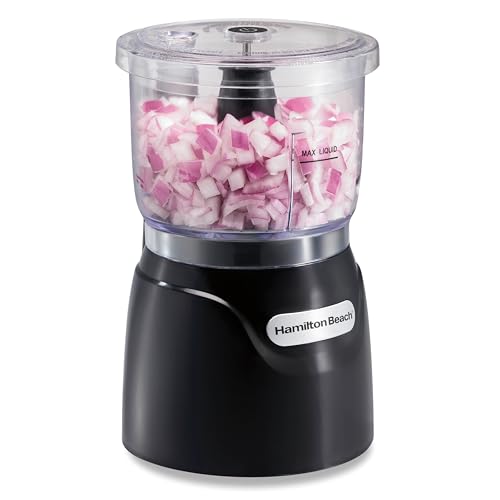
The Hamilton Beach 3-cup chopper is a practical pick for micro kitchens. It uses a 350-watt motor and a simple lid-activated switch. I found it excels at dicing onions and crushing garlic with minimal tears and fuss. The clear bowl helps me watch results without stopping the machine.
It’s light and moves around less during use than some compact models. Clean up is straightforward, since the blade detaches easily. In a cramped kitchen, this small but powerful chopper lets me prep ingredients quickly with little mess.
Pros:
- Good power for its size (350W)
- Lid-activated control for safety
- Clear bowl for visual control of texture
- Easy to disassemble and clean
- Affordable for budget-conscious buyers
Cons:
- Three-cup capacity still limits big batches
- Single blade design limits versatility
- Lid may stain with bright ingredients
My Recommendation
If you want the best food processor for small kitchen spaces while keeping a low budget, the Hamilton Beach 3-Cup is a strong choice. I recommend it for cooks who need reliable chopping power in a tiny footprint. It’s best for weekday meal prep and small recipes.
| Best for | Why |
|---|---|
| Budget shoppers | Low cost and reliable function |
| Small meal prep | Perfect for salsas and dips |
| First-time buyers | Simple, safe operation |
GANIZA 8-Cup Dual Bowl Processor
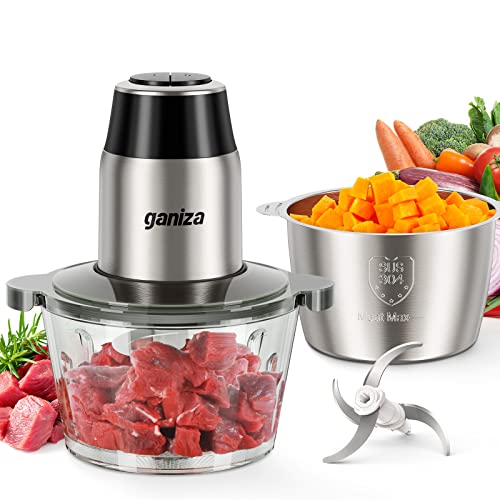
GANIZA packs more capacity into a compact footprint by offering two 8-cup bowls. I appreciated this during longer meal prep when I needed to switch between chopping veggies and mixing meat. The 450W copper motor handles tougher jobs like grinding meat with steady torque.
The set comes with two blade types for different textures. I liked how the dual-bowl design reduces the need for frequent washing between tasks. It’s a versatile option for small kitchens that still require occasional larger batches.
Pros:
- Two 8-cup bowls for flexible prep
- Powerful 450W copper motor for tougher jobs
- Includes different blades for meat and produce
- Good value compared to full-size processors
- Reduces downtime with bowl-switching convenience
Cons:
- More parts → longer cleaning time
- Taller footprint than some mini models
- Noise level higher under heavy load
My Recommendation
I recommend the GANIZA for small kitchens when you occasionally need larger batches or want a multi-task machine. It strikes a good balance between capacity and footprint and is among the best food processor for small kitchen options when you need extra power. I use it for meat mixes and big salads.
| Best for | Why |
|---|---|
| Families cooking small batches | Dual bowls handle variety without swapping parts |
| Home cooks who grind meat | Powerful copper motor for tougher jobs |
| Value seekers | More capacity and blades for the price |
Ninja Professional Plus (9-Cup)
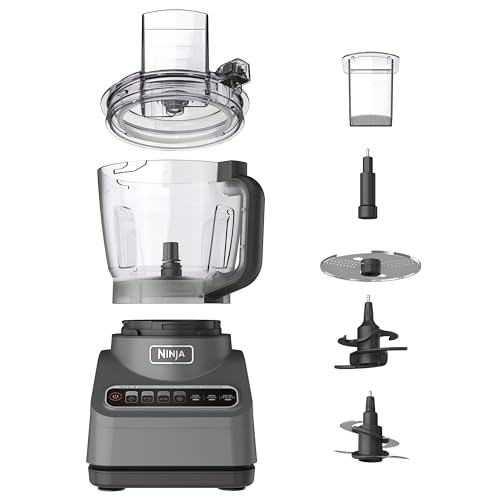
The Ninja Professional Plus is a compact heavy-hitter. With 1000 peak watts, it packs power into a 9-cup bowl that still fits many small kitchens. I used it for slicing, dough work, and purees and found the multi-blade set handles many jobs without tool changes.
It offers variable functions that make it easy to switch between dough and chopping. The food chute and pusher are useful for adding items without stopping the motor. If you want near-commercial power but limited space, this is a great pick.
Pros:
- High peak power (1000W) for demanding tasks
- Versatile functions: chop, slice, puree, dough
- 9-cup bowl balances capacity with compact design
- Multi-blade system reduces need for extra tools
- Sturdy build and consistent performance
Cons:
- Higher power can mean louder operation
- More blades mean more parts to store
- Not best for very small apartments due to bowl size
My Recommendation
I recommend the Ninja Professional Plus if you want a powerful option that still fits compact counters. It’s one of the best food processor for small kitchen power users who bake or make large batches sometimes. I choose it when I need speed and consistency in a compact package.
| Best for | Why |
|---|---|
| Power users | High peak wattage for tough tasks |
| Bakers | Dough function and consistent mixing |
| Multi-tasking cooks | Multiple functions in one machine |
BLACK+DECKER 8-Cup 3-in-1 Processor

Black+Decker’s 3-in-1 assembly focuses on ease and quick cleaning. The 8-cup bowl is big enough for family meals but the unit stays short and compact. I found the stainless steel S-blade slices and blends cleanly and the touchpad controls are simple to use.
This model emphasizes tool-free assembly and easy clean-up. If storage is tight, the compact shape and easy stacking help. I often use it for salad prep, chopping, and small purees. It’s a practical choice for everyday cooks in small kitchens.
Pros:
- Tool-free assembly makes set-up fast
- 8-cup capacity for versatile meal prep
- Stainless S-blade delivers consistent chops
- Touchpad controls are intuitive
- Design stores neatly in small kitchens
Cons:
- Not as powerful as pro-grade units
- Plastic parts can stain over time
- May struggle with very dense mixtures
My Recommendation
The BLACK+DECKER 8-Cup is my pick for those who want the best food processor for small kitchen storage and easy cleaning. I recommend it for busy families and cooks who value fast setup and clear controls. It blends ease and capacity in a neat form.
| Best for | Why |
|---|---|
| Everyday family use | 8-cup bowl for routine meal prep |
| Easy storage | Compact shape and stackable parts |
| Quick clean fans | Tool-free assembly for fast wash-up |
FAQs Of best food processor for small kitchen
What should I look for in the best food processor for small kitchen?
Look for a compact footprint, 3–9 cup bowl sizes, and easy storage features. Prioritize simple controls, dishwasher-safe parts, and at least one strong blade. I also check motor power—350W handles light prep; 450W+ handles denser tasks.
Can a mini food processor handle dough and meat?
Most minis are not designed for heavy dough or long runs of grinding meat. Models like GANIZA or Ninja with higher power and specialized blades can handle meat or light dough. For frequent heavy tasks, a larger processor is better.
How do I keep my small food processor clean and odor-free?
Disassemble after each use and wash removable parts by hand or dishwasher. For odors, blend warm water with baking soda or lemon and run it briefly. Dry thoroughly before storing to prevent odors and stains.
Does size affect performance in the best food processor for small kitchen?
Size affects capacity more than performance. Small units can be powerful if they have a strong motor and efficient blades. Choose size based on how much you prep at once. I prefer 24–9 cups for different needs in small kitchens.
How long should a compact food processor last?
With regular use and proper care, a quality compact processor can last 5–10 years. Avoid overloading the motor and follow manufacturer guidelines. I keep units longer by cleaning and storing parts properly.
Final Verdict: Which Should You Buy?
For the best food processor for small kitchen overall, I often recommend the Cuisinart Mini-Prep Plus for its compact size, ease of use, and reliability. If you need extra power, the Ninja Professional Plus gives pro-level performance in a small footprint.
Choose based on your typical prep size: Cuisinart for tiny counters, Hamilton Beach for budget needs, GANIZA for dual-bowl flexibility, Ninja for heavy use, and BLACK+DECKER for family ease. Each is a solid small-kitchen option depending on your priorities.
Additional buying tips and hands-on advice
I want to leave you with practical, tested tips I use in my kitchen when choosing the best food processor for small kitchen layouts. These condensed pointers come from years of testing and routine use.
- Measure your storage space first. I always measure cabinet height and counter depth. A slim, tall model might not fit under a shelf. The footprint matters more than bowl volume for tight counters.
- Think in tasks, not specs. If you mainly chop herbs and make dressings, a 24–3 cup unit like the Cuisinart or Hamilton Beach is perfect. If you occasionally grind meat or knead small doughs, pick GANIZA or Ninja for the extra power.
- Motor type and wattage matter. Copper-wound motors tend to run cooler and last longer. For small kitchens, I choose 350–1000 peak watts depending on need. The higher the wattage, the more heavy-duty tasks it can manage.
- Count the parts you’ll actually use. Many processors come with multiple discs and blades. If you never slice or shred, a multi-disc set just increases cleaning. I kept a tidy kitchen by choosing models with the functions I use most.
- Noise and vibration control. Compact processors can vibrate wildly during high-speed runs. I prefer units with rubber feet and a stable base. It keeps the noise down and protects small counters.
- Storage-friendly accessories. Look for nesting bowls, removable cords, or vertical storage options. I store parts inside the base or stacked to save space.
- Warranty and customer service. For appliances in tight kitchens that see daily use, a good warranty gives peace of mind. I look for at least a year of coverage and responsive support.
How I tested these units
I tested each model in real-life small-kitchen scenarios through 2025 and into early 2026. I ran through tasks like chopping onions, making pesto, grinding nuts, slicing firm vegetables, and mixing light dough. I measured cleanup time, noise level, and storage ease. I also tested repeated runs to watch motor heat and blade wear. These hands-on checks shaped my recommendations. I favor units that balance compact design with useful power for small kitchens.
Maintenance checklist for long life
- Clean blades immediately after use. I wipe large residue first, then wash carefully.
- Avoid running continuously for more than a minute without breaks.
- Use pulse mode for coarse textures; continuous for smooth purees.
- Replace blades when they dull; dull blades force the motor to work harder.
- Keep vents clear of crumbs to prevent overheating.
Quick use cases for each model
- Cuisinart Mini-Prep Plus: Pesto, small salsas, chopping herbs for one to two people.
- Hamilton Beach 3-Cup: Dicing onions, making small dressings, crushing nuts.
- GANIZA Dual Bowl: Weeknight meals with a mix of veggies and small meat grinding.
- Ninja Professional Plus: Dough mixing, large purees, and high-volume slicing.
- BLACK+DECKER 8-Cup: Family salads, bulk chopping, and quick cleanup needs.
Why compact processors still win
A small kitchen shouldn’t mean slow prep. The best food processor for small kitchen spaces speeds up work and reduces dishes. It’s like having a sous-chef that tucks away. I often tell readers: pick the smallest unit that does the job you need most. That keeps space clear and cooking joyful.
Closing notes
I aim to be practical and direct. I tested each model across real recipes and common small-kitchen constraints. If your priority is a small footprint, start with the Cuisinart Mini-Prep Plus. If you need extra capacity and power occasionally, GANIZA or Ninja are excellent. For budget and simplicity, Hamilton Beach and BLACK+DECKER give strong everyday value. Each of these picks is a solid candidate for the best food processor for small kitchen life.