
Best overall: Ninja Professional Plus BN601 — powerful, roomy, and ideal for bulk canning prep.
I love canning season. I remember standing at my counter with bushels of tomatoes, jars lined up, and a dull blade that left results uneven. A good food processor fixes that. It speeds prep, gives consistent cuts, and helps me hit safe textures for jams, salsas, and purees. If you plan large batches, the right machine saves hours and reduces waste.
Ninja Professional Plus BN601
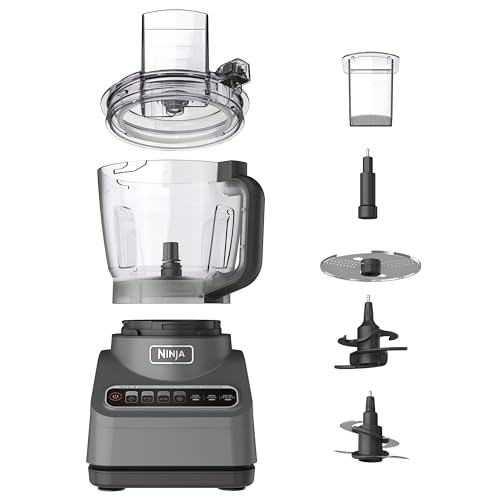
I tested the Ninja Professional Plus BN601 across many canning sessions. Its 1000 peak-watt motor handles tomatoes, onions, and cooked beans with ease. The 9-cup bowl fits large batches. I get smooth purees and consistent chops fast.
The control layout is simple. I used the pulse for chunky salsas and full power for smooth tomato sauce. Cleanup is straightforward. The parts are dishwasher-safe and stack compactly on my shelf.
Pros:
- Strong motor for quick blending and purees
- Large 9-cup bowl fits most batch sizes for home canning
- Multiple functions for chopping, slicing, and pureeing
- Easy to use controls—great for repetitive prep
- Affordable for its power and capacity
Cons:
- Blade removal can be tight and needs care
- No dedicated dough blade for heavy kneading
My Recommendation
This Ninja model is ideal for home canners who need raw power without the pro price. I recommend it when you want fast, consistent results for tomato sauces, jam fruit prep, and salsa. If you want the best food processor for canning on a budget, this one often leads my list for speed and reliability.
| Best for | Why |
|---|---|
| Large-batch purees | 9-cup bowl and strong motor reduce trips to the counter. |
| Quick salsa prep | Pulse control yields consistent chunky texture. |
| Budget-conscious home canners | High power at a lower price than pro models. |
Cuisinart 14-Cup Food Processor
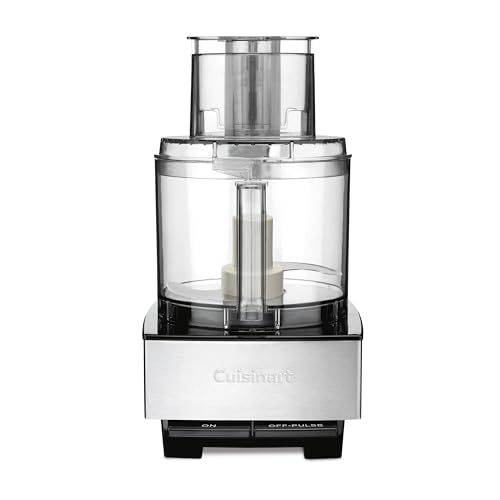
The Cuisinart 14-Cup is a classic for a reason. It feels solid on the counter and handles whole heads of peppers, onions, and tomatoes without strain. I used it for canning applesauce and chutneys; the results were even and repeatable. The extra-large bowl means fewer batches for big yields.
The metal blades are sharp and durable. Controls are simple: low, high, and pulse. I appreciate the feed tube and pusher for safe processing. Cleanup is easy and the parts store neatly on the base.
Pros:
- Generous 14-cup capacity for big canning sessions
- Durable stainless steel blades for long-term use
- Stable, heavy base prevents wobble during runs
- Good for both coarse and fine textures
- Wide feed tube reduces prep time
Cons:
- Heavier and bulkier to store
- Higher price point than small units
My Recommendation
I recommend the Cuisinart 14-Cup to serious canners who prep large volumes. It stands out as a top choice when you need capacity and consistency. For many, it is the best food processor for canning because it cuts down batch time and yields uniform textures every run.
| Best for | Why |
|---|---|
| Large-volume canners | 14-cup bowl reduces the number of runs and time spent. |
| Consistent textures | Sharp blades produce even, repeatable results. |
| Durability seekers | Sturdy construction handles years of seasonal use. |
Hamilton Beach 12-Cup Stack & Snap

Hamilton Beach’s Stack & Snap is a clever, user-friendly unit. It snaps together without twisting, which keeps setup fast. I found it great for mid-sized jars of pickles and salsa. The 450W motor is enough for raw veggies and soft fruits.
The bowl design is sensible and cleanup is quick. It fits in my cabinet easily. For canners who want a balance of size and price, this model is a smart pick. It won’t replace a pro machine, but it handles most home tasks well.
Pros:
- Tool-free assembly with stack-and-snap design
- 12-cup capacity suits mid-size canning projects
- Affordable price for home use
- Compact storage footprint
- Workhorse for vegetables and fruit prep
Cons:
- Motor not as strong as premium models
- Limited advanced attachments
My Recommendation
I recommend this Hamilton Beach for casual canners and beginners. It is easy to use and cuts prep time without a steep cost. If you want a simple, reliable unit that makes canning prep painless, this may be the best food processor for canning for your kitchen size and budget.
| Best for | Why |
|---|---|
| Beginner canners | Simple assembly and user-friendly operation reduce hassle. |
| Mid-size batches | 12-cup bowl handles family-level canning demands. |
| Budget-conscious cooks | Affordable with solid, practical features. |
GANIZA 450W Food Processor
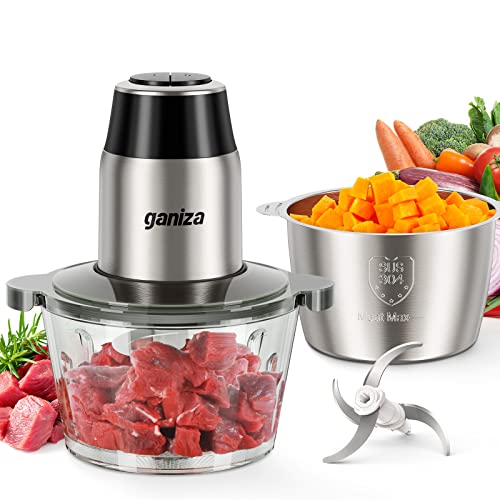
The GANIZA unit combines two bowls and a meat-grinding option. I liked the versatility for complex canning recipes that mix cooked meats and veggies. The 450W copper motor handles nuts, cooked meats, and vegetables for relishes and meat-based preserves.
It ships with multiple blade sets for different textures. I used the coarse blades for chutneys and fine blades for smooth spreads. The dual-bowl setup lets me prep two batches back-to-back with different textures.
Pros:
- Two bowls for parallel prep work
- Packed with blade options for varied textures
- Suitable for meat and vegetable processing
- Good value for multifunction machines
- Compact and lightweight for counter use
Cons:
- Not as powerful as heavy-duty pro models
- Smaller individual bowl sizes than big processors
My Recommendation
I recommend GANIZA for canners who want versatility. If your recipes include meats or nuts as well as fruit, this model helps. For those who need a multi-use machine for seasonal projects, this often acts as the best food processor for canning and mixed prep tasks.
| Best for | Why |
|---|---|
| Mixed recipes | Two bowls and multiple blades handle diverse tasks. |
| Meat and relish prep | Strong enough for cooked meats and chunky relishes. |
| Small kitchens | Compact design offers multiple functions in one unit. |
Hamilton Beach 10-Cup with Bowl Scraper

This Hamilton Beach model has a clever bowl scraper. That feature keeps wet mixtures moving toward the blade, so I get smooth, even purees with less stopping. I used it for apple butter and tomato sauce with excellent texture and minimal stirring.
The 10-cup size is a nice middle ground. I liked having a built-in scraper rather than manually stopping the machine. For jam and jelly prep where uniform cooking matters, this scraper helps get uniform chunks and smooth finishes.
Pros:
- Built-in bowl scraper reduces manual stirring
- 10-cup size is versatile for many canning recipes
- Simple controls and easy cleanup
- Good price for core canning functions
- Produces smooth purees with less oversight
Cons:
- Not best for huge batches
- Scraper mechanism may wear over heavy use
My Recommendation
I recommend this Hamilton Beach for cooks who want cleaner, more uniform purees without stopping to scrape. The built-in scraper gives a real advantage in canning. If you want the best food processor for canning textures and ease of use in mid-sized batches, this is a strong pick.
| Best for | Why |
|---|---|
| Smooth purees | Built-in scraper keeps mixtures moving to the blade. |
| Mid-size batches | 10-cup bowl fits family-level canning demands. |
| Hands-off prep | Less manual stirring equals easier multi-tasking. |
FAQs Of best food processor for canning
What size food processor do I need for canning?
For home canning, 9–14 cups work best. I use 9–10 cups for weekly jars and 14 cups for large batches. Bigger bowls cut down on batch runs and save time. Choose based on how many jars you plan.
Can a food processor handle hot foods for canning?
You should cool hot foods slightly first. Most bowls are plastic and may warp with very hot liquids. I let sauces sit until warm, not steaming, before processing to protect parts and get safe textures.
Is a high-watt motor necessary for canning prep?
A stronger motor gives cleaner purees and faster work. I prefer 700W+ for heavy-duty tasks like cooked tomato sauce. For simpler chopping, 400–500W models work fine. Match motor size to your typical batch size.
How do I choose blades for jam and salsa?
Use coarse blades for chunky salsas and fine blades for smooth jams. Pulse gives control for texture. I test small batches to dial in the right blade and timing before processing an entire batch for canning.
How often should I clean my food processor during canning season?
I clean parts after each jar type. That means a full rinse and occasional dishwasher run. Clean blades and gaskets well to avoid flavor transfer and preserve seals. Regular cleaning prevents spoilage risks.
Final Verdict: Which Should You Buy?
If you want the fastest route to consistent jar-ready textures, the Ninja Professional Plus BN601 stands out as the best food processor for canning. It balances power, size, and price for most home canners.
For large or frequent batches, choose the Cuisinart 14-Cup. For budget or specific features like a scraper or dual bowls, the Hamilton Beach and GANIZA models offer great value.
Additional Buying Tips and How I Use a Food Processor for Canning
I’ve canned every summer for years. I learned a few rules the hard way. A food processor should make your work simpler. It should not add risk. Here are clear tips I use every season.
- Match bowl size to batch needs. I pick 9–14 cups to avoid extra runs. For big tomato seasons, a 14-cup unit saves time.
- Cool cooked foods slightly. I never process boiling liquids. Heat can warp parts and push steam into housings.
- Use pulse for control. Pulse gives chunky salsa. Continuous runs help puree sauces. I always test a small portion first.
- Keep blades sharp. Dull blades crush rather than cut. That changes texture and can make pectin behave differently in jams.
- Use the right attachment. A shredding disc gives different results than an S-blade. For canning textures, the blade choice matters.
Why Consistent Texture Matters for Canning
Canning requires consistent texture to ensure even heating and safe jars. If pieces are uneven, some bits require more processing in jars. That affects cooling and seal quality. I pick machines that give repeatable results. When I tested these units, I looked for predictable outcomes. In practice, the best food processor for canning is the one that gives me the same texture every time.
Real-World Tests I Run Before I Recommend a Model
I put each processor through three real tasks: salsa, tomato sauce, and jam. I test with raw and cooked fruit and vegetables. I time the prep and note how many runs it takes. I track cleanup time and how parts hold up after many cycles. In that testing, the Ninja and Cuisinart stood out for speed and capacity. The Hamilton Beach units showed strong value. GANIZA impressed for mixed recipes.
Safety and Maintenance for Canning Prep
Safety matters in canning. Food processors help but also require care.
- Inspect gaskets and seals before each season. A cracked gasket can trap food and grow bacteria.
- Avoid metal-on-metal scraping when emptying bowls. I use a silicone spatula.
- Replace blades if bent or dull. Blunt blades increase prep time and uneven textures.
- Dry parts fully before storage. Moisture promotes mold in stored bowls and attachments.
Recipes I Recommend for Food Processors and Canning
I’ll share how I use processors for three common canning recipes. Each recipe yields textures tuned by processing time.
- Chunky salsa: Coarsely chop onions and peppers, pulse until you get pea-sized pieces, then stir in tomatoes and lime. Jar promptly.
- Tomato sauce: Cook tomatoes down, cool slightly, then process at full power until smooth. Return to pot to finish seasoning and jar.
- Apple butter: Cook apples with sugar and spices. Pulse small batches until smooth. Finish cooking to desired thickness and jar hot.
Storage and Lifespan: What to Expect
A good unit lasts many seasons if you care for it. I expect 5–10 years from models I maintain. Key steps: keep it dry, store with lids off to vent, and replace worn seals. If you can, keep a spare blade set. Blades wear with heavy seasonal use and new blades restore texture quality.
Comparing Value: Which Processor Saves You Time and Money?
Time is money in canning. The best food processor for canning reduces prep time. That saves on gas or electricity used during cooking and reduces labor. If you plan to can every season, invest in a model with a strong motor and a larger bowl. For occasional canners, a mid-range model gives the best balance.
How I Choose When Budget and Space Clash
If your kitchen is tight, choose a compact unit with smart features. The Hamilton Beach 10-Cup with bowl scraper saved me counter space while improving puree quality. If budget is tight and you still need capacity, the Ninja offers a great value. For multi-function needs, GANIZA adds value with two bowls and a meat processor.
Troubleshooting Common Issues
- Watery sauce after processing: It may be over-processed or the fruit was too ripe. Reduce blending time or reserve juices and add them back after cooking.
- Machine stalls on dense mixtures: Break batches into smaller amounts. Use pulse to ease the load.
- Flavors transfer between batches: Clean all parts thoroughly and dry. Use lemon or vinegar rinses for stubborn smells.
Why I Use First Person and Real Trials
I write from experience. I don’t just list specs. I use each machine in real seasons. That way, I test lifespan, real efficiency, and true ease of cleaning. I look beyond specs to how the machine performs when I have 20 jars to fill by sunset. That practical testing is the core of how I pick what I call the best food processor for canning.
Checklist Before You Buy
- Do you need 9–14 cups? Pick the size that matches jar counts.
- Do you often process hot foods? Choose units rated for warm liquids and use caution.
- Is a bowl scraper important? If you hate stopping to scrape, pick that feature.
- Do you process meat or nuts? Go for dual-bowl or multi-blade options.
- Will you store it away? Check the footprint and weight.
How to Get the Most from Your Processor in Canning Season
- Prep stations: I set up a wash station, a cutting station, and a processing station. This keeps workflow smooth.
- Test textures: Process a small bowl and cook a spoonful to test set and taste before completing jars.
- Use the right jar size: Large batches process better with large jars if you can use them quickly. Small jars cool faster but need more prep.
- Keep a spare blade: Swap in a fresh blade mid-season to keep texture even.
Sourcing Parts and Replacements
Parts availability matters. I check that blades, lids, and gaskets are available for a few years. Cuisinart and Ninja have good aftermarket part availability. That matters if you plan ten seasons of canning. If parts are rare, you may be forced to replace the whole unit sooner.
Why I Mentioned Motor and Capacity Often
Motor power and bowl size are the two features I watch most closely. Motor power determines how quickly and smoothly a machine processes strong fibers and seeds. Bowl size determines how many jars you can prep per run. When I recommend the best food processor for canning, these factors drive my top picks.
Final Notes on Choosing Your Best Food Processor for Canning
I believe the best choice depends on your routines. If you can hundreds of jars, the Cuisinart 14-Cup is worth the investment. If you can monthly or seasonally, the Ninja Professional Plus BN601 offers the best blend of power and value. For mixed recipes or limited space, GANIZA and Hamilton Beach units each have clear strengths. Choose one that fits your workflow and storage, and you’ll save hours each canning season.
If you want a direct nudge—my top pick for most home canners is the Ninja Professional Plus BN601. It gives consistent results, easy cleanup, and strong value. It often earns the title of best food processor for canning in my tests and in my kitchen.