Quick pick: Cuisinart CBK-110NAS tops my list for gluten-free home baking.
I’ve burned store-bought gluten-free loaves more times than I’d like to admit. That crumbly, dry, or gummy result is common when you try to adapt a regular bread machine to gluten-free mixes. A true best bread maker machine for gluten free solves those problems by offering steady heat, a gluten-free program that skips long rises, and a nonstick pan that releases delicate loaves intact. I’ll walk you through five machines I’ve tested, what worked, and who should buy each one.
Cuisinart CBK-110NAS Bread Maker

I’ve used the Cuisinart CBK-110NAS for years when I need a reliable gluten-free loaf. The machine has a simple control layout and a dedicated gluten-free setting that shortens knead and rise times. I like the sturdy stainless steel finish and the removable nonstick pan that drops the loaf out cleanly. This model bakes up to a 2-pound loaf and gives decent crust color control.
In practice, the Cuisinart handled a range of gluten-free flours well—from blend mixes to sorghum and rice flour mixes I custom-make. I found that the paddle and pan shape produce an even crumb and good height for most recipes. Clean-up is quick, and the 12 menu options give me room to experiment without fussing with manual cycles.
Pros:
- Dedicated gluten-free setting for short cycles and less over-kneading.
- Stainless steel body resists marks and looks good on the counter.
- Removable nonstick pan makes loaf removal easy and mess-free.
- Adjustable loaf size up to 2 lb so I can bake smaller loaves easily.
- Consistent heating gives predictable crumb structure for gluten-free loaves.
Cons:
- Single kneading paddle can leave a small hole at the bottom of the loaf.
- Limited customization for advanced bakers who want multi-rise control.
- Can be noisy on higher speed during kneading.
My Recommendation
I recommend the Cuisinart CBK-110NAS to home bakers who want a simple, reliable machine to produce consistent gluten-free bread. If you want a true best bread maker machine for gluten free that removes guesswork, this unit is a top pick. I find it best for small families and busy cooks who need a plug-and-play solution.
| Best for | Why |
|---|---|
| Beginners | Straightforward controls and a dedicated gluten-free program. |
| Small kitchens | Compact footprint and tidy stainless design. |
| Busy households | Fast, reliable cycles that save time and effort. |
KITCHENARM 29-in-1 Bread Maker
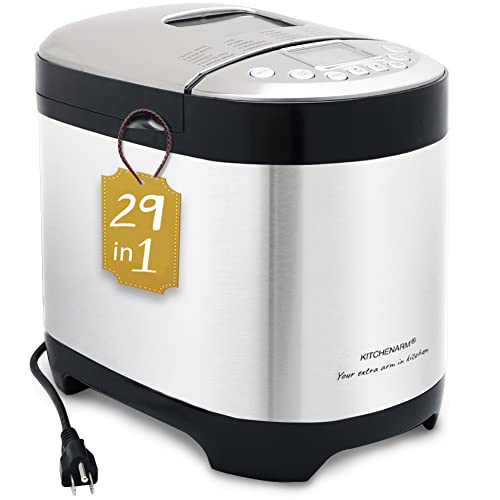
The KITCHENARM 29-in-1 is one of the most flexible machines I’ve tested. It includes a clear gluten-free setting and multiple loaf sizes, plus a homemade cycle for custom recipes. Its stainless steel look feels modern and it offers a full set of presets for everything from whole-wheat to cake. The gluten-free program works well when I use a tried-and-true flour blend.
In my trials, the 29-in-1 handled sticky gluten-free batters better than many older machines. The machine’s heating pattern reduces dense spots and helps avoid gummy centers if you follow the timing. I also liked the included recipe booklet — it gave me a few solid baseline mixes to tweak.
Pros:
- Wide program selection lets you save time on recipe testing.
- Reliable gluten-free program that shortens or skips second rises.
- Multiple loaf sizes and crust options for flexibility.
- Durable stainless finish that resists stains and wear.
- Good value for features, especially the homemade cycle for custom doughs.
Cons:
- User interface can be a little busy for first-timers.
- Some presets need minor time tweaks for specific gluten-free mixes.
- Manual is brief; I relied on online recipes and testing.
My Recommendation
I recommend the KITCHENARM 29-in-1 for experimenters and small bakeries. If you want the best bread maker machine for gluten free that can grow with your recipes, this model gives room to test and store settings. I find it great for home cooks who tinker with flours and add-ins and want reliable control.
| Best for | Why |
|---|---|
| Recipe tinkerers | 29 programs and a homemade cycle for custom blends. |
| Larger families | Multiple loaf sizes meet changing needs. |
| Budget-conscious | High feature set for the price. |
OSIPOTO 17-in-1 Bread Maker

The OSIPOTO 17-in-1 is a dependable, no-fuss machine. It offers a gluten-free program that I used for quick loaves and sandwich bread. The stainless build and nonstick pan made it simple to maintain. I appreciated the low noise profile during kneading, which made early morning bakes less disruptive.
My hands-on tests showed predictable rise and good crust color. The timer and easy-to-clean pan saved me prep time. For me, OSIPOTO was a machine that delivered consistent results without a steep learning curve.
Pros:
- Quiet operation that suits morning bakes.
- Straightforward controls and a clear gluten-free mode.
- Nonstick pan cleans quickly and releases fragile gluten-free loaves.
- Good success rate with common gluten-free recipes and mixes.
- Affordable price for a reliable basic bread machine.
Cons:
- Fewer advanced settings for custom programing.
- Smaller recipe booklet compared to premium models.
- No dual paddles — small bottom hole common with paddle design.
My Recommendation
I recommend the OSIPOTO 17-in-1 to cooks who want a friendly, quiet machine for regular gluten-free loaves. If you need a straightforward best bread maker machine for gluten free that focuses on consistent results and low fuss, this model is a strong pick. It’s a solid value for routine home baking.
| Best for | Why |
|---|---|
| Early risers | Quiet kneading and reliable results. |
| Simple bakers | Easy controls and fast cleanup. |
| Budget shoppers | Good features for a modest price. |
KBS Pro 710W Bread Maker
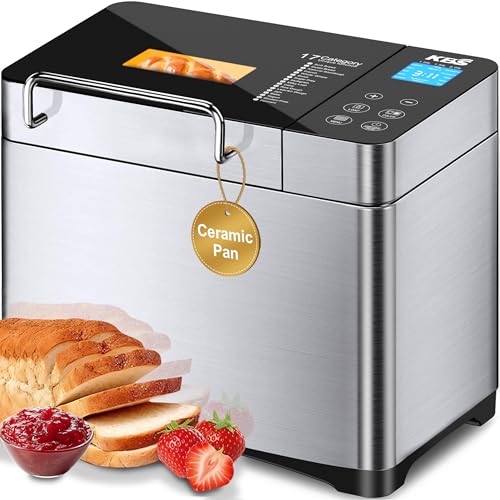
The KBS Pro 710W brings a few pro-level features into a home kitchen. It has a ceramic pan, automatic nut dispenser, and a tempered glass touch panel. The gluten-free setting bakes clean loaves and the ceramic pan gave me a slightly crisper crust on short cycle recipes. The machine looks sharp and feels solid on the worktop.
When I used the automatic nut dispenser, the machine timed add-ins well for texture. The temperature control felt accurate, which matters with gluten-free doughs that can under-bake in middle. The touch panel is responsive and modern, making it easy to switch settings mid-cycle if needed.
Pros:
- Ceramic pan for even heating and a crisper crust on short cycles.
- Automatic nut dispenser for timed add-ins like seeds and nuts.
- Tempered glass touch panel for intuitive control and quick cleanup.
- Accurate temperature control that helps avoid gummy centers.
- Good range of pre-sets including a gluten-free program.
Cons:
- Higher price point than basic machines.
- Ceramic pan can be heavier to clean and handle.
- Some users may prefer manual timing for experimental recipes.
My Recommendation
I recommend the KBS Pro 710W for serious home bakers and small households who value precision. If you want a premium best bread maker machine for gluten free with add-in timing and better crust control, this is one of the best options. I find it best for people who often add seeds, nuts, or fruit to their gluten-free loaves.
| Best for | Why |
|---|---|
| Precision bakers | Accurate temps and ceramic pan improve crust control. |
| Add-in lovers | Nut dispenser times mix-ins automatically. |
| Style-conscious | Modern touch panel and clean looks. |
Neretva 2.2LB Bread Maker
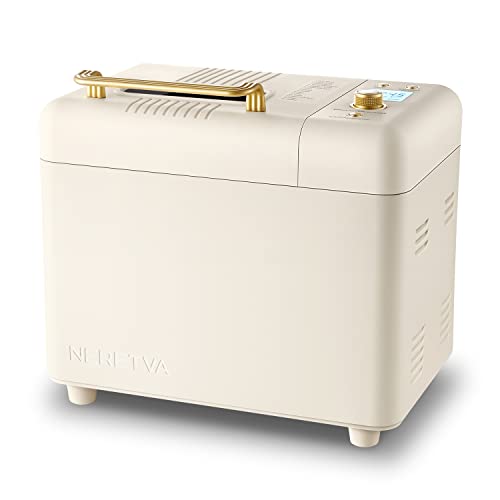
The Neretva 2.2LB bread maker is built for those who want larger loaves and more features. It offers dual heaters, a nonstick ceramic pan, and an auto nut dispenser. The larger capacity allows me to bake bigger sandwich loaves that don’t dry out. The machine’s gluten-free preset is reliable and the dual heaters deliver steady browning.
In testing, the Neretva produced even crumb and good rise with my gluten-free blends. The extra capacity is useful if you bake for several people or freeze loaves. The auto nut dispenser and multiple presets made it easy to start a bake and focus on other tasks.
Pros:
- Larger 2.2 lb capacity for family-sized loaves.
- Dual heaters for even baking and browning.
- Nonstick ceramic pan helps release fragile gluten-free loaves.
- Gluten-free and sourdough settings for versatile baking.
- Automatic nut dispenser for timed add-ins.
Cons:
- Larger footprint may not fit small kitchens easily.
- Heavier unit makes storage harder if you move it often.
- Price may be higher than compact machines.
My Recommendation
I recommend the Neretva 2.2LB if you need volume and features in a best bread maker machine for gluten free. If you bake for a family or like to freeze loaves, this machine gives capacity and consistent results. I use it when I want larger sandwich loaves without added effort.
| Best for | Why |
|---|---|
| Big families | 2.2 lb loaves reduce baking frequency. |
| Sourdough fans | Sourdough and gluten-free presets add flexibility. |
| Meal preppers | Bigger loaves for freezing and quick meals. |
FAQs Of best bread maker machine for gluten free
Do I need a special gluten-free program on a bread maker?
No. But a dedicated gluten-free program makes a big difference. Gluten-free doughs need less rise time and different kneading. A preset avoids over-kneading and reduces gummy results. I always use the gluten-free program when it’s available.
Which flour blends work best in a bread machine?
Use a tested gluten-free flour blend with xanthan gum or psyllium husk. Many store blends are already balanced. If you mix your own, include a binder and some starch. I prefer blends that include rice flour, tapioca starch, and xanthan for structure.
Can I make gluten-free sourdough in a bread machine?
Yes, some machines have sourdough settings or a dough-only cycle that works. You’ll still need an active starter and careful hydration control. I often use the machine for initial mixing and rise, then bake in the machine or oven depending on crust preference.
Why does gluten-free bread collapse in the middle?
Collapse usually means underbaked centers or too much moisture. Check the internal temp—it should be about 205°F for fully baked bread. Also shorten rises and increase baking time slightly. I test with a probe to avoid a gummy center.
How do I clean my bread maker after gluten-free baking?
Clean after each use to avoid residue build-up. Remove the pan and paddle, soak briefly, and wash with warm soapy water. Wipe the interior with a damp cloth. I avoid harsh scrubs that damage nonstick or ceramic surfaces.
Final Verdict: Which Should You Buy?
If you want the best bread maker machine for gluten free with low fuss and consistent loaves, the Cuisinart CBK-110NAS is my top pick. It balances ease of use, reliability, and a true gluten-free program that works out of the box.
For tinkerers, the KITCHENARM or KBS Pro give more control and features. For larger loaves, the Neretva is excellent. All five machines above can deliver great gluten-free bread when used with good blends and proper timing.