
Most islands need 10–12 inches for seating; 15–18 inches for knee space and comfort.
As a kitchen designer and builder with years of hands-on remodels, I’ll walk you through exactly how much of an overhang for kitchen island makes sense for seating, safety, and style. This guide explains measurements, supports, materials, and real-world tips so you can choose the right overhang for your layout and budget. Read on for clear rules, quick drawings you can visualize, and mistakes to avoid when planning your island overhang.
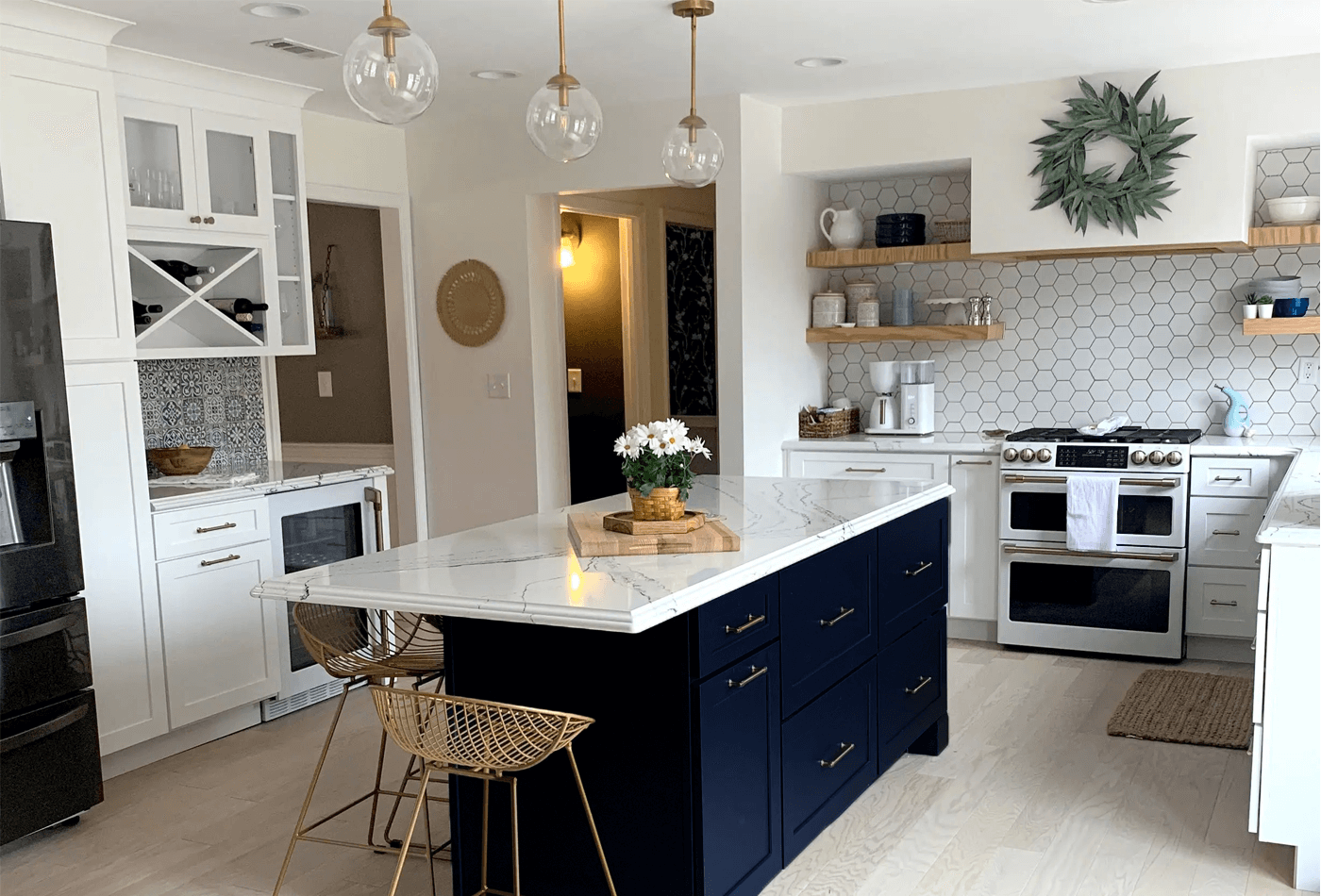
Recommended overhang dimensions
Choosing how much of an overhang for kitchen island depends on use. Here are clear, simple rules you can follow.
- Seating for stools at counter height: 10 to 12 inches of overhang is typical.
- Comfortable knee space for adults: 15 to 18 inches gives more legroom.
- Bar-height seating: 8 to 10 inches usually works because stools are taller.
- No seating (purely decorative or landing space): 1 to 2 inches can be enough.
Why these numbers work
- A 10–12 inch overhang keeps stool legs under the counter and stops knees from hitting the cabinet base.
- A 15–18 inch overhang lets people tuck legs back and sit for longer meals.
- Overhangs beyond 18–20 inches need strong support to avoid sagging or risk.
How to think about it
- If you want a casual breakfast bar, aim for 10–12 inches.
- For dining-style seating, plan 15–18 inches.
- If your island doubles as a prep surface and seating, use a two-tier or stepped design to balance work space and legroom.
how much of an overhang for kitchen island appears often in plans because it affects comfort and structure. Follow these ranges and adjust for family habits and stool style.

Factors that affect how much of an overhang for kitchen island
Several factors change what overhang is safe and comfortable.
- Countertop material and thickness
- Thick stone or concrete can cantilever farther if supported properly.
- Thin laminate or thin butcher block needs closer support.
- Support method
- Brackets and corbels let you extend the overhang without bulky legs.
- Full apron or knee space cabinet limits how far you can go without reinforcement.
- Seating type and stool depth
- Backless stools need less overhang than stools with backs.
- Counter stools with footrests push the user forward, changing needed overhang.
- Usage patterns
- Frequent dining needs more knee room. Quick snacks can use less.
- Building codes and safety
- Local codes may limit cantilever spans or require specific fasteners. Always check.
Think of how much of an overhang for kitchen island in context. The same overhang that works with one countertop or stool can fail with another. Plan the whole system, not just the ledge.

Support methods and construction options
How you support an overhang matters as much as the depth. Here are common methods and their typical uses.
- Cabinet face frame and apron
- Best for small overhangs up to 10–12 inches. Simple and clean.
- Corbels and decorative brackets
- Good for 12–15 inches when properly fastened to framing. Offers style and support.
- Steel or wooden brackets hidden under the countertop
- These allow 15–20 inches when anchored to floor joists or the cabinet carcass.
- Full cantilever with reinforced plywood or engineered beams
- Needed for 18+ inches or long spans. Used with heavy stone or concrete.
- Drop-panel or knee space design
- Adds leg room while keeping structure close to cabinets.
Installation tips
- Fasten supports into studs or blocking, not just cabinet faces.
- Spread supports every 12–24 inches for long overhangs.
- For stone counters, use steel brackets rated for the weight.
how much of an overhang for kitchen island should always match the chosen support method. Don’t overreach without the right hardware.
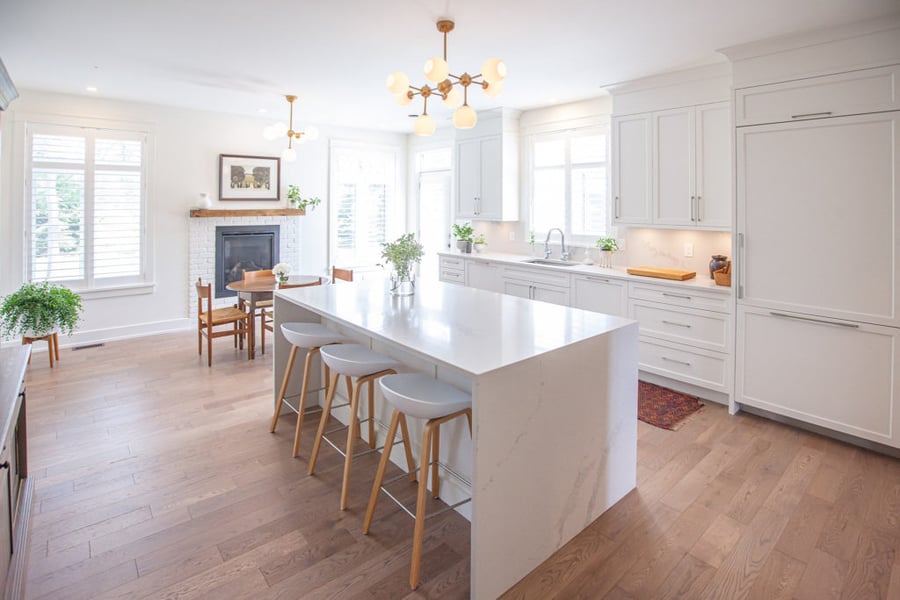
Materials and their limits
Different countertops behave differently. Consider limits when deciding how much of an overhang for kitchen island.
- Granite and quartz
- Can cantilever 10–12 inches naturally. With steel support, 15–18 inches is common.
- Marble and concrete
- Heavy; need robust support for any overhang beyond 6–8 inches.
- Solid wood and butcher block
- Lighter and forgiving; can safely extend 10–15 inches with proper brackets.
- Laminate and thin tops
- Best kept under 10 inches unless backed by strong framing.
Practical note
- Thicker slabs resist flexing. Thinner slabs need more support.
- A bonded steel rod or hidden bracket under the slab adds safety and reduces sag.
how much of an overhang for kitchen island is limited by material stiffness and weight. Choose supports with the material in mind.

Measuring and installing the overhang
A short checklist you can use when measuring and installing:
- Measure chair or stool depth and add 8–12 inches for personal space.
- Confirm countertop thickness and weight.
- Mark stud locations and add blocking for supports.
- Choose support type: corbel, bracket, or cantilever beam.
- Fasten supports with bolts or heavy screws into blocking, not just into thin cabinet face.
- Check for level and even support before securing the countertop.
Quick example
- Stool seat depth: 15 inches. Add 8 inches to avoid knees hitting the cabinet. Overhang target: 23 inches — this is large, so convert to a two-tier island or add heavy hidden support.
I recommend dry-fitting the support and sitting on the stool to test. Small tests catch big problems.

Design tips and common mistakes to avoid
Avoid these frequent errors when deciding how much of an overhang for kitchen island.
- Mistake: Relying on cabinet screws only
- Use blocking and through-bolts for strong connection.
- Mistake: Ignoring stool style
- Test with the actual stool. Backrests change needed space.
- Mistake: Making a long thin overhang without mid-support
- This leads to sagging and cracked counters.
- Tip: Use a stepped or waterfall edge to hide structural supports.
- Tip: For large overhangs, consider a separate eating ledge that’s supported independently.
Small design choices make a big comfort difference. Plan for real use, not just looks.

Personal experience and lessons from the field
I once installed a 14-inch overhang on a quartz island with hidden steel brackets. At first it looked sleek. After a year, heavy use near the edge showed small hairline gaps. I solved it by adding extra brackets and a thin metal stiffener under the slab. Lesson learned: always overbuild slightly for long-term use.
Other real tips from my projects
- Test seating by having family members sit for five minutes. This reveals comfort issues fast.
- If you want a floating look, use a thick waterfall edge and threat it as a structural beam.
- When in doubt, go 1–2 inches more for comfort rather than less.
These small real-world fixes save time and money later. Practical testing beats theory.
People also ask — quick answers
Q: How much overhang do I need for a bar stool?
- 10 to 12 inches for a counter height stool; 8 to 10 inches for bar height.
Q: Can granite overhang 12 inches without support?
- Often yes if it’s thick and spans a short length; but supports are safer for long runs.
Q: Is a 24 inch overhang possible?
- Yes, but it requires engineered steel supports and careful structural design.

Frequently Asked Questions of how much of an overhang for kitchen island
What is a standard overhang for seating on an island?
A standard overhang for counter-height island seating is 10 to 12 inches. This fits most stools and keeps knees away from the cabinet face.
Can I have an overhang on a heavy stone countertop?
Yes, but heavy stone needs strong brackets or a cantilever beam for overhangs above 10 inches. Use hidden steel supports for safety.
How much overhang do I need for comfortable dining?
For dining comfort, aim for 15 to 18 inches to allow full knee room and a relaxed posture. Two-tier islands can separate dining from prep space.
Do I need special permits or codes for overhangs?
Most small overhangs don’t need special permits, but local building codes can affect anchor and fire safety rules. Check with your local authority when planning structural changes.
What support options hide the hardware?
Hidden steel brackets, a waterfall support leg, or a reinforced apron can hide hardware while giving strong support. These keep the look clean and modern.
Conclusion
Choosing the right how much of an overhang for kitchen island blends comfort, safety, and style. Stick to 10–12 inches for casual counter seating and 15–18 inches for dining comfort. Match the overhang to your countertop material and use proper supports. Test with real stools and consider a stepped design if you need both prep space and seating. Take action: measure your stool, check your countertop, and plan the support before finalizing the design. If you’re renovating, talk to a pro or bring this guide to your contractor to make decisions faster — and leave a comment with your island dimensions or questions.