
Wipe with a damp cloth, use mild detergent or baking soda paste for stubborn spots, then dry thoroughly.
I’ve cleaned dozens of rice cookers in kitchens big and small, so I know what works and what doesn’t when it comes to cleaning the heating plate. This guide shows exactly how to clean the rice cooker heating plate safely and effectively, with step-by-step instructions, tips for stubborn stains, and simple maintenance to keep your cooker working like new. Read on for clear, friendly advice you can use right away.
Why cleaning the heating plate matters
The heating plate is the metal surface under the inner pot that heats rice. When food or water spills and burns on that plate, heat transfer drops. Poor heat transfer causes uneven cooking, longer cook times, and possible damage to the cooker. Cleaning the heating plate keeps your rice cooker efficient, safe, and long-lasting.
How to clean the rice cooker heating plate properly prevents odors and protects internal sensors. Regular care avoids costly repairs or replacing the cooker. A clean plate also reduces the chance of smoke or burning smells during use.

What you need before you start
Prepare tools and safe cleaners. You will save time and avoid damage by using the right items.
- Soft microfiber cloth or sponge for gentle wiping.
- Soft-bristled brush or old toothbrush for crevices.
- Mild dish soap for regular cleaning.
- Baking soda for mild abrasion on stuck-on residue.
- White vinegar for mineral deposits and odors.
- Cotton swabs for sensors and small gaps.
- Plastic or silicone scraper—avoid metal tools.
- Clean, dry towel for finishing.
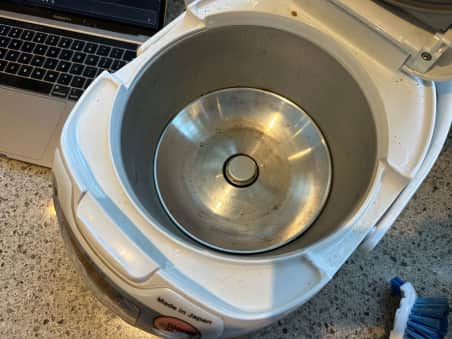
Always unplug the cooker and let the unit cool completely. Never immerse the base in water. These simple steps help protect electronics and sensors.
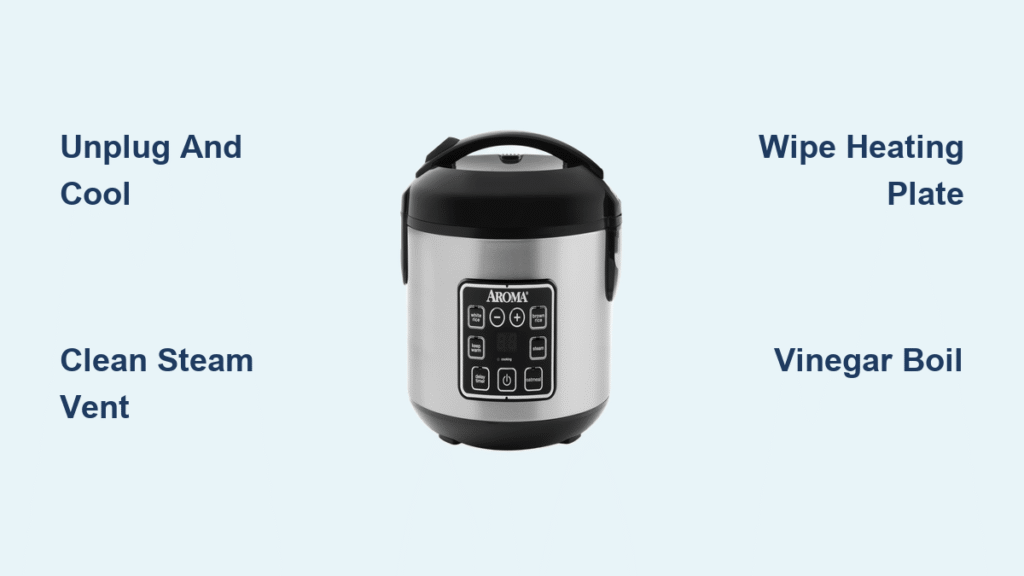
How to clean the rice cooker heating plate — Step-by-step quick clean
Follow these short steps for routine cleaning after every few uses. This is the simplest way to keep your plate in good shape.
- Unplug and cool down
- Unplug the rice cooker and wait until the heating plate is cool. Hot surfaces can burn and cleaners can react to heat.
- Remove inner pot and accessories
- Take out the inner pot, steam basket, and lid if removable. Clean these separately.
- Wipe loose debris
- Use a dry cloth to remove loose rice and crumbs. This prevents scratching during wet cleaning.
- Clean with soapy cloth
- Dampen a cloth with warm water and a drop of dish soap. Wipe the heating plate gently in small circles.
- Rinse and dry
- Wipe again with a clean damp cloth to remove soap. Dry fully with a soft towel before reassembling.
Repeat this process weekly or whenever you see spills. Regular quick cleaning prevents build-up that needs heavy work later.
How to clean the rice cooker heating plate — Deep clean for stuck residue
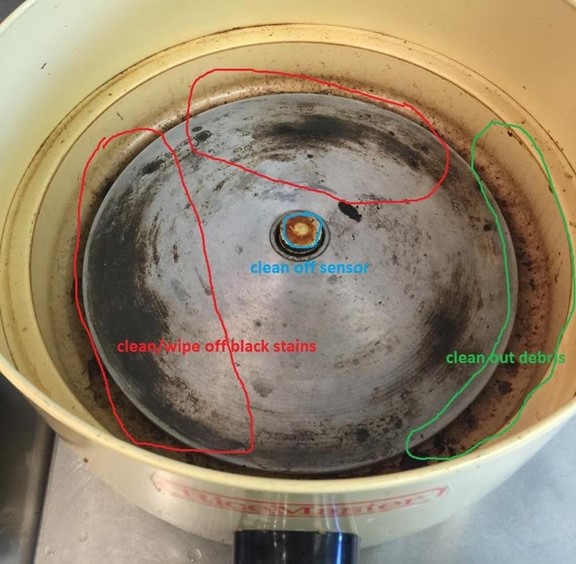
When spills burn or mineral deposits form, a deeper method helps. Follow these safe steps and avoid metal scrapers that can scratch sensors.
- Unplug and cool down
- Safety first. Ensure the cooker is unplugged and cold.
- Make a baking soda paste
- Mix 1 tablespoon baking soda with a little water into a spreadable paste. Baking soda is mildly abrasive and safe on metal.
- Apply paste to spots
- Use a soft cloth or old toothbrush to apply paste to burned spots. Let sit 5–10 minutes to break up residue.
- Gently scrub
- Rub lightly in a circular motion. Use a plastic scraper for stubborn bits, rubbing slowly to avoid marks.
- Vinegar for mineral scale
- Dampen a cloth with white vinegar and hold on mineral deposits for a minute. Wipe clean to dissolve scale.
- Final rinse and dry
- Wipe all residue away with a damp cloth. Dry completely. Reassemble only when fully dry.
If residue still won’t budge after two treatments, stop and contact the manufacturer. Persistent damage may signal underlying issues you shouldn’t force.

Preventive maintenance and best practices
Small habits keep cleaning easy and extend cooker life. Use these tips to avoid frequent deep cleans.
- Clean spills immediately after cooling to prevent burning.
- Use the correct water-to-rice ratio to avoid boil-over.
- Place a small towel under the steam vent when cooking sticky grains to catch splatters.
- Avoid metal utensils that can scratch the inner pot and plate.
- Check the gasket and lid seal for trapped food. Clean those parts regularly.
- Schedule a deep clean once every 2–3 months if you use the cooker often.
Keeping a quick-clean routine makes learning how to clean the rice cooker heating plate fast and painless.

Troubleshooting and safety tips
When problems appear, a careful check helps you decide whether to clean more or call for service.
- If the cooker won’t heat properly after cleaning, confirm the plate is fully dry and inner pot is seated correctly.
- If sensors look corroded or damaged, stop using the cooker and seek professional repair.
- Never pour water into the base or heating well. Moisture in electronics causes short circuits.
- For persistent odors, leave a bowl of baking soda in the cooker overnight with the lid closed to absorb smells.
- If your model has a detachable heating plate, follow the manual for safe removal and cleaning steps.
Always follow the manufacturer’s cleaning guidance for your model. When in doubt, consult the user manual or support line.
People also ask
What is the safest cleaner for heating plates?
- Mild dish soap and warm water are safest. Baking soda paste works for light burnt residue without harsh chemicals.
Can I use vinegar on the heating plate?
- Yes, diluted white vinegar removes mineral buildup and odors. Wipe it off thoroughly and dry the plate after use.
How often should I deep clean the plate?
- Deep clean every 2–3 months with regular daily quick wipes in between. Heavy use may require more frequent deep cleaning.
Frequently Asked Questions of How to clean the rice cooker heating plate
How do I remove burnt rice from the heating plate?
Gently soften the burnt bits with a baking soda paste and warm water, then scrub with a soft brush. Avoid metal tools and repeat once if needed.
Can I use a metal scraper on the heating plate?
No. Metal scrapers can scratch the plate and damage sensors. Use a plastic scraper or a soft cloth instead.
Will vinegar damage the rice cooker?
Vinegar is safe in small amounts for mineral deposits but must be wiped off and rinsed completely. Do not pour vinegar into electrical parts.
What should I do if the heating plate is still sticky after cleaning?
Repeat the baking soda treatment and allow a longer soak time. If stickiness persists, check seals and gaskets for trapped residue.
Is it safe to put the rice cooker base in the dishwasher?
No. The base contains electronics and should never go into the dishwasher or be submerged in water. Clean it with a damp cloth only.
How often should I clean the inner pot versus the heating plate?
Clean the inner pot after every use. The heating plate needs a quick wipe after use and a deep clean monthly or every few months depending on use.
My cooker smells after cleaning; what next?
Air the cooker with the lid open and place a small bowl of baking soda inside overnight to neutralize odors. Ensure all parts are dry before using again.
Conclusion
Cleaning the heating plate keeps your rice cooker efficient, safe, and longer lasting. Use simple daily wipes, handle stubborn spots with baking soda or vinegar, and follow gentle scrubbing steps to avoid damage. From my experience, small habits prevent big problems—clean spills quickly and deep clean occasionally to save time and money later. Try these steps today, and share your cleaning wins or questions in the comments—subscribe for more practical kitchen care tips.