Yes — you can use a meat thermometer for candy with the right probe and careful technique.
I’ve been boiling sugar and testing probes for years, so I know what works and what doesn’t. This guide explains when a meat thermometer can help, when it won’t, and exactly how to get reliable readings when making candy. Read on for clear steps, real-life tips, and trouble-shooting to make better caramels, fudges, and hard candies.
:max_bytes(150000):strip_icc()/Meat-Thermometer-vs-Candy-Thermometer-2x1-1-463c3dedb0c54dfbb04e1c236016573d.png)
Why temperature matters in candy making
Candy is mostly about precise temperatures. Small shifts of 2–3°F can change texture. That’s why candy cookbooks always list exact degrees. You need an accurate reading to hit stages like soft-ball, firm-ball, or hard-crack.
- Temperature controls sugar structure and water content.
- Undercook and candies stay too soft.
- Overcook and they get dry or bitter.
Understanding temperature is the first step to consistent candy. Use good tools and clear technique to get repeatable results.
:max_bytes(150000):strip_icc()/ses-candy-thermometer-test-goodcook-classic-irvin-lin-02-7a189ec81afd457c9a60e42dc949bde7.jpg)
Can you use a meat thermometer for candy?
Yes, but with limits. A meat thermometer can work for candy if it’s fast, accurate, and meant for liquids. Many probe-style meat thermometers are slow or have too big a probe tip. That leads to lag and wrong readings.
Key points:
- Use a thin, instant-read probe with a quick response time.
- Avoid oven or large-dial meat thermometers made for air temperature.
- Check the thermometer’s temperature range; it must read up to at least 400°F (204°C).
If you ask "Can you use a meat thermometer for candy?" the short reality is that some meat thermometers will do fine and others will fail. Pick the right type and test it before you rely on it for a critical batch.
:max_bytes(150000):strip_icc()/GettyImages-890692882-c75c0ef3b87b4df8bbfc263f65ec72b9.jpg)
Types of meat thermometers and suitability for candy
Not all meat thermometers are the same. Here’s a quick guide to common types and whether they work for candy.
- Instant-read digital probe
- Good choice. Fast and precise if rated for high temps.
- Dial stem meat thermometer
- Not ideal. Slow to respond and often designed for air, not liquids.
- Probe with remote display
- Maybe. Use if the probe is thin and fast. Beware of cable heat damage near the pot.
- Infrared meat thermometer
- Poor choice. Reads surface temp only. Sugar pots have bubbles and uneven surface.
- Thermocouple thermometers
- Best choice. Very fast and accurate for boiling sugar.
If you want reliable candy temps, aim for an instant-read or thermocouple probe that lists a suitable range.
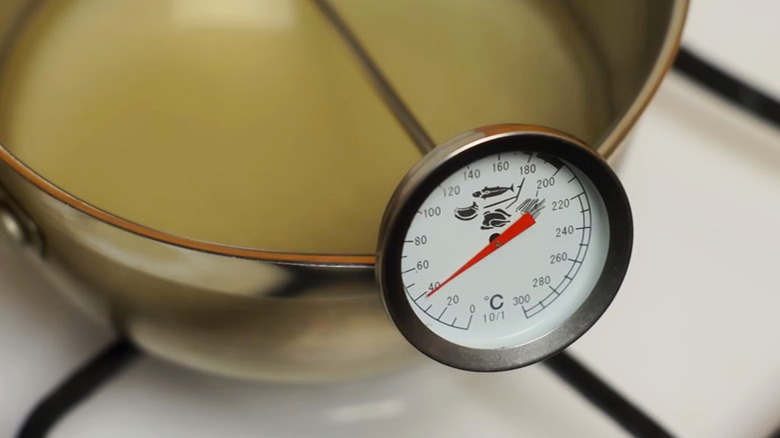
How to use a meat thermometer when making candy — step-by-step
Follow these steps for safer, more accurate readings.
- Choose the right probe
- Use a thin instant-read or thermocouple probe rated above 400°F.
- Calibrate or test
- Test in boiling water (should read about 212°F at sea level). Adjust mentally for elevation.
- Position the probe correctly
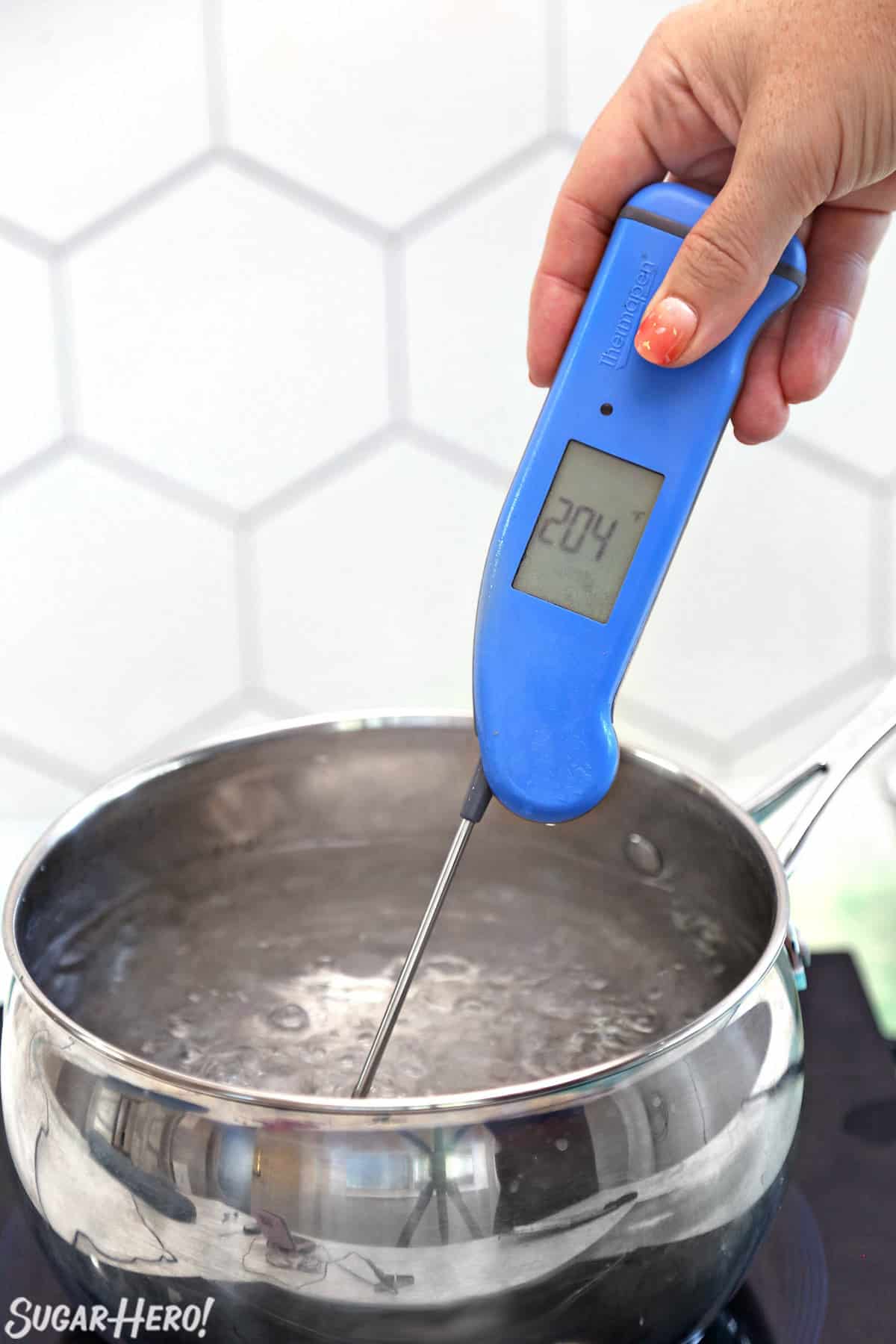
- Insert the probe into the middle of the pot. Avoid touching the bottom or sides.
- Stir and then test
- Stir gently to even out temp. Pause stirring then insert probe for reading.
- Read quickly and act
- Note the temp and remove the pot from heat or continue boiling to the next stage.
Small habits make a big difference. Keep the probe clean and avoid leaving it on a hot rim or leaning against the pan.
:max_bytes(150000):strip_icc()/Meat-Thermometer-vs-Candy-Thermometer-2x3-1-2118268f0b0d45be993596d190d77200.png)
Accuracy, calibration, and common pitfalls
Common errors can make your meat thermometer useless for candy. Know these pitfalls.
- Slow response time
- A slow probe lags behind boiling sugar. You may overcook.
- Probe thickness
- Thick probes heat more slowly. They average the temp and hide peaks.
- Contact with pan
- Touching metal skews readings hotter than the liquid.
- Range limits
- Some thermometers max out below candy temps and give false low reads.
- Elevation differences
- Boiling point falls with elevation. Adjust target temps accordingly.
Calibration tips:
- Boiling water test: 212°F at sea level. Use for coarse check.
- Ice bath test: 32°F for low-end check.
- If reading is off, note the error and mentally correct until you can recalibrate.
Alternatives to using a meat thermometer for candy
If a meat thermometer looks risky, these options work well.
- Candy thermometer
- Classic choice. Designed for sugar and high heat.
- Thermocouple thermometer
- Fast and very accurate for sugar work.
- Digital probe with thin tip
- Good if rated for candy temps.
- Time-and-technique method
- Use timers and visual cues (color, viscosity) for old-school cooks.
Each option has pros and cons. A true candy thermometer or thermocouple gives the most reliable results.
Safety and cleaning when using a meat thermometer for candy
Hot sugar sticks and burns badly. Follow safe handling and cleaning practices.
- Don’t touch hot sugar.
- Wipe the probe with warm water immediately after use.
- Avoid abrupt temperature shocks; let the probe cool before washing.
- If the probe is not fully waterproof, avoid submerging the display or connector.
- Keep kids away while boiling sugar.
Clean well to avoid sticky buildup. A soft cloth and warm water work. For stubborn sugar, soak the probe tip (if waterproof) in warm water until dissolved.
Personal experience and practical tips
I learned the hard way. I once used a thick dial meat thermometer for caramel. It lagged. My caramel overcooked by 10°F. The result was grainy and hard. After that I switched to a thermocouple. My batches improved.
Tips from my kitchen:
- Buy a thin-tip instant-read or thermocouple.
- Test your thermometer in boiling water before a big batch.
- Use a heavy saucepan to reduce hot spots.
- Work on one task at a time to avoid missing the target temp.
These small changes cut errors and stress. They made candy making fun again.
Frequently Asked Questions of Can you use a meat thermometer for candy
Can I use a meat thermometer for candy if it reads to 400°F?
Yes. If the meat thermometer reads high enough and is fast, it can work for most candy stages. Make sure the probe is thin and designed for liquids.
Will an infrared thermometer measure candy accurately?
Not reliably. Infrared measures surface temperature only and misses internal hotspots. Steam and bubbles also skew readings.
How do I calibrate a meat thermometer for candy?
Test in boiling water and an ice bath. Note any offset and mentally correct readings or adjust calibration if the device allows.
Is a candy thermometer always better than a meat thermometer?
A candy thermometer is made for sugar and often easier to use. But a high-quality thermocouple or instant-read meat thermometer can match or exceed its accuracy.
What temperature is the hard-crack stage for candy?
Hard-crack is about 300°F to 310°F. Always confirm with a reliable thermometer and visual tests.
Conclusion
Using a meat thermometer for candy is possible. The key is choosing a fast, thin probe rated for high temperatures and using good technique. Test your tool, avoid touching the pan, and watch the sugar closely. With the right gear and care, you can make consistent candy without guesswork.
Try a quick test run before a big batch. Share your results or questions below. If you found this helpful, subscribe for more kitchen tips and candy tricks.