The best way to calibrate a meat thermometer is to use the ice water and boiling water tests for accuracy.
I’ve calibrated dozens of thermometers in home and professional kitchens. This guide shows the best way to calibrate a meat thermometer step by step. You will learn easy checks, clear steps, common mistakes, and when to recalibrate. I explain why calibration matters and share real-world tips from my kitchen tests so you can trust every temperature reading.
Why calibration matters and what it means
Calibration makes sure your thermometer reads true temperatures. The best way to calibrate a meat thermometer keeps food safe and helps you cook to the right doneness. A wrong reading can undercook or overcook meat. That risks foodborne illness or a dry roast.
Calibration checks two things:
- Accuracy — how close the reading is to the real temperature.
- Repeatability — whether readings are consistent each time.
I learned early that even new thermometers can be off by several degrees. Regular checks are simple and fast. They save meals and protect health.

Two reliable methods to calibrate a meat thermometer
When asking about The best way to calibrate a meat thermometer, most pros use two simple tests. Both use common household items and give quick answers.
Ice water method
- Purpose — tests accuracy at 32°F (0°C).
- How it works — crushed ice and water create a stable 32°F environment.
- When to use — best for digital probes and dial thermometers.
Boiling water method
- Purpose — checks accuracy at water’s boiling point near 212°F (100°C), adjusted for altitude.
- How it works — boiling water gives a predictable high-temperature point.
- When to use — good to check the top end of a thermometer’s range.
Both methods together give a clear sense of how well your thermometer reads across the cooking range. Use both to find and fix offsets.

Step-by-step guide: ice water and boiling water checks
Here are clear steps for the best way to calibrate a meat thermometer. Follow each step slowly. Use short pauses to let the probe settle.
Ice water test
- Fill a tall glass with crushed ice. Pack it lightly.
- Add cold tap water until ice is just covered.
- Stir and let sit 30 seconds.
- Insert the probe tip into the center of the ice water. Avoid touching glass sides.
- Wait for a stable reading. It should read 32°F (0°C). If it does not, note the offset.
Boiling water test
- Bring a small pot of clean water to a rolling boil.
- Insert the probe into the boiling water without touching the pot bottom or sides.
- Wait for the reading to stabilize. It should read close to 212°F (100°C) at sea level.
- If you live above sea level, subtract 1°F for every 500 feet of elevation and compare.
Adjusting the thermometer
- Digital probes with calibration buttons — follow the manufacturer steps to set the correct value.
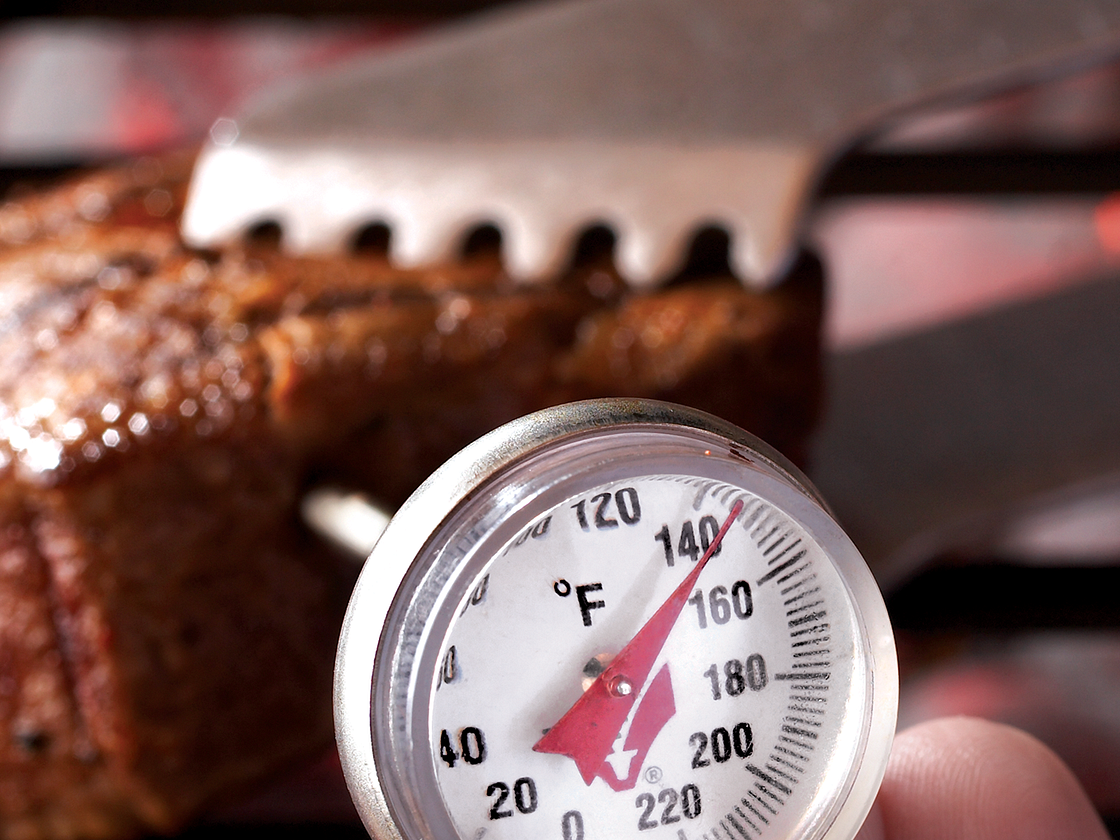
- Dial thermometers — many have a small nut under the dial you can turn with pliers to align the needle to the correct temperature after the ice or boil test.
- No adjust option — record the offset and mentally add or subtract it when cooking.
I once found a probe off by 7°F after a summer move. A quick ice test and a small dial adjustment fixed it. Since then I check before big meals.

Practical tips and real-life advice
Use these tips to make calibration easy and reliable.
- Check often — test before major cooks and every few months for regular use.
- Use clean equipment — dirty probes add error.
- Avoid thin glass contact — keep the probe centered in the liquid.
- Let the probe stabilize — give it time; modern probes can take 10–30 seconds.
- Track offsets — write the offset on the device with a small label if it cannot be adjusted.
From experience, probe placement matters most. If the probe touches a pot bottom, readings jump. I test each probe in the same way to build trust across devices.
When to recalibrate and signs your thermometer is off
Knowing when to recalibrate saves time and prevents bad results. Recalibrate if:
- You drop the thermometer.
- Readings change suddenly.
- It fails the ice or boiling water tests.
- You move from a very cold to very hot climate.
Other signs of trouble
- Readings that jump or fail to stabilize.
- Large differences between two thermometers tested in the same liquid.
- Corrosion or visible damage on the probe.
If you see any of these, stop using the thermometer for food safety until you test it.

Troubleshooting and common mistakes
Calibration is simple but people still trip up. Here are common errors and how to avoid them.
Touching the container
- Mistake — probe touches the pot or glass.
- Fix — center the tip in the liquid for true readings.
Not waiting long enough
- Mistake — reading too soon.
- Fix — wait at least 10 seconds for digital probes, longer for thicker dial stems.
Using wrong reference points
- Mistake — testing at room temperature only.
- Fix — use both ice water and boiling water for a full check.
Ignoring elevation
- Mistake — assuming boiling point is 212°F everywhere.
- Fix — adjust boiling point for altitude using 1°F per 500 feet.
I once trusted a new thermometer without testing. It read 5°F low. That turned a perfectly safe roast into a near-miss. Now I test every new device.
Frequently Asked Questions of The best way to calibrate a meat thermometer
How often should I calibrate my meat thermometer?
Calibrate before big cooks, after drops, and at least every three months for regular use. If accuracy matters for food safety, test more often.
Can I use only the ice water method?
You can, but it checks only low-end accuracy. For full confidence, use both ice water and boiling water tests.
What if my thermometer has no calibration adjustment?
Note the offset and add or subtract it when reading temperatures. Replace a consistently unreliable thermometer.
Will extreme cold or heat damage the thermometer?
Yes. Extreme conditions can harm sensors. Avoid exposing digital probes to direct flames or freezing them for long periods.
Is a small error acceptable for cooking?
A 1–2°F error is usually fine for most cooking. For safety-critical cooking, such as poultry, aim for 1°F or less accuracy.
Conclusion
Calibrating your thermometer is quick, cheap, and smart. Use ice water and boiling water tests to find errors. Adjust the device or track offsets. Test after drops and before major cooks. These simple steps give you reliable temps, safer meals, and better results.
Try the ice water test today and mark your thermometer’s accuracy. Leave a comment about your results or subscribe for more kitchen tips.