Insert the probe into the thickest part of the thigh, avoiding bone, and take the reading at 165°F.
I’ve cooked dozens of turkeys and tested many thermometers. This guide shows exactly how to use a meat thermometer for turkey so you cook safely and get juicy meat every time. You’ll learn which thermometer to pick, where to place it, what temperatures to trust, and simple checks to avoid soggy breast or undercooked dark meat. Read on for clear steps, real tips from my kitchen tests, and common mistakes to dodge.
:max_bytes(150000):strip_icc()/how-to-take-a-turkey-temperature-AdobeStock_270447236-4cd8b9c2e43f45368247b7a090bef9c7.jpeg)
Why a meat thermometer matters for turkey
Using a meat thermometer for turkey removes guesswork. Visual cues like color and clear juices can mislead you. A thermometer tells you when meat is safe to eat and when it is perfectly done.
Food safety agencies set clear temp targets. For turkey, that target matters for both safety and texture. A thermometer also helps you avoid overcooking the breast while waiting for the thigh to reach temperature.
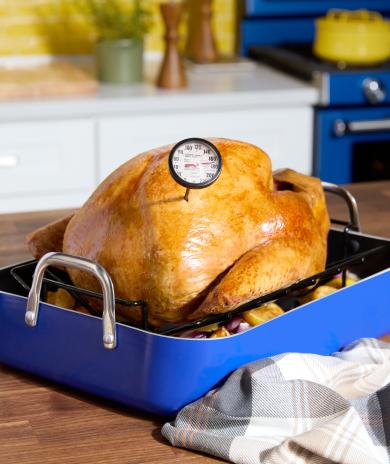
Types of thermometers and which to use for turkey
There are three main types. Each has pros and cons for turkey.
- Instant-read digital thermometer
- Fast and accurate. Read in seconds. Use it after the turkey is out or during cooking.
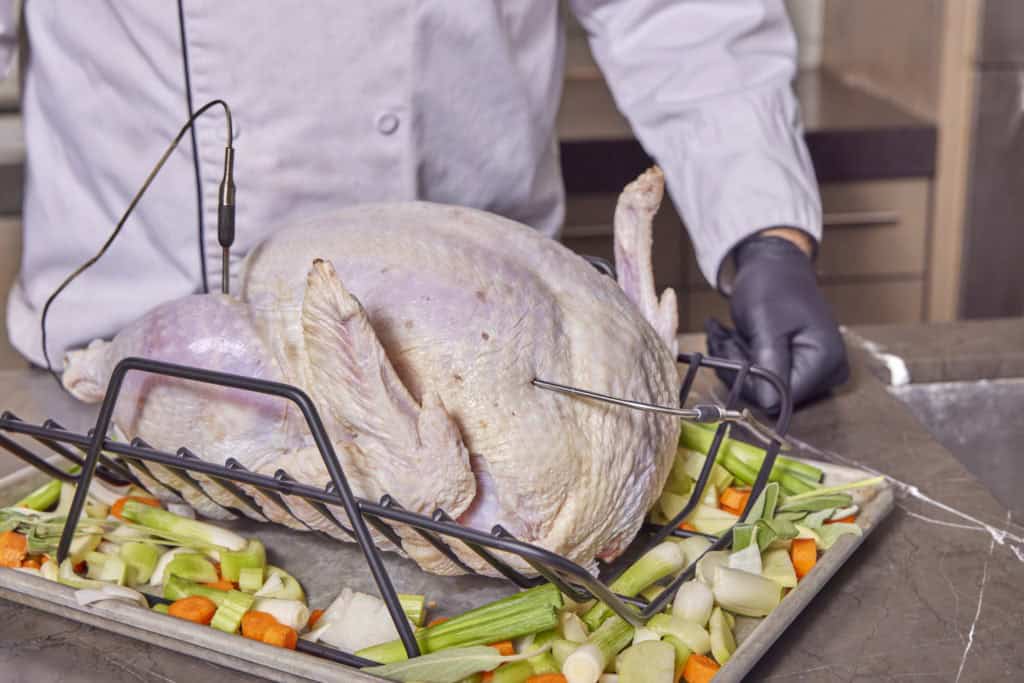
- Leave-in probe with oven display
- Stays in while the bird roasts. Great for big turkeys and hands-off cooking.
- Oven-safe dial thermometer
- Can be left in the bird but is slower to react. It is less common now.
For most home cooks, a reliable instant-read plus a leave-in probe for long roasts is ideal. I use an instant-read for quick checks and a probe for large birds.
Step-by-step: how to use a meat thermometer for turkey
Follow these steps for a safe and juicy turkey.
- Choose the right thermometer.
- Use a calibrated instant-read or an oven-safe probe.
- Preheat your oven and cook as your recipe directs.
- Thermometers don’t change cook time but tell you when to stop.
- Know where to measure.
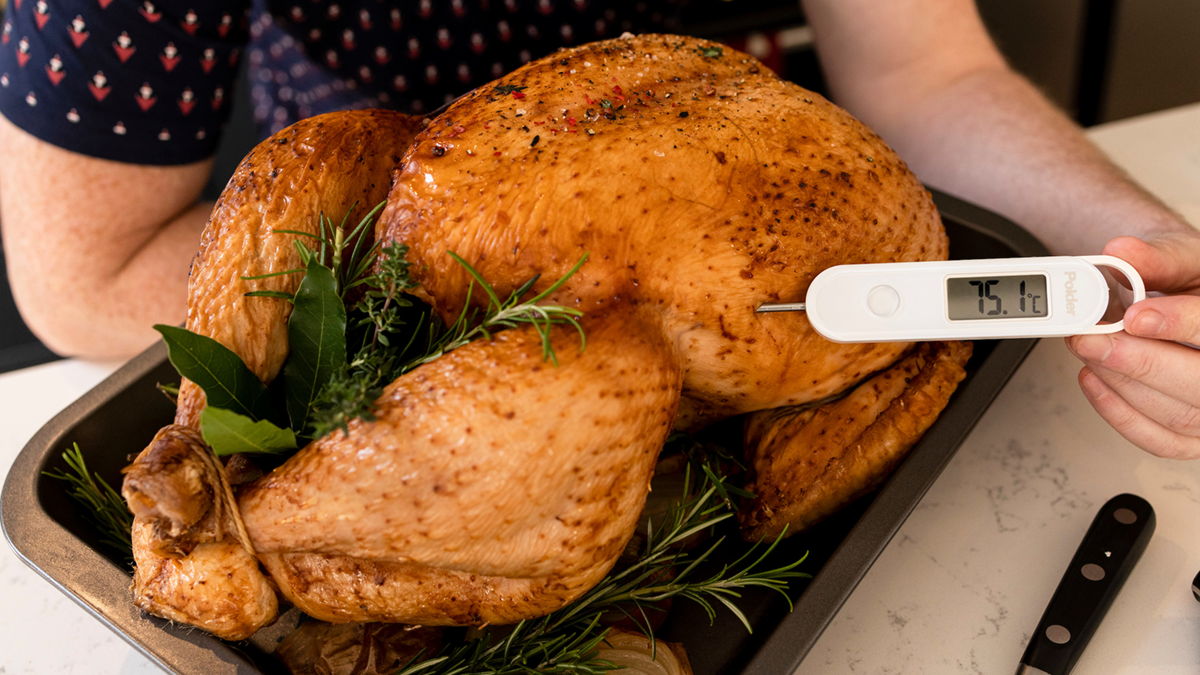
- Insert the probe into the thickest part of the thigh, not touching bone.
- For the breast, check the thickest part of the breast meat.
- Insert the probe correctly.
- Angle it toward the center of the thigh. Push deep enough to reach the center.
- Read the temperature.
- Wait for a stable reading. Instant-read models settle in a few seconds.
- Target temps.
- Remove turkey when the thickest part reaches 165°F. If using an instant-read, check both thigh and breast.
- Rest the turkey.
- Tent with foil and rest 15 to 30 minutes. Carryover cooking raises temp a few degrees. Rest keeps juices inside.
A useful rule: always avoid touching bone. Bone gives false high readings. If the thermometer hits bone, move a little and recheck. I learned this the hard way when a false reading made me undercook the thigh.
PAA-style quick questions
Where exactly do I put the thermometer in a turkey?
Aim for the thickest part of the thigh. Avoid bone by angling toward the center of the joint.
How long should I leave a probe in a turkey?
Leave-in probes can stay for the whole roast. Instant-read probes are inserted just to check temps and removed.

Common mistakes and how to avoid them
These errors are common. Avoid them for better results.
- Touching the bone
- Move the probe if it hits bone. Recheck in a new spot.
- Checking too early
- Wait until the meat is near done before testing. Early tests can be low and misleading.
- Not calibrating the thermometer
- Test calibration using ice water or boiling water.
- Relying only on color
- Juices and color can lie. Use temperature.
I once cut into a turkey by color and found undercooked meat near the bone. Now I always trust the thermometer.
:max_bytes(150000):strip_icc()/how-to-use-a-meat-thermometer-effectively-0123-2000-1e8cae6ec10e4e39abe870829460c7f7.jpg)
Temperature targets and timing
Know these numbers. They keep you safe and help you cook to preference.
- Safe internal temp for turkey
- 165°F measured in the thickest part of the thigh and the breast.
- Stuffing
- If turkey is stuffed, the center of the stuffing should reach 165°F too.
- Rest time
- Rest 15 to 30 minutes before carving. The temp will rise 3–5°F during rest.
If you prefer slightly darker meat texture, a careful short rest after reaching 165°F keeps the meat moist and safe. Always follow local food safety guidance for vulnerable eaters like kids or elderly guests.
Calibrating and caring for your thermometer
Keep your thermometer accurate with simple checks.
- Ice bath calibration
- Place the probe in a glass of crushed ice and water for 30 seconds. Reading should be 32°F.
- Boiling water check
- Boiling water should read roughly 212°F at sea level. Adjust for altitude.
- Clean probe after use
- Wash with hot soapy water and sanitize.
- Replace batteries and store safely
- A low battery can give wrong readings. Store in a dry place.
I do a quick ice test once a month. It takes a minute and gave me the right read when I needed it most.
My real-life tips and lessons learned
Practical tips I use every turkey season.
- Check both thigh and breast
- Thigh often cooks slower. Check both to be safe.
- Use a marker on the thermometer
- Mark the insertion depth to be consistent.
- Let the thermometer rest
- After cleaning, let your probe air dry before storage.
- Learn your oven’s hot spots
- An oven thermometer helps. I rotate pans and adjust racks for even roast.
One Thanksgiving, a cracked probe saved the day. I kept an instant-read on hand and finished the turkey in the broiler with frequent checks. That taught me to never rely on one device alone.
:max_bytes(150000):strip_icc()/place-thermometer-in-turkey-GettyImages-140461994-bac7c170521e45e396af7c03fb3779f3.jpg)
Frequently Asked Questions of How to use a meat thermometer for turkey
How long does it take a turkey to reach 165°F?
Time varies by size and oven. A 12–14 pound turkey typically takes 2.5 to 3.5 hours at 325°F, but always verify with a thermometer.
Can I leave the thermometer in the turkey while it cooks?
Yes, if it is an oven-safe leave-in probe. Instant-read thermometers should be inserted only to check the temp and then removed.
What if the thermometer reads 160°F in the breast and 165°F in the thigh?
If the thigh is 165°F, the turkey is safe, but let it rest a few minutes. If the breast is below 165°F, continue cooking and check again until both areas meet 165°F.
Does rest time change the internal temp?
Yes. Rest allows carryover cooking and the internal temperature can rise 3–5°F. Rest also locks in juices for juicier meat.
How do I avoid hitting the bone with the probe?
Insert the probe from the side and angle it toward the center. If you hit bone, move the probe and recheck in a nearby spot.
Conclusion
Using a meat thermometer for turkey makes cooking safer and more reliable. Pick the right tool, insert it correctly, and aim for 165°F in the thickest parts. Rest the bird, and you’ll get moist, well-cooked turkey every time. Try these steps at your next roast, share your results, and leave a comment if you want tips for specific recipes.