Best pick: KITCHENARM 29‑in‑1 smart bread maker — top choice for keto loaves.
I used to buy dry, crumbly store keto bread until I found a machine that made warm, soft loaves at home. If you want a reliable way to bake low‑carb bread without fuss, the right bread maker saves time, cuts waste, and gives consistent results.
KITCHENARM 29‑in‑1 Smart Bread Maker
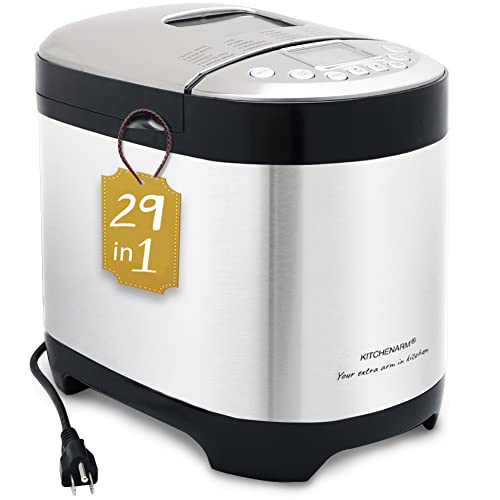
I used the KITCHENARM 29‑in‑1 for months while testing keto recipes. The gluten‑free and homemade cycle options let me tailor dough time for almond and coconut flours. It handles small loaves well and gives reliable texture when I tweak liquid and egg counts.
The machine has roomy programming and a homemade cycle that I use for dense keto doughs. It heats evenly and the loaf shape is consistent. I could bake two different loaf sizes and adjust crust color easily.
Pros:
- Dedicated gluten‑free and homemade cycles for keto-friendly doughs
- Multiple loaf sizes to match low‑volume keto recipes
- Reliable heat distribution gives even crumb for dense flours
- Easy program adjustments for hydration and rise time
- Stainless steel housing is easy to clean and looks modern
Cons:
- Learning curve for non‑wheat flours and recipe tweaks
- Some buttons are small and take time to read in low light
- Heavy unit takes space on the countertop
My Recommendation
I recommend the KITCHENARM 29‑in‑1 if you want a machine you can customize. It is great for home bakers who try many keto recipes. I find it best when I need a versatile bread maker for keto bread that adapts to different flours and loaf sizes.
| Best for | Why |
|---|---|
| Custom keto recipes | 29 programs let you tweak time and heat for almond/coconut flours |
| Gluten‑free baking | Has a dedicated gluten‑free setting I used for consistent loaves |
| Small batch baking | Multiple loaf sizes suit low‑volume keto recipes |
Cuisinart CBK‑110NAS Bread Maker

I like the Cuisinart CBK‑110 for its simple controls and sturdy build. It has 12 menu options that cover quick breads and gluten‑free cycles I repurpose for keto dough. The removable pan and paddle make cleanup easy after sticky mixes like almond flour blends.
The CBK‑110 bakes evenly and gives predictable timing. I used it when I wanted a low‑fuss way to test several keto recipes fast. The texture comes out consistent when I use extra eggs and psyllium husk.
Pros:
- Simple controls make keto experiments easy for beginners
- Three loaf sizes and crust shades for flexibility
- Removable nonstick pan simplifies cleanup after sticky batters
- Solid, durable build that holds up after frequent use
- Good value for a known brand with proven reliability
Cons:
- Fewer specialty programs for custom gluten‑free/keto cycles
- No automatic nut dispenser for add‑ins like seeds
- Standard paddles can leave a hole in dense keto loaves
My Recommendation
I recommend the Cuisinart CBK‑110 if you want a simple, durable bread maker. It suits a cook who prefers straightforward controls and reliable results. I find it a solid choice for people starting to bake keto bread at home who want less programming fuss.
| Best for | Why |
|---|---|
| Beginners | Easy controls and consistent bakes |
| Quick testing | Fast menu options let you try many recipes |
| Easy cleanup | Removable nonstick pan cuts cleaning time |
OSIPOTO 17‑in‑1 Bread Maker

The OSIPOTO 17‑in‑1 is a solid midrange machine with beginner‑friendly controls. I used it for low‑carb loaves and found the timer and presets helpful for overnight bakes. The quiet motor means I can run long rises without noise disturbance.
This model is easy to clean and feels robust. The nonstick pan helps with dense keto batters, and the higher success rate and low noise make it good for daily use. I rely on it when I want routine loaves with minimal tweaks.
Pros:
- Beginner‑friendly controls reduce setup mistakes
- Quiet motor suitable for overnight or timed bakes
- Nonstick pan and paddle help with sticky keto doughs
- Multiple presets let you adapt for low‑carb recipes
- Good overall value for frequent bakers
Cons:
- Limited advanced customization for fine tuning
- Manual add‑in timing instead of automatic dispenser
- Fewer loaf size choices than high‑end models
My Recommendation
I recommend the OSIPOTO 17‑in‑1 if you want a quiet, easy machine for everyday keto bread. It is a good fit for busy kitchens and for people who bake at night. For those seeking a dependable bread maker for keto bread with minimal fuss, this model is a great value.
| Best for | Why |
|---|---|
| Overnight bakes | Quiet motor and reliable timer for long rises |
| Daily bakers | Sturdy build and low maintenance |
| Value seekers | Features at a midrange price |
KBS Pro 710W 2LB Bread Maker
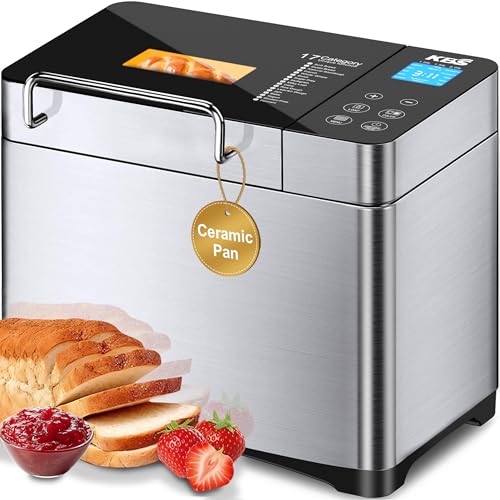
The KBS Pro 710W impressed me with its ceramic pan and nut dispenser. I used its healthy ceramic pan for keto loaves and liked the even browning. The automatic nut/seeds dispenser is handy when I add flax, chia, or toasted seeds at the end of kneading.
The touch panel is responsive and the three crust colors help me dial in a crisp top. The machine keeps loaves warm, which is useful when I can’t eat right away. For keto bread, the key is steady heat and this unit gives that.
Pros:
- Ceramic pan yields even heating and a healthier cook surface
- Automatic nut/seed dispenser for crunch additions
- Touch panel is responsive and easy to read
- Good keep‑warm function for flexible schedules
- Multiple programs that suit keto and low‑carb mixes
Cons:
- Ceramic pans are heavier to handle
- Touch panel can be sensitive to moisture
- Some presets still tuned for wheat flour, needs tweaking
My Recommendation
I recommend the KBS Pro 710W for people who like add‑ins and a healthier pan surface. The nut dispenser makes it easy to add texture to keto bread without manual timing. If you want a bread maker for keto bread that adds seeds and keeps loaves warm, this is a top pick.
| Best for | Why |
|---|---|
| Seed and nut breads | Automatic dispenser adds seeds at the right time |
| Health‑minded cooks | Ceramic pan is a lower‑toxicity choice |
| Flexible schedules | Keep‑warm holds bread until you are ready |
KBS Premium 2LB Convection Bread Maker

The KBS Premium adds convection and dual heaters for more even crusts. I used it on dense keto loaves and noticed a crisper crust without drying the crumb. Dual heat gives a nice top sear and solid internal bake when I use egg and fiber blends.
It is slightly noisier but heats fast. I tested it for seeded keto loaves and low‑sugar recipes and got consistent results. The touch panel and timer are helpful for scheduling bakes around a busy day.
Pros:
- Convection and dual heaters deliver even browning and crust
- Healthy ceramic pan option reduces sticking
- Good presets that work for dense, low‑carb mixes
- Low noise for a machine with strong heating
- Reliable 15H timer and keep‑warm options
Cons:
- Convection may need recipe tweaks for moisture retention
- Heavier unit and uses more counter space
- Higher price point than basic entry models
My Recommendation
I recommend the KBS Premium for bakers who want a crisp crust and even internal bake. Convection and dual heaters help when you need a consistent loaf every time. If you want a premium bread maker for keto bread that gives restaurant‑style crust and steady heat, this is a solid choice.
| Best for | Why |
|---|---|
| Crispy crust lovers | Convection and dual heaters improve crust |
| Consistent bakers | Even heat makes repeatable keto loaves |
| Advanced users | Plenty of settings for recipe refinement |
How I Test Bread Makers for Keto Bread
I test with the same core keto recipe each time. I use almond flour, coconut flour, eggs, psyllium husk, baking powder, and a bit of xanthan. I keep hydration consistent so I can judge heat and texture alone.
I look for even crust, internal crumb, and rise. I also check noise, cleanup, and ease of programming. For me, the best bread maker for keto bread is the one that gives predictability and saves time.
I test add‑ins like seeds and nuts to see how dispensers and paddles perform. I time the full cycle and note how much waiting and intervention each model needs. I also check how easy it is to remove sticky loaves.
During tests, I measure loaf height and sliceability. A good keto loaf should slice thin without crumbling. I found that machines with custom gluten‑free or homemade cycles handled dense doughs best and most consistently produced usable slices.
Key Features to Look for in the Best Bread Maker for Keto Bread
Choose a machine with a gluten‑free or homemade cycle. These modes skip long, vigorous rises that harm low‑gluten doughs. The best bread maker for keto bread will let you reduce knead time and extend baking to get the right crumb.
Look for different loaf sizes and crust settings. Keto recipes use less volume than wheat recipes. A machine that supports small loaves helps avoid flat or overbaked ends. A crust control helps keep the top from drying out.
Consider a nonstick or ceramic pan. Keto dough is sticky. Nonstick pans reduce waste and make cleanup much easier. If you add seeds or nuts, a dispenser is a useful feature.
Check for a timer and a keep‑warm function. I use timers to set an overnight rise and wake to a fresh loaf. Keep‑warm holds the bread without overcooking. Quiet motors and durable parts are bonuses for daily bakers.
Ingredient Tips for Great Keto Bread
Use psyllium husk for structure. It mimics gluten and gives elasticity. I add a tablespoon per cup of almond flour to improve sliceability.
Eggs add moisture and help bind the crumb. I often increase egg whites for lighter texture. If you avoid eggs, add extra psyllium and water, but expect a denser loaf.
Balance fats carefully. Butter or oil adds tenderness. Too much fat can stop proper rise, so I stick to 1–2 tablespoons per loaf for best results.
Measure precisely and use a digital scale. Keto baking is less forgiving than wheat. I weigh almond and coconut flours to keep hydration consistent across machines.
Common Problems and Quick Fixes
Problem: Dry, crumbly slices. Fix: Increase egg and fat slightly. Add a tablespoon of psyllium husk to hold moisture. Also reduce bake time by 5–10 minutes if the crust is overcooked.
Problem: Dense, gummy center. Fix: Reduce liquid slightly and lengthen bake time. Check that yeast (if used) is fresh. For yeast‑free keto recipes, extend baking at a lower temperature to set the crumb.
Problem: Loaf sticks to pan. Fix: Use cooking spray or line the pan with parchment on the bottom. A ceramic pan or better nonstick pan helps too. Let the loaf cool 10–15 minutes before removing.
FAQs Of best bread maker for keto bread
Can a regular bread maker bake keto bread?
Yes. Many regular machines work well if they have a gluten‑free or homemade mode. You may need to shorten knead time and adjust bake time for dense, low‑gluten doughs.
Which features matter most for keto bread?
Look for nonstick or ceramic pans, gluten‑free/homemade cycles, small loaf size options, and adjustable bake time. An add‑in dispenser helps with seeds and nuts.
Do I need special yeast for keto bread?
Not always. Some keto recipes use eggs and leaveners like baking powder instead of yeast. If your recipe uses yeast, use instant yeast and give a gentle rise. I prefer recipes tested for bread makers.
How do I prevent keto bread from crumbling?
Add psyllium husk and eggs for structure. Let the loaf cool fully before slicing. I slice with a serrated knife and store slices wrapped to retain moisture.
Is it safe to bake low‑carb bread in these machines long term?
Yes. Modern machines are built for many cycles. Clean the pan and paddle after each sticky dough bake to prevent buildup. Use nonabrasive cleaners and follow manufacturer care tips.
Final Verdict: Which Should You Buy?
If you want the best bread maker for keto bread with maximum flexibility, the KITCHENARM 29‑in‑1 is my top pick. It offers dedicated gluten‑free and homemade cycles that handle low‑carb flours well.
For beginners, the Cuisinart CBK‑110 is simple and reliable. For add‑ins or a crisper crust, consider KBS Pro or KBS Premium. OSIPOTO is a great quiet, midrange choice. Choose based on your routine and recipe needs.
Extra Tips I Use When Baking Keto Bread
I always weigh ingredients. Small changes in almond and coconut flour alter hydration. Weighing makes results repeatable across machines.
I test one variable at a time. For instance, I adjust psyllium in 0.5 tablespoon steps. This helps me learn how each bread maker handles dough changes.
I keep a log of settings. I record program, time, temperature, and results. When I find a winner for a particular machine, I can repeat it easily.
Storage and Serving Suggestions
Cool fully, then slice and freeze extra portions. I wrap slices in parchment and freeze flat. Thaw in the toaster or warm oven for best texture.
Store short term in a sealed container at room temperature for 2–3 days, or refrigerate for up to a week. For freshness, I toast slices before use to restore a fresh‑baked feel.
Closing Thoughts
I’ve baked dozens of keto loaves across these machines. The best bread maker for keto bread is one that fits your recipe style and schedule. Machines with gluten‑free modes, nonstick or ceramic pans, and flexible programs make the biggest difference.
If you bake often, choose a durable model like KITCHENARM or the KBS models. If you want simplicity, Cuisinart and OSIPOTO will save time and give consistent results. Happy baking — and enjoy fresh keto bread at home.