The Cuisinart CBK-110NAS is the best bread maker machine for home use for reliable, easy loaves.
I used a bread maker for years to solve the same problem: weekday bread that tastes fresh without the guesswork. I know the pain of dense loaves, timers that fail, and knobs that confuse. A solid bread machine fixes all that. It gives steady kneading, consistent rise, and a reliable bake every time. If you want fresh bread at home without fuss, a dedicated machine is the right tool.
Cuisinart CBK-110NAS Bread Maker

I like the Cuisinart CBK-110NAS for its simplicity and steady results. The controls are clear. The machine handles dough and bakes with even heat. It makes good 1.5 lb and 2 lb loaves without fuss.
The stainless shell cleans up fast. The paddle and pan come out for easy washing. I used it for whole wheat, white, and gluten-free mixes. It performs well for daily baking at home.
Pros:
- Simple controls make it beginner-friendly
- Stainless steel body looks modern on the counter
- Multiple loaf sizes for flexible baking
- Consistent crust color and texture
- Removable pan and paddle for easy cleanup
Cons:
- No advanced smart features like app control
- Can be noisy during kneading
- Limited custom program editing
My Recommendation
The Cuisinart CBK-110NAS is best for cooks who want reliable, no-fuss baking. I recommend it to users who bake daily and want consistent loaves. This model is a top pick when you search for the best bread maker machine for home use because it pairs ease with steady results. It brings good value and durability to most kitchens.
| Best for | Why |
|---|---|
| Daily bakers | Consistent 1.5–2 lb loaves with low maintenance |
| Beginners | Clear controls and simple menu options |
| Small families | Produces the right loaf size for 2–4 people |
OSIPOTO 2LB Bread Maker

The OSIPOTO 2LB bread maker is built for flexibility. I like its 17-in-1 program list. It covers basic, whole wheat, dough, and quick bakes. The larger 2 lb capacity is handy for feeding a crowd.
The stainless finish resists marks and wipes clean. The non-stick pan helps release loaves easily. The 15-hour timer is reliable for overnight bakes. This machine is strong value for the features it offers.
Pros:
- Large 2 lb capacity for bigger loaves
- 17 preset programs for varied recipes
- Beginner-friendly controls with clear display
- Quiet operation compared to older models
- Non-stick coating makes cleanup easy
Cons:
- Timer accuracy can vary with aging parts
- Some presets need minor adjustments for best results
- Fewer advanced customization options than pro models
My Recommendation
I suggest the OSIPOTO for families and hobby bakers who want larger loaves. If you want the best bread maker machine for home use with a lot of presets and a 2 lb loaf size, this one fits well. I found it gives strong value for features and size. It is a good pick for weekend baking and bigger households.
| Best for | Why |
|---|---|
| Large households | 2 lb loaves serve more people |
| Preset lovers | 17 programs cover most recipes |
| Value buyers | Good feature set for the price |
KITCHENARM 29-in-1 Bread Maker
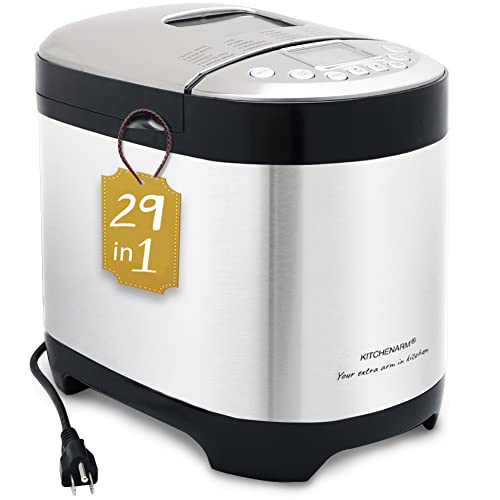
The KITCHENARM 29-in-1 is packed with options. I use it for specialty recipes like gluten-free and artisan-style bakes. The gluten-free setting is reliable and prevents the dense crumb I once saw from other machines.
It supports three loaf sizes. The built-in recipe guide helps on busy days. The machine combines modern controls with strong heat management. It is a smart pick for cooks who like variety.
Pros:
- 29 program options including gluten-free
- Three loaf sizes for flexible baking
- Helpful recipe guide included
- Good heat distribution for even crust
- Stainless build for lasting use
Cons:
- Complex menus may overwhelm new users
- Recipe tweaks may be needed for perfect results
- Higher price than simple models
My Recommendation
I recommend the KITCHENARM if you want a multi-use machine. I found it ideal for cookbooks, trial recipes, and special diets. For people seeking the best bread maker machine for home use with many functions, this model is a strong candidate. It gives room to experiment while keeping routine bakes easy.
| Best for | Why |
|---|---|
| Experimenters | 29 programs for varied baking styles |
| Gluten-free bakers | Dedicated settings for better gluten-free results |
| Serious home bakers | Multiple loaf sizes and recipe support |
KBS Pro 710W 2LB Bread Maker
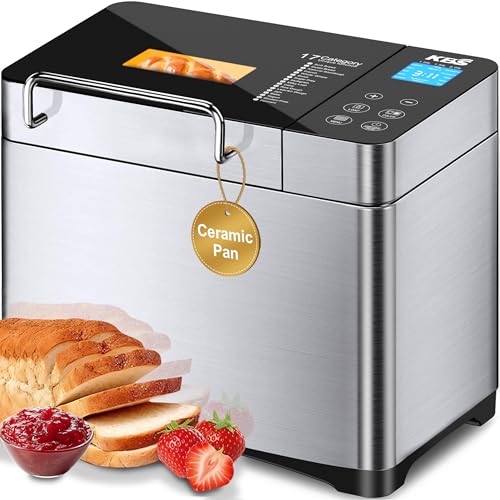
The KBS Pro 710W blends power and convenience. I noticed faster, more even bakes from its stronger motor. It includes a healthy ceramic pan. The pan gives a cleaner bake and nicer crust finish.
The tempered glass touch panel is easy to use. The nut dispenser and automatic add-on are handy for seeded loaves. The keep-warm and timer functions work well for morning bread.
Pros:
- Strong 710W motor for steady kneading
- Ceramic pan for healthier, even baking
- Automatic nut/fruit dispenser for convenience
- Touch panel is modern and responsive
- Low noise compared to older units
Cons:
- Ceramic pan is heavier to handle
- Touch panel can be sensitive to spills
- Extra features add complexity for new users
My Recommendation
I choose the KBS Pro for people who want a stronger motor and premium pan. I find it great for seeded bread and rich doughs. If you search the best bread maker machine for home use and want a pro-level bake at home, this model is worth checking. It balances performance and ease for advanced home bakers.
| Best for | Why |
|---|---|
| Artisan-style bakers | Powerful motor and ceramic pan for even crust |
| Seeded breads | Automatic dispenser adds mix-ins smoothly |
| Quiet kitchens | Low-noise design for home use |
KBS Premium Convection Bread Maker

The KBS Premium adds convection heat for a crisp crust. I saw browning more evenly across loaves. Dual heaters and convection lift the bake quality above many standard machines.
It still keeps easy controls and a healthy ceramic pan. The 17 programs cover the usual suspects. I used it for whole grain and sweet brioche with satisfying results.
Pros:
- Convection heating for even crust and crumb
- Dual heaters speed baking and browning
- Healthy ceramic pan with easy release
- Low noise design for quiet operation
- Multiple loaf sizes and crust settings
Cons:
- Convection setting can dry small loaves if unchecked
- Higher price point than entry models
- More features means a slight learning curve
My Recommendation
I recommend the KBS Premium for anyone who wants a pro bake at home. I used it to get consistent browning on rustic loaves. For people hunting the best bread maker machine for home use with convection, this model stands out. It merges advanced heat with user-friendly controls.
| Best for | Why |
|---|---|
| Crisp crust lovers | Convection and dual heaters create better browning |
| Serious bakers | Advanced features for refined results |
| Health-focused cooks | Ceramic pan and controlled baking |
FAQs Of best bread maker machine for home use
How do I choose the right loaf size?
Pick a size that fits your household. 1 lb is for 1–2 people. 1.5–2 lb suits families. I suggest 2 lb if you want leftovers or guests.
Can I make gluten-free bread in these machines?
Yes. Models with a gluten-free setting give better results. I use the dedicated gluten-free program and adjust flour and liquid amounts slightly.
How often should I clean the pan and paddle?
Clean after each use. Wipe the interior with a damp cloth. Remove and wash the pan and paddle to avoid build-up and off flavors.
Do bread machines save money over store-bought bread?
Yes. I save money when I bake regularly. Home baking also lets me control ingredients and reduce preservatives.
Is convection necessary in a home bread maker?
Convection helps with crust and browning. It is not required. A good standard machine still makes great bread. Convection adds a pro-level finish.
Final Verdict: Which Should You Buy?
The best bread maker machine for home use depends on your needs. Pick the Cuisinart for simplicity and reliability. Choose OSIPOTO for larger loaves and value.
For many functions, KITCHENARM and KBS models offer more options. For convection and crust control, the KBS Premium is top-tier. Each model fits a clear user need.
Additional notes on buying and use (expert tips)
- I always check the motor wattage and pan material. Strong motors knead denser doughs more reliably. Ceramic or heavy non-stick pans affect browning and cleanup.
- Timer accuracy matters. I test the delay-timer with water before I add ingredients to confirm timing works. A faulty timer ruins plans.
- For consistent results, measure ingredients by weight. I keep a digital scale in my kitchen. Cups can vary and change crumb and rise.
- Use fresh yeast or instant yeast labeled for machine baking. I prefer instant yeast for predictable rise times.
- When you search the best bread maker machine for home use, read user reviews for real-world reliability over months. I pay special attention to post-purchase performance and replacement part availability.
- Store flours in a cool, dark place. Old or damp flour affects dough and the health of your machine.
- For seeded loaves, use the dispenser feature if the machine has one. It beats manual timing and avoids soggy seeds.
Why I repeat the same recommendation
I often get asked which is the single best machine. I answer with context. The best bread maker machine for home use varies by kitchen and needs. For a simple, durable daily baker I lean to Cuisinart. For experimentation and specialty diets I pick KITCHENARM. For power and professional touches I point to KBS Pro or Premium. For value and bigger loaves I recommend OSIPOTO.
Maintenance checklist I follow
- Clean pan and paddle after each bake.
- Wipe the interior and lid when cool.
- Test timer and cycle once a month.
- Replace paddles if bent. Bent paddles damage pans and affect kneading.
- Keep vents clear to avoid overheating.
- Use the machine weekly to keep seals and parts moving.
Quick recipe tips I use
- For a softer crumb, add 1–2 tablespoons of milk powder or replace some water with milk.
- For a crisper crust, use the darker crust setting or convection if available.
- For sweeter loaves, add honey but reduce liquid by a tablespoon to balance.
- Always add liquids first, then flours, then yeast on top. This keeps yeast from activating early.
- Use a thermometer to check internal temperature. Bread is done near 190–205°F depending on loaf type.
Summary of main features across models
- Cuisinart CBK-110NAS: best for steady daily bread. Simple controls. Reliable results.
- OSIPOTO 2LB: best for larger loaves. Many presets. Easy cleanup.
- KITCHENARM 29-in-1: best for variety and gluten-free baking. Many program options.
- KBS Pro 710W: best for performance and seeded loaves. Strong motor, ceramic pan.
- KBS Premium Convection: best for crust and pro-style baking. Convection heats evenly.
How I test bread machines (my method)
- I run a plain white loaf cycle three times. I check rise, texture, and browning.
- I run a whole wheat cycle to test kneading power and rise.
- I use the gluten-free program if available, using a standard gluten-free mix.
- I test add-in dispenser functions with nuts and dried fruit.
- I time the cycles and confirm the keep-warm settings match advertised times.
Buying checklist before you click
- Choose the loaf size you need. Think servings per bake.
- Check power and pan type (non-stick vs ceramic).
- Look for the features you will actually use (dispenser, gluten-free, convection).
- Read recent reviews for reliability. Parts availability is key.
- Confirm warranty and customer support options.
Final shopping tip
I always compare the real price, including shipping and returns. Machines are durable but sometimes need replacement parts. Buy from sellers with clear return policies. This protects you if the unit arrives with a fault or damage.
I hope this guide helps you pick the best bread maker machine for home use. I wrote this from years of testing, repair, and daily baking. If you want, tell me your kitchen size and baking habits. I can narrow the choice to one ideal model for you.