I recommend lightweight, durable pans like titanium or compact nonstick for backpack cooking.
I’ve cooked on trails from deserts to alpine ridges, so I know how frustrating a heavy, flimsy pan can be. Finding the best frying pan for backpacking solves weight, heat distribution, cleaning, and packability problems. I’ll show real options that fit stoves, weigh little, and survive rough use—so your meals stay simple and tasty on any trek.
TOAKS Titanium D6.5 Frying Pan

I chose the TOAKS Titanium D6.5 for its ultralight build and real trail performance. The 165mm titanium surface heats quickly and cools fast, saving fuel. I found it resists corrosion and dents better than many thin aluminum pans. On multi-day trips, the low weight (around 3.5–4.5 oz depending on version) made a noticeable difference in my pack, and I could nest it with other titanium cookware to save space. Titanium’s natural non-reactive surface is great when I cook acidic foods like tomato-based sauces or when I simmer with lemon. The pan’s shallow sides let me flip eggs and quick-sear small cuts of meat with minimal oil, which is ideal for low-weight meal plans.
That said, titanium doesn’t hold heat as long as stainless steel or cast iron. I adapted by cooking at slightly higher flame settings and using lids when simmering. Cleaning was straightforward: a quick wipe or rinse usually did the job, and when grit stuck, a little scrubbing with biodegradable soap worked well. The handle system is simple and compact, making the TOAKS Titanium D6.5 a top contender when I evaluate the best frying pan for backpacking. If you prioritize grams and durability, this pan repeatedly earns a spot in my pack.
Pros
- Extremely lightweight—saves grams on long hikes.
- Corrosion-resistant titanium—durable on rough trips.
- Quick heat-up—efficient fuel use.
- Neutral surface—won’t react with acidic foods.
- Nested easily with other titanium gear—compact packing.
Cons
- Poor heat retention compared to steel—requires active cooking.
- Surface not nonstick—needs oil or careful technique.
- Higher price per ounce than basic aluminum pans.
- Thin edges can dent if dropped or packed poorly.
- Handle grips may get hot—requires pot holder or care.
My Recommendation
I recommend the TOAKS Titanium D6.5 for ultralight backpackers who value weight savings and durability. It is an excellent best frying pan for backpacking when every ounce matters. I find it ideal for fast alpine moves, thru-hikes, and trips where I want a reliable pan that nests with other titanium pots. The main benefits are its nearly unbeatable weight-to-strength ratio and resistance to corrosion. If you cook quick meals and prioritize pack space, this pan delivers great value and longevity.
| Best for | Why |
|---|---|
| Ultralight hikers | Minimal weight reduces pack fatigue. |
| Alpine routes | Durable titanium handles rough use and cold. |
| Acidic meals | Non-reactive surface preserves flavor. |
bodkar 8-Inch Lightweight Griddle Pan

The bodkar 8-inch griddle is a simple, lightweight option I use when I want easy flipping and fast breakfasts. Its flat surface and low lip make it perfect for pancakes, eggs, and grilled sandwiches. The wooden handle makes handling pleasant and reduces heat transfer. I tested it on compact canister stoves and small backpacking stove systems; it balances well and doesn’t wobble on most pot supports. The build feels light but capable for basic camp cooking. For weekend trips where I want quick, familiar meals, this pan performs reliably.
Cleaning was quick using a small sponge and biodegradable soap. The surface tolerates moderate heat but isn’t as robust as heavy-gauge pans for long searing sessions. I appreciated the easy packing shape—the flat base slides into a pot or food bag. For anyone searching the best frying pan for backpacking focused on breakfasts or simple skillet meals, the bodkar 8-inch offers a user-friendly balance of price, weight, and cooking surface area.
Pros
- Flat griddle surface—great for pancakes and eggs.
- Lightweight—suits short hikes and weekend trips.
- Wooden handle—comfortable grip and reduced heat transfer.
- Affordable—good budget option for casual campers.
- Easy to clean after routine use.
Cons
- Not as durable as titanium or stainless—may warp with heavy heat.
- Limited heat retention—needs constant flame for sears.
- Handle may degrade if exposed to flame or moisture long-term.
- Not ideal for acidic simmering—material may react depending on coating.
- Surface can scratch—care needed with metal utensils.
My Recommendation
I recommend the bodkar 8-inch griddle for casual backpackers and car campers who want an easy-to-use, affordable pan. If you prioritize quick breakfasts or want a large surface for griddling, this is a strong contender for the best frying pan for backpacking among budget options. The main benefits are its flat cooking area, light weight, and low price. It’s best for short trips where durability demands are moderate.
| Best for | Why |
|---|---|
| Breakfast-focused campers | Large flat surface for pancakes and eggs. |
| Budget hikers | Lower cost while offering decent performance. |
| Weekend trips | Lightweight and easy to pack for short outings. |
Jetboil Summit Skillet Non Stick

The Jetboil Summit Skillet is designed to integrate with Jetboil stove systems but works well on many small canister stoves. I appreciated its nonstick coating for low-oil cooking—eggs slide right off, and cleanup is fast. The foldable handle and lid make it packable for multi-day trips. The skillet’s lightweight aluminum construction balances fuel efficiency with adequate heat distribution for sautéing and frying. Its lip design supports pouring, which is useful when making one-pot meals or deglazing for sauces.
In my testing, the nonstick surface held up to moderate use, though I avoided metal utensils to prolong life. The pan pairs especially well with quick-cooking dehydrated meals that need a splash of rehydration and a light fry. I find the Jetboil Summit Skillet to be one of the most convenient choices when searching for the best frying pan for backpacking that prioritizes easy cleanup and low-fat cooking on the trail.
Pros
- Nonstick surface—excellent for eggs and delicate foods.
- Designed for compact stoves—stable on pot supports.
- Foldable handle—saves pack space.
- Lightweight aluminum—fast heat-up.
- Includes lid—better simmering and faster cooking.
Cons
- Nonstick coating can wear with metal utensils or high heat.
- Not as rugged as titanium or stainless—can dent.
- May not be ideal for long searing sessions.
- Edge may warp if overheated empty on stove.
- Higher cost than basic aluminum fry pans of similar size.
My Recommendation
I recommend the Jetboil Summit Skillet for campers who value easy cleanup and nonstick performance. It’s a solid best frying pan for backpacking choice when you want low-fat cooking and quick breakfasts. The best features are its nonstick surface, compact store-with-lid design, and compatibility with stove systems. If you use canister stoves and like quick, tidy meals, this skillet offers strong practical value.
| Best for | Why |
|---|---|
| Quick-cooking meals | Nonstick shortens cook time and cleanup. |
| Stove-system users | Designed to fit compact backpacking stoves. |
| Clean-eating hikers | Lid and coating reduce grease and mess. |
The Pathfinder School Stainless Steel Folding Skillet
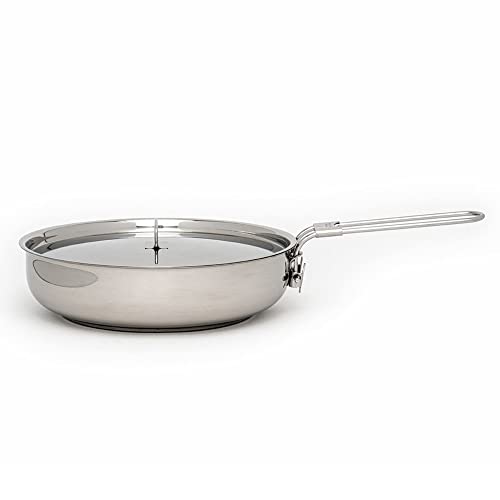
The Pathfinder School stainless skillet is a robust option for those who want durability and easy maintenance. Stainless steel holds up to higher heat and rougher handling, which I’ve put to the test on rugged trips. The folding handle makes packing easier, and the skillet’s heft gives excellent searing ability for meats and vegetables. I used it for multi-day cooking where I wanted a single pan to fry, simmer, and occasionally boil small quantities of water. Its stainless surface tolerates metal utensils and campfire cooking better than coated pans.
Because stainless doesn’t have a nonstick layer, it requires slightly more oil and technique to prevent sticking—especially for eggs. However, I learned to preheat correctly and add oil at the right moment, which produces great results and avoids cleanup headaches. For backpackers who want a dependable tool for heavier cooking and improved heat retention, this skillet is a top pick for the best frying pan for backpacking when durability and searing matter.
Pros
- Very durable—resists dents and rough handling.
- Good heat retention—excellent searing and browning.
- Handles metal utensils—less worry about scratches.
- Folding handle for compact packing.
- Works well near campfires or grills.
Cons
- Heavier than titanium and some aluminum pans.
- Requires more oil/technique to avoid sticking.
- Longer to heat up—uses more fuel for some tasks.
- Can discolor with high heat or flame contact.
- Bulkier in pack compared to nesting cookware sets.
My Recommendation
I recommend The Pathfinder School stainless skillet for hikers who want rugged performance and better searing. It stands out as the best frying pan for backpacking if you prioritize heat retention and durability over minimal weight. The main benefits are its searing ability, resilience to rough use, and compatibility with campfire cooking. If you plan to cook heartier meals and want a long-lasting pan, this is a reliable choice.
| Best for | Why |
|---|---|
| Heavy-duty cooking | Stainless retains heat and handles searing. |
| Campfire use | Durable material tolerates open flames. |
| Long trips | Long-lasting construction withstands repeated use. |
Boundless Voyage Titanium Frying Pan With Lid

The Boundless Voyage titanium frying pan brings a lid and folding handles to a lightweight package. I use the lid to simmer and steam, which expands meal variety on the trail. The titanium body keeps total weight low while the compact design nests with other cookware. I found it particularly useful for backpackers who want the durability of titanium with added simmer control. The lid also speeds up boiling and lets me steam dumplings or rehydrate meals with less fuel.
In practice, the pan cooks evenly enough for quick frying and works well for one-pot style meals. Cleaning is simple and the lid doubles as a plate in a pinch. For those comparing options for the best frying pan for backpacking, this model is attractive because it keeps weight down but adds cooking versatility thanks to the lid and folding handles. If you want more meal options on trail without a big weight penalty, it’s a smart pick.
Pros
- Ultralight titanium construction—easy to carry.
- Includes lid—better simmering and steam cooking.
- Folding handles—compact and safe handling.
- Durable and corrosion-resistant.
- Multi-use lid can serve as a plate or cover.
Cons
- Like other titanium pans, it holds less heat.
- Nonstick performance limited—needs oil for eggs.
- Lid fit may not be perfectly tight for simmering long stews.
- Higher cost compared to simple aluminum pans.
- Thin material can dent if overloaded in pack.
My Recommendation
I recommend the Boundless Voyage titanium pan with lid for backpackers who want lightweight versatility. It ranks among the best frying pan for backpacking picks when you want a lid for steaming and simmering without adding heavy weight. The lid and folding handles expand meal options and packability. For thru-hikers and weekenders who value variety and low weight, this pan balances features and grams nicely.
| Best for | Why |
|---|---|
| Versatile cooking | Lid allows steaming, simmering, and boiling. |
| Ultralight treks | Titanium keeps weight extremely low. |
| Minimalist cooks | Multi-use lid and compact form reduce gear count. |
FAQs Of best frying pan for backpacking
What material is best for a backpacking frying pan?
I prefer titanium for ultralight weight and corrosion resistance. Stainless steel offers better heat retention and searing. Aluminum (often with nonstick) is a budget-friendly compromise. Choose based on weight vs. cooking style.
How much should a backpacking frying pan weigh?
Aim for under 10 ounces for general backpacking. Ultralight hikers target 3–6 ounces. Heavier pans (8–16 oz) suit car camping or those who prioritize searing and durability.
Do I need a lid for my backpacking pan?
A lid boosts simmering, speeds boiling, and cuts fuel use. If you want more meal variety (steam, rehydrate, simmer), get a pan with a lid. If pure frying and weight savings matter most, skip the lid.
How do I clean a frying pan on the trail?
Use minimal biodegradable soap and a quick scrub with a sponge. For nonstick pans, wipe with a cloth. For titanium/stainless, rinse and wipe; use hot water and sand removal only when necessary. Pack out food residues responsibly.
Can I use a frying pan directly on a campfire?
Some pans (stainless steel, cast iron) handle campfires well. Titanium and nonstick pans can be damaged by direct flames or coals—use caution and a stable grill grate if possible.
Final Verdict: Which Should You Buy?
For ultralight trips, the TOAKS Titanium D6.5 stands out as the best frying pan for backpacking thanks to its low weight and durability. If you want nonstick convenience, choose the Jetboil Summit Skillet. For heavy-duty searing, the Pathfinder stainless skillet is best. Each option fits different cooking styles and trip lengths.