Best inline beer filter: BouncerMD Mac Daddy for clarity, hop retention, and easy flow control.
You’re standing over your kettle, watching your late-add hop stand cloud your beer, or you’re bottling and wish those last bits of trub wouldn’t make it into the bottle. I’ve been brewing in my garage for years, and the right filter solved that messy, bitter finish problem fast. A simple inline filter can protect your beer clarity, reduce blocked racking tubes, and make bottling or kegging far less stressful—all without stripping flavor when chosen correctly.
Inline Beer Filter 80 Mesh (150 Micron)
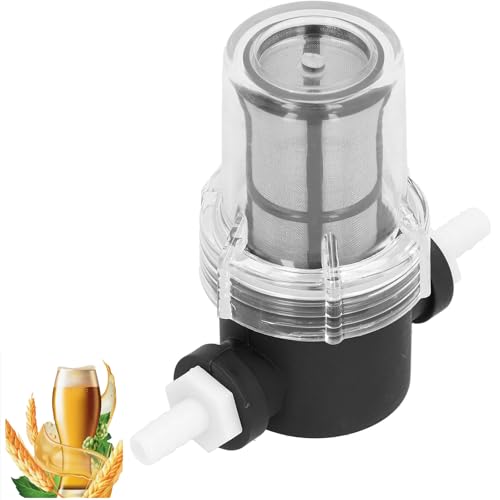
I use this 80 mesh inline filter when I want to keep hop particles and grain husks out of my siphon. It’s a simple T-strainer that snaps into 3/8″ tubing and handles gravity-fed transfers without fuss. In my garage setup it reduced the number of times I had to clean and clear tubing during bottling.
The 150 micron screen does a solid job of catching mid-sized particles while still allowing a steady flow. It’s plastic, so it’s lightweight and easy to inspect. This model is ideal for brewers who want a low-cost, no-frills filter to protect their beer during transfers.
Pros:
- Good balance between filtration and flow for gravity siphons
- Affordable and easy to replace
- Simple installation into 3/8″ tubing
- Lightweight and visible for clog checks
- Durable for multiple bottling sessions
Cons:
- Plastic housing can look cheap
- Not ideal for ultra-fine filtering needs
- Mesh can clog with heavy trub if not monitored
My Recommendation
This 80 mesh inline filter is best for homebrewers who want reliable, hands-off protection during siphon transfers. I recommend it if you’re bottling small batches or transferring between fermenter and keg without a pump. When I need simple, dependable filtering without changing the beer’s mouthfeel, this model is a go-to.
| Best for | Why |
|---|---|
| Gravity transfers | Steady flow and mid-level filtration keeps lines clear |
| Budget-conscious brewers | Low cost with solid performance for routine use |
| Occasional bottling | Easy to install and inspect between batches |
Inline Beer Filter 100 Mesh (150 Micron)

This 100 mesh inline strainer tightened the clarity on my dry-hopped IPA without choking the line. It’s slightly finer than the 80 mesh, so I felt more confident keeping hop debris out of my keg. During transfers, the flow stayed decent and clogging was rare when I racked off most of the trub first.
I found it especially useful for beers with heavy dry hopping where small hop bits float free. The design fits standard siphon tubing and is easy to clean. If you want better clarity for hop-forward beers, this filter balances capture and flow well.
Pros:
- Finer mesh catches more small hop particles
- Maintains acceptable flow for gravity or gentle pump use
- Easy to clean and re-use
- Protects kegs and bottles from clogging
- Small footprint fits tight setups
Cons:
- Finer screen may clog faster with dense trub
- Plastic components may warp under heat during cleaning
- Not suited for very high-volume commercial transfers
My Recommendation
I recommend this 100 mesh inline filter to brewers chasing clearer dry-hopped ales without installing a full filter rig. It’s a smart choice if you want to improve clarity while keeping transfers quick. I use a 100 mesh when I want better particle control but still need the beer to flow for home bottling.
| Best for | Why |
|---|---|
| Dry-hopped IPAs | Catches small hop particles to keep kegs clean |
| Keg transfers | Protects valves and fittings from debris |
| Moderate clarity upgrades | Better filtration without heavy flow loss |
Inline Beer Filter 80 Mesh – Dry Hop Filter

This 80 mesh model was optimized for dry-hopped batches in my trials. It removed a surprising amount of hop particulate while keeping the mouthfeel intact. I liked that it didn’t seem to strip delicate hop oils during slow transfers.
Installation is straightforward and the filter is easy to disassemble for cleaning. For weekend brewers who often add big dry-hop schedules, this filter simplifies racking and reduces sediment in the keg lines. It’s a dependable tool in my kit when clarity matters.
Pros:
- Tailored for dry-hopped beers
- Keeps hop particles out of valves and bottles
- Good flow for gravity or pump-assisted transfers
- Simple assembly and maintenance
- Affordable and effective
Cons:
- Not a substitute for cold crashing or fining
- Will not catch dissolved proteins or chill haze precursors
- Plastic build may stain over time
My Recommendation
If you brew hazy or heavily hopped beers, this 80 mesh dry hop filter is a practical addition to your gear. I use it specifically when I want to keep hop debris out of my kegs without over-filtering. It’s a small, inexpensive way to get cleaner transfers while preserving hop character—the kind of improvement that makes this among the best water filter for brewing beer situations where turbidity is a problem.
| Best for | Why |
|---|---|
| Dry-hop heavy beers | Catches loose hop bits while keeping oils intact |
| Home kegging | Prevents line and fitting clogs |
| Easy maintenance | Simple disassembly and cleaning between batches |
Bouncer Classic Inline Beer Filter

The Bouncer Classic is a proven design in many home brew setups I’ve seen. It has a rugged build and a dependable stainless screen that handles thick trub and hop material. In my experience, the Bouncer kept my pump heads and keg posts free of debris during heavy transfers.
This model gave me confidence when moving larger volumes. The classic Bouncer screen is easier to clean than many cheap plastic filters. If you want a tried-and-true unit that won’t surprise you mid-batch, the Classic Bouncer fits the bill.
Pros:
- Durable construction for repeated use
- Stainless mesh resists clogging and is easy to clean
- Large flow capacity for pump-assisted transfers
- Trusted by many homebrewers
- Reduces hops and trub entering kegs
Cons:
- More expensive than cheap inline strainers
- Bulkier than minimal options for tight setups
- May require adapters for some tubing sizes
My Recommendation
I recommend the Bouncer Classic when you need a durable, serviceable inline filter for regular brewing. I often choose this for heavier-duty transfers that involve a pump or larger batches. For many brewers seeking the best water filter for brewing beer with longevity and reliability, the Classic Bouncer is a smart pick.
| Best for | Why |
|---|---|
| Regular homebrewers | Built to last across many batches and seasons |
| Pump-assisted transfers | Handles higher flow and larger debris loads |
| Low maintenance | Easier to clean and service than disposable filters |
Food Grade Electric Water Transfer Pump

This electric food-grade transfer pump changed how I bottle and transfer beer. It’s self-priming and has adjustable speed, which gives me control over flow and head pressure. I use it with inline filters to speed up transfers and keep sediment out when bottling larger runs.
The small footprint and adjustable speed make it friendly for countertop use. I pair this pump with a mesh inline filter to combine active pumping and particulate removal. For brewers who feel limited by gravity transfers, this pump adds control and consistency.
Pros:
- Self-priming and food-grade materials
- Speed control for gentle or faster transfers
- Easy to pair with inline filters for cleaner outputs
- Good for bottling and moving liquids between vessels
- Compact and portable for small brew spaces
Cons:
- Not a replacement for full filtration systems
- May need regular cleaning to avoid yeast buildup
- Requires power source, so not fully portable outdoors
My Recommendation
Pair this food-grade electric pump with an inline filter to make transfers faster and cleaner. I recommend it if you bottle often or move larger volumes; it reduces time spent and helps keep sediment from ending up in bottles. When I need a practical upgrade to gravity transfers, this pump plus the best water filter for brewing beer works well together.
| Best for | Why |
|---|---|
| Frequent bottlers | Speeds up transfers and reduces manual effort |
| Pump-based setups | Gives fine speed control to protect beer clarity |
| Small-scale producers | Compact and food-safe for countertop use |
BouncerMD Mac Daddy Inline Filter

The BouncerMD Mac Daddy is my top recommendation for brewers who want heavy-duty inline filtration. It’s built for large screens and high flow, so I used it when moving several gallons quickly with a pump. The mesh holds up well and the housing survives repeated cleanings and sanitizing.
I noticed fewer clogged tubing incidents with this unit, and fittings stayed cleaner in the keg. For serious homebrewers and small commercial brewers alike, the Mac Daddy saves time and keeps final vessels free from coarse particles. It’s pricier but worth the investment if you brew often.
Pros:
- Heavy-duty construction for frequent use
- Large mesh area reduces clogging
- Excellent for pump transfers and big batches
- Sanitizes well and lasts multiple seasons
- Measurably reduces trub reaching packaging
Cons:
- Higher price point than disposable alternatives
- Bigger size may not fit compact setups
- Can be overkill for one-off or tiny batches
My Recommendation
The BouncerMD Mac Daddy is for committed brewers who want a long-term inline solution. I choose this filter when I need the best water filter for brewing beer that can withstand frequent use and pump pressures. It’s ideal for those scaling up batch sizes or moving to more regular kegging and bottling routines.
| Best for | Why |
|---|---|
| Frequent, large batches | Handles high flow and larger particulate loads |
| Pump-based systems | Built to resist pressure and reduce clogs |
| Long-term investment | Durability and serviceability justify the cost |
FAQs Of best water filter for brewing beer
Do inline filters strip hop flavor?
Not when chosen correctly. I use mid-range mesh screens that trap solids but let oils through. Very fine filters can reduce hop oils, so pick a filter that balances clarity and flavor.
How often should I clean inline filters?
Clean after each heavy transfer or every batch. I rinse, scrub lightly, and sanitize the filter. Regular cleaning prevents clogging and off-flavors from old trub.
Can I use an inline filter with a pump?
Yes. Many inline filters are built for pump use. I match the filter’s mesh size to the pump flow to avoid pressure buildup and clogging. Use fittings rated for the pump’s pressure.
Will an inline filter replace cold crashing or fining agents?
No. Filters help remove solids during transfer but won’t replace fining or temperature cold crashing. I still use cold crash or fining when I want crystal-clear beer before packaging.
Which mesh size is best for dry-hopped beers?
I prefer 80–100 mesh for dry-hopped beers. That range captures loose hop bits without dramatically slowing flow. It’s a practical compromise I use frequently.
Final Verdict: Which Should You Buy?
If you want one pick for consistency and durability, the BouncerMD Mac Daddy stands out as the best water filter for brewing beer for frequent brewers. It handles pump flows, large batches, and repeated cleaning without complaint.
For casual brewers, the 80 and 100 mesh inline filters give excellent value and protection during bottling. Pair any inline filter with a food-grade pump to speed transfers and improve clarity when you need it.