I’ve spent years helping home cooks turn simple dough into great pizza. Here’s the clear, proven path I use when friends ask, How I can make a pizza at home with real pizzeria flavor. We’ll keep it simple, fun, and precise. By the end, you’ll know the why behind each step and feel ready to bake tonight.

Source: www.youtube.com
Essential Ingredients And Substitutions
A great pie starts with smart choices. Quality flour, balanced hydration, and fresh toppings make the crust light and the flavor bold. Use these as your base, then swap as needed.
- Flour: Use bread flour for chew and rise. Use 00 flour for tender, light crust. All-purpose works in a pinch.
- Water: Cool or room temp. Aim for 60–65% hydration for easy handling.
- Yeast: Instant yeast mixes right in. Active dry yeast needs a 5–10 minute bloom in warm water.
- Salt: Controls flavor and fermentation. Do not skip it.
- Olive oil: Adds softness, browning, and flavor.
- Tomatoes: Use canned whole peeled tomatoes for sauce. Crushed works too.
- Cheese: Low-moisture mozzarella for classic stretch. Fresh mozzarella for a soft, milky bite.
- Extras: Basil, oregano, pepper flakes, garlic, and good olive oil.
Smart swaps:
- Gluten-free: Use a tested gluten-free pizza flour blend and follow package hydration.
- No yeast: Use baking powder for a quick flatbread-style crust. It will not taste the same but works fast.
Tip from experience: Small upgrades, like better tomatoes and salt, change everything.
:max_bytes(150000):strip_icc()/Simply-Recipes-Homemade-Pizza-Dough-Lead-Shot-1c-c2b1885d27d4481c9cfe6f6286a64342.jpg)
Source: www.simplyrecipes.com
Tools That Make Pizza Night Easier
You can make pizza with a basic oven and a sheet pan. The right tools, though, boost texture and speed.
- Pizza stone or steel: A steel heats faster and browns better. A stone is lighter and stable.
- Peel: A wooden peel releases dough well. A metal peel turns pies mid-bake.
- Scale: Accurate measurements improve consistency.
- Bowls with lids: For clean fermentation and storage.
- Bench scraper: Makes dividing and lifting dough easy.
- Parchment: Helps launch pies if you are new to using a peel.
Pro insight: If you buy one upgrade, get a pizza steel. It was my single biggest jump in crust quality at home.

Source: www.faithfilledfoodformoms.com
Make The Dough Step By Step
Great dough is simple. Mix, rest, and let time build flavor. You can go same-day or do a cold ferment for more depth.
Same-Day Dough (About 3–4 Hours)
– Mix: In a bowl, whisk 360 g water, 2 g instant yeast, and 10 g olive oil. Add 540 g bread flour and 12 g salt. Stir until no dry spots.
– Rest: Let sit 20 minutes. This relaxes gluten and makes kneading easy.
– Knead: Knead by hand for 5–7 minutes until smooth. Dough should be soft and slightly tacky.
– Rise: Cover. Let rise at room temp until doubled, about 60–90 minutes.
– Divide: For 12-inch pies, divide into 2–3 balls, 250–300 g each. Tighten into smooth balls.
– Proof: Rest balls 45–60 minutes at room temp before shaping.
Cold-Ferment Dough (24–72 Hours)
– Mix as above with cool water.
– Bulk rest 20 minutes. Knead 3–5 minutes.
– Ball: Tighten and place each dough ball in an oiled, lidded container.
– Chill: Refrigerate 1–3 days. This boosts flavor and browning.
– Warm up: Bring to room temp for 1–2 hours before shaping.
Note: Warmer rooms ferment faster. Cooler rooms slow it down. Aim for a smooth, airy dough that feels alive and springy.

Source: www.youtube.com
Simple Pizza Sauce That Pops
Skip cooking the sauce. A fresh, raw sauce tastes bright and sweet after a hot bake.
- Base: 1 can whole peeled tomatoes, drained of excess liquid.
- Crush: Hand-crush or pulse in a blender for 3–5 seconds.
- Season: 1 teaspoon fine salt, 1 teaspoon olive oil, a pinch of sugar if too acidic.
- Add-ons: 1 small grated garlic clove, a pinch of oregano, and black pepper. Fresh basil after baking.
- Rest: Let it sit 10–15 minutes so the salt dissolves.
Evidence-backed tip: Avoid heavy cooking. High-heat ovens cook the sauce on the pizza, which protects fresh tomato flavor.

Source: www.loveandlemons.com
Prep Toppings Like A Pro
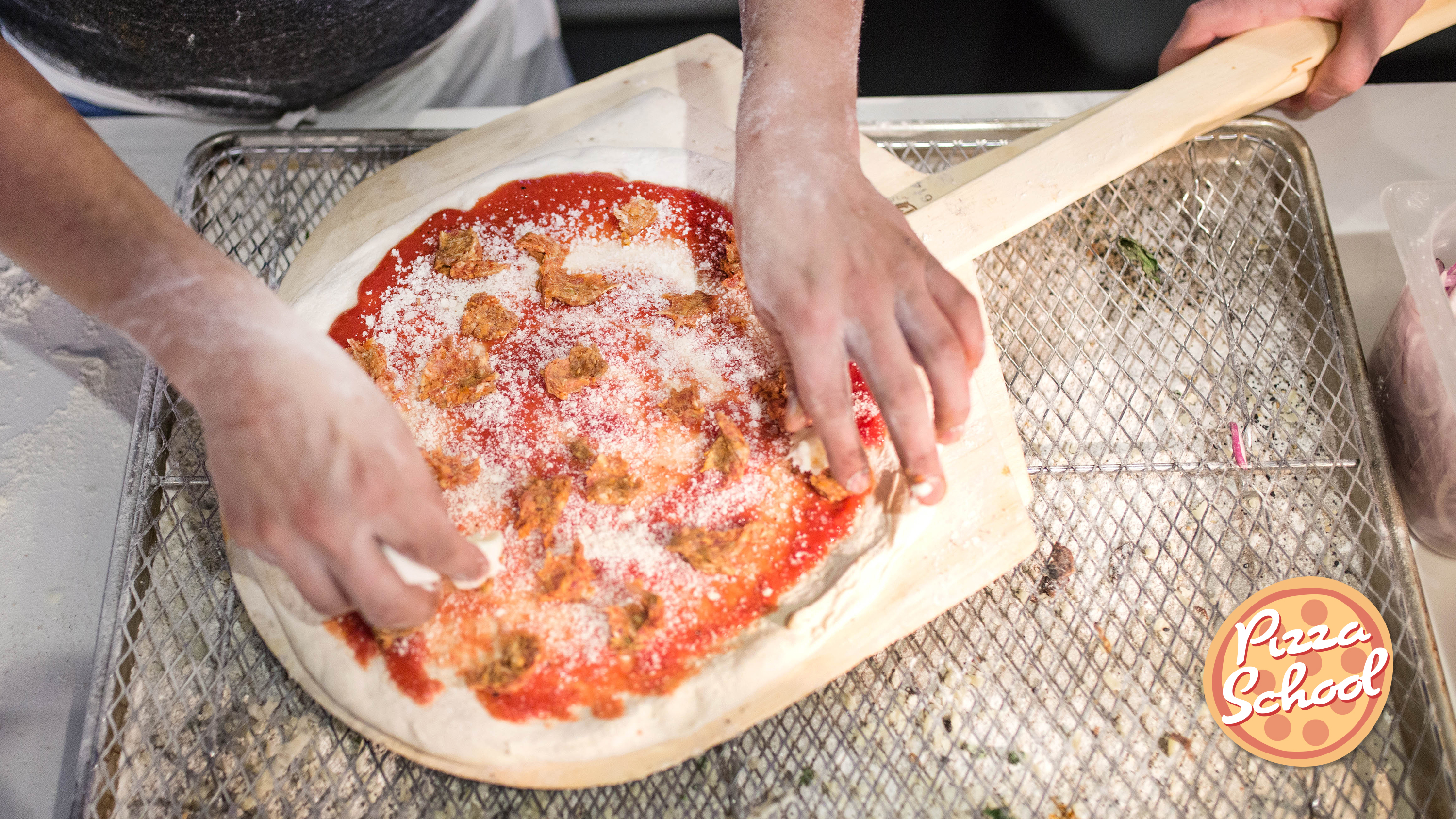
Less is more. Too many toppings lead to soggy pies.
- Cheese: Pat dry fresh mozzarella. Grate low-moisture cheese cold so it does not clump.
- Veggies: Slice thin. Pre-sweat mushrooms and peppers for less moisture.
- Meats: Cook sausage and bacon first. Food safety guidelines recommend 165°F for cooked toppings.
- Balance: Use 3–4 toppings max per pie for even heat and crisp crust.
Personal note: I used to overload my pies. Cutting back made the crust crisp and the flavors clear.
Source: www.thetakeout.com
Shape And Top The Pizza
Avoid a rolling pin for most styles. Hand-stretching protects gas bubbles and gives an airy rim.
- Flour: Lightly flour the counter. Dust the dough ball.
- Press: Press from center to edge to push air to the rim.
- Stretch: Lift and let gravity help. Rotate like a steering wheel. Target 11–12 inches.
- Transfer: Move to a floured peel or parchment.
- Top: Spread 2–3 tablespoons of sauce. Add cheese in an even layer. Finish with toppings.
- Check: Wiggle the peel to ensure the pizza slides. Add a little flour under it if it sticks.
Analogy: Treat dough like a water balloon. Gentle hands keep the bubbles and the bounce.
Bake For A Crisp, Chewy Crust
Home ovens can deliver pizzeria results with the right heat.
- Preheat: Heat the oven to the max, usually 500–550°F, for 45–60 minutes with a stone or steel inside.
- Rack: Place steel on the top third for faster browning. Place stone in the middle for even heat.
- Bake: Slide pizza onto the hot surface. Bake 6–8 minutes on a steel, 8–10 on a stone.
- Boost: For extra color, switch to broil for the last 60–90 seconds.
- Finish: Brush the crust with olive oil. Add basil or a light drizzle of chili oil.
Style notes:
- New York style: Bread flour, 58–62% hydration, longer bake for foldable slices.
- Neapolitan-influenced: 00 flour, 62–65% hydration, short, hot bake with light charring.
Food fact: Higher hydration and hotter surfaces promote better oven spring and leopard spotting.
Troubleshooting And Pro Tips
Common problems are easy to fix once you know the cause.
- Dense crust: Dough under-proofed. Allow more rise time or use a warmer spot.
- Pale bottom: Surface not hot enough. Preheat longer or use a steel.
- Soggy center: Too much sauce or wet toppings. Use less and pat dry.
- Dough tears: Gluten too tight or too weak. Rest longer after kneading. Gentle handling.
- Sticking to peel: Too little flour or slow launch. Dust lightly and move with confidence.
- Yeast issues: Old yeast loses power. Test by blooming in warm water to check activity.
Pro tips I rely on:
- Use a scale for accuracy.
- Cold ferment for deeper flavor and better browning.
- Keep toppings light and dry.
- Practice your launch with a bare dough to build confidence.
Storage, Reheating, And Food Safety
Safe handling keeps pizza tasty and fresh.
- Leftovers: Cool and store in an airtight container in the fridge within 2 hours.
- Reheat: Use a skillet on medium with a lid for 3–5 minutes to crisp the bottom and melt cheese. Or heat on a 450°F steel/stone for 3–4 minutes.
- Freeze dough: Lightly oil, wrap tight, and freeze up to 3 months. Thaw in the fridge overnight, then bring to room temp.
- Freeze baked slices: Wrap tight. Reheat from frozen in a 425°F oven for 10–12 minutes.
- Safety: Cook meats before topping. Aim for safe internal temps and avoid leaving cooked pizza at room temp for long periods.
Note: Moisture is your enemy for crispness. Airflow and high heat are your best friends.
Frequently Asked Questions Of How I Can Make A Pizza
What Is The Best Flour For Homemade Pizza?
Bread flour is the best all-around choice for strong gluten and good chew. 00 flour gives a softer bite and tender crust. All-purpose works for a lighter, less chewy style.
How Long Should I Let Pizza Dough Rise?
For same-day dough, 60–90 minutes to double, then 45–60 minutes after balling. For best flavor, cold ferment 24–72 hours and warm to room temp before shaping.
Do I Need A Pizza Stone Or Steel?
No, but they help a lot. A steel browns faster and gives a crisper bottom. A preheated sheet pan flipped upside down can work in a pinch.
Why Is My Pizza Soggy?
Too much sauce, wet cheese, or underheated bake surface. Use less sauce, pat fresh mozzarella dry, and preheat your stone or steel for at least 45 minutes.
Can I Make Good Pizza Without Yeast?
You can make a quick flatbread-style crust with baking powder. It will be tender but lacks the flavor and chew of yeast dough.
What Oven Temperature Should I Use?
Use the highest your oven allows, usually 500–550°F. Preheat the stone or steel for 45–60 minutes for a crisp base and good oven spring.
Wrap-Up And Next Steps
You now have a clear, tested plan for how I can make a pizza at home. Choose your dough path, keep toppings light, and bake hot for a crisp base and airy rim. With a little practice, you will taste the jump from good to great.
Try your first pie this week. Then tweak one variable at a time: hydration, flour, or bake time. Share your results, ask questions, and join the conversation. Subscribe for more guides, or drop a comment with your favorite topping combo.