Use a baking soda paste, hydrogen peroxide, and gentle degreaser to restore yellowed white cabinets.
I’ve cleaned and restored dozens of painted and laminate kitchens, so I know what works and what doesn’t when you want to know how to clean white kitchen cabinets that have yellowed. This guide walks you through safe, tested methods, easy steps, and when to repair or repaint so your cabinets look fresh again.

Why white cabinets yellow
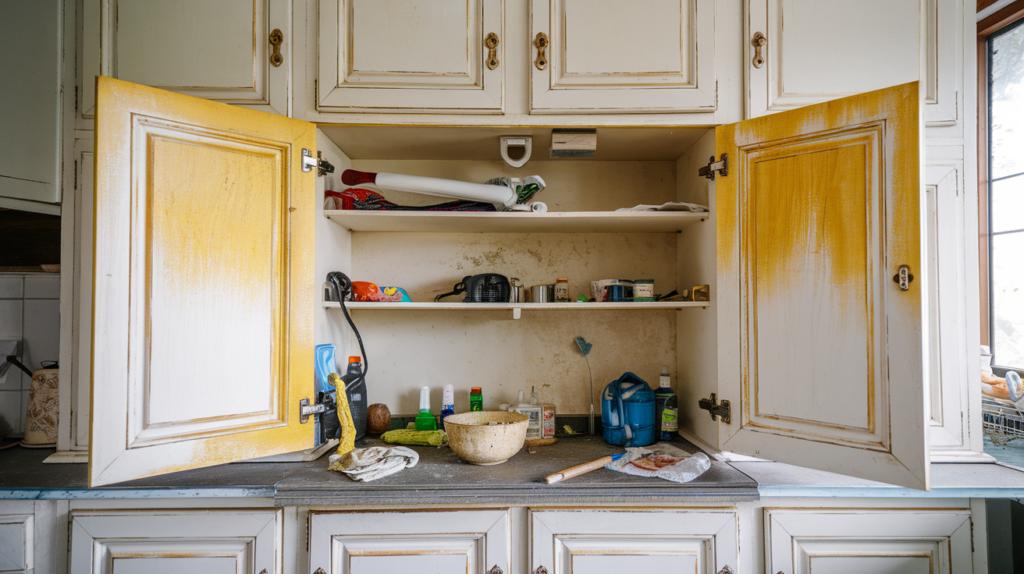
White cabinets can turn yellow for several simple reasons. Plastics and paints oxidize with time. Heat from stoves and ovens speeds the change. Grease, cooking smoke, and nicotine add a film that deepens yellowing. Sunlight and UV exposure also break down pigments and binders, making plastics and finishes look old.
Knowing the cause helps pick the best fix. If the yellowing is surface grease, cleaning often removes it. If it is oxidation or pigment change, cleaning may help some but refinishing could be needed. Understanding these differences makes it easier to decide how to clean white kitchen cabinets that have yellowed and whether deeper work is required.
Safety, tools, and prep
Safety first. Wear gloves and eye protection for stronger cleaners. Work in a ventilated area and test any cleaner on a hidden spot first.
Essential supplies
- Mild dish soap and warm water for initial cleaning
- Baking soda, white vinegar, or hydrogen peroxide for stains
- Gentle degreaser or trisodium phosphate (TSP) substitute for heavy grease
- Soft sponges, microfiber cloths, and an old toothbrush for crevices
- Magic Eraser for scuffs (use sparingly on finishes)
- Sandpaper (220–320 grit), primer, and paint for refinishing, if needed
Prep steps
- Remove hardware and tape off counters and floors.
- Clean loose dirt and dust first with a dry cloth.
- Test cleaners in an inconspicuous spot and wait 10 minutes before proceeding.

Step-by-step cleaning methods
Below are practical methods in order from gentlest to strongest. Pick the one that matches your cabinet material and how much yellowing there is.
Method 1 — Mild soap and warm water (best first step)
- Mix a few drops of dish soap in warm water.
- Wipe cabinets with a soft cloth, rinsing the cloth often.
- Dry with a clean towel to prevent streaks.
When to use: routine maintenance and light yellowing.
Method 2 — Baking soda paste (safe and effective)
- Make a paste with baking soda and water.
- Apply with a soft cloth and rub gently in small circles.
- Rinse well and dry.
When to use: grease film and light stains. Baking soda is mildly abrasive but safe for most finishes.
Method 3 — White vinegar solution (degreasing)
- Mix equal parts white vinegar and water.
- Spray or wipe on cabinets, let sit 1–2 minutes, then wipe clean.
- Rinse with water to remove vinegar smell.
When to use: grease and smoke residue. Avoid on raw wood or certain painted finishes without testing.
Method 4 — Commercial degreaser or TSP substitute (stronger)
- Follow product directions and wear gloves.
- Apply, scrub gently, then rinse thoroughly.
When to use: heavy grease, baked-on oils, and nicotine film.
Method 5 — Hydrogen peroxide lift for deep yellowing
- Use 3% hydrogen peroxide or a paste with baking soda.
- Apply to yellowed areas, cover with plastic wrap, and let sit 30–60 minutes.
- Wipe and rinse. Repeat if needed.
When to use: organic stains and some oxidation on painted surfaces. Test first; hydrogen peroxide can lighten pigments.
Method 6 — Magic Eraser and micro-abrasives (spot clean)
- Dampen a Magic Eraser and rub gently on marks.
- Avoid heavy pressure on glossy or thin finishes to prevent sheen loss.
When to use: scuffs, marker, and grime spots.
Method 7 — Bleach for stubborn organic stains (use sparingly)
- Dilute household bleach heavily: one part bleach to ten parts water.
- Apply briefly, rinse well, and ventilate the room.
When to use: mold, mildew, or strong nicotine stains. Avoid long contact with colored or raw wood surfaces.
How to decide: start with mild soap, move to baking soda or vinegar, then try hydrogen peroxide or degreaser for tougher jobs. If none remove the yellow, consider refinishing. These steps explain practical ways to clean white kitchen cabinets that have yellowed and restore many surfaces without repainting.
When cleaning won't fix it: restoration and painting
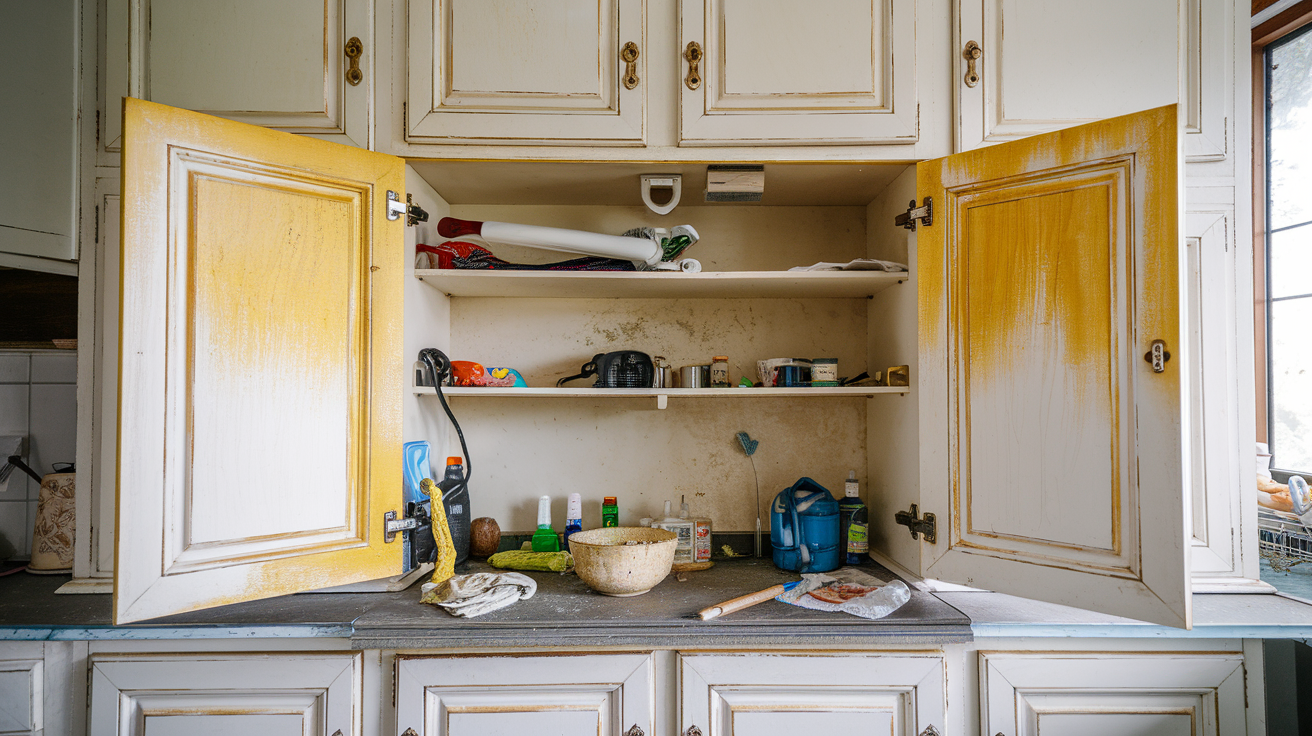
If discoloration is from oxidation of plastic or pigment change, cleaning may only help a little. That’s when restoration or repainting is the answer.
Refinish steps
- Sand lightly with 220–320 grit to scuff the surface.
- Clean dust and apply a quality primer designed for your cabinet material.
- Paint with a durable cabinet paint in thin, even coats.
- Reattach hardware after proper cure time.
Alternative: reface or replace doors if damage is severe. Painting will hide deep yellowing. Priming first prevents bleed-through and improves adhesion.
Maintenance and prevention tips to keep cabinets white
Simple habits prevent yellowing and cut cleaning time.
- Wipe spills and grease daily with a damp cloth.
- Use a range hood and keep ventilation on during cooking.
- Clean thoroughly every 1–3 months with a mild degreaser.
- Avoid placing cabinets in direct, strong sunlight or use window film.
- Use cabinet liners inside to reduce stains from spills.
These steps help minimize the need to deep clean or refinish and make it easier to maintain white cabinets long-term. Following them keeps your cabinets bright and cuts down repeat cleaning when you search how to clean white kitchen cabinets that have yellowed.

Common mistakes to avoid
Be careful with these traps that can make yellowing worse.
- Using harsh abrasives that strip paint and weaken finishes.
- Skipping patch tests; one wrong cleaner can stain or remove gloss.
- Over-bleaching or leaving chemicals too long on surfaces.
- Painting over grease without cleaning first — the paint won’t last.
Avoiding these mistakes saves time and prevents damage to your cabinets.
Quick questions people ask
What causes yellowing in white cabinets?
- Yellowing comes from oxidation, grease, smoke, nicotine, and UV light. Each cause affects which cleaning method works best.
Can I use bleach on painted cabinets?
- You can use diluted bleach briefly for mildew or nicotine, but rinse well and test first. Avoid long exposure to protect the paint.
Will Magic Eraser remove yellowing?
- Magic Eraser removes surface stains and scuffs but may not remove deep oxidation or pigment change. Use gently to avoid dulling the finish.
How long does refinishing take?
- A basic refinish can take 2–4 days including prep and dry time. Full curing can take longer depending on paint type and humidity.
Is it cheaper to clean or replace cabinet doors?
- Cleaning is far cheaper. Replace doors only if damage, warping, or irreparable discoloration remains after cleaning.
Frequently Asked Questions of how to clean white kitchen cabinets that have yellowed
How quickly should I act once I notice yellowing?
Tackle yellowing as soon as you can. Early cleaning removes grease and smoke before stains set. Older yellowing may need stronger methods.
Can I use bleach on laminate cabinets?
Use diluted bleach cautiously on laminate. Test first in a hidden area. Rinse thoroughly and avoid long contact to prevent edge lifting.
Is hydrogen peroxide safe on painted finishes?
Hydrogen peroxide is usually safe in low concentration and short contact. Test first; it can lighten some pigments on sensitive paints.
How often should I deep clean to prevent yellowing?
Deep clean every 3 months in a busy kitchen. Light wipe-downs weekly help a lot. Regular care prevents buildup that leads to yellowing.
Will sunlight protection stop yellowing completely?
Window film and blinds reduce UV damage but won’t stop all yellowing from heat or grease. Combined measures work best to protect cabinets.
Conclusion
You can restore many cabinets with simple, safe methods: start mild, work up to stronger cleaners, and know when to refinish. Small habits like regular wiping and good ventilation prevent most yellowing. Try the baking soda, hydrogen peroxide, and degreaser steps first, and plan refinishing only if needed.
Take action now: test a gentle method on a hidden spot, clean a single door, and see the results. If this guide helped, leave a comment, share your experience, or subscribe for more practical home care tips.