A kitchen sink organizer keeps clutter away, improves hygiene, and speeds up cleanup.
I’ve spent years testing kitchen tools and organizing small spaces. I know which kitchen sink organizer styles work, when to use them, and why they matter. Read on to learn proven benefits, real tips, and simple steps to pick and maintain the best kitchen sink organizer for your home.

Why a kitchen sink organizer matters
A kitchen sink organizer turns a messy sink area into a tidy workspace. It keeps sponges, brushes, and soap in order. That small change saves time during dishes and food prep.
The right kitchen sink organizer also improves hygiene. Wet sponges and brushes dry faster when stored properly. Faster drying reduces bacteria and bad smells.
A neat sink area feels calmer. When tools are easy to find, chores feel shorter. A kitchen sink organizer gives structure to a high-use zone.

Top benefits of using a kitchen sink organizer
- Declutters the sink area
- A kitchen sink organizer groups items in one place. Counters look cleaner and dishes have more room.
- Saves time during cleanup
- When sponges and brushes are accessible, you waste less time searching. That adds minutes back to your day.
- Improves hygiene and reduces germs
- Proper drainage helps items dry. Drier tools grow fewer bacteria and smell less.
- Protects sink surfaces and fixtures
- An organizer keeps sharp tools and heavy items off the sink rim. This prevents scratches and water stains.
- Extends the life of cleaning tools
- Sponges and dishcloths last longer when stored upright to dry. A kitchen sink organizer supports that.
- Maximizes small kitchens
- Over-the-sink or compact organizers add storage without taking counter space. Small kitchens gain big benefits.
- Reduces clutter-related pests
- Less standing water and hidden crumbs mean fewer fruit flies and ants around the sink.
- Improves kitchen aesthetics
- A streamlined organizer makes the sink area look intentional. That boosts the overall feel of the room.
- Multi-function convenience
- Many organizers hold soap, scrubbers, and even small cutting boards. They simplify daily tasks.

Types of kitchen sink organizers and when to use them
- Countertop caddy
- Good for large counters. It sits near the sink and stores soap and brushes.
- Over-the-sink rack
- Ideal for tiny kitchens. It uses vertical space above the sink for drying and storage.
- Suction or clip-on baskets
- Great for renters. These attach to the sink wall without tools.
- Roll-up drying rack
- Useful for drying dishes and saving counter space. It doubles as a prep surface.
- Built-in sink trays
- Best for remodels. These offer integrated drainage and a permanent solution.
- Draining sponges holders
- Small and efficient. They keep sponges upright and let water drip into the sink.
Choose a style that fits your sink shape, use pattern, and budget. Each kitchen sink organizer type solves different needs.
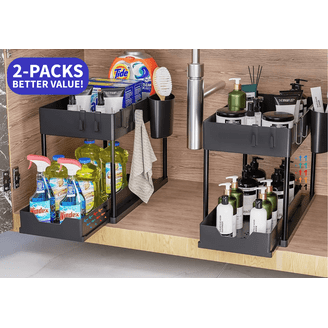
How to choose the right kitchen sink organizer
- Measure your space
- Check sink width, depth, and nearby counter area. Fit is the first rule.
- Pick the mounting style
- Decide between suction, adhesive, clip-on, or freestanding. Think about longevity and renter rules.
- Look for proper drainage
- Choose organizers with holes or sloped trays. That keeps items dry and clean.
- Choose durable materials
- Stainless steel, silicone, and BPA-free plastics last longer and resist rust.
- Prioritize ease of cleaning
- Removable trays and smooth surfaces save time. Avoid hard-to-reach crevices.
- Match your routine
- If you hand-wash often, pick an organizer with drying space. If you use a dishwasher a lot, a small caddy may suffice.
- Consider style and color
- A pleasing design makes the sink area feel finished. Neutral tones adapt to most kitchens.
From personal tests, suction holders failed more often than stainless options. I recommend testing the mount method before committing.

Installation and maintenance tips
- Simple installation steps
- Clean the sink edge or tile first. Attach suction or clip as directed. Test stability before loading.
- Keep drainage clear
- Empty drip trays weekly. Check holes and wipe away residue.
- Clean regularly
- Wash the organizer with warm soapy water every one to two weeks. For metal parts, dry fully to prevent rust.
- Rotate sponges and cloths
- Replace sponges monthly and wash cloths often. Even with a kitchen sink organizer, tools wear out.
- Avoid overloading
- Do not stack too many heavy items in one organizer. Overload can bend clips or block drainage.
These easy steps keep a kitchen sink organizer working well for years.

Common mistakes and how to avoid them
- Choosing the wrong size
- Measure first to avoid buying an organizer that doesn’t fit or blocks faucets.
- Ignoring drainage
- Poorly draining organizers trap water. Look for sloped designs and holes.
- Relying on weak mounts
- Cheap suction cups can fail. Test a mount with weight before final use.
- Forgetting cleaning
- An organizer stays useful only if you clean it. Treat it like another kitchen tool.
- Overfilling with items
- Keep only daily essentials in the organizer. Store extras elsewhere.
Avoid these mistakes and your kitchen sink organizer will make life easier, not harder.

Personal experience and lessons learned
I fitted a stainless kitchen sink organizer in my small apartment two years ago. The counter looked cleaner the first day. Over time, I learned to keep only daily tools in the caddy. That kept it tidy and easy to clean.
One lesson: test suction mounts in both warm and cool water. Some lost grip after hot dishwater. I switched to a clip-on model for long-term stability and have been happy since.
Frequently Asked Questions
What is a kitchen sink organizer used for?
A kitchen sink organizer stores cleaning tools like sponges, brushes, and soap. It keeps the sink area tidy and helps items dry quickly.
How does a kitchen sink organizer improve hygiene?
It promotes airflow and drainage so sponges dry faster. Drier tools reduce bacteria growth and unpleasant odors.
Can I install a kitchen sink organizer in a rental?
Yes. Many organizers use suction, clips, or freestanding designs that don’t damage surfaces. Choose non-permanent mounts to protect your deposit.
Which material is best for a kitchen sink organizer?
Stainless steel and silicone are top picks. They resist rust, clean easily, and last longer than cheap plastics.
How often should I clean my kitchen sink organizer?
Wipe it weekly and wash it with warm soapy water every one to two weeks. Empty drip trays more often if you notice residue.
Conclusion
A kitchen sink organizer saves time, improves hygiene, and makes small kitchens more efficient. It protects tools and surfaces and adds tidy style to daily chores. Start by measuring your space, choose a durable mount, and commit to simple cleaning habits. Try one for 30 days and notice the difference in how your kitchen feels.
Take action: pick a style that fits your sink, install it this weekend, and share your results or questions below.