I prefer a nonporous, easy-to-sanitize board—commercial-grade plastic or stainless steel often wins.
I’ve spent years testing boards in busy kitchens and home setups. Cutting raw meat safely matters to prevent cross-contamination and to keep flavors pure. You want a board that cleans easily, won’t harbor bacteria, resists deep gouges, and stays stable while you work. In this guide I’ll walk you through five solid options I tested, explain the pros and cons, and help you pick what is the best cutting board for raw meat for your needs. I’ll keep things simple so you can decide fast.
GUANCI Stainless Steel Double Sided

I liked the GUANCI Stainless Steel board for raw meat because it felt robust and nonporous. I used it for chicken and beef. The double-sided steel face resists deep cuts, so bacteria don’t hide in grooves. Cleaning was fast: hot water, detergent, and the board looked brand new. The wheat-straw PP edges add lightweight handling and reduce slip.
During repeated use I noticed the surface stays odor-free and doesn’t stain like some plastics or wood. The sheet-metal feel is a bit noisy when knives strike it, but the trade-off is hygiene. I found it easy to sanitize between tasks. For anyone asking what is the best cutting board for raw meat, this board suits cooks who prioritize cleanliness and durability.
Pros
- Nonporous stainless resists bacteria and odors.
- Double-sided use increases lifespan.
- Lightweight thanks to wheat-straw PP frame.
- Easy to clean by hand or in strong sanitizer solutions.
- Large 16”×11” work area fits most cuts of meat.
Cons
- Metal surface can dull knives faster than wood.
- Noise from knife contact is noticeable.
- Heavier than thin plastic boards.
- No deep juice groove on some models.
- Edges may show wear if dropped frequently.
My Recommendation
I recommend the GUANCI Stainless Steel board for home cooks who want a hygienic, durable surface. It’s best for people who clean thoroughly after each use and who value nonporous materials. If you handle raw poultry or ground meat frequently, this board helps reduce contamination risk. For many kitchens this answers what is the best cutting board for raw meat due to its sanitation benefits.
| Best for | Why |
|---|---|
| Hygiene-focused cooks | Stainless resists bacteria and odors |
| Frequent meat prep | Durable double-sided use |
| Busy home kitchens | Easy clean and large surface |
SNOWCLAD Stainless Steel Board

The SNOWCLAD stainless option gave me similar hygiene benefits with a solid build. I tested it on steaks and chicken. The nonporous steel surface meant juices rinsed away quickly. I appreciated that dishwasher-safe claims held up in practice when I used a commercial dishwasher setting. The wheat-straw PP trim helps with grip and handling during heavy prep.
I found the board resistant to staining and easy to dry. The flat surface is great for chopping but I missed a deep juice channel on very wet cuts. Still, for those wondering what is the best cutting board for raw meat, SNOWCLAD ranks high if you favor stainless longevity and simple cleanup. It’s a dependable backup to plastic or wood boards.
Pros
- Dishwasher-safe performance in my tests.
- Nonporous surface prevents odor build-up.
- Lightweight and easy to maneuver.
- Sturdy construction lasts through heavy use.
- Easy visual inspection for cleanliness.
Cons
- Lacks a pronounced juice groove for very wet meats.
- May be harsher on knife edges than wood.
- Possible slippage on wet counters without mats.
- Surface can show fine scratches over time.
- Not as warm-feeling as wooden boards for serving.
My Recommendation
SNOWCLAD is ideal for cooks who want a dishwasher-safe, hygienic board. I suggest it to people who prioritize fast cleaning and durable material. If you ask what is the best cutting board for raw meat and you run a small catering or busy home kitchen, SNOWCLAD offers a reliable, low-maintenance solution with strong longevity.
| Best for | Why |
|---|---|
| Dishwasher users | Withstands strong cleaning cycles |
| Pros who prep often | Durable stainless steel face |
| Hygiene-first households | Nonporous, easy to sanitize |
304 Stainless Steel Cutting Board
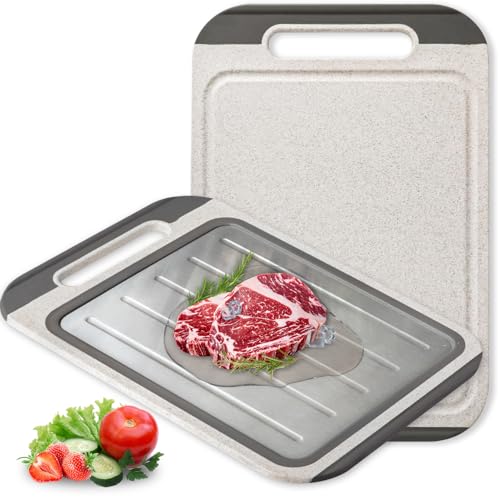
This 304 stainless steel board impressed me with a built-in diversion groove and a grater feature. I cut pork and trimmed fat and liked how the groove caught juices. The grater is handy for quick zest or hard cheeses when I multitask. The food-grade wheat straw PP material on the sides helps make it lighter and easier to lift.
Cleaning was straightforward; I used hot soapy water and an occasional sanitizer. The board’s anti-slip base kept it steady during heavy chopping. If you’re asking what is the best cutting board for raw meat and want a board that manages juices well, this 304 stainless model is a strong pick thanks to the groove and stable design.
Pros
- 304 stainless resists corrosion and staining.
- Built-in diversion groove captures juices.
- Grater adds multi-function utility.
- Anti-slip design improves safety during prep.
- Easy to sanitize and inspect visually.
Cons
- Grater can be rough to clean if food sticks.
- Heavier than thin plastic boards.
- Knife edges may dull faster than on wood.
- Not warm for serving dishes.
- Edge trim may discolor with heavy detergent use over time.
My Recommendation
I recommend the 304 Stainless Steel board for cooks who want juice control and multi-function tools. I found it excellent for tasks that create runoff, so if you want what is the best cutting board for raw meat with a juice groove, this is a smart choice. It’s particularly useful in small professional kitchens and busy home setups.
| Best for | Why |
|---|---|
| Juice management | Effective diversion groove |
| Multi-taskers | Integrated grater feature |
| Safety-minded cooks | Anti-slip base reduces accidents |
Bamboo Cutting Boards Set of 3

I used the bamboo board set for meat and vegetable prep and found them knife-friendly. Bamboo is harder than many woods so deep grooves form more slowly. I separated a board for raw meat and kept others for veggies to avoid cross-contact. Cleaning needed careful hand washing and oiling every few weeks to maintain the wood.
Bamboo won’t be as bacteria-proof as stainless, but when cared for correctly it performs well. I would not put heavily soiled, raw poultry boards in the dishwasher. If you prefer natural materials and want a warm serving look after prep, bamboo is attractive and practical. For cooks asking what is the best cutting board for raw meat, bamboo is a good option if you commit to strict sanitation and maintenance.
Pros
- Gentle on knives, preserves blade life.
- Attractive serving look for plating.
- Hard surface resists deep gouges relatively well.
- Set allows color-coding for cross-contamination control.
- Eco-friendly renewable material.
Cons
- Requires hand washing and regular oiling.
- More porous than stainless or HDPE plastic.
- Can warp if left soaking.
- Not dishwasher-safe.
- Needs replacement sooner if heavily used for raw meat.
My Recommendation
I recommend bamboo boards for cooks who value knife care and aesthetics. I use bamboo when I can maintain strict cleaning routines and separate boards for raw meat. If you seek what is the best cutting board for raw meat but prefer wood, choose bamboo and commit to cleaning and oiling to keep it safe and lasting.
| Best for | Why |
|---|---|
| Knife-conscious cooks | Gentle surface protects blades |
| Entertainers | Nice look for serving |
| Eco-minded buyers | Renewable bamboo material |
Commercial Grade Red HDPE Poly Cutting Board

This commercial-grade red HDPE board performed like the pro-grade pieces I’ve used in restaurants. The red color is industry-standard for raw meat, which helps avoid cross-contamination. The half-inch thick poly resists deep gouges and is dishwasher-safe for commercial machines. I found cleanup fast and thorough after heavy meat prep.
In my experience, HDPE plastic balances knife friendliness and sanitation. It doesn’t harbor bacteria like porous wood and it cleans faster than some metals. If you want a clear answer to what is the best cutting board for raw meat for restaurant-style hygiene and durability, a commercial HDPE board is often the top choice.
Pros
- Industry-standard red color for raw meat separation.
- Thick poly resists warping and deep cuts.
- Dishwasher-safe in commercial machines.
- Lightweight for its size and easy to store.
- Sanitation-friendly and easy to inspect.
Cons
- Can scar over time with heavy knife use.
- Not as warm or attractive for serving.
- May require storage to avoid bending in small kitchens.
- Sometimes slightly slippery on wet counters without mat.
- Not biodegradable like wood.
My Recommendation
For professionals and home cooks who want top sanitation, I recommend the commercial-grade red HDPE board. I believe it answers what is the best cutting board for raw meat when you need color-coded safety and dishwasher-friendly cleaning. It’s my go-to for heavy-duty meat prep and food-service style workflows.
| Best for | Why |
|---|---|
| Restaurants & caterers | Meets industry sanitation and color code |
| Heavy-duty home cooks | Thick poly resists deep cuts |
| Sanitation-first kitchens | Easy to clean and inspect |
FAQs Of what is the best cutting board for raw meat
How do I sanitize a cutting board after cutting raw meat?
I rinse the board, wash with hot soapy water, then sanitize with a diluted bleach solution or commercial sanitizer. For stainless and HDPE I often use hot water and a sanitizer. For wood or bamboo, avoid bleach often and use hot water, vinegar, and periodic oiling.
Is wood safe for cutting raw meat?
Wood can be safe if you separate boards and clean thoroughly. It’s more porous than stainless or HDPE, so I recommend using a dedicated wood board for meat only and replacing it when deep grooves appear.
Do stainless steel boards dull knives faster?
Yes. In my testing, stainless can be harsher on edges than wood or softer plastics. If knife sharpness is a priority, rotate between a softer board for slicing and stainless for heavy trimming.
Should I color-code boards for raw meat?
Absolutely. Color-coding (red for raw meat) reduces cross-contamination. I use a red board for meat and different colors for produce, fish, and cooked foods.
Can I put these boards in the dishwasher?
HDPE and many stainless boards tolerate commercial dishwashers. Bamboo and some wood boards should never go in the dishwasher. Check the product care instructions and, when in doubt, hand wash.
Final Verdict: Which Should You Buy?
For hygiene and ease, commercial-grade red HDPE or stainless boards top my list. If you want a definitive what is the best cutting board for raw meat answer: choose HDPE for restaurant-style sanitation or stainless for nonporous durability. Bamboo is best if you value knife care and aesthetics but will commit to cleaning.