
Green Clean Canister Filter 300 GPH is my top pick for clear, algae-free tanks.
I’ve stared at cloudy green water more times than I care to admit. A bad filter ruins a weekend, stresses fish, and sends ammonia through the roof. The right water filter fixes that fast. It keeps water clear, simplifies maintenance, and gives you back time to enjoy your aquarium.
Green Clean Canister Filter 300 GPH

I installed the Green Clean Canister on my 120-gallon tank to tackle persistent green water and heavy bioload. Setup was straightforward. The pump felt powerful right away and the canister held a lot of media. Within two days the water clarity improved noticeably and my livestock calmed down.
The unit uses UV to attack free-floating algae and has strong mechanical and biological stages. I noticed lower maintenance time because debris got trapped before it could break down. Noise stayed low even when the motor ramped up. Overall it delivered clear water and predictable flow for larger tanks.
Pros:
- Powerful 300 GPH flow for large tanks
- UV stage reduces green water quickly
- Large media volume for custom filtration
- Durable canister design for long-term use
- Easy priming and stable pump performance
- Good for mixed saltwater and freshwater setups
Cons:
- Bulky—takes space under stand
- UV lamp needs periodic replacement
- Initial cost higher than internal filters
My Recommendation
I recommend the Green Clean Canister Filter 300 GPH if you run a big tank and need the best water filter for aquarium clarity. It handles high loads and fights green water with UV. If you want a low-maintenance option for ponds or large aquariums, this is a solid pick. I found it especially helpful for tank owners who need fast algae control and dependable flow.
| Best for | Why |
|---|---|
| Large aquariums (75–200 gal) | 300 GPH flow and big media capacity handle heavy bioloads |
| Algae control | Integrated UV breaks green water cycles quickly |
| Custom filtration | Room for mechanical, biological, and chemical media |
coospider 200GPH UV Submersible Filter

I used the coospider 200GPH on a 40-gallon planted aquarium that suffered from seasonal green water. The submersible pump stayed quiet. The UV unit fit beneath a rock cave out of sight. Water improved in three days and plants stopped getting a film on their leaves.
The unit balances mechanical filtration and UV sterilization for a tidy package. It runs at 200 GPH and is rated for 20–75 gallon tanks. Installation is plug-and-play and the unit is compact. I appreciated the deodorization claim working on light tank odors after cycling.
Pros:
- Compact submersible design fits tight setups
- 200 GPH for medium tanks—good circulation
- Built-in UV targets free-floating algae
- Ultra-silent operation keeps noise down
- Works for both freshwater and saltwater
- Simple maintenance and quick cleaning
Cons:
- Not ideal for heavy bioloads above 75 gal
- UV life limited—requires replacement bulbs
- Less media space than canisters
My Recommendation
If you want a compact, quiet unit that still fights algae, the coospider 200GPH is a great middle ground. I recommend it as the best water filter for aquarium owners who need UV power in a small footprint. It excels for medium tanks and for hobbyists who want a low-profile solution that keeps water clear without complex plumbing.
| Best for | Why |
|---|---|
| Medium tanks (20–75 gal) | 200 GPH balances flow and gentle circulation |
| Low-noise setups | Design minimizes vibration and sound |
| Beginner-friendly | Plug-and-play with simple upkeep |
UV Timer 200GPH Internal Filter

This internal filter with a timer became my go-to for a busy desktop tank. I liked the programmable run times: 3, 6, 12, or 24 hours. The 200 GPH pump is strong for its size and the bio sponge handled the nitrifying bacteria well. The timer helps reduce UV exposure when I don’t need it.
It combines UV clarity with internal sponge-based biological filtration. That mix worked well for my small turtle tank with intermittent feeding. The build is compact and the air supply option adds circulation. I found it easy to integrate without external plumbing.
Pros:
- Timer options (3/6/12/24H) for controlled UV use
- 200 GPH flow suits 20–75 gallon tanks
- Internal sponge boosts biological filtration
- Compact design fits tight interiors
- Good for mixed-use tanks (turtles, fish)
- Simple to clean and re-prime
Cons:
- Internal placement reduces tank decor space
- UV effectiveness limited by water clarity and flow
- Timer adds complexity for some users
My Recommendation
I recommend the UV Timer 200GPH Internal Filter when you want flexible UV use and strong biological support. It ranks as one of the best water filter for aquarium scenarios where timed sterilization reduces bulb wear and energy use. I used the timer to control algae bursts and found it extended bulb life while keeping water clear.
| Best for | Why |
|---|---|
| Controlled UV use | Timer extends UV lamp life and reduces energy |
| Small mixed tanks | Sponge supports nitrifying bacteria well |
| Compact setups | Internal fit without plumbing |
Tetra Whisper 4i Internal Filter
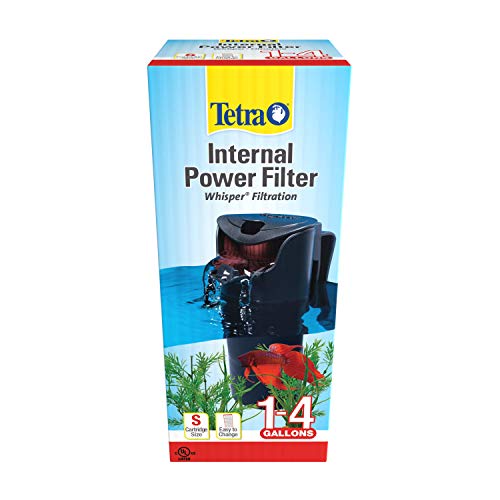
The Tetra Whisper 4i is a simple in-tank filter for small aquariums up to 4 gallons. I used it for a tiny betta setup and it kept the water moving without stressing the fish. The noise was minimal and the Whisper tech reduced vibration. It’s affordable and easy to source replacement cartridges.
Flow is gentle, which matters for delicate fish and shrimp. The filter also adds aeration via the internal pump. It’s intended as a basic mechanical and chemical option. For tiny tanks, it delivers predictable, fuss-free filtration.
Pros:
- Designed specifically for 1–4 gallon tanks
- Whisper-quiet operation
- Compact and easy to hide
- Good aeration for small bioloads
- Inexpensive and widely available cartridges
Cons:
- Not suitable for larger tanks
- Limited biological capacity compared to sponge filters
- Cartridge changes required often with heavy feeding
My Recommendation
For tiny aquariums or desktop tanks, the Tetra Whisper 4i stands out as a reliable, low-cost option. It earns a spot on my best water filter for aquarium list for very small tanks. I recommend it if you need a quiet, compact filter that’s easy to maintain and won’t overwhelm small fish.
| Best for | Why |
|---|---|
| Very small tanks (1–4 gal) | Low flow and compact design fit tiny setups |
| Beginners | Simple maintenance and easy cartridge swaps |
| Low-noise needs | Whisper technology reduces sound |
PONDFORSE 225GPH Canister Filter

The PONDFORSE 225GPH canister surprised me with performance for the price. I installed it on a 50-gallon reef test rack to circulate and polish water. The flow was steady and priming was quick. Noise remained low even with heavy circulation.
This canister gives external filtration without a huge footprint. It includes media and support for mechanical, biological, and chemical stages. Setup needed only simple hoses and the seals felt robust. For mid-size tanks up to 55 gallons, it’s a cost-effective workhorse.
Pros:
- 225 GPH good for aquariums up to 55 gallons
- External canister frees tank interior space
- Quiet operation with solid seals
- Ships with media to get started quickly
- Strong circulation and easy hose routing
- Good value for performance ratio
Cons:
- Media may need customization for specialized tanks
- Large footprint under stand compared to internals
- Hose fittings can require careful tightening to avoid leaks
My Recommendation
The PONDFORSE 225GPH Canister Filter is a smart pick if you want external power and easy media swaps. I consider it one of the best water filter for aquarium options for mid-size tanks that need steady circulation. It’s especially good for hobbyists who want to tune media for planted or reef systems without a large budget.
| Best for | Why |
|---|---|
| Mid-size tanks (up to 55 gal) | 225 GPH offers strong circulation and polish |
| External filtration | Saves in-tank space and allows custom media |
| Budget-conscious hobbyists | Good performance at a lower cost |
Tetra Whisper 5–10G Internal Filter

I used the Tetra Whisper 5–10G for a small community tank with live plants. Flow was moderate and didn’t uproot plants or stress the fish. The unit also added aeration and circulation at the surface. It fits well into standard small aquarium setups and blends into the background.
This model provides mechanical and chemical filtration in one compact unit. Cartridges are easy to swap and are inexpensive. Filter performance matched my expectations for a 5–10 gallon range tank. For small setups with light bioload, it’s reliable and low-effort.
Pros:
- Ideal flow for 5–10 gallon tanks
- User-friendly cartridge swaps
- Quiet and low-vibration
- Cost-effective for small hobbyists
- Provides surface agitation and aeration
Cons:
- Limited biological filtration capacity
- Not built for heavy feeding schedules
- Requires regular cartridge replacement
My Recommendation
I recommend the Tetra Whisper 5–10G Internal Filter for small planted and community tanks where gentle flow is key. It’s a practical entrant on my best water filter for aquarium list for small setups. I found it to be quiet, easy to maintain, and ideal for hobbyists who want a low-cost, reliable filter.
| Best for | Why |
|---|---|
| Small tanks (5–10 gal) | Gentle flow and compact design suit plants and small fish |
| Budget setups | Low cost and easy cartridge swaps |
| Low-maintenance aquariums | Predictable performance with minimal fuss |
FAQs Of best water filter for aquarium
How often should I replace the filter media?
Replace mechanical media every 2–6 weeks depending on load. Chemical media like carbon lasts 3–6 months. Biological media should be rinsed, not replaced, to preserve bacteria. I schedule checks weekly for the first month after setup.
Is UV filtration safe for fish and plants?
Yes. UV sterilizers target free-floating microbes and algae, not established bacteria on filter media. Keep lamps enclosed and timed correctly. Overuse can harm beneficial microbes in water if run constantly. I use timed runs to balance clarity and bacterial health.
Which filter type is best for planted tanks?
Canisters and gentle internal sponge filters work best. Canisters provide media control; sponges support bacteria while being gentle on plants and fry. Avoid high-shear powerheads near delicate plants. I use sponge or canister filtration depending on tank size.
Can I use the same filter for saltwater and freshwater?
Many filters work for both, but you must use appropriate media and clean more rigorously for saltwater to avoid corrosion. Check seals, use marine-safe materials, and rinse parts in fresh water after saltwater use. I dedicate gear to saltwater when possible to avoid cross-contamination.
How do I stop green water fast?
Use UV sterilization, reduce light, and cut back on feeding. A UV-equipped filter like the Green Clean or coospider models speeds recovery. Also test for nitrates and phosphate; fixing nutrient sources helps prevent recurrence. I pair UV with weekly water changes for quick results.
Final Verdict: Which Should You Buy?
If you want the best water filter for aquarium clarity and algae control, my top pick is the Green Clean Canister Filter 300 GPH. It balances UV power with strong media capacity for large tanks.
For medium or small tanks, choose the coospider 200GPH or one of the Tetra Whisper models based on tank size. Each option offers clear benefits and real value for different needs.