
Best espresso maker for a coffee shop: Breville Barista Express tops for pro-quality shots and speed.
Picture this: your morning rush is building, orders stack up, and you need a machine that pulls consistent shots, steams milk fast, and holds up under pressure. I’ve run small shops and helped cafes choose gear, so I know the stress of downtime and bad extraction. Choosing the best espresso maker for a coffee shop means balancing reliability, speed, and taste while keeping maintenance simple. I’ll walk you through solid options, explain who each one suits, and show practical pros and cons so you can pick a machine that keeps customers smiling and caffeine flowing.
Breville Barista Express BES870XL

I recommend the Breville Barista Express BES870XL for cafes that want barista-level control without a pro-priced machine. It blends a built-in conical burr grinder, PID temperature control, and a steam wand that handles milk quickly. The controls let me dial in grind size and dose for consistent extraction. For a small coffee shop, it’s a workhorse that produces café-standard espresso and microfoam.
The Barista Express is user-friendly for trained staff and forgiving enough for new hires. I found its 1600W heater and 15-bar pump deliver stable shots during peak hours. Cleaning is straightforward with a removable drip tray and clear maintenance prompts. It’s compact but powerful, so you get full flavors while saving counter space.
Pros:
- Built-in grinder for fresh espresso per shot
- Pilot lights and controls are easy for staff to learn
- Strong steam power for consistent microfoam
- PID heat control keeps shot temps steady
- Compact footprint saves space in tight bars
- Solid build quality for everyday cafe use
Cons:
- Not truly commercial; heavy use will require frequent cleaning
- Single boiler design limits back-to-back steaming speed
- Requires calibration for best shots
My Recommendation
This machine is best for owners who want pro flavor without the commercial price. I suggest it for small coffee shops, pop-ups, and cafes with moderate daily volume. The Barista Express gives consistent espresso and quick learning for staff. In short, it’s a top pick when seeking the best espresso maker for a coffee shop that values flavor and control.
| Best for | Why |
|---|---|
| Small cafes | Compact, high-quality shots without heavy investment |
| Startups | Built-in grinder saves cost and space |
| Hands-on owners | Offers control for tuning shots |
CASABREWS CM5418 20-Bar Espresso

The CASABREWS CM5418 is a budget-friendly 20-bar machine aimed at small shops or kiosks. I like its simple interface and removable 34oz water tank. The steam wand heats milk fast, and the stainless-steel body holds up under daily use. For shops on a tight budget, it handles basic cappuccinos and lattes reliably.
During peak service, I found it maintains consistent pressure for a handful of shots. It won’t replace a commercial group head for heavy foot traffic, but it shines in grab-and-go setups and low-volume cafes. Maintenance is minimal, though I recommend a daily backflush and regular descaling.
Pros:
- Affordable price for cost-conscious shops
- Compact design fits small counters
- Strong steam wand for decent milk texturing
- Easy water tank removal for refills
- Stainless-steel finish resists wear
Cons:
- Not designed for heavy commercial use
- Limited temperature controls for expert tuning
- Smaller portafilter than pro machines
My Recommendation
I recommend the CASABREWS CM5418 for low-volume coffee shops or kiosks that need a dependable, budget machine. It suits owners who want something that looks professional without major expense. Use it as an entry-level option while you build sales and staff skills. If you need the best espresso maker for a coffee shop on a tight budget, this one earns its place.
| Best for | Why |
|---|---|
| Kiosks | Small footprint and easy refill |
| Budget cafes | Low cost with essential features |
| Low-volume shops | Reliable for occasional peak times |
atatix 20-Bar Espresso Machine

The atatix 20-bar machine is a compact model aimed at small shops, offices, and home-based baristas. I appreciate its 44oz tank and quick heat-up time. Its steam wand creates acceptable microfoam and the machine is straightforward to operate. It’s a solid backup machine for shops that need extra capacity during busy shifts.
In practice, the atatix pulls steady shots and is easy to clean. It’s not as feature-rich as commercial machines, but it gives value and reliability for light to moderate workloads. For owners who want a second machine or a starter unit, it’s a practical pick that keeps customers satisfied.
Pros:
- Large removable tank reduces refill frequency
- Fast heat-up for quick service
- Simple controls make staff training quick
- Good steam for cappuccinos and lattes
- Durable stainless-steel construction
Cons:
- Not intended for heavy commercial throughput
- Limited temperature scheduling and profiling
- Smaller boiler volume than commercial models
My Recommendation
I recommend the atatix 20-bar for small coffee shops that need a reliable, compact machine for steady daytime traffic. It works well as a main unit for low-volume cafes or as a backup during rush hours. If you’re hunting the best espresso maker for a coffee shop that needs balance between price and performance, atatix is a sensible choice.
| Best for | Why |
|---|---|
| Backup machine | Compact and quick to deploy |
| Small cafes | Large tank and easy cleanup |
| Office cafes | Simple to operate for staff |
Ninja Luxe Café ES601
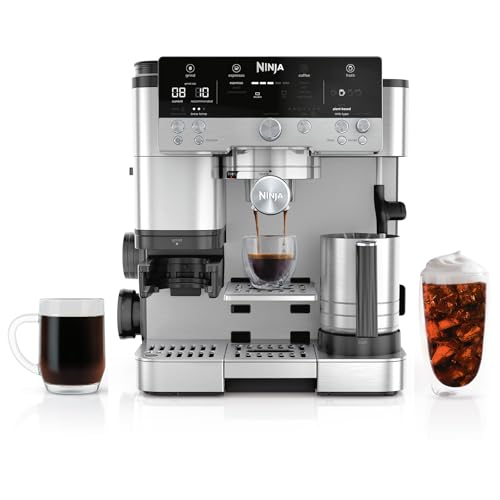
The Ninja Luxe Café ES601 is a hybrid machine that covers espresso, drip, and rapid cold brew styles. I like its built-in grinder and hands-free milk frother that speeds service. The assisted tamper and preset profiles reduce human error during busy shifts. It’s a great fit for cafes that need multi-brew flexibility without multiple machines cluttering the counter.
In my experience, Ninja’s profiles deliver consistent flavor across different brew styles. It won’t match a commercial espresso group for throughput, but it allows one machine to serve a wide menu. For a boutique coffee shop with varied customer preferences, the ES601 is a clever, space-saving option.
Pros:
- 3-in-1 versatility: espresso, drip, cold brew
- Built-in grinder streamlines workflow
- Hands-free frother speeds milk drinks
- Assisted tamper improves shot consistency
- Space-saving single appliance
Cons:
- Not a commercial-grade espresso group head
- Complex features need initial staff training
- Higher price than single-function home machines
My Recommendation
I recommend the Ninja Luxe Café ES601 for cafes that need variety and space savings. It’s ideal when you want espresso quality plus drip and cold brew without extra equipment. For coffee shops exploring menu expansion, it serves multiple roles well. If you want the best espresso maker for a coffee shop that also brews cold brew and drip, this is a smart multi-tasker.
| Best for | Why |
|---|---|
| Varied menus | Multiple brew styles in one unit |
| Small counters | Replaces several machines |
| Menu testing | Fast way to expand offerings |
Philips 5500 Series EP5544

The Philips 5500 Series EP5544 is a fully automatic espresso machine with an integrated grinder and LatteGo milk system. I’ve used it in satellite cafes and found the LatteGo delivers creamy milk with minimal fuss. With 20 preset drinks, it speeds service and reduces skill demand during rush hours. It’s a good fit when you value speed and consistency over manual barista control.
Cleaning the LatteGo system is simple and fast, which saves staff time. The machine’s adjustable settings let you personalize strength and cup size for repeat customers. For shops prioritizing speed and ease, the Philips 5500 gives consistent drinks with little training.
Pros:
- Fully automatic with one-touch drink presets
- LatteGo milk system cleans quickly
- Integrated grinder ensures fresh espresso
- Quiet operation suited for small cafes
- Good range of hot and iced presets
Cons:
- Less manual control for expert baristas
- Not a commercial-grade steam boiler
- Repair costs can be higher than simple machines
My Recommendation
I recommend the Philips 5500 Series for coffee shops that value speed and consistent quality with minimal staff training. It’s especially helpful in busy settings where one-touch drinks keep lines moving. The machine is an excellent choice if you want to serve many drink types and keep training time low. For those asking which is the best espresso maker for a coffee shop with a heavy focus on speed, Philips 5500 is a strong contender.
| Best for | Why |
|---|---|
| High-volume speed | One-touch drinks reduce wait times |
| Low-skill staff | Preset drinks minimize training |
| Varied menus | Hot and iced options in one unit |
Ninja Barista CFN601
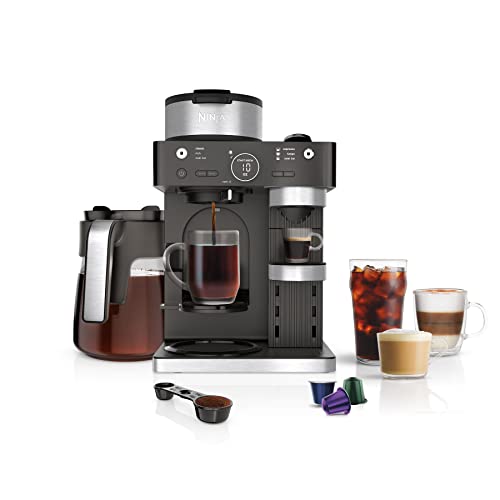
The Ninja Barista CFN601 is a hybrid brewer with three espresso-style brew styles and a built-in frother. I find it excellent for shops offering single-serve espresso-style drinks and Nespresso-compatible options. The unit makes lattes and cappuccinos quickly with minimal cleanup. It’s a versatile helper for cafes that want to expand offerings without hiring extra staff.
Operationally, the CFN601 shortens drink times and reduces mistakes with preset profiles. It’s great for second-line service at peak times or as a primary machine in low-traffic shops. I recommend it when you need flexibility and consistent results across different drink styles.
Pros:
- Multiple espresso brew styles for menu variety
- Compatible with Nespresso capsules for convenience
- Built-in frother supports cappuccinos and lattes
- Easy to operate for casual staff
- Affordable multi-function machine
Cons:
- Not a commercial-grade espresso group head
- Capsule use increases per-cup cost
- Limited manual tuning for espresso purists
My Recommendation
I recommend the Ninja Barista CFN601 for coffee shops that want menu flexibility and ease of use. It works well for shops testing new drinks or offering capsule convenience. If you aim to serve fast lattes and capsule-based espressos, it’s a smart choice. For owners picking the best espresso maker for a coffee shop that mixes manual and capsule service, this machine balances both worlds.
| Best for | Why |
|---|---|
| Menu testing | Supports several brew styles quickly |
| Convenience cafes | Capsule compatibility increases choice |
| Second-line use | Speeds service during rush hours |
De’Longhi COM532M Combo
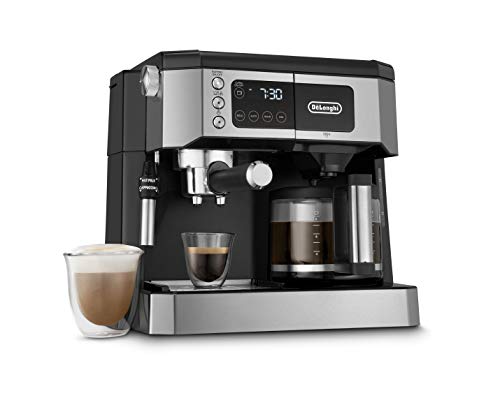
The De’Longhi COM532M is an all-in-one coffee and espresso combo with a 10-cup glass carafe and adjustable milk frother. I recommend it for shops that want to offer drip coffee and espresso from one machine. It saves counter space and reduces equipment costs compared to separate machines. For cafes serving mixed crowds, it’s a practical and economical choice.
In real use, the COM532M handles drip coffee well and makes passable espresso. It’s best for light to medium traffic where a single machine must multitask. The adjustable frother adds value for cappuccino fans, though it won’t match a dedicated steam wand for latte art.
Pros:
- Combo machine eliminates extra equipment
- 10-cup carafe is useful for batch brewing
- Adjustable frother enhances milk drinks
- Space-saving for small counters
- Good value for mixed-service cafes
Cons:
- Not a commercial espresso solution
- Simultaneous brewing limits throughput
- Steam performance is modest for latte art
My Recommendation
I recommend the De’Longhi COM532M Combo for small coffee shops that need flexible brewing without extra machines. It fits businesses that sell both carafes of drip coffee and a limited espresso menu. This combo is a useful cost-saver and simplifies staffing needs. If you want a compact option while choosing the best espresso maker for a coffee shop that also serves drip by the pot, De’Longhi is worth considering.
| Best for | Why |
|---|---|
| Mixed menus | Drip and espresso in one machine |
| Small cafes | Cost-effective and space-saving |
| Low to medium traffic | Handles casual cafe needs |
Gevi Commercial 20-Bar Espresso

The Gevi Commercial 20-Bar unit targets small commercial settings with a focus on durability and steam power. I appreciate its robust stainless-steel housing and pro-style steam wand. It serves consistent shots and can handle back-to-back drinks better than many home machines. For a small café seeking a budget-conscious commercial-looking machine, Gevi delivers reliable performance.
Operationally, the Gevi machine holds pressure well and gives steady extraction when paired with proper grind and tamp routines. It’s a good entry-level commercial option for cafes that need a beefier machine than consumer models. Still, I advise routine descaling and filter checks to keep it performing well.
Pros:
- Commercial-style build and steam wand
- Handles frequent use better than home units
- Stainless-steel body resists wear
- Good pressure stability for consistent shots
- Affordable step-up from home machines
Cons:
- Not equivalent to full commercial group-head machines
- Limited service network compared to big brands
- Requires regular maintenance for long life
My Recommendation
I recommend the Gevi Commercial 20-Bar for small coffee shops and startups that need a tougher, commercial-looking machine without the high price. It suits businesses that expect steady but not industrial throughput. The machine earns its place when you want a durable unit that pulls solid espresso. If you’re weighing options for the best espresso maker for a coffee shop on a budget, Gevi is a practical contender.
| Best for | Why |
|---|---|
| Budget commercial | Durable build at lower cost |
| Small cafes | Handles frequent short bursts |
| Startups | Affordable upgrade from home machines |
FAQs Of best espresso maker for a coffee shop
What is the most important feature when choosing the best espresso maker for a coffee shop?
Temperature stability and steam power matter most. Stable temps give consistent flavor. Strong steam makes milk drinks quickly. Also consider build quality and ease of maintenance.
Do I need a commercial group head for a small coffee shop?
Not always. Small cafes can use heavy-duty prosumer or entry-level commercial machines. If you expect high volume, choose a commercial group head. For moderate traffic, prosumer machines often suffice.
How often should I service my espresso machine in a cafe?
Daily cleaning and weekly backflushing are essential. Schedule professional service every 6-12 months depending on volume. Regular care prevents downtime and keeps flavor consistent.
Can the best espresso maker for a coffee shop be budget-friendly?
Yes. You can find reliable machines that balance cost and performance. Focus on durability, steam power, and consistent extraction when choosing a budget option.
Is a built-in grinder necessary for a coffee shop?
A built-in grinder saves space and speeds workflow but external commercial grinders give finer control. For higher volume, I recommend a separate commercial grinder. For small shops, integrated grinders often work well.
Final Verdict: Which Should You Buy?
For the best espresso maker for a coffee shop, I pick the Breville Barista Express BES870XL when balancing price, flavor, and control. It gives barista-level shots in a compact footprint and suits small cafes that want excellent espresso without a full commercial setup.
If you need multi-function or budget options, machines like the Ninja Luxe Café or Gevi Commercial offer practical alternatives. Choose based on your volume, menu, and staffing to keep customers happy and service flowing.