
The best pans for candy making offer even heating, easy release, safe handling, and precise temperature control.
Have you ever watched a batch of caramel turn grainy, or struggled to lift sticky candy from a pan? The right cookware can make sugar work much less stressful. I look for pans that spread heat well, resist hot spots, and clean up without a fight. I also consider size, material, handle design, and how well each tool suits chocolate, caramel, gummies, nougat, or hard candy. This guide reviews popular options for home cooks, candy hobbyists, and small-batch makers who want better results.
ABOOFAN Nougat Candy Mold Pan

The ABOOFAN nougat candy mold is made for users who want neat, even candy slabs. Its flat sheet-pan style works well for nougat, gelatin candy, soft caramels, and other mixtures that need time to set. The broad shape gives you more room to spread a batch into one even layer. That can make cutting and portioning much easier.
I like this style of mold for homemade gift candy because it helps create a clean, uniform look. It can also serve as a small baking pan when you need a simple tray for bars or cookies. The best pans for candy making should help control shape as well as cooking, and this product focuses on that second stage. Remember that a mold does not replace a heavy cooking pot for boiling sugar.
Pros:
- Useful for nougat, gelatin candy, and soft candy
- Flat shape helps create even slabs
- Helpful for cutting uniform candy pieces
- Suitable for small home batches
- Can also work for some sheet-style baking tasks
- Simple design is easy for beginners to understand
Cons:
- It is not a deep pan for cooking candy syrup
- Large batches may require more than one mold
- Users must confirm the material and heat limits before oven use
My Recommendation
I recommend the ABOOFAN mold for candy makers who already have a reliable saucepan but need a better setting tray. It is especially useful for nougat, jelly candy, and soft caramel that you want to cut into tidy squares. It is not the best choice for direct high-heat sugar cooking. Still, as a low-cost shaping tool, it adds useful value to a home candy station.
Digital Candy Thermometer With Pot Clip
 thermometer with pot clip”>
This digital candy thermometer is one of the most useful tools for anyone who makes candy often. It has a long stainless steel probe and a pot clip that helps hold the tip in the syrup. A digital display makes it easier to read a changing temperature than a small dial. The long probe also keeps your hand farther from hot sugar.
Temperature matters because sugar behaves differently at each stage. A few degrees can separate a soft caramel from a firm caramel or a chewy candy from a hard one. I would place this thermometer high on any list of the best pans for candy making because even the finest pan cannot fix an incorrect cooking temperature. Keep the probe from touching the pan base, since the metal may give a false reading.
Pros:
- Digital display is quick to read
- Long probe helps keep hands away from heat
- Pot clip supports hands-free monitoring
- Useful for candy, frying, syrup, and cooking
- Stainless steel probe is suited to kitchen use
- Helps improve repeat results between batches
Cons:
- It needs batteries to operate
- Electronic parts require careful cleaning
- The probe must stay clear of the pan bottom for a true reading
My Recommendation
This thermometer is best for new candy makers who want a clear guide while learning sugar stages. It also suits experienced cooks who make caramel, toffee, marshmallows, or fried treats and want fast readings. I would pair it with a thick stainless steel or copper pan for better control. For many users, accurate temperature tracking gives more benefit than buying a very expensive pan.
1000ML Double Boiler Pot Set
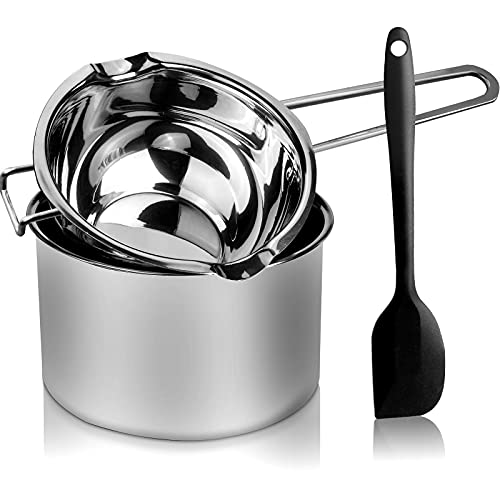
A double boiler gives candy makers a gentle way to melt ingredients. This set includes a smaller 1000-milliliter pot, a larger 2200-milliliter stainless steel pot, and a silicone spatula. The design is useful for melting chocolate, butter, candy melts, wax, and other heat-sensitive ingredients. Steam from the lower pot warms the upper pot without placing it directly over strong heat.
This type of cookware is a smart choice when direct heat feels too aggressive. Chocolate can seize or scorch when it gets too hot, while candy melts may become thick and difficult to stir. The double boiler helps create a softer heat zone and gives you more time to work. It belongs among the best pans for candy making for chocolate work, although it is not designed for boiling large batches of hard candy syrup.
Pros:
- Gentle heat suits chocolate and candy melts
- Includes both upper and lower pots
- Stainless steel construction is practical for kitchen use
- Silicone spatula supports stirring and scraping
- Useful for sauces, custards, and wax melts too
- Reduces the risk of direct scorching
Cons:
- Small capacity limits large candy batches
- It requires water in the lower pot
- Users must prevent steam or water from entering melted chocolate
My Recommendation
I recommend this double boiler for home cooks who make chocolate bark, truffles, dipped treats, or candy melts. It is also a good first tool for children’s supervised candy projects because the heat is easier to manage than direct burner heat. It will not replace a large saucepan for caramel or brittle. For gentle melting and controlled stirring, though, it offers strong everyday value.
Stainless Steel Sugar Melting Pan

This stainless steel sugar melting pan is built for melting and heating sugar-based mixtures. Its design suits gas and induction use, which gives it broad kitchen appeal. The pan can be useful for candied fruit, tanghulu, syrup, caramel, and small commercial-style candy tasks. Stainless steel also resists food odors and does not add a metallic taste when cared for correctly.
A dedicated sugar pan can feel more controlled than a wide frying pan. Its shape helps keep a syrup pool together while you stir or dip fruit. I would still use a thermometer and watch the mixture closely, since stainless steel can develop hot spots on some burners. Among the best pans for candy making, this model is most appealing to users who want a pan focused on sugar melting rather than general baking.
Pros:
- Works with gas and induction cooktops
- Stainless steel suits sugar and syrup work
- Useful for tanghulu and candied fruit
- Supports small commercial or frequent home batches
- Easy to pair with a candy thermometer
- Resists food stains and lingering flavors when cleaned well
Cons:
- Stainless steel may heat unevenly on some burners
- Hot sugar can be hard to remove if allowed to dry
- It may be too specialized for occasional candy makers
My Recommendation
This pan is best for cooks who make sugar syrup, candied fruit, or hard candy on a regular basis. It is a strong option for induction users who need compatible cookware. I would choose it over a basic skillet when the main goal is melting sugar and dipping fruit. Use moderate heat, avoid sudden temperature changes, and clean the pan soon after use.
CRAFT911 Candy Thermometer

The CRAFT911 candy thermometer offers a simple way to track hot sugar and frying oil. Its long design and pot clip help keep the thermometer in place during cooking. The white finish makes the scale easy to spot against a dark syrup or pot. It is useful for candy, deep frying, syrups, and even candle-making projects.
An analog thermometer does not need batteries, which can be a real advantage during a long cooking session. It also gives a constant reading without pressing buttons or waiting for a screen to refresh. I suggest checking the thermometer in boiling water before a major candy project, since accuracy can change with age or rough handling. It is a practical companion for the best pans for candy making when you prefer simple tools.
Pros:
- No batteries are required
- Pot clip supports steady placement
- Long shape helps protect hands from heat
- Works for candy and deep-fry oil
- Simple analog design is easy to use
- Useful for cooks who prefer a constant reading
Cons:
- Analog scales may take longer to read
- Small temperature marks can challenge some users
- The glass or sensing area needs careful handling
My Recommendation
I recommend the CRAFT911 for budget-minded cooks and beginners who want a basic candy thermometer without batteries. It is a good match for caramel, fudge, oil, and syrup recipes that need steady heat checks. It may not feel as quick as a digital model. However, its simple format is dependable when you handle it carefully and keep the probe from touching the pan.
Taylor Stainless Steel Candy Thermometer

The Taylor candy and deep-fry thermometer uses a 12-inch analog paddle design. Its long body can reach into deeper pots while keeping your hand away from hot oil or boiling syrup. A pan clip helps hold the tool in position during cooking. The stainless steel body gives it a durable feel and supports use with sugar, syrup, frying oil, and brewing tasks.
I see this as a useful choice for people who move between candy work and frying. The paddle shape is easy to place in a larger pot, and the long length helps when a recipe has more liquid. Like other analog thermometers, it may not offer the instant digital display some users prefer. Still, temperature awareness is one of the most important parts of using the best pans for candy making.
Pros:
- 12-inch length suits deeper pots
- Stainless steel body is made for kitchen work
- Pan clip helps maintain a stable position
- Useful for candy, syrup, frying, and brewing
- Does not rely on batteries
- Long body creates more distance from hot ingredients
Cons:
- Analog readings need close attention
- It may be too long for very small saucepans
- The clip must be positioned so the probe does not touch the pan
My Recommendation
The Taylor thermometer is best for cooks who use deep pots or prepare several types of hot foods. It makes sense for a kitchen that handles candy, doughnuts, fried chicken, syrup, or brewing. I would pair it with a sturdy 3- to 5-quart pan for a balanced setup. Its broad use and battery-free design help make it a sensible long-term kitchen tool.
Palksky 468-Cavity Mini Silicone Mold

The Palksky silicone mold has 468 small round cavities for tiny candies, chocolate drops, gummies, jelly, ganache, and pet treats. Its many cavities let you make a large number of small pieces in one fill. Silicone helps the finished candy release with less sticking than a rigid metal tray. The mini size is useful when you want toppings, tasting portions, or bite-size treats.
This mold is very different from a cooking pan, but it fills an important role in candy making. It helps turn melted chocolate or gummy mixture into consistent shapes without much cutting. A firm tray under the silicone makes filling and moving it safer. If you need the best pans for candy making for party favors or tiny treats, high-cavity silicone molds deserve a close look.
Pros:
- Offers 468 small round cavities
- Useful for chocolate, gummies, jelly, and ganache
- Silicone supports easier release
- Creates consistent bite-size pieces
- Helpful for party favors and candy toppings
- Can also suit small pet treats and wax melts
Cons:
- Tiny cavities require careful filling
- The flexible mold may need a rigid tray underneath
- It is not designed for cooking syrup on a burner
My Recommendation
I recommend the Palksky mold for makers who value quantity and small portions. It works well for chocolate pearls, mini gummies, and candy decorations. It is less useful for thick nougat or large caramels. For best results, place it on a flat baking sheet, fill with a piping bag or squeeze bottle, and let the candy set fully before flexing the mold.
DEMMEX Solid Copper Sugar Pan

The DEMMEX sugar pan is a 1.7-quart solid copper pan with a hammered, unlined interior. It includes a lid and helper handle, which can make lifting and controlled pouring easier. Copper transfers heat very efficiently, so it responds quickly when you adjust the burner. That quality can help an experienced candy maker manage sugar as it moves from clear syrup to caramel.
This pan has a traditional look and a specialized purpose. An unlined copper surface is valued by many confectioners for sugar work, but it requires thoughtful care and proper cleaning. Copper can react with some acidic foods, so I would reserve this pan mainly for sugar, caramel, jam, and similar recipes. It is one of the best pans for candy making for skilled users who want fast heat response in a small batch pan.
Pros:
- Copper offers fast heat response
- 1.7-quart size suits small candy batches
- Helper handle supports safer lifting
- Lid helps cover sugar or sauce between steps
- Traditional hammered finish gives it a distinctive look
- Useful for sugar sauce, caramel, jam, and dessert work
Cons:
- Unlined copper needs careful food selection and care
- It may require polishing to maintain its finish
- The price can be higher than basic stainless steel pans
- It may not suit cooks who want dishwasher cleaning
My Recommendation
The DEMMEX pan is best for experienced candy makers who understand heat control and copper care. It is a strong choice for small batches of caramel, sugar sauce, jam, and confectionery syrup. I would not make it my first pan for a beginner who is still learning sugar stages. If you want responsive heat and appreciate traditional cookware, this pan can bring excellent control and lasting character to your kitchen.
Bongpuda 468-Cavity Silicone Candy Mold

The Bongpuda silicone mold also provides 468 mini round cavities for candy, chocolate, gummies, jelly, and wax melts. It is designed for makers who want many small pieces with the same round form. Flexible silicone can make removal simple after the mixture has cooled and set. The mold can also suit small dog treats when used with safe, suitable ingredients.
For candy gifts, this design saves time because you do not need to cut every piece by hand. It can turn one bowl of melted chocolate into hundreds of tiny drops or decorations. The main challenge is filling so many small spaces without spills. I suggest using a squeeze bottle, piping bag, or small measuring tool for more control when working with this option among the best pans for candy making.
Pros:
- Creates 468 small round pieces
- Works for candy, chocolate, gummies, and jelly
- Flexible material supports easy release
- Useful for decorative candy and toppings
- Can support small treat-making projects
- Large cavity count saves time during batch work
Cons:
- Mini cavities can be slow to fill by spoon
- A support tray helps prevent bending and spills
- It cannot replace a heat-safe cooking pot
My Recommendation
I would choose the Bongpuda mold for home candy makers who produce small sweets in large numbers. It suits chocolate drops, tiny gummies, and colorful candy decorations for birthdays or holidays. It is a shaping tool, not a burner pan, so pair it with a double boiler or saucepan. Its high cavity count gives it excellent value when uniform mini candy matters most.
EPYHREHM Madeleine Shell Candy Mold

The EPYHREHM mold has nine shell-shaped cavities inspired by the classic madeleine form. It can add a decorative shape to chocolate, candy, gelatin, or other soft sweets. The shell pattern gives homemade treats a more polished look without special decorating skills. It is a good fit for small batches when presentation matters more than maximum output.
This mold offers a different experience from a flat slab pan or mini round mold. Each cavity creates a distinct shape that works well for party plates, dessert boxes, and themed gifts. Before using it, check the listed material and temperature limits for your planned recipe. Among the best pans for candy making, this one is aimed at creative presentation and small, attractive pieces.
Pros:
- Creates attractive shell-shaped candy
- Nine cavities are easy to fill and monitor
- Useful for chocolate and soft candy projects
- Helps improve the look of homemade gifts
- Small batch size reduces waste during testing
- Simple design suits beginners and craft projects
Cons:
- Only nine pieces can be made at one time
- It may not suit large party orders
- Users should verify heat limits before baking or heating
My Recommendation
The EPYHREHM mold is best for creative cooks who want shell-shaped candy for gifts, events, or dessert displays. It is also helpful when testing a new chocolate or gelatin recipe in a small amount. Choose a high-cavity mold instead if speed and volume are your main goals. For attractive treats with a handmade feel, this mold is a charming and useful choice.
What Makes the Best Pans for Candy Making?
Candy cookware must handle heat in a very different way from an ordinary baking pan. Sugar syrup can become extremely hot, and it changes quickly near the firm-ball, hard-ball, and hard-crack stages. A thin pan may heat too fast in one spot and too slowly in another. That uneven heat can cause burnt edges, sugar crystals, or a batch that sets with the wrong texture.
When I compare the best pans for candy making, I first check the material. Heavy stainless steel is a practical choice for many homes because it is durable, easy to clean, and suitable for most sugar recipes. Copper responds faster to heat changes, but unlined copper needs more care. Aluminum heats quickly, yet a thick base matters because very thin aluminum can create hot spots.
The pan shape also affects your result. A saucepan with tall sides helps prevent bubbling syrup from spilling. A heavy bottom spreads heat across the base. A pouring lip can make it easier to move caramel or syrup into a mold. For chocolate, a double boiler is often better than direct heat. For gummies and nougat, a mold or setting tray becomes more important after cooking.
Capacity should match the recipe. A small pan gives a shallow syrup layer, which may cook faster than expected. An oversized pan can spread a small batch too thin and make temperature changes harder to judge. I prefer a pan that leaves plenty of headroom without making the ingredients look lost at the bottom.
A thermometer is not technically a pan, but it is part of the full candy setup. Candy recipes often use terms such as soft-ball or hard-crack, yet a thermometer gives a clearer target. The probe should sit in the syrup without touching the bottom or side. This small detail can prevent misleading readings.
How I Judge Candy Pans
I judge each item by its intended job rather than forcing every product into one ranking. A copper sugar pan should not compete directly with a silicone mold. One cooks the syrup, while the other shapes the finished candy. Good product selection means matching the tool to the recipe.
I also look at safety. Hot sugar sticks to skin and can cause serious burns. Long handles, helper handles, stable clips, and wide bases all matter. I never recommend rushing a candy recipe or carrying a full pan of boiling syrup across a busy kitchen.
Cleaning is another key point. Sugar becomes hard as glass when it cools. The easiest cleanup method is often to add warm water to the pan and gently heat it until the sugar dissolves. Avoid sudden cold water in a very hot pan, since rapid temperature changes can stress some cookware.
Finally, I consider long-term value. A simple stainless steel pan may serve for candy, sauces, soup, and everyday cooking. A cavity mold may only serve one purpose, but it can still save hours during holiday projects. The best pans for candy making are the ones that solve your exact problem without adding needless work.
Best Candy Pan Material Guide
Stainless steel
Stainless steel is a reliable all-around option. It does not usually react with common candy ingredients, and it stands up well to frequent use. The main drawback is that a thin stainless pan may heat unevenly. Look for a thick base or bonded construction when possible.
Copper
Copper heats rapidly and responds quickly when you lower the burner. This can help with caramel and sugar sauce. Unlined copper requires more care and should not be treated like ordinary nonstick cookware. It is best for users who understand its limits and want precise heat response.
Silicone
Silicone is ideal for shaping candy after it melts. It helps release gummies, chocolate, and soft candy from detailed cavities. It does not replace a cooking pan, and flexible molds work better on a rigid tray. Always follow the maker’s heat guidance.
Aluminum
Aluminum heats quickly and often costs less. A heavy-gauge base can work well for candy, but thin aluminum may make temperature control harder. It is a useful material for some molds and pans, provided the product is designed for the recipe and heat level.
Candy-Making Tips for Better Results
Use a clean pan. Old sugar crystals on the side can encourage a new syrup to crystallize. A pastry brush dipped in water can help wash crystals down the inside wall during cooking.
Avoid stirring at the wrong time. Some recipes need stirring at the start, then require the syrup to cook without disturbance. Follow the recipe closely, because caramel, fudge, brittle, and pulled sugar each behave in their own way.
Control moisture. A small amount of water helps dissolve sugar at the beginning, but extra steam or water can ruin chocolate and change the texture of finished candy. Keep lids, spatulas, and molds dry unless the recipe says otherwise.
Use a lined tray for sticky candy. Parchment, silicone sheets, or a properly prepared mold can make release easier. Do not assume every silicone mold needs grease, but a light coating may help with certain recipes.
Let candy cool as directed. Cutting too soon can cause soft edges and misshapen pieces. Waiting too long can make some candy difficult to cut. A sharp, lightly oiled knife can help with firm slabs.
Keep children and pets away from the cooking area. Hot sugar stays dangerous even when it looks calm. Set tools within reach before you start so you do not need to search for them while the syrup is boiling.
Best Setup for Different Candy Types
Caramel
Use a medium heavy-bottom saucepan with tall sides and a reliable thermometer. A copper pan can give experienced cooks excellent heat response. A silicone mold or lined tray helps after cooking.
Chocolate
Use the 1000ML double boiler set or another gentle melting setup. Keep water and steam away from the chocolate. Stir slowly and use low heat.
Nougat
Choose a setting mold such as the ABOOFAN sheet-style pan. You still need a separate saucepan for cooking the sugar syrup. A flat pan helps you create an even slab that is easier to cut.
Gummies and jelly candy
A high-cavity silicone mold makes the most sense. The Palksky and Bongpuda designs can help produce many small pieces. Use a squeeze bottle or piping bag to limit mess.
Tanghulu and candied fruit
A dedicated stainless steel sugar pan can make dipping easier. Use a thermometer and keep fruit dry before dipping. Moisture can cause the crisp sugar shell to soften.
Hard candy and brittle
Choose a pan with good heat control and enough headroom. A thermometer helps you reach the correct stage. Pour with care, and use a prepared heat-safe tray or mold.
Best For Table
Best For
| Best for | Why |
|---|---|
| Caramel and sugar syrup | The DEMMEX copper pan responds quickly to burner changes and suits small batches. |
| Chocolate and candy melts | The 1000ML double boiler provides gentle heat and includes a silicone spatula. |
| Mini gummies and candy gifts | The Palksky or Bongpuda 468-cavity molds create many uniform pieces at once. |
FAQs Of best pans for candy making
What is the best pan material for making candy?
Heavy stainless steel is the best all-around choice for many home cooks. It is durable, easy to clean, and works with most sugar recipes. Copper offers faster heat response, but it needs more care.
Can I make candy in a regular saucepan?
Yes, you can make many candies in a regular saucepan. Choose one with a thick base and tall sides. Avoid thin pans that create hot spots, and use a thermometer for better control.
Is a double boiler good for candy making?
A double boiler is excellent for chocolate, candy melts, and other heat-sensitive ingredients. It provides gentle heat and lowers the risk of scorching. It is not the usual choice for hard-crack sugar syrup.
Why does candy stick to the pan?
Candy sticks when it cools against an unprepared surface or when the mixture contains thick sugar residue. Use a suitable mold, parchment, or silicone sheet. Soaking the pan in warm water can help dissolve leftover sugar.
Do silicone candy molds need to be greased?
Some silicone molds release candy without grease, while others benefit from a very light coating. Check the product guidance and the recipe. Always place a flexible mold on a firm tray before filling it.
Final Verdict: Which Should You Buy?
The DEMMEX copper pan is my top pick for experienced cooks making caramel and sugar syrup. For chocolate, the 1000ML double boiler is safer and more gentle. The Palksky and Bongpuda molds are best for high-volume mini candy.
The best pans for candy making depend on your recipe, batch size, and skill level. Add a reliable thermometer, use safe heat control, and choose the tool that fits your candy goals.