
The best pans for non-toxic and chemical-free cooking use safe metals, PFAS-free coatings, and simple care.
Have you ever cooked eggs, only to scrape half of them from the pan? Or worried about old coatings, high heat, and unknown chemicals touching your food? I understand that concern. The best pans for non-toxic and chemical-free cooking should offer safe materials, steady heat, easy release, and long service life. I reviewed these pans for daily tasks such as frying eggs, roasting vegetables, searing meat, and baking cookies. I also looked at coating claims, handle design, cleaning needs, size, and value. Keep in mind that no modern pan is truly “chemical-free,” but some choices avoid PFAS, PTFE, and PFOA.
SENSARTE Ceramic Frying Pan

The SENSARTE 9.5-inch ceramic frying pan is a useful size for eggs, grilled cheese, pancakes, and small portions. Its ceramic nonstick surface is listed as PFAS-free, which may appeal to shoppers who want to reduce their use of fluorinated coatings. The pan has a smooth cooking surface and a heat-resistant handle. I like the size because it feels easy to control without taking up much room on the stove.
This pan works best over low or medium heat. A little oil can help protect the surface and improve food release, even though the pan has a nonstick finish. It is induction compatible, so it suits many modern kitchens. As with most ceramic-coated pans, gentle tools and hand washing can help the coating last longer.
Pros:
- PFAS-free ceramic cooking surface
- Helpful 9.5-inch size for daily meals
- Compatible with induction cooktops
- Comfortable heat-resistant handle
- Good food release with low heat
- Simple shape that stores easily
Cons:
- Ceramic coating may wear faster under high heat
- Hand washing is the safer care choice
- Not large enough for family-size stir-fries
My Recommendation
I recommend this pan for one or two people who want a light ceramic skillet for breakfast and quick meals. It is one of the best pans for non-toxic and chemical-free cooking when you want a PFAS-free option without buying a full cookware set. The 9.5-inch size also suits small kitchens and new cooks. Its value is strongest when you use low heat, soft utensils, and careful cleaning.
CAROTE Titanium Cookware Set
 titanium cookware set for non-toxic cooking”>
The CAROTE 20-piece titanium cookware set is designed for cooks who need more than one pan. The set includes several pots and pans, along with detachable handles and related pieces. A broad set can help replace mismatched cookware in one step. It may also save cabinet space when the handles come off for storage.
Titanium in a product name does not always mean the whole pan is solid titanium. In many cookware designs, it describes a reinforced surface or a marketing feature, so I suggest checking the current listing for exact construction details. The detachable handle is useful for moving cookware from the stove to the oven or table, when the manufacturer allows that use. Use the care instructions closely, since removable parts need proper fitting and cleaning.
Pros:
- Large 20-piece collection for a new kitchen
- Detachable handles can improve storage
- Several pan and pot sizes for varied meals
- Useful choice for small cabinets or apartments
- Can reduce the need for separate cookware purchases
- Flexible setup for stovetop cooking
Cons:
- More pieces require more sorting and care
- Detachable handles may feel less familiar than fixed handles
- Exact coating and material details should be checked before purchase
My Recommendation
This CAROTE set is best for families, first apartments, and anyone replacing several old pans at once. It can be a practical path toward the best pans for non-toxic and chemical-free cooking if the exact model meets your material standards. I especially like the storage idea for compact kitchens. Before ordering, review the current care, oven, and coating information because set contents can vary by model.
Wildone Stainless Steel Baking Sheets
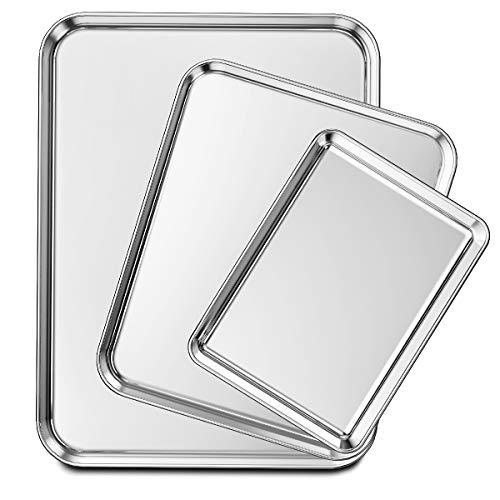
The Wildone three-piece stainless steel baking sheet set offers sizes for cookies, roasted vegetables, sheet-pan dinners, and small baked goods. Stainless steel has no synthetic nonstick coating to peel or flake. That makes it a strong pick for shoppers who want a simple surface with fewer coating concerns. The set includes 9-, 12-, and 16-inch pans, so I can match the pan to the amount of food.
Stainless steel may need parchment, oil, or a silicone mat to prevent sticking. It can also discolor after high heat, though that usually affects looks more than function. I find stainless sheets more forgiving than coated sheets when used for roasting and browning. They are also useful when you want a pan that can handle regular oven work without worrying about a soft nonstick layer.
Pros:
- No synthetic nonstick coating
- Three useful sizes in one set
- Suitable for cookies and roasted foods
- Strong choice for high-heat oven cooking
- Stainless steel construction is easy to understand
- Helpful for meal prep and sheet-pan dinners
Cons:
- Food may stick without oil or parchment
- May show heat marks over time
- Not designed for stovetop frying
My Recommendation
I recommend the Wildone set for bakers and home cooks who prefer uncoated cookware. It is among the best pans for non-toxic and chemical-free cooking because stainless steel avoids the coating question altogether. The three sizes give you room for both small and large recipes. Choose this set if oven cooking matters more to you than effortless release.
SENSARTE 8-Inch Ceramic Pan With Lid

The SENSARTE 8-inch ceramic pan is made for smaller servings. It can handle eggs, one grilled sandwich, a small quesadilla, or a quick portion of vegetables. The included lid helps keep heat and moisture in the pan. Its listed PFAS-, PTFE-, and PFOA-free design may suit cooks who want a modern nonstick alternative.
The compact body heats quickly, so I would start with low or medium heat rather than turning the burner all the way up. The lid is useful for finishing eggs, warming leftovers, and gently steaming vegetables. Because the cooking area is small, this pan feels less wasteful when cooking for one. Avoid metal tools and harsh scrubbers to help protect the ceramic surface.
Pros:
- PFAS-, PTFE-, and PFOA-free listed surface
- Compact size for one-person meals
- Includes a matching lid
- Heats quickly for breakfast cooking
- Easy to store in a small cabinet
- Useful for eggs and delicate foods
Cons:
- Too small for large portions
- Coating needs gentle care
- High heat may shorten nonstick performance
My Recommendation
This pan is best for students, singles, and anyone who cooks small meals. It earns a place among the best pans for non-toxic and chemical-free cooking for people who want a small PFAS-free skillet with a lid. The size saves time and space. I would not choose it as the only pan for a busy family, but it is a handy second pan.
SENSARTE 12-Inch Deep Frying Pan

The SENSARTE 12-inch deep frying pan gives you a wide cooking area and a five-quart shape. It works like a skillet and sauté pan, so it can handle stir-fries, pasta sauce, one-pan chicken, and family-size meals. The helper handle makes the large pan easier to lift. A lid adds control when food needs to simmer or finish cooking.
The listed coating is PFOA- and PFOS-free, but shoppers should still review the full current product details for the exact coating type. Deep sides help reduce splatter and hold more food than a standard skillet. The pan is induction compatible, which adds value for homes with different cooktops. Its size is useful, yet it also means the pan can feel heavy when full.
Pros:
- Large 12-inch cooking surface
- Five-quart capacity for family meals
- Deep sides help limit splatter
- Includes a lid for simmering
- Helper handle improves control
- Works on induction cooktops
Cons:
- Heavy when filled with food
- Takes more cabinet space than a small skillet
- Nonstick coating needs careful cleaning
My Recommendation
I suggest this pan for families and cooks who want one large pan for many jobs. It is one of the best pans for non-toxic and chemical-free cooking when you need a PFAS-conscious option with deep sides and a lid. The helper handle is a real benefit during busy cooking. It offers strong everyday value, provided you have room to store it and follow the care guide.
CAROTE Titanium Cookware Set With Handles

This CAROTE titanium cookware set is another full collection with detachable handles. It gives a kitchen several cooking shapes while helping reduce the space needed for storage. Removable handles can also make it easier to move a pan from the cooktop to the oven or refrigerator, but only when the product instructions permit it. The set may appeal to cooks who want a tidy, coordinated look.
I would pay close attention to the locking system before cooking. A handle should click into place and remain stable while you stir or lift the pan. Detachable designs are helpful, but they add a part that must stay clean and dry. As with any coated cookware, moderate heat and nonmetal utensils are sensible habits.
Pros:
- Broad cookware selection for daily meals
- Detachable handles save cabinet space
- Coordinated set looks neat in the kitchen
- Several sizes support different recipes
- Useful for small homes and RV kitchens
- Can reduce clutter from loose cookware
Cons:
- Removable parts need extra care
- Exact materials may vary by set version
- Large sets can include pieces you rarely use
My Recommendation
This set is a good match for organized cooks, small kitchens, and people moving into a new home. It can support a search for the best pans for non-toxic and chemical-free cooking, but I recommend confirming the current coating details first. The storage system is its main strength. Buy it when flexibility matters more than the simple feel of a traditional fixed-handle pan.
SENSARTE 13-Piece Ceramic Cookware Set

The SENSARTE 13-piece ceramic cookware set is built for a complete kitchen refresh. It includes different pots and pans, so you can cook soup, rice, vegetables, eggs, and sauces without switching to unrelated pieces. The non-toxic positioning and ceramic surface will attract shoppers who want to move away from traditional fluoropolymer coatings. A matching set can also make meal prep feel more organized.
I see this as a balanced option for cooks who want several pan sizes but do not need a very large collection. Ceramic surfaces often release food well at first, especially when used with gentle heat. They can lose that easy release if exposed to repeated overheating or rough cleaning. Follow the included instructions and use wood, silicone, or plastic utensils made for cookware.
Pros:
- Useful 13-piece kitchen collection
- Ceramic surface suits PFAS-conscious shoppers
- Provides pots and pans for varied recipes
- Coordinated design creates a tidy set
- Good choice for a first full cookware set
- Supports low-oil everyday cooking
Cons:
- Ceramic release can decline with hard use
- Needs gentle tools and careful washing
- Not as simple as an uncoated steel set
My Recommendation
I recommend this set for new homeowners, couples, and cooks replacing a mixed group of old pans. It is a strong contender among the best pans for non-toxic and chemical-free cooking when you want ceramic cookware in several sizes. The set gives better coverage than buying one skillet alone. Its long-term value depends on low heat and careful care.
Astercook 19-Piece Titanium Cookware Set

The Astercook 19-piece cookware set targets shoppers who want a large, matching kitchen set. Its black titanium style gives the pieces a modern look, while the collection covers frying, sautéing, boiling, and general meal prep. The product listing identifies the set as PTFE-, PFOA-, and PFOS-free. That makes it worth considering for cooks who want a broad nonstick set with fewer coating concerns.
The induction-ready design adds useful flexibility for different homes. A large set can be convenient during holiday cooking or when several burners are in use. However, more pieces also mean more storage and more care. I suggest checking the exact contents, oven limits, and cleaning directions before purchase because cookware sets can change between listings.
Pros:
- Large 19-piece collection
- Listed as PTFE-, PFOA-, and PFOS-free
- Induction-ready design
- Multiple pieces for full meal preparation
- Modern black finish
- Useful for families and frequent cooks
Cons:
- Requires significant cabinet space
- Large sets may include duplicate sizes
- Coated surfaces need moderate heat and soft tools
My Recommendation
This Astercook set is best for larger households and cooks who want many matching pieces at once. It belongs on a shortlist of the best pans for non-toxic and chemical-free cooking because the listing makes clear PFAS-related coating claims. Still, I recommend reading the current product page before ordering. It offers good coverage when you need a complete set, not just a single everyday pan.
SENSARTE Swiss Granite Frying Pan
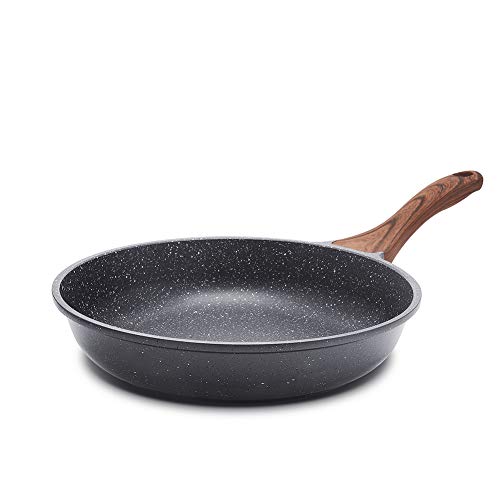
The SENSARTE 9.5-inch Swiss granite frying pan is shaped for omelets, eggs, pancakes, and other delicate foods. Its stone-style finish gives it a different look from plain black cookware. The product is listed as PFOA-free and uses a nonstick cooking surface. I like this size for quick meals because it is large enough for a normal breakfast but still easy to lift.
Granite or stone labels do not mean the pan is made from a solid rock surface. They usually describe the appearance or coating style, so I would read the material details with care. The pan should perform best with low to medium heat and gentle tools. It is a convenient pick for people who want easy food release without a heavy cast-iron skillet.
Pros:
- Useful 9.5-inch omelet size
- PFOA-free listed coating
- Stone-style finish looks attractive
- Light and easy to handle
- Good for eggs and pancakes
- Needs little oil for many foods
Cons:
- Not a true solid granite pan
- Coating may need replacement after heavy use
- Limited space for large meals
My Recommendation
I would choose this pan for a cook who wants a simple omelet pan with a decorative finish. It is one of the best pans for non-toxic and chemical-free cooking for shoppers focused on a PFOA-free surface and a modest price. The pan is easy to use for breakfast and snacks. Pick a larger model if you often cook for more than two people.
CAROTE 21-Piece Ceramic Cookware Set
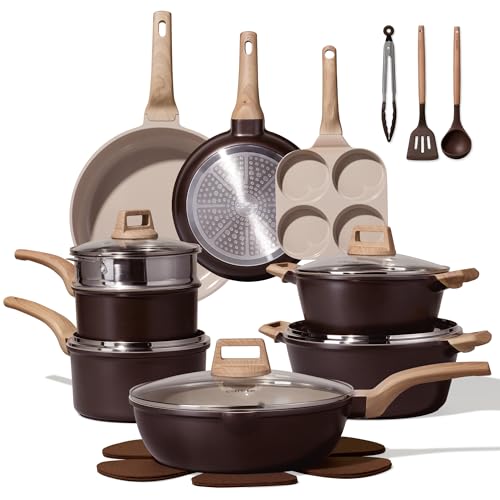
The CAROTE 21-piece ceramic cookware set is the largest ceramic collection in this review. It is aimed at cooks who want a coordinated range of pans, pots, and accessories. The many pieces can cover daily breakfast, soups, sauces, frying, and larger family meals. For someone starting from an empty kitchen, that level of coverage can be helpful.
A big set is not always the best value if you already own useful cookware. Before buying, I suggest measuring your cabinets and checking which pieces come with lids. Ceramic cookware needs the same care as other coated pans: avoid extreme heat, metal tools, and abrasive cleaners. Used with care, the set can create a smooth and attractive cooking station.
Pros:
- Large 21-piece ceramic collection
- Good coverage for a full kitchen
- Matching design across the cookware
- Useful range of pots and pans
- Fits shoppers seeking ceramic surfaces
- Helpful for family meal preparation
Cons:
- Needs considerable storage space
- Some pieces may see little use
- Ceramic coating requires careful maintenance
My Recommendation
This CAROTE set is best for large households, new kitchens, and cooks who enjoy having the right pan for each task. It may be among the best pans for non-toxic and chemical-free cooking if you prefer ceramic cookware and need a full collection. Its main strength is variety. I would choose it over a smaller set only when you have enough storage and will use most of the pieces.
What Makes a Pan Non-Toxic?
The phrase “non-toxic cookware” can sound simple, but it needs careful reading. Every pan is made from materials, and many materials contain chemicals in some form. The real question is whether the cooking surface is stable, properly made, and suitable for its intended heat. I look for clear material claims instead of vague words such as “healthy” or “natural.”
PFAS, PTFE, and PFOA are common terms in cookware discussions. PTFE is a fluoropolymer used in many traditional nonstick coatings. PFOA was once used in the production of some fluoropolymer coatings, but it has been phased out of many products and regulated in several markets. A pan labeled PFOA-free is not automatically free of every PFAS or every nonstick material. That is why a clear PFAS-free claim or an uncoated surface gives shoppers more useful information.
Stainless steel is one of the simplest choices because it has no nonstick coating. Cast iron and carbon steel are also popular, though they may need seasoning and can react with some acidic foods. Ceramic-coated pans can offer easy release without a traditional PTFE coating, but the coating can wear with time. I always treat “chemical-free” as a shopping phrase, not a literal scientific description.
How I Chose the Best Pans for Non-Toxic Cooking
I compared the pans by material claims, cooking size, heat control, handle design, cleaning needs, and likely use. A pan must do more than avoid a material a shopper dislikes. It should also cook evenly, feel stable, and match the meals you make. A safe pan that sits unused in a cabinet is not a good buy.
I also checked how each pan fits a real kitchen. A small skillet can be ideal for eggs but frustrating for a family stir-fry. A 21-piece set may look like a bargain, yet it can waste money if you lack storage. I gave extra attention to products with clear PFAS-, PTFE-, or PFOA-related claims, while avoiding claims that suggest any pan is completely free of all chemicals.
For coated pans, care matters as much as the original material. High heat, empty preheating, metal tools, and rough sponges can shorten the life of a nonstick surface. Even the best pans for non-toxic and chemical-free cooking need sensible use. I recommend reading the current product instructions because temperatures, dishwasher guidance, and oven limits may differ.
Ceramic vs. Stainless Steel Pans
Ceramic-coated pans usually give easier food release at the start. They are friendly for eggs and pancakes, and many use less oil. Their weak point is long-term coating wear. High heat and harsh care can make the smooth surface lose performance.
Stainless steel pans have a learning curve. Food can stick if the pan is cold, the heat is too high, or you use no oil. Yet stainless steel has no soft coating to scratch, and it handles oven roasting well. For shoppers who want the least complicated material story, stainless steel is often the clearest choice.
I see both types as useful. Choose ceramic when easy release matters most. Choose stainless steel when durability, browning, and an uncoated surface matter more. Many home cooks get the best results by keeping one of each.
How to Use Nonstick and Ceramic Pans Safely
Start with low or medium heat. Most foods do not need a very hot burner, and gentle heat helps protect coated surfaces. Do not leave an empty coated pan over a strong flame for a long time. If a pan smokes, turn off the heat and let it cool before cleaning.
Use wood, silicone, or soft plastic tools approved for cookware. Metal forks and spatulas can scratch some finishes. Wash the pan with warm water, mild soap, and a soft sponge unless the maker gives different instructions. Do not stack pans without protection if the cooking surface can touch another pan.
Replace a pan when the surface is badly peeling, deeply scratched, warped, or no longer stable. A small mark does not always mean immediate danger, but serious damage can affect cooking and cleaning. I also avoid buying cookware with unclear claims or no care information. Good product details help you make a safer, calmer choice.
Best-For Comparison Table
| Best for | Why |
|---|---|
| Small daily meals | The SENSARTE 8-inch and 9.5-inch ceramic pans are easy to control and store. |
| Family-size stovetop meals | The SENSARTE 12-inch deep pan offers wide space, deep sides, and a lid. |
| Uncoated oven cooking | The Wildone stainless steel baking sheets avoid a synthetic nonstick layer. |
Care Tips for Longer Pan Life
Do not use cooking spray on many coated pans unless the maker approves it. Spray residue can build up and become hard to remove. Instead, add a small amount of oil with a brush or paper towel. This simple habit can keep the surface cleaner.
Let a hot pan cool before placing it under cold water. A sudden temperature change may cause warping. Dry stainless steel well after washing to reduce water spots. For ceramic pans, avoid abrasive powders and steel wool.
Store pans with a cloth, paper towel, or pan protector between them. This small cushion can prevent scratches during busy mornings. Keep removable handles separate only when they are fully dry. Good care costs little, but it can make a major difference in daily use.
FAQs Of best pans for non-toxic and chemical-free cooking
What are the best materials for non-toxic cookware?
Stainless steel, cast iron, carbon steel, and ceramic-coated cookware are popular choices. Each has different care needs. Stainless steel has no nonstick coating, while ceramic can offer easier food release.
Are ceramic pans completely chemical-free?
No pan is literally free of all chemicals. Ceramic-coated pans are made with manufactured materials, but many avoid PTFE and may carry PFAS-free claims. Always check the exact product label and current listing.
Is stainless steel safer than nonstick cookware?
Stainless steel avoids a synthetic nonstick coating, which some shoppers prefer. It may stick more, especially when used incorrectly. Preheating, moderate heat, and a little oil can improve results.
Can I use high heat with ceramic pans?
Low to medium heat is usually the better choice for ceramic-coated pans. High heat can reduce coating life and may cause food to burn. Follow the care and heat limits supplied with your pan.
How often should I replace a coated pan?
There is no single time limit. Replace it when the surface peels, flakes, warps, or becomes badly scratched. Care, cooking temperature, and use frequency all affect its service life.
Final Verdict: Which Should You Buy?
For most homes, I would choose the SENSARTE 12-inch deep pan for family meals or the SENSARTE ceramic skillet for small tasks. The Wildone stainless steel set is best when you want uncoated oven pans.
The best pans for non-toxic and chemical-free cooking match safe material claims with careful use. Pick the size and surface that fit your meals, then protect it with gentle heat and tools.