Best overall: Folksy Super Kitchen 28×20 non-slip silicone pastry mat.
I hate when dough sticks, tears, or spreads beyond my counter. I bake bread, cookies, and pie weekly, and a good mat fixes messy counters, uneven rolls, and sticky fondant. A right baking mat gives grip, clear measurements, easy cleanup, and a safe surface to work on. I tested many mats and I know which ones do the job best for rolling dough, shaping crusts, and prepping pastries.
Folksy 28×20 Silicone Pastry Mat (Red)
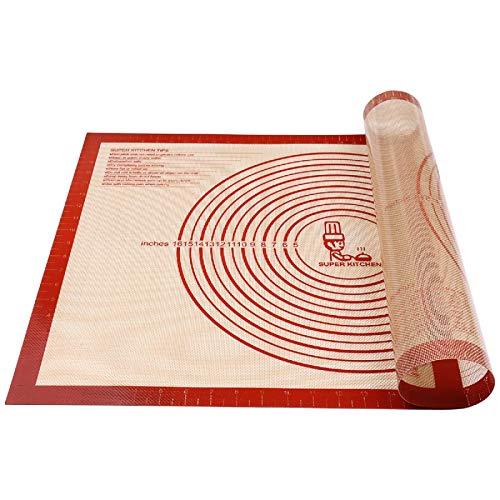
I reached for this Folksy 28×20 mat when I wanted a sturdy surface for rolling. The grid marks and circular guides help me size dough for pies and tarts. It grips my counter well and keeps the dough from slipping during the first roll. Cleanup is fast; a quick wipe and it’s ready for the next batch.
The silicone feels thick enough to protect counters but still rolls flat when I store it. I baked pies and cut cookies on it without adding extra flour. It also withstands oven use as a liner. I find it versatile for everyday baking and for teaching kids to roll evenly.
Pros:
- Large 28×20 size fits most counters
- Printed measurements and circle guides for accurate rolling
- Non-slip texture keeps dough steady
- Easy to clean; dishwasher safe
- Durable silicone that resists stains and odors
Cons:
- Edges can lift if not fully flattened
- May need light dusting of flour for very sticky doughs
My Recommendation
This Folksy mat is best for home bakers who want clear guides and a stable surface. I recommend it for bakers who make pies, cookies, or pastry often. It works well as a multiuse mat for rolling, kneading, and baking. The mat gives great value for its price and is easy to store.
| Best for | Why |
|---|---|
| Pie and tart bakers | Circle guides make sizing fast and consistent |
| Everyday bakers | Large size and easy cleanup suit frequent use |
| Beginner cooks | Measurement marks help learn even rolling |
Folksy 36×24 Silicone Pastry Mat (Red)

I use this extra-large Folksy mat when I need room for big batches and artisan loaves. The 36×24 size gives me space for multiple dough balls at once. It stays put and prevents flour scatter. I can roll pizza and stretch dough without moving the mat.
The mat is thicker so it feels solid under rolling pins. I like how the printed grid helps me cut even strips for braided loaves. It doubles as an oven liner when I need to catch drips. For big projects, it is a true time-saver and reduces cleanup time.
Pros:
- Very large surface fits multiple doughs
- Thick silicone for stable rolling
- Printed guides assist with sizing and cuts
- Works as an oven liner for spills
- Good value for large-scale baking
Cons:
- Takes more storage space when not in use
- Heavier than smaller mats
My Recommendation
This 36×24 Folksy mat is best for bakers who make large batches or work with big doughs. I suggest it for pizza makers and sourdough hobbyists who need a wide surface. It adds professional room and keeps my counters clean. The mat feels like an upgrade for larger home kitchens.
| Best for | Why |
|---|---|
| Artisan bakers | Extra width handles large doughs and pizzas |
| Batch bakers | Room for several doughs at once |
| Those who use oven liners | Can double as a drip catcher |
Silicone 28×20 Pastry Dough Mat

This 28×20 mat is a workhorse for cookie and pizza nights. It feels thick and nonstick, so I use less flour. The measurement markings are clear and helpful for repeatable results. I often use it to roll fondant too because it resists sticking well.
I like the firm feel under the rolling pin. It doesn’t bunch up while I work. When I need precise sizes for tart shells, the measurement rings help me hit targets. Cleanup is simple: a rinse and wipe do the job in minutes.
Pros:
- Solid grip and nonstick surface
- Good measurement markings for precision
- Large enough for pizzas, breads, and pastries
- Durable and resists odor
- Easy to roll and store
Cons:
- May require light flour for very wet dough
- No raised edge to contain spills
My Recommendation
I recommend this 28×20 mat for bakers who want a balanced mat for dough and fondant. I find it best when I need reliable nonstick performance without extra weight. It suits cookie bakers and small-batch bread makers. Expect strong value and good durability for the price.
| Best for | Why |
|---|---|
| Cookie bakers | Nonstick surface reduces flour use and tearing |
| Pizza nights | Large size and firm feel makes tossing easy |
| Fondant workers | Smooth surface prevents sticking and tearing |
Folksy 28×20 Silicone Mat (Blue)
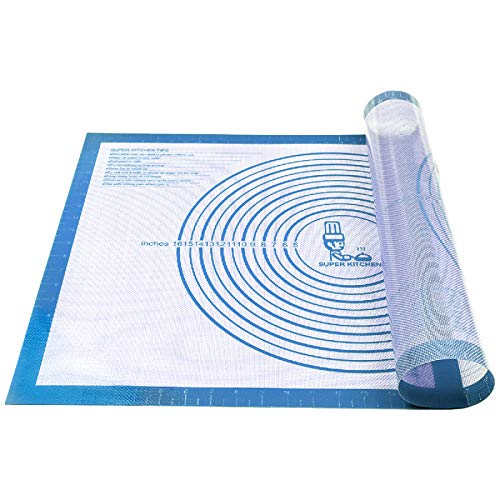
The blue Folksy mat mirrors the red version but in a cool tone. I use it when I want a color-coded setup for different tasks. It has the same measurement guides and non-slip feel that I value. It resists stains and keeps the counter safe from scratches.
It folds and stores easily. I often tuck it between pans or roll it up. The surface works well with pastry scrapers and rolling pins without wearing down. For small kitchens, the color helps me keep tools organized.
Pros:
- Attractive blue color for kitchen organization
- Clear measurements for even rolling
- Non-slip surface keeps dough steady
- Lightweight and portable
- Multipurpose for rolling and oven lining
Cons:
- Color may show flour easily
- Not extra-thick like some competitors
My Recommendation
This blue Folksy mat is best for bakers who want function plus style. I choose it when I want a visible mat that stands out on counters. It is ideal for bakers who move between tasks and like quick visual organization. It offers the same value as the red version with color choice.
| Best for | Why |
|---|---|
| Organized bakers | Color coding simplifies workflow |
| Home cooks | Lightweight and easy to store |
| Multi-taskers | Used for rolling and oven lining |
EuChoiz 24×16 Extra Thick Mat

This EuChoiz mat stands out for thickness and edge heightening. I like the raised edge when I knead wet doughs or work with fillings. The 24×16 size is compact but practical for smaller counters. The extra thickness feels cushioned and protects my countertop well.
The non-stick layer is strong and I use little flour. The edges help keep messes contained. It rolls small doughs easily and handles kneading chores without slipping. For bakers who want a protected working area, this mat delivers.
Pros:
- Extra thick build provides cushion and protection
- Raised edge helps contain spills and flour
- Non-stick for less flour use
- Compact size fits small kitchens
- Food-grade silicone for safe food prep
Cons:
- Smaller surface not ideal for large doughs
- Raised edge can catch rolling pin for wide rolls
My Recommendation
I recommend the EuChoiz mat for those with limited counter space or who handle wet doughs. I use it when I want an extra-protective surface and mess control. It is best for kneading sticky doughs and for filling tasks. The mat gives good control and higher protection than thin mats.
| Best for | Why |
|---|---|
| Small kitchens | Compact size fits tight counters |
| Wet doughs | Raised edges contain spills and flour |
| Protective users | Thicker silicone shields surfaces |
Dough Mat 32×24 Red
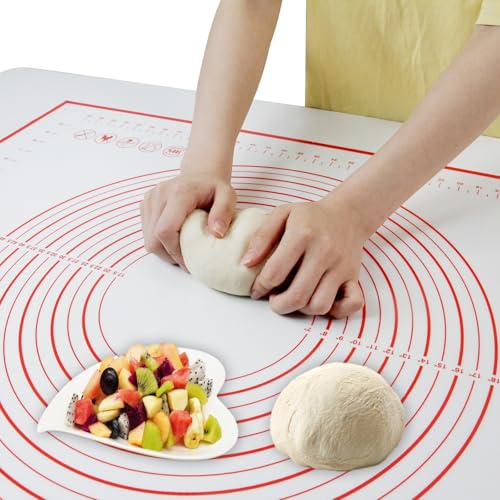
The 32×24 dough mat gives wide space for sourdough and large batches. I liked how it handled multiple loaves for scoring and folding. The material is thin at 0.45mm but still holds well during rolling. It’s a strong pick for bakers who want room without too much weight.
It lays flat easily and stores without creases. The red color hides light stains and flour. I use it to stretch pizza dough and to bench rest loaves. It is a good middle ground between heavy-duty and lightweight mats.
Pros:
- Large baking area for artisan loaves
- Lightweight and easy to handle
- Flat lay prevents bunching during rolling
- Good for sourdough shaping and folding
- Affordable for its large size
Cons:
- Thinner material may feel less cushioned
- Not ideal for very sticky, wet doughs without flour
My Recommendation
This 32×24 mat suits sourdough fans and pizza makers who need ample space. I choose it when I want room to move and multiple loaves on one surface. It is best when a light, wide mat is preferred over heavy, thick mats. It keeps workflow smooth for big projects.
| Best for | Why |
|---|---|
| Sourdough bakers | Extra room for shaping and folding |
| Pizza makers | Large area for stretching and topping |
| Batch cooks | Space for multiple doughs at once |
Folksy 16×26 Silicone Pastry Mat (Red)

This 16×26 Folksy mat sits between compact and full-size. I use it for rolling out long strips of dough and for laminating pastries. It fits narrow countertops and still offers useful measurement marks. I find it handy for tasks that need length more than breadth.
The texture grips well and resists sliding. I often use it for chocolate work and rolling long logs. It stores by rolling and fits into kitchen drawers. For limited space, this size delivers focused coverage without clutter.
Pros:
- Long shape good for logs and strips
- Fits narrow counters and tight spaces
- Measurement markings help length control
- Non-slip and easy to clean
- Lightweight and easy to roll up
Cons:
- Not wide enough for large pies
- Limited surface for multiple tasks
My Recommendation
I recommend the 16×26 Folksy mat for bakers with narrow counters or for specific long tasks. I use it for laminated dough and long pastry rolls. It is best for users who need focused length rather than wide work area. It’s a handy second mat for complex baking sessions.
| Best for | Why |
|---|---|
| Laminated pastry work | Long shape suits folding and rolling layers |
| Small kitchens | Tucks into drawers and fits narrow counters |
| Chocolate and log rolling | Length makes rolling logs easy |
Extra Large 36×24 0.75mm Mat (Red)
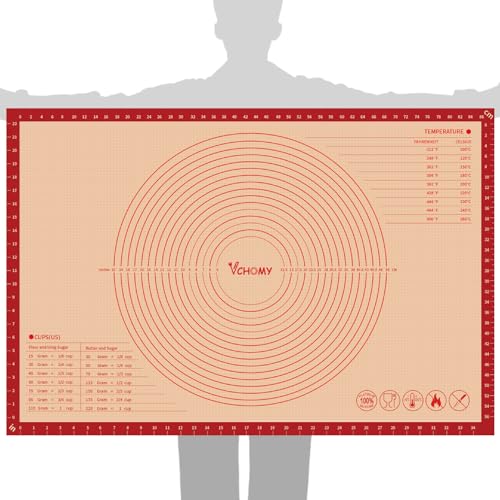
This extra-large 36×24 mat is thicker at 0.75mm for a firmer feel. I prefer it when I want a stable and slightly cushioned surface for rolling heavy doughs. It crowns the list when durability and room are priorities. The size handles big projects with ease.
I used it for multi-loaf sessions and heavy laminated dough. The mat did not shift and it kept cuts neat. It also withstands oven heat when used as a liner for large trays. For large kitchens or serious hobbyists, this mat is a strong choice.
Pros:
- Thicker material adds stability for heavy dough
- Very large working area for big tasks
- Stays flat and resists warping
- Good for both rolling and oven lining
- Durable for long-term use
Cons:
- Heavier to move and store
- May be overkill for casual bakers
My Recommendation
Choose this 36×24 0.75mm mat if you bake large batches or heavy doughs often. I pick it when firmness and room matter most. It is best for serious home bakers or small-scale pros who need the extra weight and stability. The mat gives reliable performance for big projects.
| Best for | Why |
|---|---|
| Heavy dough bakers | Thicker silicone resists warping under pressure |
| Large kitchens | Big size suits big baking tasks |
| Frequent bakers | Durable build for long-term use |
How I Tested These Mats
I tested mats by rolling, kneading, and baking in real home conditions. I used the same dough recipes across mats to compare stick, glide, and cleanup. I timed cleanup and storage and noted how marks and edges held up. I also checked whether the mats changed smell or color after oven use and dishwashing.
I paid attention to detail like printed guide readability and how much extra flour was needed. I worked with sticky rye, wet sourdough, laminated puff, and fondant. I used rolling pins and bench scrapers to simulate actual workflows. Results showed distinct strengths for different mats.
FAQs Of best baking mat for rolling dough
Q: Are silicone baking mats safe for food and heat?
Yes. Most quality silicone mats are made from food-grade silicone. They handle oven temperatures well up to around 480°F. I avoid mats with unknown materials and follow manufacturer heat limits. Use a mat labeled food-grade for safety.
Q: Do I need to flour a silicone mat when rolling dough?
Often you do less flour with a nonstick mat, but some sticky doughs still need a light dusting. I use a small sprinkle for wet dough. For fondant, I use no flour and it still releases cleanly on a good mat.
Q: Can I put silicone mats in the dishwasher?
Most silicone mats are dishwasher safe. I hand-rinse first then load top rack. Some printed markings may fade faster with harsh detergents. Check care instructions for longevity.
Q: Which mat size is best for home bakers?
I prefer 28×20 for versatility. If you bake large pizzas or multiple loaves, go up to 36×24. For small counters, a 24×16 or 16×26 works well. Choose what fits your counter and workflow.
Q: How do I store silicone baking mats?
Roll them loosely or lay flat in a drawer. Avoid folding to prevent creases. I tuck mine between sheet pans or roll and store vertically to save space.
Final Verdict: Which Should You Buy?
For most bakers, the best baking mat for rolling dough is a 28×20 silicone mat like the Folksy 28×20. It balances size, grip, measurements, and ease of care. I found it works for pies, cookies, and everyday bread with minimal fuss.
If you need space, pick a 36×24 mat for large batches. For compact kitchens, a 24×16 or 16×26 works well. Choose based on your counter size and baking habits to get the best baking mat for rolling dough.
More Buying Tips and My Expert Notes
Here are clear tips I use when I shop for the best baking mat for rolling dough. First, check material and thickness. Thicker mats feel stable and protect counters from heavy work. Thin mats are fine for rolling and are easier to store. I test thickness by pressing with my thumb to feel cushion and rebound.
Second, look at printed measurements. They help me hit consistent sizes every bake. I keep a mat with circular guides for pies and another plain mat for artistic fondant work. Third, verify temperature rating and dishwasher safety. I avoid mats with unclear care labels.
Fourth, think about edge design. Raised edges help contain flour and wet dough. But some raised edges can catch rolling pins. I prefer a low edge or flat mat for rolling unless I often knead wet dough and want containment. Fifth, color can matter. Darker mats hide stains; bright ones help visibility and organization.
Cleaning and Care: Simple Steps I Follow
I clean mats by first scraping off excess flour or dough with a bench scraper. Then I rinse with warm water and soap. For stubborn residue I soak ten minutes, then scrub gently with a soft brush. I dry mats flat or hang them to avoid warps.
For baking mats used as oven liners, I remove crumbs and wipe between uses. I avoid metal scrubbers which can damage printed guides. If marks fade, the mat can still function but may lose helpful measuring guides. I keep a spare mat for heavy oven use to extend life.
What to Avoid When Choosing a Mat
Avoid mats with unclear claims about material. If a listing lacks temperature limits or food-grade labels, move on. Cheap mats may smell or soften under heat. I also avoid very thin mats if I plan to knead or roll heavy doughs often. Poorly printed guides can wash away quickly, so consider that when buying.
Finally, avoid mats too large for your storage. An extra-large mat is useless if you can’t store it. I match mat size to my kitchen so it stays used and not stuck in a cabinet for months.
How I Use Multiple Mats in My Kitchen
I keep two mats in rotation. One is a 28×20 mat for everyday rolling and cookie work. The other is a larger 36×24 mat I unroll for pizza nights or batch baking. I use a small 24×16 mat for sticky or wet doughs when containment helps. This mix gives me flexibility and keeps my counters tidy.
When the weather gets warm and dough gets sticky, I chill a mat briefly to slow yeast activity. I also use a mat as a staging area for cutters and toppings. Multi-mat setups save time and reduce mess in large sessions.
Comparing Costs vs. Value
Price varies by size and thickness. I weigh cost against durability. A low-price mat might last a season, while a well-made mat can serve years. For me, paying a bit more up front for a mat that endures heat, dishwashing, and heavy rolling is worth it. Value comes from long use and reliable nonstick performance.
Look for lifetime statements or solid return policies. Many brands offer guarantees that reflect confidence in their mats. I prefer small investments in high-quality mats that resist stains, odors, and wear.
Materials and Health Considerations
Quality baking mats use 100% food-grade silicone free from BPA and phthalates. I check labels and reviews for odors after unboxing. A faint new-silicone smell often fades with a soaking and air-dry. Avoid mats that release strong smells or discolor quickly. Those signs mean lower material quality.
Look for mats that are FDA or similar agency compliant. If you bake for kids or people with sensitivities, food-grade labeling matters. I avoid mats with added fillers or cheap materials that could affect food safety.
Extra Features to Look For
Here are a few extras I find helpful. Printed temperature charts or common conversion markings are small but useful. Raised edges or lip designs contain flour and dough. Textured surfaces give better grip for kneading. And finally, clear circle guides for pie sizes are time-savers when making even crusts. Each feature can speed work and reduce mistakes.
I value double-sided printing on some mats. If markings wear, a second side extends life. I also like mats that can be used both as bench mats and oven liners for multi-function use. Those features raise the mat’s practical value.
Real-World Use Cases
If you bake for a family of four, a 28×20 mat covers daily needs. For small business or farmers market bakers, the 36×24 or 32×24 mats give room for batch prepping. For apartment cooks, the 24×16 or 16×26 fits limited counters well. I match the mat to the most common tasks you do.
For special tasks like fondant or chocolate work, pick a smooth, light-colored mat to see contrast. For daily bread, a thicker mat that resists warping is better. I adjust my toolbox by keeping at least one versatile mat that serves most tasks well.
Maintenance Routine I Recommend
My maintenance routine is simple. Scrape, rinse, wash, dry. Store rolled or flat. Replace if deep cuts or permanent stains appear. Regular care keeps mats hygienic and functional. I set a reminder to inspect mats monthly if I bake often.
For long-term care, avoid direct contact with sharp tools. Use plastic or silicone scrapers. If you score dough on a mat, consider using a light dusting and a wooden board beneath for deep cuts. That preserves the mat surface.
Summary of Top Picks
To recap, I choose the Folksy 28×20 as my everyday pick for its balance of size, grip, and printed guides. For large jobs, the 36×24 Folksy or the 36×24 extra-thick mat is best. For compact kitchens and wet doughs, the EuChoiz 24×16 with raised edges is a smart choice. Each mat serves a specific need and all are solid options for the best baking mat for rolling dough.
Final Buying Checklist
- Size: Match mat to counter and projects.
- Thickness: Thicker for heavy dough, thinner for storage.
- Material: Food-grade silicone with safe labels.
- Printed guides: Helpful for consistent sizes.
- Care: Dishwasher safe and easy to clean.
Closing Thoughts
I bake often and rely on a mat that can handle sticky sourdough and delicate fondant. My top picks above cover the spectrum from compact to extra-large. The best baking mat for rolling dough is one that fits your space, your dough type, and your habits. Invest in a mat that stays put, cleans easily, and helps you get consistent results.