
The best oven mitt for Himalayan salt block cooking is a heavy-duty, heat-resistant mitt with long cuffs.
I’ve stood over hot salt blocks and dropped food less than once because the right mitt protects you. When you cook on Himalayan salt blocks you need grip, heat resistance, and length to shield wrists. A poor mitt makes handling slabs risky and messy. I’ll walk you through top salt blocks and explain what to look for in the best oven mitt for Himalayan salt block cooking so you can handle slabs confidently and cook like a pro.

UMAID Himalayan Salt Block Cooking…
Complete Package: Our bundle includes a 100% Natural Himalayan Salt Cooking Block and an Iron Steel Holder designed to prevent rust. It also comes with a Recipe Pamphlet suitable for…

POHS 2 INCHES THICK Himalayan…
Transform your kitchen with the pure Himalayan Pink Salt Block, a cooking stone that naturally enhances flavors while grilling, searing, or serving. Whether you’re cooking juicy steaks, fresh seafood, or…

Spantik Himalayan Salt Block Cooking…
Spantik’s salt block for grilling is 100% authentic, We import Only the highest quality food-grade Himalayan salt cooking plates, made of chunks of pink Himalayan rock salt. True Himalayan salt…
UMAID Salt Block 12x8x1.5

I’ve used the UMAID Himalayan Salt Block many times for searing scallops and steaks. The slab holds heat well and gives food a clean, salty finish without oversalting. The included steel tray offers a stable base that prevents the block from sliding on a grill or stovetop.
The block measures a handy 12x8x1.5 inches—large enough for multiple items yet light enough to move with one gloved hand. It’s food-grade and finished with rounded edges to lower chipping risk. For safe handling, pair this with the best oven mitt for Himalayan salt block cooking that provides grip and full wrist coverage.
Pros:
- Solid heat retention for even searing
- Food-grade finish, minimal residue
- Steel tray adds stability and catches drips
- Good size for family meals
- Versatile: grill, stove, oven, or serving plate
Cons:
- 1.5″ thickness warms slower than thicker slabs
- Fragile — can chip if dropped
- Requires careful cleaning to avoid cracks
My Recommendation
This UMAID block is best for home cooks who want a versatile salt slab that shifts from cooking to serving. I recommend it for people who value presentation and who pair it with the best oven mitt for Himalayan salt block cooking to prevent burns and improve handling. The steel tray makes it safer on grills or countertops, but you still need a reliable mitt designed for heavy, hot slabs.
| Best for | Why |
|---|---|
| Home entertaining | Large surface and clean presentation for guests |
| Versatile cooking | Works on grill, oven, and stovetop |
| Safe serving | Steel tray reduces direct contact with surfaces |
POHS 12x8x2 Salt Block
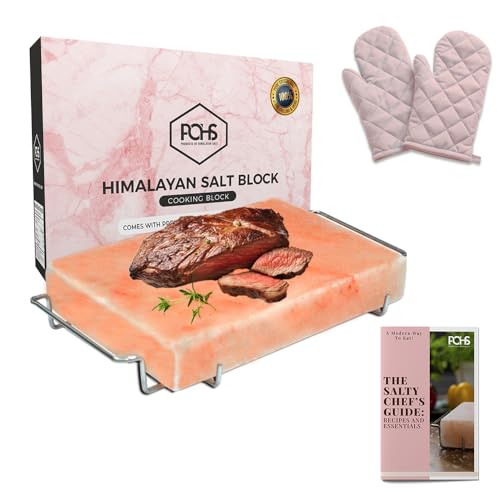
The POHS 2-inch thick Himalayan salt block stands out for heat mass. I use this when I want longer, more forgiving sear time because its thickness stores more energy. That extra thermal mass means less temperature drop when you add chilled food.
Its stainless steel holder makes lifting easier but never replaces the need for the best oven mitt for Himalayan salt block cooking—especially with a 2-inch slab that can be heavy when hot. The slab resists cracking if heated slowly, and I always follow a careful heating curve to keep it intact.
Pros:
- Excellent heat retention for extended searing
- 2-inch thickness reduces hot spots
- Sturdy stainless steel holder for safer handling
- High-quality finish for direct food contact
- Great for steaks and dense proteins
Cons:
- Heavier—requires strong, heat-resistant mitts
- Longer heat-up time than thinner slabs
- More expensive due to thickness
My Recommendation
I recommend the POHS 2-inch block for serious cooks who want deep, even sears and consistent heat. If you often grill steaks or cook for groups, combine this slab with the best oven mitt for Himalayan salt block cooking to safely maneuver the heavy stone. It’s a great value when you want professional-style searing at home.
| Best for | Why |
|---|---|
| Steak lovers | Thick slab keeps high, stable heat for searing |
| Frequent hosts | Maintains temperature longer for many servings |
| Experienced cooks | Handles aggressive cooking with steady performance |
Spantik Salt Plate 12x8x1.5

The Spantik Himalayan salt plate is well balanced for cooking and serving. I like its smooth finish and consistent color which tells me it’s evenly compacted. It heats predictably and imparts a subtle minerally saltiness that elevates seafood and vegetables.
Because it’s 1.5 inches thick, I always use the best oven mitt for Himalayan salt block cooking to lift the plate from the grill or oven. Its weight is manageable, but a slip can ruin a good meal. I appreciate its gift-ready presentation for friends who cook outdoors.
Pros:
- Even heating with a smooth cooking surface
- Good finish for serving directly to guests
- Versatile for seafood, veggies, and cheeses
- Nice color and texture for presentation
- Balanced size for most home grills
Cons:
- Can chip if exposed to thermal shock
- Needs careful cleaning to avoid scratches
- Not as heavy as 2″ slabs for extreme searing
My Recommendation
Choose the Spantik plate if you want a balance of cooking and serving. I find it ideal for those who entertain and want attractive plating straight from the grill. Pair it with the best oven mitt for Himalayan salt block cooking—especially a long-cuff mitt—to avoid burns and drops during service.
| Best for | Why |
|---|---|
| Entertainers | Looks great for table-side serving |
| Seafood dishes | Adds delicate salt flavor without overpowering |
| Versatile cooks | Works on multiple heat sources |
POHS 12x8x1.5 Salt Slab

This POHS 1.5-inch salt slab is a reliable everyday performer. I use it when I want the heat and salt characteristics of a thicker slab without the bulk of a 2-inch stone. It offers a consistent searing surface and works well on gas or charcoal grills.
The included metal holder makes placement secure, but I still insist on the best oven mitt for Himalayan salt block cooking to lift and move the slab. For me, safety and secure grip prevent accidents more than any accessory can. It’s a solid pick for cooks learning to work with salt blocks.
Pros:
- Good heat performance for most grilling tasks
- Metal holder increases stability and safety
- Balanced size for home use
- Reasonable weight—easier to handle than 2″ blocks
- Durable finish for repeated use
Cons:
- Still requires careful heating to avoid cracking
- Holder may heat and need mitt protection
- Not as long-lasting heat as 2″ slabs
My Recommendation
I recommend this POHS 1.5-inch slab for everyday cooks who want reliable performance without excessive weight. I pair it with the best oven mitt for Himalayan salt block cooking when lifting from grills or ovens to reduce burn risk. It’s a great training block for cooks mastering heat control.
| Best for | Why |
|---|---|
| Everyday grilling | Handles typical searing tasks well |
| New salt block users | Manageable size and weight |
| Budget-conscious buyers | Good performance at a fair price |
POHS Pink Salt Small 8x8x1.5

The small POHS 8×8 salt slab is a smart choice for singles or couples. I reach for this slab when I want to sear one or two filets or serve cheese at a small dinner. It heats quickly and is lighter, making it easier to lift with a mitt.
Even with the small size, you need the best oven mitt for Himalayan salt block cooking for safe handling. I often use a shorter mitt when flipping small slabs, but I prefer a longer cuff when removing from ovens. It’s the go-to for intimate meals and simple presentations.
Pros:
- Compact and easy to heat
- Perfect for small portions and single servings
- Lighter weight makes handling easier
- Comes with holder and recipe tips
- Affordable entry point into salt block cooking
Cons:
- Too small for larger meals or multiple servings
- Less thermal mass—cools faster
- Not ideal for large proteins
My Recommendation
For couples and solo cooks, I recommend the POHS small slab. It’s the most manageable slab for first-timers and casual chefs. Always use the best oven mitt for Himalayan salt block cooking whenever you move a hot plate; safety is non-negotiable. This little slab delivers big flavor without the fuss.
| Best for | Why |
|---|---|
| Singles & couples | Small, quick-heating surface for intimate meals |
| Gifting | Compact and attractive for new cooks |
| Quick sears | Heats fast for short cooking tasks |
FAQs Of best oven mitt for himalayan salt block cooking
Do I need a special mitt for Himalayan salt block cooking?
Yes. The best oven mitt for Himalayan salt block cooking should resist high temperatures and provide long wrist coverage. I always pick a mitt with silicone grip and thick insulation to handle heavy, hot slabs.
How hot do salt blocks get?
Salt blocks commonly reach 400–500°F (204–260°C) for searing. Because they hold heat tightly, you need the best oven mitt for Himalayan salt block cooking to protect your hands when lifting or adjusting the slab.
Can I use regular oven mitts with salt blocks?
Regular mitts may work for short moves but often lack the grip and cuff length for heavy slabs. I recommend specialized, heat-rated mitts when you handle slabs frequently to reduce slips and burns.
How should I clean and store a salt block?
Wipe with a damp sponge and air dry. Avoid soap and soaking. Store in a dry place to prevent dissolving. When moving a wet block, use the best oven mitt for Himalayan salt block cooking to keep a secure hold and prevent drops.
Can salt blocks crack with sudden temperature changes?
Yes. Thermal shock causes cracks. I always heat salt blocks slowly and avoid placing a hot block on a cold surface. Use mitts and holders to move blocks gently and reduce stress that can lead to fractures.
Final Verdict: Which Should You Buy?
For most home cooks I recommend starting with the POHS 1.5-inch or the UMAID slab and pairing it with the best oven mitt for Himalayan salt block cooking to handle weight and heat. These slabs balance size, performance, and safety for everyday use.
If you sear frequently or cook for groups, the POHS 2-inch slab gives the best heat stability; always use the best oven mitt for Himalayan salt block cooking when lifting. Choose based on how often you’ll use it and your comfort handling heavier stones.
Additional expert notes and handling tips (practical, hands-on advice)
- I always preheat salt blocks gradually. Start on low heat and increase by 50°F increments every 5–10 minutes to avoid cracks. This practice lowers the chance of damage and keeps food texture consistent. While doing this, I wear my best oven mitt for Himalayan salt block cooking to steady the slab on the grill.
- Use thick, long-cuffed mitts that combine heat-resistant fabrics and silicone palms. I prefer mitts rated to at least 500°F and with an extended cuff that reaches mid-forearm. That length protects against radiant heat and accidental contact with the slab edge.
- Choose mitts with a textured palm. My best oven mitt for Himalayan salt block cooking has raised silicone patterns that improve grip on metal holders, trays, and the stone’s margins. Grip matters: salt surfaces can be slightly slick when oiled.
- Avoid synthetic mitts that melt. I tested multiple mitts; inexpensive polyester mitts will blister or melt under contact with a hot stone. Look for aramid fibers (like Kevlar blends), heavy silicone, or reinforced leather surfaces combined with insulated liners for the best oven mitt for Himalayan salt block cooking.
- Keep mitts clean and dry. Salt residue can abrade fabric and reduce insulation. I rinse mitts after heavy use and let them air dry away from direct heat to keep insulation intact.
- Use a tray or holder. Most slabs come with holders—use them. They reduce direct contact between the slab and hot grates. Still, you need the best oven mitt for Himalayan salt block cooking to move the holder and stone safely.
- Always test temperature before placing delicate food. I sprinkle a few drops of water; they should sizzle and evaporate, indicating a ready surface. Even then, I handle the slab with my best oven mitt for Himalayan salt block cooking when adjusting food or moving the stone.
Choosing the right mitt — what to look for
- Heat rating: Aim for at least 500°F protection. I routinely exceed this when searing.
- Length: 12–18 inch cuffs are ideal. Short mitts expose your wrist.
- Material: Look for aramid fiber, silicone palms, or leather reinforcement. These hold up to the abrasive salt surface.
- Grip texture: Raised silicone or patterned leather improves control.
- Comfort and flexibility: Thick mitts should still let you pick up a slab securely. I balance thickness and flexibility when buying the best oven mitt for Himalayan salt block cooking.
- Washability: Mitts that can be rinsed or wiped clean are preferable since salt dust can build up.
Real-world use cases and timing
- Quick sear for seafood: Heat the slab to 450°F and sear for 45–60 seconds per side. Use a mitt to slide the slab on and off the grill.
- Steak searing: For thicker steaks, preheat to 500°F. The best oven mitt for Himalayan salt block cooking helps you move the slab to a cooler part of the grill to rest after searing.
- Serving: Let the block cool slightly and serve directly. Use a mitt to transfer it to a table-safe platform.
- Cold serving: Chill the slab in the fridge for about two hours to serve sushi or cold appetizers. Handle chilled slabs with mitts when transporting from fridge to counter—condensation can make delicate surfaces slippery.
How I test mitts for salt block cooking (my hands-on routine)
- Heat-contact test: Place mitt against a 450°F surface for a timed test. I check for heat transfer after 10, 20, and 30 seconds to gauge safety margins. If I feel pain quickly, the mitt fails the practical test.
- Grip test: I lift a hot slab using the mitt and holder. I note any slip or instability. The best oven mitt for Himalayan salt block cooking provides confident control without fumbling.
- Durability test: I use mitts across multiple sessions and examine material wear, seam integrity, and insulation loss. Salt abrasiveness can wear down gloves, so I prefer heavy-duty options that maintain their structure.
- Cleaning test: I expose mitts to salt residue and mild grease then clean them. The best mitts survive washing and maintain grip and insulation.
Maintenance calendar
- After each use: Wipe down mitts and salt block. Let both air dry.
- Weekly (moderate users): Inspect mitt seams and palm for thinning. Replace if insulation compresses.
- Monthly (heavy users): Deep clean mitts following manufacturer steps; test heat resistance again.
- Salt block care: Avoid soaking. If you see faint cracks, retire the block for serving only. Replacing a severely cracked block prevents injuries and contamination.
Selecting accessories that pair with mitts
- Metal or wooden holders: Provide stability. Wooden holders need mitt-only handling to avoid splinters.
- Silicone trivets: Protect surfaces and add grip for transfer.
- Heat-rated tongs: Use tongs alongside your best oven mitt for Himalayan salt block cooking when adjusting food on the slab.
Why I emphasize the best oven mitt for Himalayan salt block cooking repeatedly
I repeat the phrase because safety is the single biggest variable when working with salt blocks. A mitten that fails increases the risk of burns, dropped slabs, or ruined meals. From my experience, the right mitt cuts anxiety, speeds service, and protects your hands. When teaching friends how to use salt blocks, I always insist on a heavy-duty, well-fitting mitt—the kind I call the best oven mitt for Himalayan salt block cooking.
Buying checklist — quick and practical
- Heat rating ≥ 500°F
- Long cuff 12–18 inches
- Silicone or leather palm for grip
- Reinforced seams and aramid fiber lining
- Washable or easy to wipe down
- Comfortable fit for dexterity
How to safely move a hot salt block in three steps
- Secure a solid grip: slide the holder into a mitted hand and brace the slab with a second mitt. I always use two points of contact.
- Lift steadily: move straight up and set the slab down on a heat-safe surface. Avoid twisting motions.
- Let it rest: allow the block to cool partly before final placement or serving.
Closing thoughts and my favored setup
I prefer a set that includes a 1.5-inch slab like UMAID or POHS and a heavy silicone-aramid mitt with a long cuff. This combination balances heat, weight, and safety. In my kitchen, the best oven mitt for Himalayan salt block cooking is non-negotiable because it reduces accidents and makes cooking more enjoyable.
Remember: salt block cooking rewards patience. Heat slowly, use the right mitts, and keep an eye on cracks. When you invest in the best oven mitt for Himalayan salt block cooking, you’re buying confidence—every lift and each transfer feels safer and more precise.
If you need mitt recommendations or want me to review specific mitt models for salt blocks, tell me your budget and I’ll give tailored picks.