
The best pans for Indian cooking combine even heat, sturdy handles, useful depth, and easy daily care.
I know the struggle: one pan must temper spices, fry onions, simmer dal, and cook curry without sticking or scorching. A flat skillet may work for some tasks, but Indian food often needs a deep kadai shape, strong heat control, and room for stirring. I reviewed these pans with real kitchen needs in mind, including tadka, frying, sautéing, biryani, and family-size meals. This guide helps you choose the best pans for Indian cooking based on size, material, cooktop use, cleaning, and value.
Tramontina Utsava 4-Inch Tadka Pan

The Tramontina Utsava Tadka pan is a small, focused tool for one of the most important steps in Indian cooking. Its compact 4-inch size suits mustard seeds, cumin, curry leaves, dried chilies, garlic, and ghee. The tri-ply clad stainless steel design aims to spread heat through the base instead of leaving one tiny hot spot. I like this shape for making a quick tempering oil without using a large skillet.
The small size also makes it easy to pour hot tadka over dal, sambar, chutney, or vegetables. Stainless steel does not add a coating to food, and it can handle high-heat work when used with care. The narrow body may help reduce splatter during a short fry, though I still recommend a lid or splatter screen when oil is very hot. This is not a general curry pan, but it can become a daily part of a well-equipped Indian kitchen.
Pros:
- Compact size uses less oil for tempering
- Tri-ply construction supports more even heating
- Stainless steel offers a durable cooking surface
- Useful for tadka, ghee, sauces, and small portions
- Easy to pour into a serving bowl
- Occupies very little storage space
Cons:
- Too small for curry, frying, or family meals
- Uncoated steel may need careful heat control
- Small handles can become hot near a strong burner
My Recommendation
I recommend this pan for cooks who make dal, sambar, rasam, or vegetable dishes that need fresh tempering. It is also a smart choice for a small apartment kitchen or anyone who wants a dedicated tadka tool. If you already own a larger kadai, this little pan fills a very specific gap. Among the best pans for Indian cooking, it stands out for speed, control, and low oil use rather than capacity.
| Best for | Why |
|---|---|
| Daily tadka | The compact body heats a small amount of oil quickly. |
| Small kitchens | It stores easily and takes little counter space. |
| Spice tempering | The shape suits cumin, mustard seeds, curry leaves, and chilies. |
Vinod 2.1-Liter Hard Anodized Deep Kadhai

The Vinod Professional Deep Kadhai offers a practical middle size for everyday Indian meals. Its 2.1-liter capacity gives you room to stir onions, tomatoes, paneer, vegetables, or a small batch of curry. The hard anodized body is designed for regular cooking and may resist wear better than plain aluminum. Its deep profile also helps reduce spills when you toss or stir food.
This kadhai includes a glass lid, which helps you watch a simmer without lifting the cover. The riveted handles provide a firm connection for lifting a filled pan, but I still suggest using a dry mitt because metal hardware can heat up. The manufacturer positions it for Indian food, sauces, pasta, stews, and soups, so it can work as an everyday multipurpose pan. Check your cooktop instructions before buying, since cookware compatibility can vary by model and base design.
Pros:
- 2.1-liter size suits small and medium meals
- Deep walls help contain curry and frying oil
- Hard anodized construction feels sturdy for routine use
- Included glass lid makes simmering easier
- Riveted handles support a secure grip
- Works for more than Indian recipes
Cons:
- Not ideal for cooking large family portions
- Hard anodized surfaces need proper care
- Metal utensils may not be suitable if the surface has a coating
My Recommendation
This Vinod kadhai is best for a couple, a small family, or a cook who wants one deep pan for many recipes. It has enough room for chana masala, mixed vegetables, noodles, and quick curries without feeling oversized. I would choose it over a shallow skillet when splatter control and stirring space matter. It is one of the best pans for Indian cooking for buyers who want a balanced daily pan with a lid.
| Best for | Why |
|---|---|
| Everyday curry | The deep 2.1-liter body gives food room to simmer and move. |
| Small families | It offers useful capacity without the bulk of a large pot. |
| Covered cooking | The glass lid lets you monitor food while it cooks. |
Shourya Trading Large Aluminum Kadai

The Shourya Trading aluminum kadai is built for cooks who need generous space. Its large size works well for frying, poha, pulao, pakoras, sabzi, and party-size curry. Aluminum usually responds quickly to burner changes, which can help when you move from frying spices to gentle simmering. The induction base adds broader cooktop flexibility than a plain aluminum vessel, but buyers should confirm the exact compatibility with their induction unit.
This is the type of pan that can become the center of a busy weekend cooking session. The wide opening makes it easier to stir large amounts of food and lift items with a spoon or spatula. It may also reduce the need to cook in several batches when preparing food for guests. Because it is large, it needs more cabinet space and a strong, balanced grip when full.
Pros:
- Large capacity suits family meals and gatherings
- Wide opening makes stirring and serving easier
- Aluminum heats up quickly
- Induction base adds useful cooktop versatility
- Good for frying, sautéing, and bulk cooking
- Silver finish gives it a simple traditional look
Cons:
- Large size may feel excessive for one or two people
- A full pan can be heavy and harder to move
- Aluminum can discolor or react with some acidic foods
- Storage may be difficult in a small kitchen
My Recommendation
I recommend this kadai for large households, frequent entertainers, and cooks who make several servings at once. It is especially useful for frying batches of pakoras or preparing vegetables for a family dinner. I would not select it as a first pan for a student or a cook with limited storage. Still, for high-volume meals, it ranks among the best pans for Indian cooking because its broad body saves time and reduces batch work.
| Best for | Why |
|---|---|
| Large families | The roomy body handles bigger portions in one batch. |
| Deep frying | The deep shape helps hold oil and food with less splash. |
| Induction users | The induction base may work with compatible induction stoves. |
Tramontina Utsava 1.8-Quart Stainless Kadai

The Tramontina Utsava 1.8-quart kadai brings a polished stainless steel build to a useful everyday size. Its tri-ply clad construction is intended to spread heat through the pan, which can help with sautéing onions and blooming whole spices. The 1.8-quart capacity is a good fit for two to four servings, depending on the recipe. Stainless steel also gives cooks a long-lasting surface with no nonstick layer to wear away.
The included lid makes this pan more flexible for covered cooking. I would use it for dal, vegetable curry, paneer, small portions of biryani, or reheating leftovers. As with most uncoated stainless steel pans, preheating and using enough oil can make cleanup much easier. Keep the heat moderate after the pan warms, since high heat can brown food or cause sticking before you notice.
Pros:
- Tri-ply design supports even heat distribution
- Stainless steel surface is durable and nonreactive for normal cooking
- 1.8-quart size suits daily portions
- Comes with a lid for simmering and warming
- Useful for curry, dal, vegetables, and sauces
- Does not depend on a synthetic nonstick coating
Cons:
- Food may stick if the pan is cold or too dry
- Not large enough for a big family meal
- Stainless steel may show water spots or heat marks
My Recommendation
This is a strong pick for cooks who value durability and a clean, classic cooking surface. It suits small households that want a pan for both Indian dishes and general stovetop meals. I especially like it for cooks who know how to preheat stainless steel and control burner heat. For many buyers, this is among the best pans for Indian cooking because it balances size, strength, and everyday versatility.
| Best for | Why |
|---|---|
| Small daily meals | The 1.8-quart size is easy to manage for modest portions. |
| Long-term use | Tri-ply stainless steel avoids the usual coating wear concerns. |
| Covered recipes | The supplied lid supports simmering and gentle reheating. |
Vinod 24cm Stainless Steel Kadhai

The Vinod 24cm stainless steel kadhai offers a familiar Indian pan shape with a practical household capacity. The rounded sides help you stir masala, vegetables, and curry without pushing food over a sharp corner. Its stainless steel body is suited to high-heat sautéing when you preheat carefully and add oil before delicate ingredients. The 24cm width provides a useful middle ground between a small saucepan and a large kadai.
The tempered glass lid is helpful when you need to watch moisture levels during cooking. I would use this pan for bhindi, aloo gobi, chicken curry, paneer, and small batches of fried food. Stainless steel can reward good technique, but it does not forgive rushed cooking as well as nonstick cookware. A short soak and soft scrub usually help with normal residue, while harsh scouring may dull the finish.
Pros:
- 24cm diameter suits many home-cooked dishes
- Rounded kadai shape supports easy stirring
- Stainless steel offers a robust cooking surface
- Tempered glass lid helps monitor food
- Works for dry and saucy recipes
- Traditional form feels natural for Indian cooking
Cons:
- Requires preheating and oil for better release
- May develop stains from hard water or high heat
- Not the best choice for very large batches
My Recommendation
I would choose this Vinod kadhai for a cook who wants one dependable pan for regular Indian meals. It is large enough for a couple or small family but not so large that it dominates the stove. The lid adds value for curries and slow cooking. If you prefer stainless steel and want a traditional shape, this is one of the best pans for Indian cooking in the mid-size category.
| Best for | Why |
|---|---|
| Mixed Indian meals | The rounded 24cm body handles dry and wet recipes. |
| Visual cooking | The glass lid lets you check food without lifting the cover. |
| Traditional pan users | The kadhai form supports familiar stirring and frying methods. |
SHRIYA 2-Liter Hard Anodized Kadai

The SHRIYA 2-liter hard anodized kadai is made for cooks who want a deep pan with a broad range of uses. Its 3mm body is described as heavy duty, and that added thickness can help the pan feel stable on the burner. The listed durable nonstick surface may reduce the oil needed for sautéing and make cleanup simpler. Its size fits weekday curry, stir-fried vegetables, shallow frying, and small family portions.
This model includes a stainless steel lid and cool handles, which can make covered cooking and handling more comfortable. I would still use an oven mitt when the pan has been on high heat, since “cool” handles do not always stay cool in every kitchen setup. Use utensils recommended by the maker to protect the cooking surface. This pan is a practical option for anyone who wants easier food release than bare stainless steel can provide.
Pros:
- 2-liter capacity fits everyday family cooking
- 3mm body gives a solid, substantial feel
- Hard anodized construction supports regular use
- Nonstick surface may reduce oil and sticking
- Stainless steel lid supports covered recipes
- Cool-handle design can improve handling comfort
Cons:
- Nonstick care rules may limit metal utensil use
- Not listed as a universal induction pan
- Deep shape can take longer to clean by hand
- Coating life depends on heat and cleaning habits
My Recommendation
This kadai is best for cooks who want simple food release and easy cleanup. It suits beginners, busy parents, and anyone who often cooks tomato masala, vegetables, or paneer on a weeknight. I would pick it over uncoated stainless steel if low-stick cooking matters most. In a search for the best pans for Indian cooking, this model offers a useful mix of depth, capacity, and convenience.
| Best for | Why |
|---|---|
| Easy cleanup | The listed nonstick surface may release food with less scrubbing. |
| Weeknight cooking | The 2-liter size handles common meals without excess bulk. |
| New cooks | Food release can feel more forgiving than bare stainless steel. |
DELARLO 3.5-Quart Tri-Ply Hot Pot

The DELARLO 3.5-quart hot pot is a roomy everyday pan for cooks who need more capacity than a small kadai provides. Its 11-inch size gives you space for curry, biryani, pasta, soup, and stew. Tri-ply stainless construction is designed to distribute heat across the cooking surface, which can help when you brown onions before adding liquid. The included lid also makes it useful for covered simmering.
The hot pot shape has taller sides than a standard frying pan, so it can hold sauce and broth with less mess. It is a good bridge between a saucepan and a large cooking pot. I would use it for meal prep, family-size dal, chicken curry, and one-pot rice dishes. As with other stainless pans, a cook should watch the heat and avoid leaving an empty pan over a hot burner.
Pros:
- 3.5-quart capacity suits family-size meals
- 11-inch width gives useful cooking and stirring space
- Tri-ply stainless design supports even heating
- Tall sides help contain sauces and liquids
- Lid supports simmering and heat retention
- Useful beyond Indian recipes
Cons:
- May be too large for a single serving
- Stainless steel needs good heat and oil technique
- Full liquids can make the pan heavy to lift
My Recommendation
The DELARLO is best for families, meal preppers, and cooks who like one-pot meals. It offers more room than a compact kadhai without reaching the oversized scale of a party pan. I find this shape especially helpful for dal, rajma, curry, and rice dishes that need space to bubble safely. It is one of the best pans for Indian cooking when capacity and multipurpose use matter more than a classic low kadai profile.
| Best for | Why |
|---|---|
| Family meals | The 3.5-quart size supports larger portions. |
| One-pot dishes | Tall sides hold rice, sauce, broth, and vegetables. |
| Meal prep | The wide body helps cook several servings at once. |
LOLYKITCH 7-Quart Stainless Steel Kadai

The LOLYKITCH 7-quart stainless steel kadai is the largest option in this group. Its 14-inch hotpot design targets big meals, batch cooking, and gatherings. The large interior gives food room to spread, which can make stirring a large quantity of biryani, curry, or vegetables easier. A lid helps keep heat and moisture inside during longer cooking.
This is not a small, quick pan for one portion of tadka. It is a serious workhorse for families who cook ahead or host often. The stainless surface can handle daily ingredients without depending on a nonstick coating, but a full 7-quart vessel needs careful lifting and enough storage space. I recommend checking the size of your burner and sink before ordering, because a 14-inch pan may not fit comfortably in every kitchen.
Pros:
- 7-quart capacity handles large batches
- 14-inch width gives excellent stirring room
- Stainless steel offers a durable cooking surface
- Lid helps retain moisture during simmering
- Useful for parties, holidays, and meal prep
- Can replace several smaller vessels for bulk cooking
Cons:
- Too large for most single or couple portions
- May not fit small burners, sinks, or cabinets
- Heavy and awkward when filled
- Needs more oil and longer preheating than a small pan
My Recommendation
I recommend the LOLYKITCH kadai for large families, caterers, community cooks, and frequent hosts. It makes sense when you often prepare food for six or more people or cook several days of meals at once. I would avoid it as a first purchase if you have limited storage or a compact stovetop. For bulk cooking, though, it is among the best pans for Indian cooking because its size reduces crowding and repeated batches.
| Best for | Why |
|---|---|
| Large gatherings | The 7-quart capacity supports party-size food. |
| Batch cooking | The broad 14-inch body reduces the need for multiple batches. |
| Big family meals | There is ample room for curry, rice, and vegetables. |
Prestige Manttra Omega Select Plus 250 Kadai
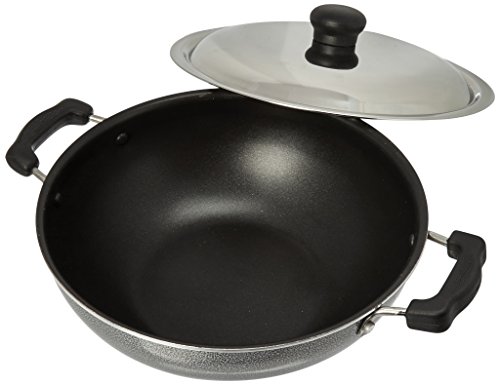
The Prestige Manttra Omega Select Plus 250 is a medium deep-fry pan with a traditional kadai profile. Its dark finish gives it a familiar look, while the deep sides suit frying, sautéing, and curry. The medium size is easier to handle than a large party kadai, yet it offers more depth than a flat frying pan. That makes it a flexible choice for everyday Indian recipes.
I would use this pan for pakoras, puris, bhaji, paneer, and small batches of masala. The deep design helps keep ingredients contained as you stir or fry, but cooks should never fill a pan too high with hot oil. Follow safe frying practice, keep water away from hot oil, and use long utensils when needed. It is a good option for someone who wants a classic deep-fry pan without buying an oversized vessel.
Pros:
- Medium size is easy to control on a home stove
- Deep walls suit frying and saucy dishes
- Traditional kadai shape works for many Indian recipes
- Good choice for small to medium portions
- Dark finish gives it a classic kitchen appearance
- Useful for both frying and sautéing
Cons:
- Medium capacity may not suit large families
- Deep-frying requires careful oil and heat control
- Coated surfaces need gentle utensils and cleaning
My Recommendation
This Prestige pan is best for cooks who want a familiar medium kadai for frying and daily Indian food. It suits students, couples, and small families that make pakoras, puris, sabzi, or paneer in moderate amounts. I like its balance between depth and manageable size. If you want one of the best pans for Indian cooking for regular frying, this model is a practical and approachable choice.
| Best for | Why |
|---|---|
| Small-batch frying | The medium deep body gives room for oil and food without excess size. |
| Everyday Indian dishes | The kadai shape works for sautéed and saucy recipes. |
| Compact kitchens | It is easier to store than a large family-size pan. |
How to Choose the Best Pans for Indian Cooking
Choosing cookware becomes easier when you match the pan to the food you cook most. Indian cooking uses several methods, including tempering, dry roasting, shallow frying, deep frying, simmering, and slow reduction. No single pan does every job perfectly. A small tadka pan may be excellent for spices, while a deep stainless kadai may be better for curry and family portions.
Choose the Right Pan Shape
A kadai has sloped or rounded sides. This shape helps you stir food and move a spatula around the base. It also gives extra depth for frying and saucy dishes. A flat skillet offers more surface area for browning, but it may not hold curry as safely.
A tadka pan has a small body and a narrow base. It heats oil quickly and uses less fat for tempering. A hot pot has taller sides and often offers more room for dal, soup, rice, and stew. When I compare the best pans for Indian cooking, I always look at the shape before the color or brand name.
Stainless Steel
Stainless steel is popular because it is tough, long lasting, and easy to use with many foods. It does not provide natural nonstick release, so technique matters. Preheat the pan on medium heat, add oil, and allow food to form a light crust before turning it.
Tri-ply stainless steel usually combines steel layers with a heat-conductive core. This design may spread heat better than a thin single-layer pan. It does not make a pan impossible to burn, but it can improve control. The Tramontina and DELARLO options are good examples of stainless pans designed for broader daily use.
Hard Anodized Aluminum
Hard anodized aluminum is valued for its light feel and fast heat response. The treatment creates a harder surface than untreated aluminum. Many cooks like this material for curry, sautéing, and frying because it warms quickly and feels easy to handle.
Some hard anodized pans also have a nonstick cooking surface. This can help with delicate foods and cleanup. Still, cooks should follow the care instructions, avoid overheating an empty pan, and use suitable utensils. The Vinod and SHRIYA pans offer useful hard anodized choices in different sizes.
Plain Aluminum
Plain aluminum is light, affordable, and quick to heat. It remains common in traditional Indian kitchens. It can be a strong value for large cooking, especially when a cook needs a wide kadai without a heavy steel body.
There are tradeoffs. Aluminum can stain, dent, or react with some acidic foods, depending on the pan finish and recipe. Avoid storing tomato or tamarind dishes in the pan for long periods. The Shourya Trading model is best viewed as a large-volume cooking tool rather than a small daily pan.
Size and Capacity
Size affects cooking more than many buyers expect. A pan that is too small crowds onions and vegetables, so they steam instead of brown. A pan that is too large may heat unevenly on a small burner and take more oil than needed.
- About 4 inches: best for tadka and small spice work
- About 1.8 to 2.1 quarts: useful for one to four servings
- About 3.5 quarts: suitable for family meals and one-pot dishes
- About 7 quarts: best for large families, events, and batch cooking
These are broad guides, not strict rules. A thick curry may need more room than a dry vegetable dish. Leave space at the top when simmering or stirring. This simple habit helps prevent spills and keeps food from landing on the stovetop.
Lid Quality
A lid helps keep moisture inside and reduces cooking time for some dishes. Glass lids let you see the food, which is useful when reducing gravy. Stainless lids can be more durable and may hold heat well.
Look for a lid that sits securely without sliding. A small vent can help release steam, though it does not replace careful monitoring. Remember that a lid handle can become hot. Use a mitt when the pan has been cooking for a long time.
Handle Design
Handles should feel stable and comfortable when the pan is full. Riveted handles often provide a strong connection, but the metal may heat up. “Cool-touch” handles can reduce heat transfer, yet their performance depends on the burner, cook time, and handle position.
Keep handles turned inward on the stove, but not over an active burner. This reduces the chance of knocking the pan. For a large kadai, check that you can lift it with both hands before filling it with hot food.
Induction Compatibility
Induction cooktops need a magnetic base. Stainless steel cookware may or may not work, depending on its construction. Aluminum alone does not work on induction, but a magnetic induction plate can change that.
Look for clear compatibility details from the seller or maker. You can also test a pan with a magnet on its base. If the magnet sticks firmly, the pan may work on induction, but the manufacturer’s instructions remain the best guide.
Nonstick Care
Nonstick pans can make cooking eggs, paneer, and delicate vegetables easier. They also simplify cleanup after masala. However, coatings need gentle treatment.
- Use wood, silicone, or approved plastic tools.
- Do not heat an empty nonstick pan for a long time.
- Wash with a soft sponge rather than an abrasive pad.
- Do not stack rough cookware directly on the surface.
- Replace the pan if the coating flakes, peels, or shows major damage.
For safety, follow the product care guide and avoid temperatures beyond its stated limit. The best pans for Indian cooking are not always the pans with the slickest surface. Pick the material that matches your habits and your willingness to follow care steps.
Cooking Tips for Better Results
Even a high-quality pan cannot fix poor heat control. Start with a clean, dry pan. Use medium heat for most masala work, then adjust after the oil warms. Spices can burn in seconds, so keep your ingredients ready before you begin tempering.
For stainless steel, test the heat with a few drops of water. If the drops glide and evaporate slowly, the pan may be ready for oil. Dry the pan first if needed, then add oil and ingredients. This method can improve release, but it takes practice.
Do not crowd the pan when frying. Too much food lowers the oil temperature and produces greasy results. Fry in batches when needed. A deep kadai helps, but it should never be filled beyond a safe level with hot oil.
When cooking curry, brown onions and spices before adding liquid. Scrape the flavorful bits from the base with a wooden or silicone tool. Add liquid gradually if the pan is very hot to reduce splatter. Keep the lid slightly ajar if the sauce needs to reduce.
Cleaning and Maintenance
Let cookware cool before washing it. Rapid temperature changes can stress some materials and may warp a hot pan. Add warm water to loosen stuck food, then use a soft sponge.
For stainless steel marks, a paste of baking soda and water can help with light residue. Rinse well and dry the pan to reduce water spots. Avoid harsh chemicals unless the care instructions allow them.
For hard anodized or nonstick pans, follow the brand’s cleaning rules. Do not assume that every pan is dishwasher safe. Hand washing often gives a coated surface a longer useful life.
Store lids separately when possible. If you stack pans, place a soft cloth or cookware protector between them. Small steps like these protect the surface and make the best pans for Indian cooking perform well for years.
FAQs Of best pans for indian cooking
What type of pan is best for Indian cooking?
A deep kadai is the most versatile choice for many Indian dishes. It works for sautéing, frying, curry, vegetables, and paneer. A small tadka pan is also useful for tempering spices.
Is stainless steel safe for Indian cooking?
Yes, stainless steel is widely used for cooking. It is durable and suitable for normal contact with common ingredients. Preheating the pan and using enough oil can help reduce sticking.
Are hard anodized pans good for curry?
Yes. Hard anodized pans heat quickly and often feel sturdy. If the pan has a nonstick layer, use gentle utensils and avoid high heat unless the care guide permits it.
Can these pans work on an induction stove?
Compatibility depends on the base. Look for a clear induction rating or test the base with a magnet. Do not assume that every stainless steel or aluminum pan works on induction.
What size kadai should I buy?
A 1.8- to 2.1-quart kadai suits small households. A 3.5-quart pan works better for family meals. Choose a 7-quart model for large batches, gatherings, or frequent meal prep.
Final Verdict: Which Should You Buy?
The Tramontina Utsava stainless kadai is my top all-round pick for small to medium meals. The SHRIYA is better for easy release, while the LOLYKITCH suits large batches. For tempering alone, the Tramontina tadka pan is the clear choice.
The best pans for Indian cooking match your portion size, stove, and care habits. Choose the right depth and material, and daily curry, dal, and tadka become much easier.