
The best pans for pizza deliver crisp crusts, even browning, easy release, and safe handling for homemade pizza nights.
You know the feeling: the cheese looks perfect, but the crust sticks, turns soggy, or burns at the edges. I have tested pizza pans by looking at heat flow, surface design, rim shape, coating, cleanup, and daily ease of use. The right pan can turn a basic oven into a small pizza shop. Below, I compare nine strong options for frozen pies, fresh dough, thin crusts, and family-size pizzas, so you can find the best pans for pizza without guessing.
GoodCook AirPerfect 15.75-Inch Pizza Pan

The GoodCook AirPerfect pizza pan is made for cooks who want a crisp base without giving up easy cleanup. Its perforated surface lets hot air reach more of the dough. That design can help reduce the soft, damp feel that often comes with a solid pan. The carbon steel body also gives it a sturdy feel during regular use.
I like the cutting guides because they make serving simple after the pizza comes out of the oven. The insulated design helps limit direct heat contact, which may support more even baking across the crust. Its large size suits family pizzas and many frozen pies, but you should check your oven width before buying. This is one of the best pans for pizza when you want airflow, a nonstick surface, and clear slice guides in one tool.
Pros:
- Perforations support a firmer, less soggy crust
- Nonstick surface helps pizza release with less effort
- Cutting guides make even slices easier
- Large 15.75-inch size works well for family meals
- Carbon steel feels more solid than thin foil trays
- Insulated design can help reduce harsh hot spots
Cons:
- The wide size may not fit smaller countertop ovens
- Perforations can allow melted cheese or sauce to drip
- Metal utensils may damage the nonstick finish
GoodCook AirPerfect 16-Inch Pizza Pan Set

This two-pan GoodCook set makes sense for homes that serve pizza often. Each pan has a perforated design that helps heat move beneath the dough. The nonstick finish makes it easier to lift slices and clean away baked cheese. With two pans, you can bake a pair of pizzas or keep one ready while the other is in use.
The 16-inch size gives you room for generous toppings and a broad crust. It is also useful for reheating leftover slices because the holes help warm the bottom instead of trapping steam. I would use parchment only when needed, since it can block some airflow through the perforations. For busy families, this set ranks among the best pans for pizza because it offers useful capacity and good value in one purchase.
Pros:
- Two pans support faster cooking for groups
- Perforated bases help promote a crisp bottom
- Nonstick coating makes release easier
- 16-inch size fits many large pizzas
- Useful for homemade, frozen, and leftover pizza
- Stackable shape saves cabinet space
Cons:
- Large pans need a wide oven rack
- Two pans take more storage room than one
- Small toppings may fall through the holes
American Metalcraft TP14 Wide-Rim Pizza Pan

The American Metalcraft TP14 takes a simple, classic approach to pizza baking. It uses an aluminum body with a wide rim that gives you a safe place to grip and move the pan. The solid surface supports traditional pan-baked pizza and helps keep sauce and cheese contained. This style also works well for shaping dough directly on the pan.
Because it lacks perforations and a built-in nonstick coating, it rewards basic preparation. A light coat of oil or a dusting of cornmeal can help prevent sticking and add flavor to the crust. Aluminum heats quickly, so I would watch the first batch and adjust your oven position if the bottom colors too fast. This pan is one of the best pans for pizza for cooks who prefer durable, restaurant-style simplicity.
Pros:
- Wide rim gives a steady grip
- Solid surface keeps toppings contained
- Aluminum heats quickly and evenly
- Simple design has no coating to wear away
- Useful for pan pizza and flatbreads
- Light weight makes it easy to handle
Cons:
- Pizza may stick without oil or cornmeal
- It may darken or scratch with heavy use
- Aluminum is not ideal for direct contact with acidic foods for long periods
American Metalcraft TP12 12-Inch Pizza Pan

The American Metalcraft TP12 is a compact aluminum pizza pan for smaller meals and controlled portions. Its 12-inch size suits personal pizzas, small families, and ovens with limited rack space. The wide rim helps you carry a hot pie with more confidence. Its standard-weight aluminum construction keeps the pan light while still feeling practical for repeated baking.
This pan has a smooth, solid base, so it suits cooks who like a softer center or classic pizzeria-style baking. I recommend greasing it before adding dough, especially during the first few uses. The smaller footprint also makes it easier to store in a narrow cabinet or drawer. Among the best pans for pizza, this model stands out for cooks who want a low-cost, no-frills pan for everyday portions.
Pros:
- Compact 12-inch size fits many ovens
- Wide rim improves carrying and serving
- Light aluminum body is easy to lift
- Solid base holds sauce and toppings well
- Good size for personal or small pizzas
- Simple construction is easy to use
Cons:
- Smaller size may not suit large families
- Needs oil or another release aid
- Thin aluminum can bend if handled roughly
HONGBAKE 14-Inch Perforated Pizza Pan Set

The HONGBAKE two-pack combines a broad baking area with wider handles for easier handling. Its 14-inch perforated surface helps hot air reach the lower crust. The carbon steel body has a substantial feel, which can help the pan stay stable while you spread dough. A pair of pans also makes sense when you cook for a crowd or prepare two flavors at once.
The wider handles are useful when wearing oven mitts, though you still need to confirm that they fit your rack and oven door. The nonstick finish can reduce the need for extra oil, but gentle tools and hand washing may help preserve it. I see this set as a practical choice for frozen pizza, homemade pies, and weekly family dinners. It belongs on a best pans for pizza list for shoppers who value a two-pack and easy grip.
Pros:
- Two pans make batch cooking more convenient
- Perforations support crisp crust texture
- 14-inch size balances capacity and oven fit
- Wider handles improve hot-pan control
- Carbon steel offers a sturdy baking surface
- Nonstick coating helps with food release
Cons:
- Handles increase the total space needed
- Perforations may not suit very wet dough
- Coating needs careful cleaning and storage
NutriChef 13-Inch Perforated Pizza Tray Set

The NutriChef two-piece pizza tray set is designed for cooks who want crisp edges and simple handling. Each 13-inch tray uses a perforated carbon steel surface to improve airflow under the dough. Silicone grip handles add a layer of comfort when moving the pan near a hot oven. The size is large enough for a satisfying pizza but not so wide that it feels hard to manage.
The nonstick finish helps release baked dough with less scraping. The listed dishwasher-safe design also makes cleanup more convenient, although hand washing may help any coated pan last longer. I would use these trays for thin crusts, frozen pizzas, and reheated slices. This set is among the best pans for pizza for new cooks who want two matching trays with easy-grip handles.
Pros:
- Two matching trays support meal prep
- Perforated carbon steel promotes bottom airflow
- Silicone handles improve comfort and control
- 13-inch size suits many home ovens
- Nonstick surface supports easier release
- Dishwasher-safe design can save cleanup time
Cons:
- Silicone handles may require extra rack clearance
- Dishwasher use can shorten coating life
- Holes may allow loose toppings to fall through
13.5-Inch Stainless Steel Pizza Pan Set

This two-piece stainless steel set is a strong match for cooks who want a coating-free option. Stainless steel resists rust and gives the pans a clean, bright look. The 13.5-inch round shape works for homemade pizzas, frozen pies, cookies, and other flat baked foods. Having two plates makes it easier to prepare one pizza while another bakes.
Stainless steel does not provide the same natural release as a coated pan, so I recommend oil, parchment, or a thin layer of cornmeal. It also responds differently to heat than aluminum or carbon steel, so preheating the pan can help the crust brown more evenly. The smooth surface is easy to inspect and simple to clean after soaking. These are some of the best pans for pizza for buyers who put long-term material choice above built-in nonstick convenience.
Pros:
- Coating-free stainless steel suits many kitchens
- Rust-resistant surface supports regular use
- Two-piece set helps with batch baking
- 13.5-inch size offers useful cooking space
- Works for pizza and other baked foods
- Easy to inspect for residue and wear
Cons:
- Pizza may stick without proper preparation
- Stainless steel can brown less quickly than aluminum
- Metal surfaces may show marks over time
Bakken Perforated Carbon Steel Pizza Pan Set

The Bakken pizza pan set uses perforated carbon steel and a nonstick marble coating to target two common pizza problems: sticking and soft crust. The holes let heat move under the dough, while the coating helps the finished pizza lift away. Its oversized silicone handle gives you a broader grip than a plain round tray. Since the set includes two pans, it can support family meals and small gatherings.
The white finish gives the pans a clean look, but it may show dark marks more clearly after repeated high-heat use. The dishwasher-safe design makes cleanup simple, yet gentle washing is still wise for coated bakeware. I would choose this set for cooks who want modern styling, easy handling, and a crisping surface. It is one of the best pans for pizza when comfort and quick cleanup matter as much as baking results.
Pros:
- Perforated base encourages a crisper bottom
- Marble nonstick coating supports easy release
- Two-pan set is useful for parties
- Oversized silicone handles improve grip
- Carbon steel provides a firm baking base
- Dishwasher-safe design simplifies cleanup
Cons:
- White coating can show baked-on stains
- Large handles need extra storage space
- Coating may wear if scrubbed with rough tools
Wilton 12-Inch PFAS-Free Nonstick Pizza Pan
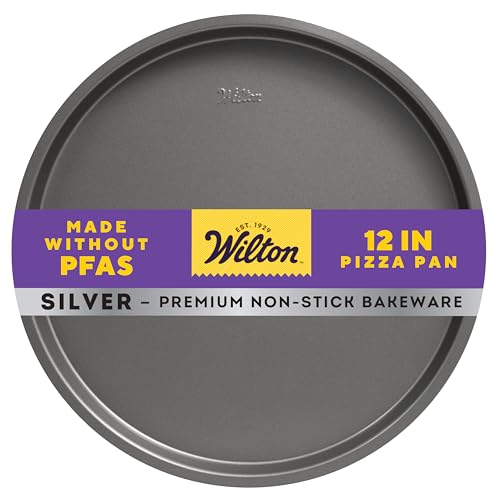
The Wilton 12-inch pizza pan is a compact choice for everyday baking. Its nonstick surface is made without PFAS, which may appeal to shoppers who are careful about bakeware materials. The smaller round shape works well for personal pizzas, quick snacks, and kitchens with limited storage. It also gives children and new cooks an easy size for making their own pies.
This pan uses a solid surface rather than holes, so it helps contain sauce, cheese, and small toppings. That makes it more forgiving for thick dough or heavily topped pizza. I would grease the pan lightly and allow the pizza to cool for a few minutes before cutting. For simple home baking, this is one of the best pans for pizza for shoppers who want a familiar nonstick format without PFAS.
Pros:
- PFAS-free nonstick design suits cautious buyers
- 12-inch size fits small ovens and cabinets
- Solid base keeps toppings contained
- Easy release helps reduce broken slices
- Good choice for personal pizzas
- Simple shape feels approachable for beginners
Cons:
- Solid base may create a softer crust
- It may feel small for family-size pizzas
- Coated bakeware needs gentle utensils
OXO Good Grips 15-Inch Ceramic Pizza Pan

The OXO Good Grips Pro pizza pan is built for cooks who want a wide surface and a smooth release. Its ceramic-coated metal body provides a nonstick cooking area without the look of a bare metal tray. The 15-inch size gives dough room to stretch and leaves space for a generous edge. Its storm blue finish also adds a polished touch to a practical piece of bakeware.
The smooth pan is best for cooks who prefer a classic solid base rather than a perforated screen. It can hold sauce and toppings well, and the broad shape works for pizza, flatbread, and round baked snacks. Since it is large, I suggest measuring your oven rack and storage shelf first. This model earns a place among the best pans for pizza for users who value OXO’s comfortable design approach and a spacious ceramic-coated surface.
Pros:
- 15-inch surface suits large homemade pizzas
- Ceramic coating supports easy food release
- Solid base keeps wet toppings in place
- Metal body offers a stable baking platform
- Works for pizza, flatbread, and snacks
- Attractive finish looks good on the table
Cons:
- Large size may not fit compact ovens
- Solid surface may not crisp as fast as perforations
- Ceramic coating needs careful handling
My Recommendation
The OXO Good Grips pan is best for cooks who want a wide, solid surface with a smooth ceramic coating. It suits large pizzas and wet toppings that could fall through a perforated tray. The GoodCook 15.75-inch model is better for crisp crust fans who want airflow and cutting guides. For small kitchens, the Wilton 12-inch pan is easier to store and simpler to handle.
| Best for | Why |
|---|---|
| Crisp crust | Perforated carbon steel pans let more hot air reach the dough. |
| Large family meals | The 15- and 16-inch pans offer room for bigger pizzas and more toppings. |
| Easy daily use | Nonstick or ceramic surfaces help with release and cleanup. |
When I compare the best pans for pizza, I look beyond the product title. A pan must match your dough, oven, cooking style, and cleanup habits. Perforated pans can help thin crusts turn crisp, but solid pans are safer for wet dough and small toppings. A wide rim or silicone grip can also matter more than expected when you move a hot pizza.
Material affects results. Aluminum heats fast and feels light, while carbon steel feels stronger and can create a firm base. Stainless steel avoids a coating but needs more care during release. Ceramic and traditional nonstick finishes are convenient, yet they need soft tools and gentle cleaning to protect the surface.
How I Chose the Best Pans for Pizza
I judged each pan by the features that affect real home cooking. The first was heat contact, since the bottom of the pan helps shape the crust. I also checked size, rim design, handles, coating type, and the likely storage needs. A pizza pan should make dinner easier, not create a new chore.
I also considered the kind of pizza each pan suits. Thin dough often benefits from holes that allow moisture to escape. Thick dough and heavy toppings usually behave better on a solid base. The best pans for pizza are not all alike, because the best choice depends on the result you want.
Perforated vs. Solid Pizza Pans
A perforated pizza pan has small holes across its base. These holes help hot air reach the bottom of the dough and may reduce trapped steam. That can lead to a crisper crust, much like opening a window lets steam leave a room. Perforated pans work especially well for thin crust, frozen pizza, and reheated slices.
A solid pizza pan has no holes. It holds liquid sauce and loose toppings in place, which makes it a safer pick for wet dough, deep toppings, and beginners. A solid pan may produce a softer bottom, but preheating it can improve browning. If you often make thick or loaded pizza, solid bakeware may be the better tool.
Which Pizza Pan Material Is Best?
Carbon steel is a popular choice because it feels strong and transfers heat well. It often gives a pan a firm base that resists flexing when you move it. Coated carbon steel adds easier release, but you should avoid sharp tools and rough scrubbers. Perforated carbon steel appears in several of the best pans for pizza listed here.
Aluminum is light and heats quickly. It is common in restaurant-style pans and works well for fast baking. It may bend more easily than thicker steel, so handle it with care. Aluminum pans often need oil or cornmeal when they do not have a nonstick finish.
Stainless steel is valued for its rust resistance and coating-free surface. It can last a long time, but pizza may stick unless you prepare the pan well. A thin layer of oil and a short preheat can help. Stainless steel also suits buyers who want bakeware that does not rely on a nonstick finish.
Ceramic-coated metal gives you a smooth cooking surface and easy cleanup. It can be a good fit for cooks who want a modern alternative to traditional coatings. Still, ceramic coatings are not indestructible. Use silicone, wood, or other gentle tools, and avoid sudden temperature changes unless the care guide allows them.
What Size Pizza Pan Should You Buy?
A 12-inch pan is ideal for a personal pizza or a small meal. It usually fits smaller ovens and takes less cabinet space. A 13- or 14-inch pan gives you more food without becoming too hard to handle. These sizes are often the best middle ground for couples and small families.
A 15- or 16-inch pan works well for family pizza night. It gives the dough more room and can hold more toppings. However, the listed diameter may not include handles or a wide rim. Measure the oven rack, door opening, and storage area before placing an order.
How to Use a Pizza Pan for Better Results
Start by reading the care instructions for your exact pan. Some coated pans need only a light wipe of oil, while bare aluminum or stainless steel may need more help. Spread dough evenly and leave a small edge for the crust. Keep toppings balanced, since a heavy center can stay soft even when the rim looks done.
For a crisper base, preheat the oven fully before baking. You can also warm a solid pan for a short time, but use care when placing dough on hot metal. Never pour cold water into a hot pan, as a sharp temperature change can damage some materials. I always use oven mitts with a firm grip when moving a large pizza tray.
Let the pizza rest for a few minutes after baking. This short pause helps the cheese settle and makes slicing safer. Use a plastic, silicone, or wooden tool on coated surfaces. A metal cutter may be fine on bare metal, but check the product care guide first.
How to Clean and Store Pizza Pans
Remove loose crumbs while the pan is still warm, but do not rush into washing it with cold water. Let the pan cool enough to handle, then use warm water and mild soap. A soft sponge can lift melted cheese without scratching the surface. For stubborn spots, soak the pan rather than attacking it with steel wool.
Dishwasher claims vary by product. A pan may be dishwasher safe, yet repeated detergent and heat can still shorten the life of a nonstick or ceramic finish. Hand washing is often the safer long-term habit. Dry bare metal pans fully before storage to reduce the risk of moisture marks or rust.
Store pans upright or stack them with a soft cloth between each piece. This matters most for coated pans, because rough contact can create small scratches. Do not place heavy cookware on top of a thin pizza tray. Good storage protects the pan and helps it stay among the best pans for pizza in your kitchen for years.
Common Pizza Pan Mistakes to Avoid
The first mistake is choosing a pan without checking oven fit. A 16-inch tray may sound useful, but a wide rim or handle can make it too large for your oven. The second mistake is adding too many toppings. Extra sauce and cheese create steam, and steam can soften the crust.
Another mistake is cutting pizza directly on a coated pan. A sharp wheel can leave marks that grow with use. I also avoid harsh cleaners and abrasive pads unless the maker clearly approves them. These small habits protect both the finish and the food release you bought the pan to provide.
Are Pizza Screens Better Than Pizza Pans?
A pizza screen is usually a thin mesh surface designed for airflow. It can produce a crisp bottom, but it offers less support than a solid pan. Loose dough may sag through the mesh, and very wet toppings can make a mess. A perforated pan gives you some airflow while keeping a stronger structure.
For home cooks, a pan is often more forgiving. It supports the dough during shaping, baking, and carrying. A screen may appeal to someone chasing a pizzeria-style finish, but it takes more control. If you want one simple tool, the best pans for pizza are usually easier to use than a separate screen.
Can You Bake Frozen Pizza on These Pans?
Yes, most of these pans can handle frozen pizza if the size and care instructions match your oven. A perforated pan can help the bottom crisp as the pizza heats. A solid pan can catch cheese and sauce if the frozen pie bubbles over. Follow the frozen pizza package instructions, then adjust only after you learn how your oven behaves.
Do not place a frozen pizza on a pan that has a temperature limit below the baking temperature. Also, do not assume a pan is safe under a broiler. Direct top heat can damage coatings and handles. The safest practice is to use the oven setting and temperature listed for the pan and pizza.
FAQs Of best pans for pizza
What are the best pans for pizza with a crisp crust?
Perforated carbon steel pans are often best for crisp crust because the holes let heat and air reach more of the dough. GoodCook, HONGBAKE, NutriChef, and Bakken offer perforated options in this list. Use less sauce and avoid overloading the center for the best result.
Is a nonstick pizza pan worth buying?
Yes, a nonstick pan can make release and cleanup much easier. It is especially useful for beginners and busy families. Use gentle tools, avoid abrasive pads, and follow the care instructions to help the coating last.
What pizza pan size fits most home ovens?
A 12- to 14-inch pan is usually easier to fit in a standard home oven. Larger 15- and 16-inch pans offer more cooking space but need careful measuring. Include handles and wide rims when checking the total size.
Should I oil a pizza pan before baking?
Oil helps bare aluminum and stainless steel pans release pizza more easily. A coated pan may need only a very light layer, or none at all. Too much oil can make the crust greasy, so start with a thin coating.
Can pizza pans go in the dishwasher?
Some models are labeled dishwasher safe, but hand washing is often kinder to nonstick and ceramic coatings. Check the product instructions first. Always dry bare metal well before storing it.
Final Verdict: Which Should You Buy?
For most homes, I recommend the GoodCook AirPerfect 15.75-inch pan. Its perforations, nonstick surface, large size, and cutting guides make it one of the best pans for pizza overall.
Choose a solid pan for wet toppings or a stainless steel set for a coating-free option. The best pans for pizza are the ones that fit your oven, crust style, and daily routine.