
The best pans for standard oven use combine safe materials, even heating, easy cleanup, and sizes that fit most home ovens.
A pan can make or break dinner. A thin tray may warp, a sticky muffin tin can ruin breakfast, and a wide pan may not fit your oven rack. I tested these picks by looking at material, shape, heat use, cleanup, and daily value. This guide covers baking sheets, broiler pans, muffin pans, loaf pans, pizza pans, and compact oven trays, so you can find the best pans for standard oven use without guesswork.
Nordic Ware Oven Crisp Baking Tray
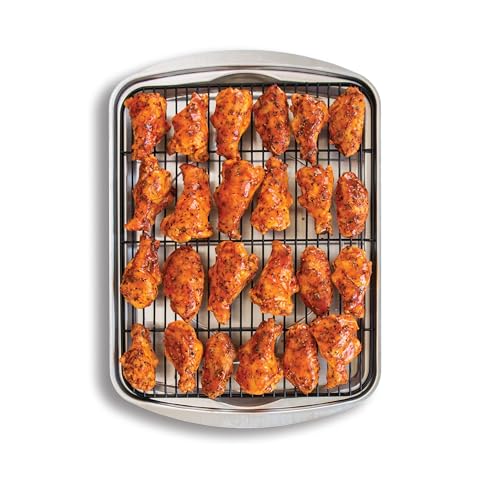
The Nordic Ware Oven Crisp Baking Tray pairs a shallow baking pan with a raised rack. This setup lets hot air move around food as it cooks. It works well for fries, wings, vegetables, bacon, and other foods that benefit from a crisp surface. The natural aluminum body also gives the tray a bright, simple look.
I like this design because it does more than a flat cookie sheet. The rack lifts food above drippings, while the pan catches crumbs and juices below. The 17-by-12-inch cooking area offers useful space for family portions, but you should still measure your oven before buying. For cooks seeking the best pans for standard oven use, this set is a strong choice when crisp texture matters.
Pros:
- Raised rack improves air flow around food
- Useful for baking, broiling, and crisping
- Pan catches drips and loose crumbs
- Large cooking surface for family meals
- Natural aluminum heats in a responsive way
- Rack and pan work together as one set
Cons:
- Aluminum may discolor over time
- Not ideal for acidic foods during long contact
- Large size may not suit compact ovens
My Recommendation
This tray suits anyone who wants crisp food without using a separate air fryer. It is especially helpful for roasted vegetables, chicken wings, and oven fries. I would choose it for cooks who value air flow more than deep sides. It also makes a useful sheet pan for foods that release fat. Overall, it offers good value for standard ovens, but check the size and care directions before use.
Porcelain Nonstick Broiler Pan

This broiler pan has a perforated rack that sits over a deep pan. The rack helps fat drain away from meat as the broiler heats the top of the food. Its listed heat tolerance reaches 550°F, which suits many high-heat oven tasks. The dark nonstick surface also helps food release with less scraping.
The 16.75-by-13-inch size gives you room for steaks, fish, burgers, and chicken pieces. The lower pan can also catch juices when you roast food. I always advise checking the oven manual before broiling, since broiler settings vary and some ovens place food close to the heating element. This is among the best pans for standard oven use if you want one pan built for high, direct heat.
Pros:
- Designed for broiling and roasting
- Raised rack drains excess fat
- Deep lower pan helps catch juices
- Nonstick coating supports easier cleanup
- Large surface handles several portions
- High listed heat rating of up to 550°F
Cons:
- Nonstick coating needs gentle tools
- May be too large for small ovens
- Broiling can create smoke with fatty foods
My Recommendation
I recommend this pan for people who broil meat, fish, or vegetables often. It is also a practical choice for anyone who wants fat to drain away during cooking. Use silicone, wood, or nylon tools to help protect the coating. If you rarely broil, a flat baking sheet may offer more daily use. For high-heat cooking, however, this is one of the best pans for standard oven use in this group.
HYTK Four-Cup Muffin Pan

The HYTK four-cup muffin pan is made for small batches and compact cooking spaces. Its small footprint can fit many toaster ovens, countertop ovens, and narrow oven racks. The four-cup layout works well for muffins, cupcakes, egg bites, and small portions of baked snacks. It can also help avoid heating a full-size oven for just a few servings.
This pan is useful when a 12-cup muffin tin feels too large. I find small bakeware helpful for single cooks, couples, and parents making separate flavors. The cups are close together, so even filling matters for even results. Among the best pans for standard oven use, this one stands out for small spaces and controlled portions.
Pros:
- Compact shape suits small ovens
- Four cups support small baking batches
- Useful for muffins, cupcakes, and egg bites
- Easy to store in a crowded cabinet
- Helps reduce leftover baked food
- Good fit for single servings and test recipes
Cons:
- Only four portions fit at one time
- Small cups may not suit large recipes
- Capacity details should be checked before filling
My Recommendation
Choose this pan if you use a toaster oven or often bake for one or two people. It is also a smart starter pan for children learning to bake. It will not replace a full muffin tin for parties or large families. Still, its small size solves a real problem and makes oven baking feel less wasteful. It is one of the best pans for standard oven use when space matters most.
TeamFar Compact Stainless Steel Tray
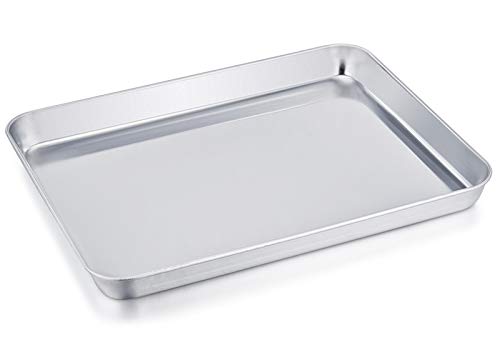
The TeamFar compact tray measures about 10.5 by 8 inches, making it a natural fit for toaster ovens and smaller countertop ovens. It uses stainless steel rather than a synthetic nonstick coating. The one-inch rim helps hold small portions, crumbs, and light cooking juices. This shape works for toast toppings, roasted vegetables, cookies, and reheating food.
Stainless steel gives this tray a durable feel and makes it a useful daily tool. It may need a light coat of oil or parchment for sticky foods, especially when baking delicate items. The compact size also makes it easy to lift with oven mitts. If you are building a collection of the best pans for standard oven use, this is a practical small tray for quick meals.
Pros:
- Compact size fits many toaster ovens
- Stainless steel avoids a nonstick coating
- One-inch rim helps contain food
- Useful for reheating and small roasts
- Easy to store in small kitchens
- Suitable for everyday oven tasks
Cons:
- Small surface limits meal size
- Food may stick without oil or lining
- Stainless steel may show baked-on marks
My Recommendation
I would pick this pan for apartment kitchens, dorm rooms, and countertop oven owners. It is also a good choice if you prefer stainless steel over coated bakeware. Use parchment for cookies and a thin oil layer for roasted foods. This tray is not meant for a large family meal. Its value comes from simple storage, broad daily use, and a compact design.
GoodCook Nonstick Loaf Pan
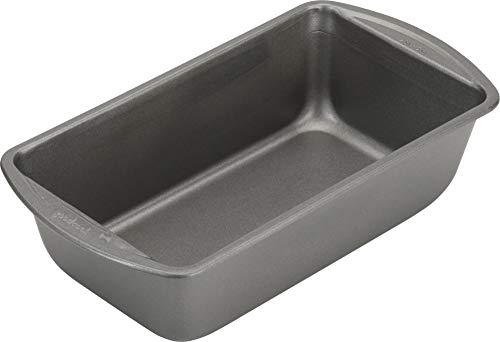
The GoodCook loaf pan uses a heavy-duty steel body with a nonstick coating. Its 9-by-5-inch shape suits sandwich bread, quick bread, pound cake, and meatloaf. The straight sides help create a neat loaf shape. The gray finish gives it a calm, modern look that fits most bakeware sets.
A loaf pan needs more than a slick surface. It must hold its shape while the center of the batter rises and the edges brown. This pan gives home bakers a familiar size for many classic recipes. As with all coated pans, I suggest hand washing when possible and avoiding sharp tools. It belongs on any list of the best pans for standard oven use for people who bake bread and loaf cakes.
Pros:
- Classic 9-by-5-inch loaf size
- Nonstick surface helps release baked loaves
- Useful for bread, cake, and meatloaf
- Steel body supports everyday baking
- Simple shape stores easily
- Listed as oven and dishwasher safe
Cons:
- Coating can wear with rough use
- Dark finish may brown edges quickly
- Some recipes may need greasing for easy release
My Recommendation
This pan is best for new bakers and families who make quick bread or meatloaf. It offers the familiar shape most recipes expect, so you do not need to adjust every ingredient. Grease the pan lightly for rich or sugary batters. I would choose it as an affordable first loaf pan or a useful replacement for an old one. It provides strong everyday value when handled with care.
Silicone Twelve-Cup Muffin Pan

This silicone muffin pan has 12 cups and a reinforced steel frame. The frame gives the flexible silicone more support while you move it to and from the oven. The cups are listed as oven-safe to 450°F, so always stay within that limit. Silicone can help baked treats release with less effort than many bare metal tins.
The soft cups are useful for muffins, cupcakes, mini quiches, and egg bites. The built-in frame and easy-grab handles can reduce spills, which matters when the batter is full. Silicone does not heat in the same way as metal, so the tops and edges may brown at a different rate. For the best pans for standard oven use, this model suits people who value easy release and simple cleanup.
Pros:
- Full 12-cup layout for batch baking
- Flexible silicone supports easy release
- Steel frame improves carrying strength
- Handles make the filled pan easier to move
- BPA-free food-grade material is listed
- Oven-safe to a listed 450°F
Cons:
- Metal pans may brown baked goods more strongly
- Silicone can feel less stable without the frame
- Must stay below the listed temperature limit
My Recommendation
I recommend this muffin pan for people who dislike scraping stuck cupcakes from metal tins. It is also helpful for families that bake a full dozen at once. Set it on a solid sheet pan before filling if you want extra support. Do not place it directly on a flame or under a broiler. Its release, handles, and large capacity make it a valuable option for regular home baking.
Yuanfenron Four-Hole Muffin Pan

The Yuanfenron four-hole muffin pan is a compact carbon steel baking tray. Its four cavities suit small batches of muffins, cupcakes, mini pies, and other portioned treats. Carbon steel gives the pan a firm structure and can provide steady heat during baking. The black finish may help absorb heat, so keep an eye on browning the first time you use it.
This pan makes sense for small ovens and cooks who do not need a full 12-cup tray. It can also help test a recipe before committing to a large batch. I suggest greasing each cavity and leaving room for the batter to rise. In a crowded kitchen, this is one of the best pans for standard oven use because it saves shelf space while still offering true molded portions.
Pros:
- Small four-cup design saves cabinet space
- Carbon steel gives the pan a sturdy feel
- Useful for mini pies and cupcakes
- Good for small households
- Helps test new recipes in small batches
- Fits many compact oven setups
Cons:
- Four cavities limit batch size
- Dark metal may brown edges faster
- Greasing may still be needed for release
My Recommendation
This pan is best for small homes, test baking, and compact ovens. It can also work well for portion control because each cavity creates a set serving. I would not buy it for school events or holiday baking, where a 12-cup pan saves time. For daily small-batch baking, its firm carbon steel body and easy storage are appealing. It is a focused tool rather than an all-purpose muffin tin.
American Metalcraft 12-Inch Pizza Pan

The American Metalcraft TP12 is a 12-inch pizza pan made from 18-gauge aluminum. Its wide rim gives you a firm grip when placing pizza in the oven or taking it out. The round shape suits homemade pizza, flatbreads, biscuits, and baked nachos. Aluminum also responds quickly to oven heat, which can help support even baking when the pan sits flat.
This pan has a simple commercial-style design without extra parts or a complex coating. I like that it can serve more than one purpose in the kitchen. It is not a deep-dish pan, so it works best for thin and regular crusts. If pizza night is part of your routine, it deserves attention among the best pans for standard oven use.
Pros:
- 12-inch size suits common homemade pizzas
- Wide rim improves handling
- Aluminum body responds quickly to heat
- Useful for pizza, flatbread, and nachos
- Simple design has no moving parts
- Lightweight enough for easy handling
Cons:
- Not designed for deep-dish pizza
- Aluminum can scratch or discolor
- May need oil or parchment for some doughs
My Recommendation
I would choose this pan for thin-crust pizza fans and cooks who want a basic round baking surface. The wide rim feels useful when the pan is hot and covered with toppings. Use a soft sponge and follow the care directions to protect the aluminum. It is not the best match for deep pies or people who want a nonstick finish. For classic homemade pizza, it offers good function at a reasonable price.
Two-Pack Nonstick Stainless Steel Pizza Pans
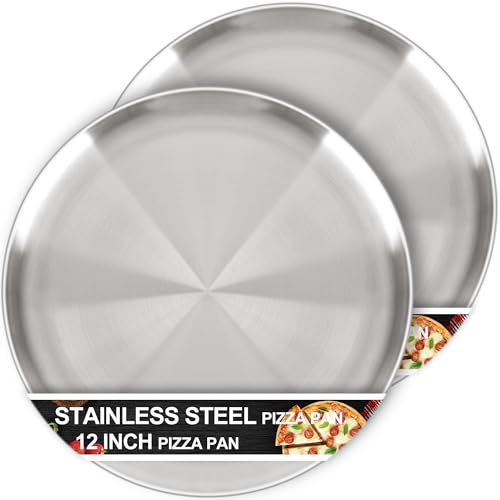
This set includes two 12-inch pizza pans with a nonstick stainless steel design. Having two pans helps when you are baking for guests or making separate pizzas. The round shape also works for cookies, quesadillas, flatbread, and small sheet-style meals. Stainless steel gives the pans a bright finish, while the nonstick surface aims to simplify food release.
A two-pan set can save time because one pizza can bake while the next one is ready. The pans are also useful when family members want different toppings. I would still use soft utensils and avoid cutting pizza directly on the surface. For shoppers comparing the best pans for standard oven use, this set offers flexibility and quantity in one purchase.
Pros:
- Two pans support back-to-back baking
- 12-inch size fits many pizza recipes
- Nonstick surface helps food release
- Stainless steel gives a durable feel
- Useful for pizza and other round foods
- Good option for families and gatherings
Cons:
- Nonstick surface needs careful handling
- Two pans require more storage room
- Not intended for deep-dish pizza
My Recommendation
This set is best for busy families, pizza nights, and cooks who like to prepare two items at once. It gives you a spare pan without requiring another purchase later. Use a pizza wheel on a cutting board rather than on the pan. If you bake pizza only a few times each year, one pan may be enough. For frequent use, the two-pack has clear practical value.
USA Pan Extra-Large Baking Sheet

The USA Pan extra-large baking sheet is made from aluminized steel and has a nonstick surface. Its large format gives you room for roasted vegetables, cookies, chicken pieces, and full sheet-pan meals. The rolled edges help add strength and make the pan easier to grip. The pan also has enough surface area to keep food from crowding during roasting.
Food often roasts better when pieces have space around them. Crowded vegetables steam instead of brown, so the extra room can make a real difference. You must measure your oven rack because extra-large pans may not fit narrow ovens. For many home cooks, this is one of the best pans for standard oven use because it can replace several smaller trays during meal prep.
Pros:
- Extra-large surface suits family meals
- Aluminized steel supports a sturdy build
- Nonstick coating helps with food release
- Rolled edges improve strength and handling
- Useful for cookies and sheet-pan dinners
- Extra space helps food brown instead of steam
Cons:
- May not fit smaller oven racks
- Large size needs more storage space
- Coating requires nonabrasive care
My Recommendation
I recommend this sheet pan for families, meal preppers, and serious home bakers. It is a strong choice when you want to roast many vegetables or bake several rows of cookies. Measure the inside of your oven before ordering, including the rack width and door clearance. Use parchment when working with sticky foods to extend the coating life. If it fits your oven, its capacity makes it one of the best pans for standard oven use.
Best For Comparison
| Best for | Why |
|---|---|
| Large family meals | The USA Pan extra-large sheet gives food more room to roast and bake. |
| Crispy meats and vegetables | The Nordic Ware tray and rack improve air flow and catch drips. |
| Small ovens and small batches | The TeamFar tray and four-cup muffin pans fit compact cooking spaces. |
How to Choose the Best Pans for Standard Oven Use
Start with the job you do most. A baking sheet helps with cookies and roasted vegetables. A loaf pan handles bread and meatloaf. A muffin pan creates even portions, while a pizza pan supports round dough. The best pans for standard oven use should match your cooking habits, not just look good in a product photo.
Check the Pan Size
Standard ovens vary more than many shoppers expect. Measure the oven rack from side to side and from front to back. Then leave space around the pan so hot air can move. A pan that touches the oven walls may cook unevenly and can be hard to remove safely.
Also check the oven door. Some extra-large baking sheets fit the rack but block the door from closing. This small step can prevent a frustrating return. Compact trays work well in toaster ovens, but a full-size oven may need a larger pan for family cooking.
Compare Materials
Aluminum heats quickly and feels light. It can work well for cookies, pizza, and roasting. Stainless steel resists rust and avoids a coated cooking surface, but food may stick more easily without oil or parchment. Aluminized steel gives you a firm body and can suit large baking sheets.
Silicone offers easy release and soft storage. It needs a strong frame or a sheet pan underneath when filled with wet batter. Carbon steel feels firm and can handle regular baking, though darker surfaces may brown food faster. No material wins every task, so choose based on the food you make most often.
Understand Nonstick Coatings
Nonstick pans can save time after baking. Cakes and muffins often release with less force, and baked cheese may need less scraping. Yet the coating needs care. Avoid metal knives, steel wool, and harsh scouring pads.
Follow the maker’s temperature and cleaning directions. A pan marked oven-safe may still have a lower limit than your oven’s maximum setting. Never assume that a nonstick pan belongs under a broiler unless the instructions clearly allow it.
Look at Rim and Depth
A rim keeps juices and crumbs inside the pan. Low rims help air move around food and make it easier to slide cookies off. Deep sides suit casseroles, meatloaf, and foods with liquid. Pizza pans often have a wide rim for safe handling.
Think about spills as well as access. A very shallow pan may let oil run onto the oven floor. A very deep pan may block heat from reaching the food edge. The right rim is a quiet detail that improves daily cooking.
Think About Cleaning
Easy cleanup matters after a long day. Nonstick and silicone surfaces often release food with a soak and a soft sponge. Stainless steel can handle more vigorous cleaning, but baked-on grease may take time. A sheet of parchment can reduce mess on many baking trays.
Dishwasher safety can sound convenient, but repeated cycles may affect coatings and finishes. I prefer hand washing coated pans when the care label recommends it. Dry every pan well before storage, especially around rolled rims and seams.
Use Heat Safely
Always read the product instructions before your first use. Check the maximum oven temperature, broiler guidance, dishwasher guidance, and whether the pan works with parchment or silicone liners. Do not place a pan on a stovetop unless the maker says it is designed for that purpose.
Use dry oven mitts and keep a clear path from the oven to the counter. Grease can smoke at high heat, and a rack full of fat needs careful handling. Good bakeware improves results, but safe habits protect you and your kitchen.
Care Tips to Extend Pan Life
Let a hot pan cool before washing it. A sudden cold-water rinse can stress some metals and may cause warping. Soak stuck food instead of attacking it with a sharp tool. For coated pans, use soft utensils and a nonabrasive sponge.
Do not stack pans without protection if their surfaces rub together. A towel, cloth, or paper liner can reduce scratches during storage. Store muffin pans upright or flat where the cups will not bend. Keep silicone pans away from sharp objects because small cuts can spread over time.
For aluminum bakeware, avoid long contact with acidic sauces when possible. Tomato, citrus, and vinegar-based foods may affect the finish. Use parchment or a separate roasting dish for long acidic bakes. These steps are simple, but they help the best pans for standard oven use stay useful for years.
Common Mistakes to Avoid
One common mistake is filling a pan too high. Batter needs space to rise, and liquid needs room to bubble. Follow the recipe’s fill line when one is provided. If you are unsure, fill muffin cups about two-thirds full and adjust after learning how the pan bakes.
Another mistake is crowding a sheet pan. Food needs room for hot air to reach its sides. Spread vegetables in one layer and use two pans when needed. A bigger pan helps only when the oven rack and food placement allow good air flow.
Many cooks also cut pizza or cake directly on the pan. This can scratch a coating or mark soft aluminum. Move the food to a board before slicing. A few seconds of care can protect your bakeware from years of avoidable damage.
FAQs Of best pans for standard oven use
What pan material is best for a standard oven?
There is no single best material for every recipe. Aluminum heats quickly, stainless steel offers a coating-free surface, and aluminized steel gives a strong baking body. Silicone helps with release, while coated steel can simplify cleanup. Match the material to the food and follow the maker’s heat instructions.
Can I use these pans in a toaster oven?
Compact trays and small muffin pans may fit toaster ovens, but you must measure first. Check the rack width, depth, and door clearance. Never let a pan touch the heating elements. A full-size sheet pan or broiler pan may be too large for a countertop oven.
Are nonstick oven pans safe at high heat?
They are safe only within the temperature range listed by the maker. A pan may be oven-safe but not broiler-safe. Avoid empty preheating at very high heat unless the instructions allow it. Use soft tools to protect the coating.
Should I grease a nonstick muffin or loaf pan?
Light greasing often improves release, especially with sugary, oily, or dense recipes. It also helps when a coating has seen heavy use. Parchment can add extra protection in loaf pans. Follow the recipe and pan instructions for the best result.
How do I stop a baking sheet from warping?
Use the pan within its stated heat range and avoid sudden temperature changes. Do not pour cold water onto a very hot sheet. Choose a sturdy pan with reinforced or rolled edges. Store it flat when possible and avoid bending it while washing.
Final Verdict: Which Should You Buy?
The USA Pan Extra-Large Baking Sheet is my top all-around pick for families and meal prep. The Nordic Ware tray is best for crisp food, while the compact pans suit small ovens. Choose the product that matches your main task.
The best pans for standard oven use should fit your oven, cooking style, and care habits. Measure first, follow heat limits, and choose durable materials for better results.