
The best pots for baking bread trap steam, spread heat, and give homemade loaves a crisp crust.
You know the feeling: the dough looks ready, yet the loaf comes out pale, flat, or too dry. A good covered pot can change that. It holds steam near the dough during the first part of baking, then helps the crust turn deep and crisp. I compared size, lid shape, material, care, useful extras, and everyday value to help you find the best pots for baking bread. The picks below suit sourdough, yeast bread, no-knead dough, and more.
Umite Chef 5-Quart Enameled Dutch Oven

The Umite Chef 5-quart enameled Dutch oven is a practical size for most home bakers. Its round shape gives a dough ball room to expand without wasting much oven space. The heavy cast iron body stores heat well, which helps the loaf bake at a steady pace. The cream white finish also gives this pot a clean look on the counter.
The lid helps hold moisture close to the dough during the early bake. That steam can help sourdough develop a thinner, more even crust before you uncover the loaf. I also like the included cotton potholders for safer handling, although thick oven gloves still make sense at very high heat. This is one of the best pots for baking bread for new bakers who want one pot for bread, soup, roast chicken, and stew.
Pros:
- Useful 5-quart size for one medium loaf
- Enameled surface needs no seasoning
- Heavy cast iron holds steady heat
- Covered design supports a crisp crust
- Included potholders add everyday value
- Works for baking, roasting, braising, and stews
Cons:
- Cast iron feels heavy when full
- Light enamel may show stains over time
- Round shape may not suit long sandwich loaves
Umite Chef 5-Quart Red Enameled Dutch Oven

This red Umite Chef Dutch oven offers the same useful 5-quart format in a brighter finish. The color stands out, so it is easy to spot among other cookware. Its cast iron walls warm slowly and then stay hot, giving bread a stable baking environment. The lid creates a small, steamy chamber around the dough.
I see this model as a strong choice for bakers who want attractive cookware that does more than one job. The enamel coating makes cleanup simpler than with raw cast iron, since you do not need to build or protect a seasoning layer. Use wooden, silicone, or plastic tools to reduce the chance of scratching the finish. For many homes, it offers the balance expected from the best pots for baking bread without feeling like a single-use bread machine.
Pros:
- Bright red finish adds visual appeal
- 5-quart capacity fits many sourdough recipes
- Covered lid helps keep dough moist early in baking
- Enameled interior simplifies routine cleaning
- Strong heat retention supports even baking
- Useful for soups, beans, meats, and casseroles
Cons:
- Heavy construction may challenge some users
- Enamel can chip if knocked against hard surfaces
- Small kitchens may have limited storage space
Blingco 6.5-Quart Enameled Dutch Oven
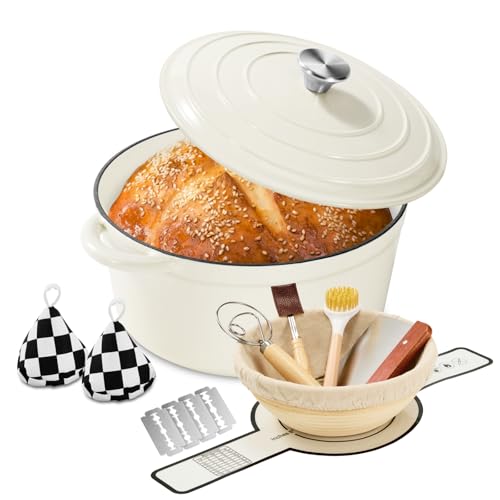
The Blingco 6.5-quart Dutch oven gives bakers more room than a standard 5-quart pot. That extra space helps when you make a larger loaf or work with dough that rises high. The enameled cast iron body holds heat well and supports a steady oven temperature around the dough. Its broad capacity also makes it useful for family-size meals.
A larger pot can feel forgiving when your dough shape is not perfect. It gives the loaf room to grow without pressing against the sides or lid. However, an oversized pot may allow a small loaf to spread more than it would in a snug vessel. I recommend this option to families, frequent bakers, and anyone who wants one of the best pots for baking bread for both large loaves and dinner cooking.
Pros:
- 6.5-quart capacity suits larger dough portions
- Good clearance for high-rising bread
- Enameled coating reduces seasoning work
- Strong heat storage from cast iron
- Covered pot supports steam during oven spring
- Useful for large stews and roasts
Cons:
- Heavier than a 5-quart option
- May feel too large for a small loaf
- Requires more cabinet space
CRUSTLOVE 5-Quart Pre-Seasoned Dutch Oven

The CRUSTLOVE 5-quart Dutch oven targets bread bakers who prefer traditional bare cast iron. Its pre-seasoned surface arrives ready for use, though a little oil care helps maintain it. The pot and lid work together to trap moisture around the loaf. A 5-quart size is a comfortable fit for many round sourdough and no-knead recipes.
This set is appealing because it focuses on bread rather than only general cooking. Raw cast iron can handle high oven heat, but it needs proper drying and light oiling after washing. I would avoid long soaks and harsh soap routines that can weaken the seasoning over time. If you enjoy hands-on care and want one of the best pots for baking bread at a reasonable size, this is a capable pick.
Pros:
- Pre-seasoned surface helps reduce setup time
- 5-quart size suits common home bread recipes
- Cast iron handles strong oven heat well
- Lid helps create a moist baking space
- Useful for frying, roasting, and camp cooking
- Traditional surface can improve with regular care
Cons:
- Needs drying and oil care after washing
- Raw cast iron may react with acidic foods
- Heavy lid requires careful handling
6-Quart Enameled Round Bread Oven
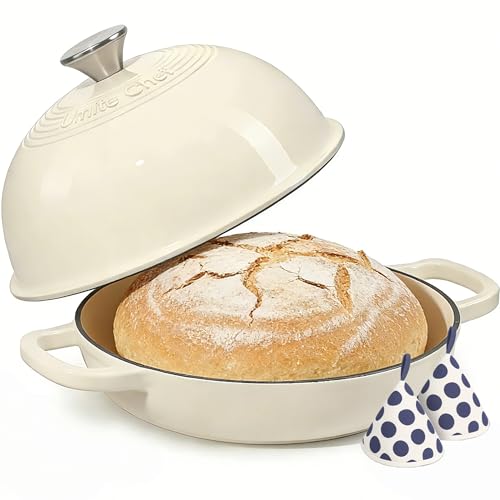
This 6-quart round bread oven is designed with homemade sourdough in mind. Its dome-style lid gives a taller loaf more headroom during oven spring. The enameled cast iron body stores heat and avoids the seasoning work required by bare iron. Cotton potholders add a useful touch when you move the hot lid.
The round profile pairs well with boules and other free-form loaves. A larger interior also helps bakers who like generous dough hydration and a strong rise. I would still check the pot’s exact heat rating and your oven’s rack clearance before baking at high temperature. For bread fans who want a roomy, dedicated-feeling vessel, this ranks among the best pots for baking bread in this group.
Pros:
- Dome lid offers extra space for rising dough
- 6-quart size supports larger round loaves
- Enameled finish makes cleanup easier
- Cast iron delivers strong heat retention
- Included potholders improve handling comfort
- Can also cook roasts, soups, and casseroles
Cons:
- Large body takes more oven and shelf space
- Cast iron weight may be tiring for some bakers
- Best suited to round bread shapes
Umite Chef 5-Quart Pink Dutch Oven

The pink Umite Chef 5-quart Dutch oven brings a softer color to a classic bread-baking tool. It uses the familiar enameled cast iron design that works well for covered baking. The pot holds heat, while the lid keeps steam near the dough at the start. Its medium size fits many home ovens and standard sourdough formulas.
I especially like this option for a first kitchen, wedding gift, or baker who wants cookware with personality. The enamel surface is easier to maintain than bare cast iron, but it still deserves gentle tools and careful cooling. Do not place a very hot pot on a cold, wet surface, since sudden temperature changes can stress enamel. This model is one of the best pots for baking bread when style, function, and multipurpose use all matter.
Pros:
- Friendly pink finish suits gift giving
- 5-quart capacity works for everyday loaves
- Covered design supports a crisp crust
- Enamel coating simplifies routine care
- Cast iron body promotes even heat
- Useful for braising, baking, and roasting
Cons:
- Decorative finish may not suit every kitchen
- Heavy compared with steel bread pots
- Enamel needs protection from sharp tools
AHJ 6-Quart Dutch Oven Bread Kit
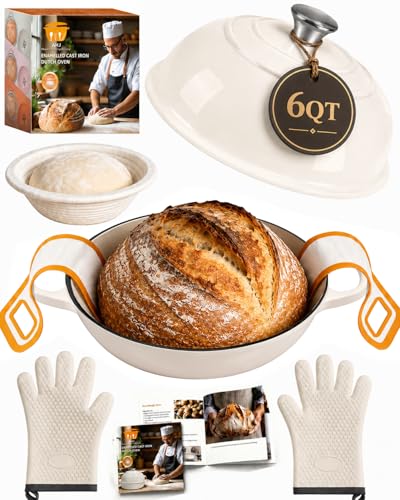
The AHJ 6-quart Dutch oven stands out as a fuller bread-baking kit. Along with the pot, it includes a proofing basket, silicone sling, and gloves. Those extras can save a new baker from buying several separate tools. The enameled cast iron pot provides the heat retention and covered space needed for many sourdough methods.
A proofing basket helps support dough shape before the bake, while a sling can make loading and lifting easier. The included tools do not replace good technique, but they lower the barrier to starting. The 6-quart capacity gives larger dough plenty of room, though small loaves may look less rounded in a wide pot. I recommend this as one of the best pots for baking bread for beginners who want a ready-to-use setup.
Pros:
- Includes proofing basket and baking accessories
- 6-quart size fits larger loaves
- Silicone sling can simplify dough transfer
- Gloves provide an extra handling aid
- Enameled surface needs less maintenance
- Useful for everyday Dutch oven cooking
Cons:
- Kit takes more storage space
- Included accessories may vary in long-term durability
- Large pot can feel bulky when filled
5-Quart Enameled Dutch Oven with Banneton

This 5-quart Dutch oven combines a covered bread pot with a 5-inch banneton basket and cotton potholders. The round shape works well for boules and compact sourdough loaves. Enameled cast iron gives the pot strong heat retention without the seasoning routine of bare iron. The included basket helps guide the dough through its final proof.
The dual-purpose design can be useful in a small kitchen. You can proof the dough in the basket, then transfer it to the heated pot with less guesswork. The 5-quart interior is not meant for very large loaves, but it should suit many standard recipes. For shoppers who want the best pots for baking bread with basic proofing gear included, this set offers good practical value.
Pros:
- Includes a banneton for final proofing
- 5-quart size fits common round loaves
- Enameled surface is simple to clean
- Cotton potholders support hot-lid handling
- Covered baking helps protect dough moisture
- Round form suits sourdough boules
Cons:
- Small basket may not fit large dough batches
- Round shape limits long loaf styles
- Accessories need dry storage between uses
5-Quart Pre-Seasoned Cast Iron Bread Pot

This 5-quart pre-seasoned cast iron pot uses a domed lid to give bread more vertical space. The bare cast iron body is made for strong heat and can move from oven to stovetop. Its round footprint suits boules, no-knead bread, and many sourdough loaves. The lid helps create the moist environment needed for good early oven spring.
The domed shape is helpful when the dough rises high or has a rounded top. Pre-seasoning makes the first bake easier, but I still treat the surface as a living finish that needs care. Dry the pot fully, wipe on a thin layer of oil, and store it in a dry place. This is one of the best pots for baking bread for cooks who want durable, classic cast iron and do not mind a little upkeep.
Pros:
- Domed lid gives extra headroom
- 5-quart size works for everyday loaves
- Pre-seasoned surface is ready to start
- Strong heat retention supports crust development
- Can move from oven to stovetop
- Useful for outdoor and camp cooking
Cons:
- Requires regular seasoning care
- Can rust if stored while damp
- Heavy body and lid need firm handling
Nuovva Rectangular Enameled Bread Pot

The Nuovva bread pot takes a different path with a rectangular 24-by-16-centimeter form. This shape fits dough shaped like a traditional loaf better than a round Dutch oven does. The enameled cast iron construction provides strong heat retention and a smooth cooking surface. Its covered design helps retain steam while the bread begins to rise.
I like this style for bakers who want sandwich bread, bâtards, or other longer shapes. It may also fit neatly beside other dishes in some ovens, but always measure your rack first. The smaller footprint means it is less flexible for a large round boule. If loaf shape matters most, this can be among the best pots for baking bread because it matches the form of the dough instead of forcing every loaf into a circle.
Pros:
- Rectangular shape suits long bread loaves
- Enameled cast iron stores oven heat
- Covered design helps hold baking steam
- Smooth surface supports easier release
- Compact footprint may suit some oven layouts
- Distinct design adds variety to bread tools
Cons:
- Less suitable for round boules
- Smaller size may limit large recipes
- Exact dimensions require careful oven checking
My Recommendation
I recommend the Umite Chef 5-quart enameled Dutch oven as the best all-around choice for most home bakers. It has the right size for many recipes, a useful lid, simple enamel care, and enough versatility for daily cooking. Choose the CRUSTLOVE if you prefer bare cast iron and do not mind seasoning. Pick the AHJ kit if you are new to sourdough and want proofing and handling tools in one package.
| Best for | Why |
|---|---|
| Most home bakers | The Umite Chef 5-quart model balances size, heat control, easy care, and price. |
| Large loaves and families | The Blingco 6.5-quart and AHJ 6-quart pots give dough extra room to rise. |
| Long sandwich-style loaves | The Nuovva rectangular pot matches a longer dough shape better than a round pot. |
How I Chose the Best Pots for Baking Bread
I started with the way a covered pot changes bread baking. Dough releases moisture as it heats. A lid keeps much of that moisture close to the loaf, so the crust stays flexible while the bread expands. After the lid comes off, dry oven heat helps the crust color and crisp.
That simple steam cycle matters, but it is not the only factor. I also looked at heat storage, lid shape, interior space, cleaning, weight, and daily use. A pot can make excellent bread and still be frustrating if it is too heavy, too small, or hard to clean.
Material Matters
Cast iron is popular because it holds heat well. A hot pot gives the dough a strong start when you load it. This can help oven spring, especially with a well-proofed loaf. Cast iron also stays useful for roasting, frying, and braising.
Enameled cast iron needs less care than bare iron. You do not need to season the cooking surface in the same way. It also handles acidic foods better for general cooking. Still, enamel is not indestructible. Avoid metal tools, hard knocks, and sudden temperature changes.
Pre-seasoned cast iron offers a more traditional feel. It can become smoother with good care. The tradeoff is clear: you must dry it well and apply a thin coat of oil when needed. If you want easy cleanup, enamel may suit you better. If you want a rugged pot for the oven, grill, or campfire, bare iron has a strong case.
Why the Lid Is So Important
A tight lid helps trap steam. That steam keeps the outer dough soft while the loaf expands. Without enough moisture, the crust may set too soon and limit the rise. This is why a covered Dutch oven often works better than an open baking sheet for rustic bread.
A domed lid gives extra vertical space. It can help when a boule rises high or when the dough has a rounded top. A flat lid still works well for many loaves. The key is a close fit and enough room around the dough.
Never assume every lid or knob has the same heat limit. Check the current product details before using very high heat. Some knobs use materials that have a lower rating than the pot body. That small detail can protect both the cookware and your oven.
Choosing the Right Size
A 5-quart pot is a strong starting point for many home bakers. It often fits one medium round loaf without leaving too much empty space. A snug fit can help the loaf keep its shape. It also makes a 5-quart pot easier to store than a very large model.
A 6- to 6.5-quart pot gives more room. Choose this size if you bake larger loaves, make large meals, or want more headroom under the lid. The downside is extra weight and storage space. A small loaf may spread more in a very wide pot.
Shape matters as much as volume. Round pots work well for boules. Rectangular pots better suit sandwich loaves and long bâtards. Think about the bread you bake most often, not only the number printed on the label.
Features That Make Bread Baking Easier
Small features can make a hot bake feel much less stressful. Large handles give you a safer grip with oven gloves. A lid that lifts easily helps you uncover the loaf without touching the hot sides. A smooth enamel interior also makes stuck flour and baked-on bits easier to remove.
A silicone sling can help lower dough into a hot pot. It can also lift the finished loaf out with less risk. A banneton supports the dough during final proofing and can leave a pleasing pattern on the surface. These extras are useful, but they should not distract from the main needs: safe heat, a good lid, and enough room.
Potholders help, but I prefer thick, heat-rated oven gloves for cast iron. The lid handle can become extremely hot. Keep a clear landing spot ready before you open the oven. Bread baking rewards calm movements, since a hot pot leaves little room for rushed choices.
How to Use a Dutch Oven for Bread
First, prepare the dough based on your recipe. Let it rise or proof until it has the right volume and feel. A finger-push test can help, but follow the recipe’s timing and dough cues. A pot cannot fix dough that is badly under-proofed or over-proofed.
Preheat the pot only if your recipe and cookware instructions allow it. Many bakers heat the empty Dutch oven in the oven before loading the dough. This gives the dough a strong burst of heat. Use care when placing dough into a hot pot, and keep your hands and arms protected.
Lower the dough into the pot with parchment or a sling. Score the top with a sharp bread tool so the loaf can expand in a planned place. Put the lid on and bake for the covered part of the recipe. Then remove the lid to let the crust darken.
Use internal temperature as one helpful check, but also judge color and texture. Rustic lean breads often finish near the low 200s Fahrenheit inside, though recipes differ. Let the loaf cool before cutting. A hot loaf may seem gummy because the crumb still sets as it cools.
Care Tips for Enameled Cast Iron
Let the pot cool before washing it. Do not pour cold water into a very hot pot. That shock can stress the enamel and may cause damage over time. Use warm water, mild dish soap, and a soft sponge for routine cleaning.
For stuck food, soak the cooled pot in warm water. A paste of baking soda and water can help with stubborn marks. Avoid steel wool and abrasive powders unless the product instructions clearly allow them. Dry the pot well before storing it.
Do not drag the pot across a glass cooktop. Lift it instead. Add felt or soft separators if you stack cookware. These simple habits protect the finish and help the best pots for baking bread stay attractive for years.
Care Tips for Bare Cast Iron
Bare cast iron needs a dry finish after each wash. Towel-dry it, then warm it briefly on the stove if needed to remove hidden moisture. Wipe on a very thin coat of neutral cooking oil. Too much oil can turn sticky instead of forming a smooth protective layer.
Rust does not always mean the pot is ruined. Light rust can often be scrubbed away, followed by drying and reseasoning. Deep rust or flaking metal needs more care. Follow the maker’s instructions when in doubt.
Acidic foods can affect a newer seasoning layer. This matters more for soups and tomato dishes than for bread. For the cleanest bread routine, keep the pot free of flour paste and dry it soon after use.
Common Bread-Baking Mistakes
Using Too Much Flour
Extra flour can make dough dry and heavy. It can also burn on the bottom of the pot. Use enough flour to prevent sticking, but do not bury the dough. Parchment or a sling can reduce the need for excess flour.
Skipping the Preheat
A cold pot may still bake bread, but the result can differ from a hot-pot method. The dough may spread more before the crust sets. If you preheat, follow safe instructions for your exact cookware. Some products have different limits for the pot, lid, and knob.
Opening the Lid Too Soon
The covered stage creates the steam that supports early expansion. Lifting the lid too soon lets that steam escape. Keep the lid closed for the time your recipe suggests. Then uncover the loaf to finish the crust.
Overfilling the Pot
Dough grows as it bakes. Leave room for expansion under the lid. A pot that is too small can press against the loaf and make it stick. If you often bake large loaves, move up to a 6-quart model.
Cutting the Loaf Right Away
Fresh bread smells wonderful, so waiting is hard. Still, the crumb needs time to set. Slice too early and the inside may look wet or gummy. Place the loaf on a rack and let it cool before cutting.
Are Enameled Dutch Ovens Safe for Bread?
Most enameled Dutch ovens are made for oven cooking, but each product has its own heat rating. Read the current instructions before baking. Pay special attention to the lid knob and any silicone parts. A pot may handle high heat while an accessory does not.
Do not heat an empty enameled pot beyond the maker’s instructions. Avoid sudden temperature changes. Never set a very hot pot on a wet counter or cold stone. Safe handling protects the enamel and your hands.
Can You Bake Sourdough in Any Dutch Oven?
Many Dutch ovens can bake sourdough if they have enough space and a suitable lid. The pot should fit the dough without crowding. It should also handle the temperature in your recipe. A 5-quart round pot suits many standard boules.
Not every pot is equally convenient. A domed lid can help a tall loaf. A rectangular pot can better fit a long loaf. The best pots for baking bread match your dough size and shape while giving you safe, steady heat.
What Size Dutch Oven Is Best for One Loaf?
For one medium round loaf, a 5-quart Dutch oven is often a smart starting point. It gives the dough room to expand while keeping the pot from feeling oversized. A 6-quart model works well for larger loaves or bakers who want extra headroom.
Check the actual inside measurements, not only the quart number. Two pots with the same stated volume may have different widths and depths. A wide pot and a tall pot bake dough in different ways. Match the vessel to your recipe and preferred loaf shape.
How Much Should You Spend on a Bread Pot?
Set your budget around use, not appearance alone. A simple 5-quart cast iron pot can handle bread and many other meals. A kit may cost more but include a basket, sling, and gloves. Those extras can make sense if you are building a bread setup from scratch.
Also consider long-term care. An enamel pot may save time during cleanup. Bare cast iron may offer a rugged cooking surface but needs more attention. A good purchase should fit your habits, storage space, oven size, and baking plans.
FAQs Of best pots for baking bread
What makes a pot good for baking bread?
A good bread pot holds heat, has a close-fitting lid, and gives the dough enough room to rise. Cast iron works well because it stores heat. The lid traps steam, which helps the loaf expand before the crust firms.
Is a 5-quart Dutch oven large enough for sourdough?
Yes, a 5-quart Dutch oven suits many medium sourdough loaves. Check your dough weight and the pot’s inside measurements. Choose 6 quarts or more for larger dough batches or extra headroom.
Is enameled cast iron better than bare cast iron for bread?
Neither is always better. Enameled cast iron is easier to maintain and does not need the same seasoning routine. Bare cast iron handles high heat well but needs drying and oil care after washing.
Do I need a special bread oven?
No. A covered Dutch oven can bake excellent bread. A special bread oven may offer a shape or lid made for loaves, but a multipurpose pot gives you more cooking uses. The best pots for baking bread often double as everyday cookware.
Can I put parchment paper in a hot Dutch oven?
Many bakers use parchment to move dough safely into the pot. Check the parchment’s heat rating and keep exposed paper away from heating elements. A silicone sling may offer another option when the product supports it.
Final Verdict: Which Should You Buy?
The Umite Chef 5-quart enameled Dutch oven is my top pick for most bakers. It offers useful size, strong heat retention, easy care, and broad kitchen use.
Choose a kit or larger pot for extra tools and big loaves. With the right dough and heat, the best pots for baking bread can turn simple ingredients into a crisp, warm loaf.