
The best pots for soups and stews combine even heat, roomy sizes, sturdy lids, and easy cleanup.
A cold evening, a busy family table, or a big batch of meal prep can make the right pot feel like a kitchen hero. A poor pot may scorch onions, spill broth, or leave you with a hard cleanup job. I reviewed these cookware and soup-related picks for size, materials, handles, lids, cooking range, and daily value. This guide will help you choose the best pots for soups and stews for your stove, recipes, and budget.
Kirecoo 8-Quart Stainless Steel Stock Pot
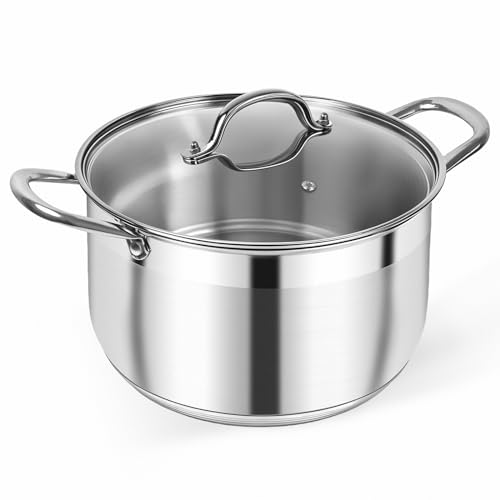
The Kirecoo 8-quart stock pot is a practical size for home soup nights, chili, pasta, and small holiday batches. Its stainless steel body gives it a clean look and a useful level of durability for frequent cooking. The visible lid lets me check simmering food without lifting the lid and losing heat. Its induction-ready design also makes it a flexible choice for many modern kitchens.
The 8-quart capacity gives you room to stir without pushing liquid to the rim. That matters when a stew contains large pieces of meat, potatoes, beans, or vegetables. Stainless steel does not hold onto food smells as much as some softer materials, so it works well for both tomato soup and mild chicken broth. For shoppers seeking the best pots for soups and stews, this model offers a useful balance of size, simple care, and broad cooktop compatibility.
Pros:
- Roomy 8-quart capacity suits family meals
- Works with induction cooktops and many other stovetops
- Visible lid helps monitor simmering food
- Stainless steel resists many food odors and stains
- Useful size for soups, stews, pasta, and stock
- Open shape makes stirring easier
Cons:
- Stainless steel may need careful heat control to prevent sticking
- An 8-quart pot can feel large in a small sink
- Metal cookware may not provide the same heat hold as cast iron
IMUSA 16-Quart Stainless Steel Stock Pot

The IMUSA 16-quart stock pot is built for large cooking jobs. It is a strong match for big batches of soup, stew, stock, seafood boil, pasta, or party food. The large capacity helps when I cook for a crowd or want several days of leftovers. Riveted handles add a firm connection between the pot and the grip points, which is helpful when the pot holds a lot of liquid.
This pot makes sense for a large household, meal-prep cook, community event, or holiday kitchen. It can turn a small recipe into a full family feast, but that extra space also comes with extra weight when full. I would place it on the burner before filling it, then use both handles and move it with care. Among the best pots for soups and stews, this is the volume pick for cooks who value capacity above compact storage.
Pros:
- Very large 16-quart capacity for groups and bulk cooking
- Good choice for stock, soup, stew, pasta, and seafood
- Riveted handles offer a secure attachment
- Stainless steel provides a durable cooking surface
- Leaves plenty of room for stirring large ingredients
- Useful for cooking once and freezing several meals
Cons:
- Too large for many small households
- Full-pot weight can be difficult to lift safely
- Needs generous cabinet or pantry storage
- 6-quart size works well for everyday family meals
- Nonstick ceramic-style surface supports easy food release
- Glass lid provides a clear view without frequent lifting
- Induction-compatible design adds cooktop flexibility
- Useful for soup, stew, curry, sauce, and pasta
- Distinct purple finish adds a decorative touch
- Nonstick coating needs gentler tools and care
- Visible food marks may require prompt cleaning
- Six quarts may not meet the needs of large gatherings
- Electric design works without a traditional stovetop
- Compact format suits dorms, offices, and small homes
- Stainless steel body is easy to understand and use
- Useful for noodles, broth, ramen, and quick meals
- Helps reduce the need for a large cooking setup
- Good option for single servings or small portions
- Not designed for large family-size batches
- Requires access to a safe electrical outlet
- May not replace a full stock pot for long simmering
- Fast pantry option for busy days
- Chunky texture can make a quick meal feel substantial
- Easy to pair with bread, rice, or vegetables
- Can work as a base for a larger custom soup
- Convenient for lunches and emergency meals
- No long prep or raw ingredient handling is required
- It is a food product, not a cooking pot
- Can be high in sodium, depending on the current label
- Flavor and texture may not match homemade soup
- Cast iron holds heat for slow cooking
- Enameled surface does not need traditional seasoning
- 5-quart capacity suits many everyday recipes
- Useful for braising, roasting, stews, and bread baking
- Heavy lid can help retain moisture during cooking
- Attractive cream-white finish can move from kitchen to table
- Cast iron is heavy, especially when full
- Enamel requires care to avoid chips and thermal shock
- Five quarts may be small for large parties
- Offers many ideas for soups, stews, and comfort food
- Can help beginners learn basic cooking methods
- Photos make recipe selection easier
- Useful with stock pots, saucepans, and Dutch ovens
- Supports meal variety during cold-weather months
- Can inspire batch cooking and family meals
- It is a cookbook, not cookware
- Printed recipes do not replace safe food-handling skills
- Some recipes may need changes for dietary needs
- 6-quart size suits most everyday family portions
- Nonstick surface can reduce sticking and scrubbing
- Induction-ready design offers broad stovetop use
- Lid helps keep moisture in during simmering
- Good for creamy soup, stew, sauce, and pasta
- Light everyday format may be easier to handle than cast iron
- Requires nonmetal utensils and careful coating care
- High heat may shorten nonstick performance
- Not as large as a stock pot for party cooking
- Fast comfort meal for busy schedules
- Chicken pot pie flavor works well with bread or crackers
- Easy to store in a pantry
- Can be combined with vegetables or cooked chicken
- Useful for quick lunches and simple dinners
- Requires little preparation beyond heating
- It is canned soup, not a cooking pot
- May contain ingredients that do not suit every diet
- Current nutrition details should be checked on the package
- 8-quart capacity supports family meals and leftovers
- Ceramic nonstick surface may make cleanup easier
- Induction-compatible design adds versatility
- Extra room helps when stirring chunky ingredients
- Suitable for soup, stew, chili, pasta, and vegetables
- Lid helps maintain moisture during cooking
- Nonstick surface needs gentle tools and cleaning
- Large size may feel bulky in a small kitchen
- Users should confirm care and heat limits before use
MICHELANGELO 6-Quart Ceramic Stock Pot
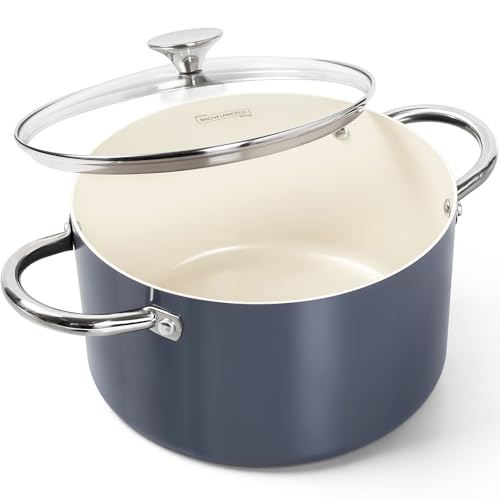
The MICHELANGELO 6-quart ceramic stock pot targets cooks who want a smooth nonstick surface and a bright, stylish finish. Six quarts is a useful middle size for soup, stew, curry, sauce, and pasta. The glass lid gives a clear view of the cooking stage, while the ceramic-style surface can make stirring and serving feel easy. Its purple exterior also brings more personality than a plain metal stock pot.
This pot is especially appealing when easy release matters. A nonstick surface can help with thick stew, creamy soup, and ingredients that tend to cling after a long simmer. I would still use wood, silicone, or other recommended utensils and follow the care directions to protect the finish. If you want the best pots for soups and stews with a nonstick focus, this 6-quart model is a friendly fit for everyday cooking.
Pros:
Cons:
Elite Gourmet Noodle Express Electric Hot Pot

The Elite Gourmet Noodle Express is different from a standard stovetop stock pot. It is an electric hot pot aimed at quick noodles, broth, ramen, and small warm meals. Its stainless steel construction gives it a simple, modern appearance and may suit a dorm room, office, studio, or compact kitchen. Because it heats on its own base, it can help when a full-size range is not available.
I see this as a convenience tool rather than a replacement for a large soup pot. It is handy for one or two servings, fast lunches, and warm broth with little setup. It may also help students and travelers who need a small cooking station, but users should follow the electrical and water-fill instructions closely. For the best pots for soups and stews in a small-space setting, this electric option offers a different kind of value.
Pros:
Cons:
Campbell’s Chunky Savory Pot Roast Soup

Campbell’s Chunky Savory Pot Roast Soup is not cookware, but it fits naturally into a guide about soup cooking. It provides a fast pantry meal for nights when there is no time to chop, brown, and simmer a full pot from scratch. The chunky style can feel more filling than a thin broth, and the pot roast theme pairs well with bread, rice, or a simple salad. I would warm it in a suitable saucepan or microwave-safe container according to the package directions.
This canned soup can also serve as a shortcut ingredient. I can add extra vegetables, cooked noodles, beans, or leftover meat to stretch the meal in one of the best pots for soups and stews. That approach saves time while still giving the kitchen a homemade touch. Always check the label for serving details, allergens, sodium, and storage instructions, since product formulas and package information can change.
Pros:
Cons:
Umite Chef 5-Quart Enameled Dutch Oven

The Umite Chef 5-quart enameled cast iron Dutch oven is made for cooks who enjoy slow, steady meals. Cast iron holds heat well, which helps maintain a gentle simmer after the pot becomes hot. The enamel surface gives the pot a smooth, colorful finish and removes the need to season the cooking surface like bare cast iron. Its 5-quart capacity suits many small families, couples, and cooks who prefer moderate batches.
This Dutch oven is a natural match for braised meat, bean stew, tomato-based soup, roast dishes, and crusty bread baking when the care instructions allow it. The heat retention feels like a warm blanket around the meal, though the heavy body needs careful handling. I would lift it with both hands, use suitable protection, and avoid sudden temperature changes. In my view, it belongs among the best pots for soups and stews when flavor depth and heat stability matter most.
Pros:
Cons:
Taste of Home Soup and Stew Recipe Book

The Taste of Home soup and stew cookbook is not a pot, but it can improve the way you use one. A good recipe collection can help a new cook learn the difference between a quick soup, a slow stew, and a rich stock. The listed collection includes comfort-food ideas, photos, and practical tips. That makes it a useful companion for anyone who has bought one of the best pots for soups and stews but needs fresh meal ideas.
I like recipe books that help me build confidence instead of forcing a rigid method. You can use the recipes as written, then adjust herbs, vegetables, beans, or broth to fit your home. The book may also inspire a better pot-size choice because some recipes need a deep 8-quart vessel while others suit a 5-quart Dutch oven. Check the current listing for edition details, since page counts and formats can vary.
Pros:
Cons:
BEZIA 6-Quart Nonstick Stock Pot

The BEZIA 6-quart nonstick stock pot is aimed at cooks who want simple daily meals and easy cleanup. Its size fits a typical family batch without taking over the stove. A lid helps hold heat and moisture while soup or stew cooks. The induction-ready design can serve homes with induction, electric, or gas cooking systems when the product instructions support those surfaces.
Nonstick cookware can be especially helpful for thick chowder, creamy soup, tomato sauce, and recipes with a sugar-rich glaze. I would keep the heat moderate and avoid sharp metal tools, because coating care has a direct effect on service life. This pot is not the choice for someone who wants to sear at very high heat every day. Still, it is one of the best pots for soups and stews for cooks who rank release and cleanup near the top of the list.
Pros:
Cons:
Campbell’s Chunky Chicken Pot Pie Soup

Campbell’s Chunky Pub-Style Chicken Pot Pie Soup offers a quick way to enjoy a familiar comfort-food flavor. It can help fill a lunch bowl when the day is too busy for a full recipe. I would heat it in a saucepan or approved microwave container rather than treating the can as cookware. Its thick, savory profile may work well with crackers, toast, or a fresh side salad.
This product also shows why pot size and recipe style should match. A single can needs only a small saucepan, while several cans plus added vegetables need more space in one of the best pots for soups and stews. As with any packaged food, I recommend checking the current ingredient, allergy, nutrition, and preparation label before serving. It is a convenience item, not a substitute for a quality stock pot.
Pros:
Cons:
BEZIA 8-Quart Ceramic Nonstick Stock Pot

The BEZIA 8-quart ceramic nonstick stock pot gives you more room than a standard 6-quart family pot. That extra space is useful for chunky vegetable soup, beef stew, chicken noodle soup, and meal prep. Its ceramic nonstick cooking surface is designed to make food release easier, while the lid helps keep the simmer covered. The induction-compatible build may also suit a range of current home kitchens.
I would choose this model when I want a medium-large pot but do not need the extreme capacity of a 16-quart vessel. Eight quarts gives ingredients room to move, which lowers the chance of spills during stirring. Use moderate heat and soft utensils to help preserve the nonstick surface over time. For shoppers comparing the best pots for soups and stews, this one blends useful capacity with a cleanup-friendly cooking surface.
Pros:
Cons:
How to Choose the Best Pots for Soups and Stews
Buying a soup pot looks simple until you stand in front of many sizes and materials. A pot can be shiny, colorful, or heavily advertised, yet still be a poor match for your cooking style. I look first at capacity, heat control, handles, lid design, cooktop use, and cleaning needs. These details affect how safely and often you will use the pot.
Choose the Right Capacity
Capacity is the first filter. A 4- to 6-quart pot often suits one to four people. It can handle a weeknight soup, a modest stew, or a batch of sauce. An 8-quart pot gives a family more room for leftovers and makes stirring easier.
A 12- to 16-quart stock pot is better for parties, large families, stock, corn, seafood, and freezer cooking. Remember that liquid is heavy. One gallon of water weighs about 8.3 pounds before you add meat or vegetables. A very large pot may be useful, but only if you have safe space to lift and store it.
Compare Stainless Steel, Nonstick, Ceramic, and Cast Iron
Stainless steel is a strong all-purpose choice. It handles regular use, high heat, and acidic foods well when made and cared for properly. It may need more stirring than nonstick cookware, but it offers a durable surface for browning and simmering.
Nonstick pots help with food release. They work well for creamy soups, thick sauces, and cooks who dislike scrubbing. The trade-off is care. Avoid overheating an empty pan, use suitable tools, and follow the maker’s cleaning directions.
Ceramic-style nonstick cookware can offer smooth release and a colorful finish. Like other coated surfaces, it needs reasonable heat and gentle handling. “Ceramic” does not mean the pot is made from solid ceramic; product construction can differ, so read the exact care guide.
Enameled cast iron holds heat very well. It is a favorite for slow stews and braises because the heavy body stays steady. It is also heavy, and enamel can chip if treated roughly. I avoid sudden temperature changes, harsh impact, and careless stacking.
Check the Lid
A good lid is more than a cover. It keeps heat and moisture in, which matters for long simmering. A glass lid lets you watch the broth, while a solid lid may hold heat well and feel more robust.
The fit should be stable but easy to remove. A loose lid can allow too much evaporation. A very tight lid can make stirring awkward. For soup and stew, I also like a lid with a comfortable knob that stays cool enough to handle with protection.
Look at the Handles
Soup and stew pots become heavy fast. Wide side handles help with balance. Riveted handles can offer a strong connection, but they may create small spots that need extra cleaning. Stay-cool claims vary by design, so I still use an oven mitt when the pot has been on heat.
For a large stock pot, two secure side handles matter more than a small helper handle. For a Dutch oven, broad grips make a difference because the vessel itself is heavy. Never fill a large pot to the brim if you need to carry it across the kitchen.
Confirm Cooktop Compatibility
Gas and electric stoves accept many pot types, but induction requires a magnetic base. A magnet test can help with some cookware, yet the product listing and maker’s instructions remain the best guide. If you use a glass cooktop, check the bottom for a smooth design and lift the pot rather than sliding it.
Some pots can move from stovetop to oven, but oven limits vary by body, lid, handles, and coating. Never assume oven safety from appearance alone. Confirm the stated temperature limit before using the pot in an oven.
Think About Cleanup
Soup can leave a ring. Stew can leave oil and browned bits. Stainless steel may need soaking and gentle scrubbing, while nonstick often wipes clean with less effort. Cast iron and enamel need careful care to prevent chips, stains, and damage.
Dishwasher guidance also varies. Even if a pot is labeled dishwasher safe, hand washing may help preserve the finish and reduce wear. I dry metal pots fully after washing. I also avoid storing a damp lid on top, since trapped moisture can create odors.
Safety and Cooking Tips for Soup Pots
Start with a stable burner and a pot that fits the heat source. A flame that climbs the sides can damage handles or discolor the pot. Use low or medium heat once the soup reaches a simmer. A rolling boil can break apart vegetables and make broth evaporate too fast.
Do not overfill. Leave space for bubbling, stirring, and expansion. This simple habit prevents spills and burns. If a large pot is nearly full, use a ladle to move contents instead of carrying the whole vessel.
For meat stews, use a food thermometer and follow current USDA guidance for safe internal temperatures. Keep hot food hot and refrigerate leftovers promptly in shallow containers. A large deep pot cools slowly, so dividing the food helps it chill faster.
When cooking acidic food, such as tomato soup, check that the cookware is intended for that use. Enameled cast iron and quality stainless steel are often selected for acidic recipes, while bare reactive metals may affect taste or color. Product care instructions always take priority.
Which Pot Size Is Best for Your Home?
For one or two people, a 4- to 6-quart pot often feels easy to use. It can make dinner without taking up much space. The MICHELANGELO and BEZIA 6-quart models fit this middle ground, with their nonstick surfaces aimed at easier cooking and cleanup.
For three to six people, an 8-quart pot is often the sweet spot. It gives enough room for leftovers without the full weight of a commercial stock pot. The Kirecoo and BEZIA 8-quart models both fit this need in different ways.
For big families and events, consider 12 to 16 quarts. The IMUSA 16-quart model is better for bulk work than a compact everyday dinner. It can be a smart purchase if you regularly make stock, soup for guests, or freezer meals.
A 5-quart Dutch oven is a special case. It may not hold the most food, but it offers steady heat and a broad range of cooking methods. The Umite Chef is best for cooks who want one heavy vessel for braising, stewing, roasting, and baking.
What I Look For in the Best Pots for Soups and Stews
My first test is control. A good pot should let me bring liquid to heat without scorching the base, then maintain a calm simmer. Even heat matters because soup often contains milk, starch, sugar, or tomato. These ingredients can stick when the burner runs too hard.
My second test is comfort. Handles should feel secure, the lid should be simple to lift, and the pot should not feel awkward on the stove. A beautiful pot that is hard to move may stay in the cabinet. The best pots for soups and stews should invite regular use.
My third test is honest care. Every surface has limits. Stainless steel rewards heat control. Nonstick rewards gentle tools. Cast iron rewards careful handling. A buyer gets better long-term value by matching the material to their habits rather than chasing one “perfect” pot.
Best for Table
| Best for | Why |
|---|---|
| Everyday family soup | An 8-quart pot gives useful space for dinner and leftovers. |
| Large batch cooking | A 16-quart stainless steel stock pot handles crowd-size portions. |
| Slow stew and braising | An enameled cast iron Dutch oven holds steady heat and moisture. |
My Recommendation
For most homes, I recommend starting with an 8-quart pot. It offers a strong balance between room, weight, and storage. The Kirecoo stainless steel model is a sensible pick for cooks who want induction support and a classic metal surface. The BEZIA 8-quart ceramic nonstick pot is better for shoppers who prefer easy release and simpler cleanup.
If you cook for a crowd, choose the IMUSA 16-quart stock pot. If you love slow braises and rich stews, the Umite Chef Dutch oven is the more specialized choice. Small-space cooks may prefer the Elite Gourmet electric hot pot for noodles and single servings. The food products and cookbook are useful companions, but they do not replace cookware. Overall, the best pots for soups and stews are the ones that match your batch size, cooktop, handling comfort, and care habits.
FAQs Of best pots for soups and stews
What is the best pot size for soup?
A 6- to 8-quart pot works well for many homes. Choose 6 quarts for smaller meals and 8 quarts for leftovers or large ingredients. Pick 12 to 16 quarts for parties, stock, and bulk cooking.
Is stainless steel good for soups and stews?
Yes. Stainless steel is durable, easy to use, and suitable for many soup and stew recipes. Use moderate heat and stir foods that may stick. A thick or layered base can help improve heat control.
Is a Dutch oven better than a stock pot for stew?
A Dutch oven is often better for slow stew because cast iron holds heat well. A stock pot is lighter and usually offers more volume. Choose the Dutch oven for braising and heat retention, or the stock pot for large batches.
Can I use a nonstick pot for soup?
Yes, a nonstick pot works well for many soups and stews. Keep the heat within the maker’s limit and use soft utensils. Avoid metal tools and abrasive cleaners that may damage the coating.
What should I check before buying an induction soup pot?
Confirm that the product listing says induction compatible. Check the base, size, lid, handles, and care instructions too. A magnetic base is required for induction heating.
Final Verdict: Which Should You Buy?
For most cooks, the Kirecoo 8-quart stainless steel pot is the best all-around choice. Choose the BEZIA 8-quart model for nonstick ease, IMUSA for large batches, or Umite Chef for slow, rich stews.
The best pots for soups and stews should fit your meals, stove, and routine. Pick the size you can safely lift, clean, and store for lasting value.