
The best pots for succulents have drainage holes, breathable walls, and a size that fits the plant’s roots.
Have you ever watered a healthy succulent, only to find soft leaves and wet soil days later? The pot may be the problem. Succulents store water in their leaves, so they need a container that lets excess moisture escape quickly. I compared popular ceramic succulent pots, shallow planters, mini pots, and useful potting supplies to help you choose with confidence. These picks suit windowsills, desks, shelves, patios, and growing collections.
LamDawn Ceramic Succulent Pots Set of 5
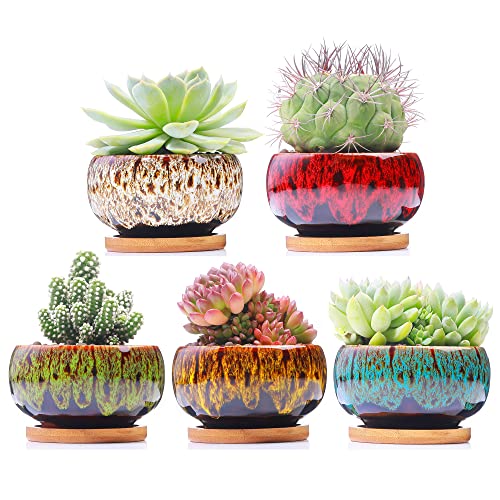
The LamDawn set gives you five small ceramic pots for a tidy succulent display. Each pot has a drainage hole and an attached saucer, which helps catch water after you irrigate. The round shape looks soft and friendly on a desk, shelf, or kitchen ledge. I especially like this design for buyers who want matching pots without spending time choosing several pieces.
The attached saucers make watering less messy, but I still suggest emptying standing water after each session. These pots work well for small haworthia, echeveria, jade cuttings, and compact aloe plants. Ceramic adds weight, so the pots feel steadier than many thin plastic containers. As with any small pot, check the root ball before moving a mature plant into it.
Pros:
- Five matching pots create a coordinated plant display
- Drainage holes help reduce trapped water
- Attached saucers protect desks and shelves
- Ceramic construction adds useful stability
- Round shape suits many small succulents
- Good choice for gifting or starting a collection
Cons:
- Small size may not fit large root systems
- Attached saucers can hold water if not emptied
- Ceramic may break if dropped
My Recommendation
I recommend the LamDawn set for beginners, apartment gardeners, and anyone styling several small plants at once. It is one of the best pots for succulents when appearance and convenience matter equally. The set also makes a thoughtful housewarming gift because the matching look feels complete. Measure your plant first, then use a gritty, fast-draining mix to get the best result.
Miracle-Gro Succulent Potting Mix
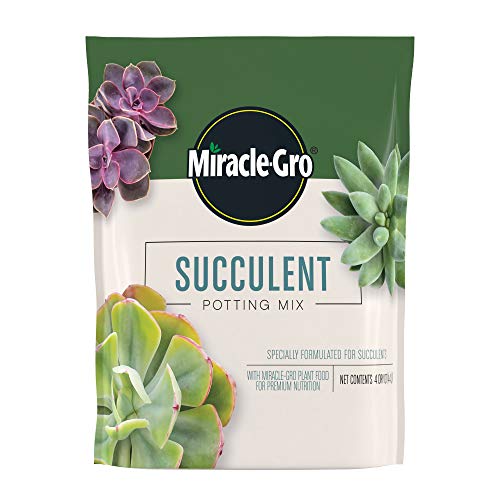
Although this is potting mix rather than a pot, it plays a major role in choosing the best pots for succulents. Miracle-Gro labels this mix for cactus, palm, and succulent plants. A suitable mix should drain faster than standard indoor potting soil and should not stay soggy around the roots. The four-quart bag offers a practical amount for repotting several small plants.
I would pair this mix with a pot that has a real drainage hole, not a sealed decorative container. Good soil cannot fix a pot with nowhere for water to go. Before planting, I check that the mix feels loose and that water can pass through the container without pooling. I also avoid watering by schedule alone because light, temperature, plant type, and pot size all change drying time.
Pros:
- Designed for cactus and succulent plants
- Useful four-quart size for several small pots
- Helps improve drainage compared with dense garden soil
- Easy option for new plant owners
- Works with ceramic, terracotta, and plastic pots
- Convenient for routine repotting
Cons:
- It is soil, not a planter
- Some growers may prefer to add extra mineral grit
- Bagged mix can vary slightly in texture
My Recommendation
I recommend this mix for anyone refreshing old soil or setting up new best pots for succulents. It is most useful for beginners who want a ready-made starting point. Experienced growers can adjust it with pumice, perlite, or coarse sand based on local humidity and watering habits. Store unused mix in a dry, sealed place and inspect it before use.
Gepege 4-Inch Ceramic Succulent Pots

The Gepege ceramic planter offers a useful four-inch size for many common indoor succulents. Its drainage opening gives excess water a path out of the root zone. The compact form fits desks, bookcases, counters, and narrow windowsills. I see it as a simple middle-ground choice for plants that have outgrown tiny nursery pots but are not ready for a large container.
A four-inch pot can work well for a young jade, echeveria, haworthia, or small cactus, but size still matters more than the label. The new container should be only slightly wider than the root ball. A pot that is too large can hold extra wet soil around a small root system. I would use a saucer or waterproof mat beneath it if the product setup does not include one.
Pros:
- Practical four-inch size for many indoor plants
- Ceramic body gives the planter a solid feel
- Drainage hole supports healthier moisture control
- Fits small rooms and compact plant displays
- Works for both succulents and small cacti
- Easy size for a first repotting step
Cons:
- A separate saucer may be needed
- Not ideal for large or top-heavy plants
- Ceramic requires careful handling during delivery and use
My Recommendation
The Gepege pot is best for a single small succulent that needs a clean upgrade from a nursery container. I would choose it for a desk plant, a dorm room, or a simple office display. It earns a place among the best pots for succulents because the size is easy to manage and the drainage feature supports sound care. Pair it with a saucer and porous mix for a reliable setup.
Eightpot 8-Inch Shallow Ceramic Planter

The Eightpot is an eight-inch shallow ceramic planter made for a wider plant display. Its low profile suits succulents with spreading rosettes, clustered stems, or shallow root systems. The drainage hole is an important feature because a broad container can otherwise keep a large mass of soil damp. Its white finish also gives colorful leaves a clean backdrop.
I would use this planter for a group of small echeverias, a mixed cactus arrangement, or a mature plant that has become wider than it is tall. Shallow pots can help prevent unnecessary soil depth, but the mix must still drain freely. Place the planter on a stable surface because a wide ceramic pot becomes heavy after planting. Keep enough space between plants to allow airflow and room for growth.
Pros:
- Wide shape suits spreading succulents
- Shallow profile limits excess soil depth
- Drainage hole supports fast water release
- White finish highlights green and colorful foliage
- Useful for group arrangements
- Ceramic weight helps steady larger displays
Cons:
- Large footprint needs a wide shelf or table
- Can become heavy after adding soil and plants
- Not the best match for tall, narrow-rooted plants
My Recommendation
I recommend the Eightpot for collectors who want one broad centerpiece rather than many tiny containers. It is among the best pots for succulents for arrangements, rosette clusters, and wide plants. It also works well in bright rooms where the white ceramic adds a calm, modern look. Check the final planted weight before placing it on a floating shelf.
ZOUTOG 3.6-Inch Ceramic Pots, 6 Pack

The ZOUTOG set includes six small ceramic pots with drainage holes and bamboo trays. The 3.6-inch size fits young succulents, small cuttings, and compact desk plants. Six matching units make it easy to build a row along a sunny window or divide a growing collection by plant type. The bamboo trays add a warm touch that softens the bright white ceramic.
This set is especially handy when several plants need the same care routine. I would still lift each tray after watering to make sure no water remains underneath the pot. Small containers dry faster than deep ones, so check the soil before watering again. The set can also help new growers learn how different succulents respond to the same light and water conditions.
Pros:
- Six pots offer strong value for a plant collection
- Small size fits cuttings and young succulents
- Bamboo trays catch drips and add visual warmth
- Drainage holes support better root care
- Matching pieces create a neat window display
- Light enough to move during cleaning
Cons:
- Small capacity limits long-term use for fast growers
- Bamboo trays should not stay soaked
- Plants and soil are not included
My Recommendation
The ZOUTOG pack is best for plant parents who want several coordinated pots at once. It is a smart pick for propagation, small windowsills, and office desks. Among the best pots for succulents, this set stands out for quantity and its attractive tray design. I would choose it when you value a tidy display and plan to monitor moisture closely.
SQKH 4-Inch Plant Pots, 6 Pack

The SQKH pack gives you six four-inch plant pots with drainage holes and trays. This size is flexible enough for succulents, herbs, violets, orchids, and other small indoor plants. The colorful design can make a plain shelf feel more cheerful without taking over the room. I like the set for homes where several plants need individual containers rather than one shared bowl.
Individual pots make watering and repotting easier because each plant has its own space. The trays help protect furniture, though they should be emptied after watering. Four inches is a useful size, but it is not a guarantee that every succulent will fit. Check the plant’s root ball and leave a little room for growth without choosing a pot that is much too large.
Pros:
- Six-pot bundle supports several plants
- Four-inch size suits many common houseplants
- Drainage holes help prevent water buildup
- Included trays protect indoor surfaces
- Colorful style adds personality to a room
- Separate containers simplify plant care
Cons:
- Color may not match every decorating style
- Some plants will outgrow the four-inch size
- Trays still need regular emptying
My Recommendation
I recommend SQKH for beginners who want an affordable six-pot starter collection. It is one of the best pots for succulents if you like variety and want to grow herbs or small flowers alongside your plants. The trays make indoor use more convenient, while the separate pots reduce crowding. Choose a bright location and use a mix that drains quickly.
Brajttt 2.1-Inch Mini Ceramic Succulent Pot
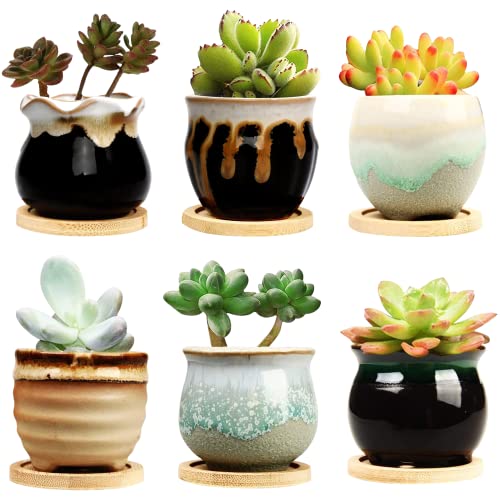
The Brajttt mini pot measures about 2.1 inches and targets very small plants. It can hold a tiny succulent, a rooted leaf pup, or a miniature cactus that does not need much soil. Its ceramic body gives a delicate plant a finished look instead of leaving it in a temporary propagation cup. This is the kind of pot that turns a small windowsill plant into a charming accent.
Mini pots need careful watering because their small soil volume can dry quickly. I prefer using a narrow-spout bottle or a small measuring tool so I do not flood the container. Before buying, compare the inside opening with the plant’s root ball because the outside measurement can be larger than the planting space. It is also wise to keep tiny plants away from harsh midday glass heat.
Pros:
- Excellent size for tiny succulents and pups
- Ceramic gives small plants a finished display
- Fits narrow desks, shelves, and windowsills
- Uses very little soil
- Works well for miniature plant gifts
- Lightweight and easy to move
Cons:
- Too small for most mature succulents
- Small soil volume dries out quickly
- Watering requires a gentle hand
My Recommendation
The Brajttt pot is best for tiny specimens, rooted offsets, and decorative plant gifts. I would not use it as a general-purpose container, but it fills a very specific need well. It belongs on a list of the best pots for succulents for collectors who enjoy miniature plants. Keep the plant small, watch the soil often, and move up a size when roots become crowded.
LE TAUCI Shallow Succulent Pots, Set of 2

The LE TAUCI set includes two shallow ceramic pots in different sizes, listed at about 6.5 and 8 inches. This pairing gives you room to display a smaller plant beside a larger one while keeping the same style. The matte white finish looks calm and modern, so it works with bright foliage and colorful gravel. Drainage holes support the quick release of extra water that succulents need.
The shallow shape is useful for rosette plants and arrangements that spread across the soil surface. I would avoid filling the extra space with dense soil, since unused wet soil can create a poor root environment. Use a gritty blend and place the pots where they receive suitable light for the plant species. The heavier ceramic body should also help keep wider plants from tipping.
Pros:
- Two complementary sizes support flexible displays
- Shallow design suits wide rosettes and clusters
- Matte white finish fits modern rooms
- Drainage holes help excess water escape
- Heavy ceramic offers good stability
- Useful for matching arrangements
Cons:
- Large sizes require more soil and floor space
- Heavy ceramic may be hard to move when planted
- White surfaces can show soil marks
My Recommendation
The LE TAUCI set is best for collectors who want a polished pair of display planters. It is one of the best pots for succulents for wide plants, mixed groupings, and clean home décor. The two sizes also let you repot as a plant grows without changing the overall look. I recommend it for living rooms, entry tables, and bright office corners.
VanEnjoy 7.3-Inch Shallow Green Planter

The VanEnjoy planter combines a round, shallow shape with a green glazed finish. At about 7.3 inches, it gives a broad succulent enough room to show its form without using an oversized deep container. The drainage hole is important for a planter designed for cactus and bonsai-style displays. The green color adds contrast to pale leaves, silver foliage, and red-tipped rosettes.
This pot can become a visual anchor on a table or plant stand. I would use it for a mature echeveria cluster, a compact jade, or a carefully arranged cactus group. Glazed ceramic is less porous than unglazed terracotta, so I pay close attention to soil moisture and airflow. A sunny spot and restrained watering matter just as much as the pot itself.
Pros:
- Green glaze creates a strong decorative accent
- Shallow shape suits broad succulent displays
- Drainage hole supports better water control
- Seven-inch size fits mature small arrangements
- Round form works for cactus and bonsai-style designs
- Stable ceramic construction resists easy tipping
Cons:
- Glazed walls may dry more slowly than terracotta
- One large pot offers less display flexibility than a set
- Heavy when filled with damp soil
My Recommendation
I recommend VanEnjoy for shoppers who want a decorative centerpiece with a natural green finish. It is among the best pots for succulents when color and display value matter. The shallow form helps frame a broad plant, while the drainage hole supports practical care. Use a porous mix and avoid leaving water in the saucer or beneath the planter.
How to Choose the Best Pots for Succulents
The right pot does not need to be expensive or fancy. It needs to match the plant, the room, and your watering habits. I start with drainage, then check size, material, shape, and stability. This simple order prevents many common succulent problems.
Drainage Comes First
A drainage hole is the most important feature in a succulent pot. It allows extra water to leave the container instead of sitting around the roots. University extension guidance for succulent care commonly stresses well-drained soil and containers because wet roots can decay. A decorative cachepot can still work, but place a draining nursery pot inside it and remove the inner pot for watering.
Do not assume a layer of gravel at the bottom will fix a sealed pot. That method can create a wet zone above the gravel rather than improving drainage. A real hole gives water a direct exit. Use a saucer to protect furniture, then empty it after the soil has finished draining.
Choose the Correct Size
A succulent pot should usually be only a little wider than the root ball. A container that is much too large holds more soil than the plant can use. That extra soil may stay wet for too long. A pot that is too small can dry very fast and may restrict roots or make a tall plant unstable.
When repotting, move up gradually. An increase of about one to two inches in width often works for many houseplant succulents, though the root shape matters. Some plants have shallow roots and prefer a wide bowl. Others have deeper roots and need more vertical room.
Compare Pot Materials
Terracotta is porous and allows some moisture and air movement through the pot wall. It often suits people who water too often or live in a humid area. Ceramic pots can be glazed or unglazed, and their performance depends on the finish. Glazed ceramic holds moisture longer but offers many colors and shapes.
Plastic pots are light, affordable, and easy to move. They can work very well when they include enough drainage openings. Metal containers look stylish but can heat up in strong sun and may need an inner pot. Glass containers are usually better as outer covers because they often lack drainage.
Think About Shape
Shallow round pots suit echeveria, sempervivum, and grouped cuttings. Tall pots can suit plants with deeper roots, but they should not be filled with heavy, wet soil. Wide pots can support a spreading plant and create a small landscape. The best pots for succulents give the roots useful space without creating a large wet reservoir.
Check Stability
Top-heavy succulents need a solid base. A heavier ceramic pot can reduce tipping, especially when the plant grows tall. Small plastic pots may need a heavier outer container. Place large planters on a strong surface, and lift them from the base rather than pulling on the plant.
Use the Right Soil
Even the best pots for succulents cannot rescue soil that stays wet for days. Choose a commercial cactus and succulent mix, or improve regular potting soil with mineral material such as pumice or perlite. Avoid ordinary garden soil indoors because it can compact and drain poorly. The goal is a loose root zone with air spaces.
Water With Care
Water thoroughly until some water exits the drainage hole. Then let the mix dry to the depth suitable for the plant before watering again. Do not water because it is Monday or because the surface looks slightly pale. Insert a finger or wooden stick, lift the pot to judge weight, and consider the plant’s light and season.
Give Succulents Enough Light
Most popular succulents need bright light, though the exact amount varies by species. A sunny window can work, but sudden exposure to strong sun may cause leaf scorch. Turn the pot every week or two so growth stays even. If the plant stretches toward light, the issue may be location rather than the container.
Keep Air Moving
Airflow helps wet soil dry and reduces the chance of fungal trouble. Do not crowd many pots tightly together in a damp corner. Leave small gaps between plants, especially after watering. A fan can help in a greenhouse or humid room, but it should not blast the foliage all day.
Best For Comparison
| Best for | Why |
|---|---|
| Beginners and matching displays | LamDawn offers five ceramic pots with drainage and attached saucers. |
| Wide plants and centerpiece arrangements | Eightpot, LE TAUCI, and VanEnjoy use shallow shapes for spreading succulents. |
| Cuttings and several small plants | Brajttt, ZOUTOG, and SQKH provide compact sizes for small collections. |
Common Succulent Pot Mistakes to Avoid
The first mistake is choosing looks over drainage. A beautiful sealed container can hide a serious root problem. I use it only as a cover pot and keep the plant in a draining inner container.
The second mistake is selecting a pot that is too large. New plant owners often think more soil means more comfort, but succulents need a balance of root space and drying speed. Match the container to the root ball, not the eventual size of the plant.
The third mistake is leaving water in a saucer. A saucer protects furniture, but it should not become a small pond. Empty it once the pot has drained.
The fourth mistake is burying the stem too deeply. Keep the crown and lower leaves above the soil line. Deep planting can trap moisture against the plant and invite rot.
The fifth mistake is using decorative rocks as a permanent fix for poor care. Top dressing can look nice, but it does not replace drainage, light, or suitable soil. Keep the surface open enough to inspect moisture and the base of the plant.
How I Evaluate Succulent Pots
I judge a succulent pot by function before style. First, I look for a clear drainage hole and a useful way to protect the surface below. Next, I consider whether the shape matches the plant’s root system. A broad pot may be excellent for a rosette cluster but wrong for a narrow-rooted cutting.
I also look at daily use. Can the pot be moved without damaging the plant? Does it feel stable? Will the finish show mineral marks? Is the size easy for a beginner to manage? These details matter because a pot is part of a care system, not just a piece of décor.
I do not treat a product title as proof of quality. Product dimensions, opening size, drainage design, finish, and included accessories matter more than marketing words. Measurements can vary by listing, so I suggest checking the current Amazon page before ordering. That step is especially important for tiny pots and shallow planters.
FAQs Of best pots for succulents
Do succulent pots need drainage holes?
Yes. Drainage holes let extra water escape and reduce the risk of soggy roots. If you use a decorative pot without a hole, place a draining nursery pot inside it and remove that inner pot for watering.
Are ceramic pots good for succulents?
Yes, ceramic pots can be excellent when they have drainage. They are stable and come in many attractive shapes. Glazed ceramic may dry more slowly than porous terracotta, so check the soil before watering again.
What size pot is best for a succulent?
Choose a pot that is slightly wider than the root ball. A container that is about one to two inches wider often works for many small plants. Always consider the plant’s root depth and final weight.
Is a shallow pot better for succulents?
A shallow pot is helpful for plants with wide, shallow roots, such as many rosette succulents. It can reduce unused wet soil. It is not ideal for every species, so inspect the roots before choosing one.
How often should I water a succulent in a pot?
Water when the soil has dried to the proper depth for the plant and room conditions. Light, temperature, humidity, and pot material change the schedule. Water deeply, let the pot drain, and empty the saucer.
Final Verdict: Which Should You Buy?
For most shoppers, the LamDawn set is the best overall choice because it combines drainage, saucers, ceramic build, and five matching pots. For wide displays, choose Eightpot or LE TAUCI. For tiny plants, Brajttt is the more focused pick.
The best pots for succulents protect roots while making care simple. Match the size, use fast-draining mix, provide bright light, and check current Amazon availability before ordering.