
The best sandwich prep table keeps ingredients cold, work areas clear, and busy meal service moving with less effort.
A lunch rush can turn a small counter into a maze of bread, cheese, vegetables, sauces, and cold meat. A good sandwich prep table solves that mess by pairing a chilled storage base with a clean worktop and easy-to-reach food pans. I looked at size, pan space, layout, cooling design, cleaning needs, and daily use to help you choose the best sandwich prep table for a restaurant, café, bakery, food truck, bar, or home kitchen. The models below cover compact one-door units and large two-door stations.
BODEGACOOLER 27-Inch Sandwich Prep Table

The BODEGACOOLER 27-inch unit is a compact sandwich prep table made for kitchens that need cold storage without giving up much floor space. Its listed 8.03-cubic-foot capacity gives a small team room for common sandwich and salad ingredients. The top includes eight 1/6-size pans, so I can keep toppings in a neat line instead of spreading containers across the counter. A stainless steel work surface and included cutting board create a useful prep zone.
This model uses one stainless steel door, which makes it a practical fit for a café, bakery, bar, or home kitchen with a tight layout. The narrow footprint should also work well beside an oven, counter, or service pass, though I would measure the full unit and door swing before ordering. The food pans keep high-use items close to hand during service. For a small operation, this can be the best sandwich prep table when space matters more than maximum storage.
Pros:
- Compact 27-inch width suits small kitchens
- 8.03-cubic-foot storage helps hold daily ingredients
- Eight 1/6 pans organize toppings and fillings
- Stainless steel surface is easy to wipe clean
- Included cutting board supports fast sandwich assembly
- Single-door layout keeps the design simple
Cons:
- One door offers less storage than a 48-inch model
- Small pans may need frequent refilling during a rush
- Buyers should confirm clearance and electrical details before purchase
My Recommendation
I recommend this BODEGACOOLER for a small café, bakery, sandwich counter, apartment kitchen, or food business with limited room. It gives you a chilled base, a worktop, and an organized topping rail in one compact body. It is not the right pick for a high-volume deli that needs many full-size food bins. Still, it offers strong value when a small footprint and clean prep flow are your top goals.
Rockitch 48-Inch Commercial Sandwich Prep Table

The Rockitch 48-inch commercial sandwich prep table is built for a larger prep line. Its listed 14-cubic-foot interior gives a team more room for bread, produce, meat, cheese, drinks, and backup stock. The 12-pan top creates a broad ingredient rail for sandwiches, wraps, salads, and pizza work. I like this layout for a busy service because staff can see more ingredients at once and spend less time walking to a separate refrigerator.
The extra width comes with a clear space cost, so this table needs a proper commercial kitchen plan. Measure the unit, door clearance, aisle width, and outlet location before delivery. A long prep surface can improve speed when two people work side by side, but it may feel oversized in a small shop. If your goal is a high-capacity best sandwich prep table for steady service, the Rockitch deserves close attention.
Pros:
- 48-inch width supports a broad prep line
- 14-cubic-foot capacity holds more food and backup stock
- 12 pans give staff many topping choices
- Large work area supports two-person prep
- Useful for sandwiches, salads, wraps, and pizza
- Commercial format suits busy food service
Cons:
- Large body needs more floor space
- Heavier size can make installation and movement harder
- Higher capacity may be unnecessary for a small café
My Recommendation
The Rockitch is best for delis, restaurants, school kitchens, catering prep rooms, and food counters with a steady lunch rush. Choose it if you need many pans and want staff to work from one central station. I would not choose it for a narrow food truck or a small home kitchen. For a busy team, the large capacity and 12-pan layout may justify the space and cost.
Bluelinecool 48-Inch Prep Table Refrigerator
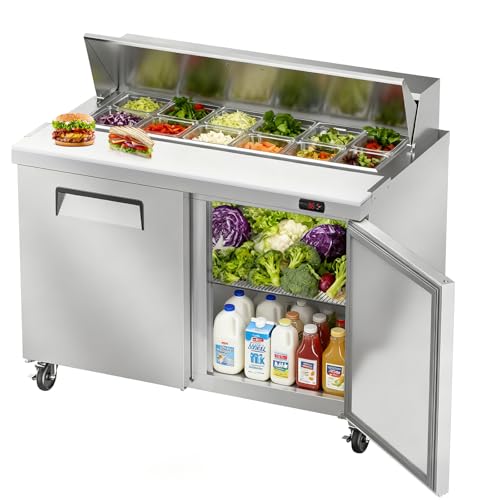
The Bluelinecool 48-inch commercial sandwich prep table focuses on space and ingredient access. Its 12-pan arrangement gives a full prep rail for lettuce, tomato, onion, pickles, sauces, and other fast-moving foods. The wide stainless steel body should fit naturally into a straight production line. I see it as a useful middle ground for operators who need commercial scale but do not want a very specialized station.
A 48-inch table can make a kitchen feel calmer because fewer ingredient trips interrupt the order flow. It also creates a larger target for cleaning, so staff should wipe spills quickly and follow a set closing routine. Keep raw and ready-to-eat food separated, and use clean utensils for each pan. When correctly sized for the room, this model can serve as a dependable best sandwich prep table for daily restaurant work.
Pros:
- Wide 48-inch design gives generous prep space
- 12 pans keep many ingredients within reach
- Stainless steel body fits a commercial setting
- Good layout for sandwich and salad production
- Roomy station can reduce trips to other coolers
- Works well in a straight kitchen line
Cons:
- Requires a large footprint and clear aisle
- More surface area means more cleaning time
- Product specifications should be checked before installation
My Recommendation
I would suggest the Bluelinecool to a deli or café that wants a wide, simple prep station with 12 ingredient pans. It is especially useful when the team prepares many menu items from the same counter. Small operators should compare its footprint with a 27- or 29-inch table first. If the room can handle the width, this unit offers a practical blend of access, work space, and storage.
ECEVT 29-Inch Eight-Pan Prep Table

The ECEVT 29-inch sandwich and salad prep table offers a compact commercial format with eight pans. Its narrow size can help a restaurant add a dedicated cold prep station without a major remodel. The stainless steel finish gives the table a clean, professional look and should be simple to sanitize when staff use the right food-safe cleaner. Eight pans are enough for a focused menu with core toppings and fillings.
This table may fit a bar, buffet line, shop, café, or small restaurant that needs a central station but has limited room. I would plan the ingredient list before buying because eight small pans favor a streamlined menu. Keep extra food in the lower cabinet or another approved cold unit, then refill the rail in small batches. That method can help maintain quality and reduce clutter during service.
Pros:
- 29-inch width saves valuable floor space
- Eight pans support a focused topping selection
- Commercial stainless steel construction is practical
- Fits restaurants, bars, buffets, and small shops
- Dedicated prep area can improve order speed
- Compact design is easier to place than a 48-inch unit
Cons:
- Eight pans may feel limited for a large menu
- Lower storage space is smaller than that of wide models
- Buyers should confirm pan depth and included accessories
My Recommendation
The ECEVT 29-inch model is best for small food businesses that need a commercial sandwich prep table without losing an entire wall. It suits a short menu, a compact service counter, or a second prep station. I would choose a wider model for a deli with many toppings and heavy order volume. For a small shop, its balance of size and function is appealing.
ECEVT 48-Inch Twelve-Pan Prep Table

The ECEVT 48-inch model expands the same basic idea into a larger production station. With 12 pans, it gives a team more room to sort ingredients by menu item or food type. The wide top can support sandwich assembly, salad work, wrap building, and light plating. Its commercial stainless steel design should also suit the pace and look of a restaurant, bar, buffet, or busy shop.
The larger size may reduce the need to place ingredient bins on nearby counters. That can make the work area safer and less crowded, especially when several staff members share the line. Before purchase, I would confirm the table’s total dimensions, power needs, pan layout, and service access. This ECEVT can be the best sandwich prep table for operators who value a wide, organized station at a practical scale.
Pros:
- 48-inch width provides a roomy prep surface
- 12 pans support a broad range of ingredients
- Useful for sandwiches, salads, wraps, and buffet work
- Stainless steel finish suits commercial kitchens
- More space can support better staff organization
- Good fit for medium and high-volume service
Cons:
- Needs more room than compact prep tables
- May be too large for a small café or food truck
- Regular cleaning is important across the wider surface
My Recommendation
I recommend this ECEVT model for a medium restaurant, deli, bar, or buffet that wants a wide ingredient station. It makes sense when 12 pans can stay filled and the team needs more elbow room. If your menu uses only a few toppings, the smaller ECEVT may save money and space. Check the seller’s current specifications before ordering because commercial equipment details can change.
VEVOR 48-Inch Mega Top Prep Refrigerator

The VEVOR 48-inch mega top prep refrigerator is designed for operators who need a large cold prep station. Its listed 12.5-cubic-foot capacity and 12 pans give it a useful mix of storage and ingredient access. The included cutting board creates a clear place to slice bread, build sandwiches, or portion food. The stainless steel salad prep cooler format makes it suitable for a restaurant, food truck, deli, or catering space.
The 12-pan top can help a cook move from bread to filling to garnish without turning away from the order. I also like the idea of keeping backup ingredients below the work line, since it can reduce trips during a rush. As with any large refrigerator, leave room for airflow and service access rather than pushing it tightly against a wall. The VEVOR is a strong candidate for the best sandwich prep table when capacity and a complete prep setup matter most.
Pros:
- 12.5-cubic-foot capacity holds useful backup stock
- 12 pans create a broad mega-top ingredient rail
- Included cutting board supports direct food prep
- 48-inch surface suits a busy production line
- Works for restaurants, delis, food trucks, and catering
- Stainless steel construction is practical for daily use
Cons:
- Large size can be difficult in a tight kitchen
- Full loading may increase weight and make movement harder
- Confirm electrical, ventilation, and pan specifications before purchase
My Recommendation
The VEVOR is best for a busy restaurant, deli, food truck commissary, or caterer that needs one central station for prep and cold storage. It is a smart choice when the 12 pans will support a varied menu every day. Small users may find the size and capacity excessive. For teams that want a broad prep top and a useful lower cabinet, this model offers strong overall utility.
Ferueo 48-Inch Two-Door Prep Table
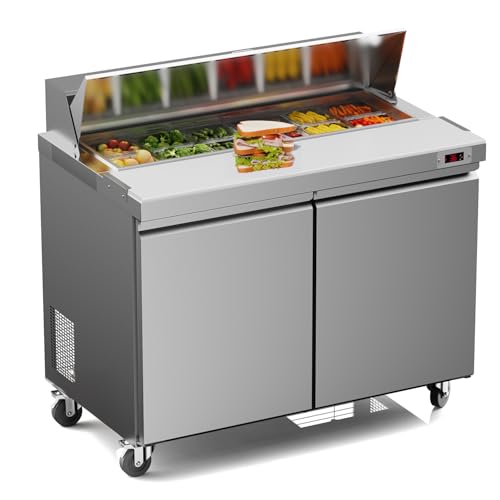
The Ferueo 48-inch two-door sandwich prep table is made for a larger kitchen that needs a wide work line and divided lower access. Its 12 pans keep ingredients visible and close to the hands, while the two-door base can make it easier to reach stored food. A two-door design may also help staff avoid opening one large door for every small item. The broad stainless steel top gives room for sandwich assembly and other cold prep tasks.
I see this layout working well in a restaurant, bar, shop, or catering kitchen with several people sharing the station. It can act like the heart of a cold line, with toppings above and backup items below. The trade-off is size: a 48-inch unit needs careful placement and enough space for both doors to open. Keep food in covered pans, label it clearly, and use a cleaning schedule based on your local food code.
Pros:
- Two doors can make lower storage easier to access
- 48-inch width supports a large prep operation
- 12 pans keep many toppings ready for service
- Wide top allows sandwich and salad assembly
- Useful for restaurants, bars, shops, and caterers
- Divided storage can help staff stay organized
Cons:
- Two-door body needs clearance in front of the unit
- Large equipment may not suit a small work area
- More storage can encourage overloading if inventory is not managed
My Recommendation
I would choose the Ferueo two-door model for a growing restaurant or busy service line that needs quick access to stored ingredients. It is especially helpful when two staff members work near the same table. A compact one-door model is a better fit for a small café. If you have the floor space, this table offers a balanced mix of access, pan space, and lower storage.
ICECASA 48-Inch Two-Door Prep Table

The ICECASA 48-inch sandwich and salad prep table combines a long stainless steel counter with a two-door refrigerated base. Its 12 pans give staff a clear view of common cold ingredients during service. The counter fan cooling design listed for this unit is intended to circulate cold air through the refrigerated cabinet. A covered prep rail can help protect food between orders while keeping the station ready.
This table makes sense for a shop that prepares many sandwiches or salads from one central menu. The two-door base provides a useful place for backup food, while the long top leaves room for cutting and assembly. I would still check the temperature range, power requirements, and installation guidance on the current listing. Good equipment cannot replace safe handling, so keep chilled foods at the temperature required by your local food rules.
Pros:
- 48-inch worktop gives plenty of assembly room
- 12 pans support a varied cold menu
- Two-door base improves access to stored items
- Fan cooling design supports even cabinet circulation
- Covered prep rail helps protect ingredients
- Stainless steel finish suits commercial use
Cons:
- Large footprint may limit placement options
- Two doors need enough front clearance
- Users should confirm cooling and electrical details before purchase
My Recommendation
The ICECASA is best suited to sandwich shops, salad bars, restaurants, and bars that need a roomy cold production line. I would pick it for a menu with many toppings and frequent orders. It may be more machine than a small café needs. For a full-size operation, its 12-pan layout and two-door storage make it a useful best sandwich prep table candidate.
Ferueo 29-Inch One-Door Prep Table

The Ferueo 29-inch one-door refrigerator prep table is a compact option for a small sandwich or salad station. It includes eight pans, which can hold a focused set of toppings without taking over the counter. The single-door base keeps the footprint modest and gives the unit a simple layout. For a small bar, café, bakery, or shop, this format can bring order to a tight prep area.
I like compact tables when a business has a short menu and limited storage needs. They let staff build a sandwich close to the ingredients instead of moving between a refrigerator and a separate worktop. The trade-off is clear: eight pans and a smaller cabinet cannot match a 48-inch station. If you plan the menu well and refill in clean, small batches, this model can deliver efficient daily service.
Pros:
- 29-inch width fits smaller kitchens
- Eight pans keep key toppings close by
- One-door layout saves space
- Dedicated worktop supports fast assembly
- Useful for cafés, bars, bakeries, and shops
- Simple design may be easier to manage
Cons:
- Storage is limited compared with 48-inch tables
- Eight pans may not cover a large menu
- Refilling may be needed more often during peak service
My Recommendation
The Ferueo 29-inch model is best for a small café, bakery, coffee shop, bar, or home-based food business. It is a good choice when you want a real prep station but have little room to spare. I would avoid it for a large deli or a menu with many toppings. For compact service, it offers a sensible mix of chilled storage, pan access, and work space.
ROVSUN 48-Inch Refrigerated Condiment Station

The ROVSUN 48-inch refrigerated condiment prep station takes a slightly different approach from the larger cabinet-style tables. Its listed 25.1-quart prep rail uses a mix of 1/3 and 1/4 pans, giving operators a way to sort condiments and toppings by size. The stainless steel cover can help shield ingredients when the station is not in active use. Auto defrost and temperature control are listed features that may make routine operation more convenient.
The ETL and NSF markings shown in the product description are important points to review, but I would verify the current listing and local approval needs before buying. This style can suit a food truck, restaurant counter, sandwich line, or outdoor service setup where fast condiment access matters. It may offer less enclosed storage than a full prep refrigerator, so plan where backup food will live. For topping-heavy service, the ROVSUN can be the best sandwich prep table style when the rail is the main priority.
Pros:
- 48-inch length gives a broad condiment station
- 25.1-quart listed rail capacity supports active service
- Mixed pan sizes offer flexible ingredient grouping
- Stainless steel cover helps protect the rail
- Auto defrost can reduce routine maintenance work
- Temperature control supports more direct operation
- Useful for restaurants and food trucks
Cons:
- May provide less enclosed storage than cabinet-style tables
- Pan mix is different from standard 1/6-pan layouts
- Buyers should verify certifications and local code needs
My Recommendation
I recommend the ROVSUN to a sandwich counter, food truck, burger shop, or restaurant that needs a long, visible condiment rail. It is especially useful when sauces, toppings, and garnish drive the menu. Choose a cabinet-style prep refrigerator if you also need a large lower storage area. For quick topping access and a covered rail, this unit offers a focused solution.
How I Choose the Best Sandwich Prep Table
A sandwich prep table is more than a cold box with a worktop. It is the place where storage, food safety, speed, and staff movement meet. I start by looking at the space, then the menu, then the expected order volume. The right table should feel like a helpful extra pair of hands, not a heavy obstacle in the kitchen.
Measure the Kitchen First
Write down the available wall length, depth, ceiling height, aisle width, and door swing area. A 48-inch model may fit along a wall but block a walk path when its doors open. Also check the route from the delivery door to the final location. Commercial refrigerators can be large and heavy, so a few minutes of measuring can prevent a costly return.
Leave the clearance recommended by the manufacturer. The unit needs room for ventilation, cleaning, and service. Do not hide the power cord under a wet area or place the table where heat from an oven can affect it. A compact 27- or 29-inch model often works better than a large table in a crowded kitchen.
Match Pan Count to the Menu
More pans do not always mean a better purchase. Count the toppings you use during a normal shift. A small sandwich menu may need only lettuce, tomato, onion, pickles, cheese, meat, and two sauces. A deli with many builds may need 12 pans or more.
Small 1/6 pans help separate ingredients and reduce open space between toppings. They also need regular refills if the menu is busy. I prefer smaller food batches during service because fresh food is easier to monitor and the rail stays less cluttered. Keep backup items in the lower cabinet or another approved refrigerator.
Consider Storage Capacity
Look at both the top rail and the lower cabinet. The rail holds ingredients that staff use now. The cabinet holds backup ingredients, bread, packaged food, or containers, depending on the unit and your food plan. A table with many pans but little cabinet room may still require a second refrigerator.
Capacity listed in cubic feet is useful, but it does not tell the whole story. Shelves, compressor space, door design, and pan supports affect usable room. Avoid packing a refrigerator so tightly that cold air cannot move. Follow the product manual and your local food safety rules for safe loading.
Review Cooling and Temperature Controls
Cold food needs reliable temperature control. The FDA Food Code uses 41°F or below as a common cold-holding standard for many time and temperature control foods, but local rules can differ. Always check the requirements that apply to your location. Use a separate, calibrated food thermometer instead of trusting a display alone.
Look for clear controls, an easy-to-read display, and a design that allows air to circulate. Auto defrost can reduce ice buildup, but it does not remove the need for cleaning. If the table arrives warm, damaged, or unable to hold safe temperatures, stop using it for food and contact the seller or service team.
Choose a Surface That Fits Your Work
Stainless steel is popular because it is strong, smooth, and easy to clean when cared for correctly. It also handles the daily bumps of a commercial prep line. A cutting board can make direct sandwich work easier, but check its size and care needs. Replace a board when deep cuts or stains make it hard to clean.
Do not use the worktop as a storage shelf for boxes and loose supplies. A crowded surface slows service and can create cross-contact risks. I like to keep one clear area for assembly and one area for tools. This small habit makes even a compact table feel more useful.
Think About Cleaning
Clean the pans, lid, cutting board, handles, shelves, and door gaskets on a schedule. Food bits can hide around rails and corners, so do not wipe only the obvious surfaces. Use products approved for food-contact areas and follow the label. Rinse when required, then allow parts to dry before putting them back.
Clean spills at once, especially sugary sauces and acidic foods. Check the condenser and airflow areas as directed by the manual. A dirty condenser can reduce cooling performance and raise energy use. A simple closing checklist protects the table and helps the next shift start clean.
Check Build and Service Details
Inspect the door seal, hinges, pan supports, casters or feet, shelves, and control panel. The door should close firmly without rubbing. A loose gasket can let warm air in and force the system to work harder. Adjustable feet can help level the table, while casters can help with cleaning if the model supports them.
Read the warranty and return terms before purchase. Confirm voltage, plug type, dimensions, pan sizes, included shelves, and delivery details. Product pages can change, and accessories shown in photos may not always be included. This is one reason I treat the listing, manual, and seller answers as part of the buying process.
Best Uses for Different Sizes
| Best for | Why |
|---|---|
| Small café or bakery | A 27- or 29-inch one-door table saves space while keeping core toppings cold and close. |
| Busy deli or restaurant | A 48-inch, 12-pan table gives more ingredient access and room for a larger prep team. |
| Food truck or topping station | A covered refrigerated condiment rail keeps sauces and garnish ready for fast service. |
FAQs Of best sandwich prep table
What is a sandwich prep table?
A sandwich prep table is a refrigerated unit with a food pan rail and a work surface. It stores cold ingredients below and keeps toppings within reach above. Many models also include a cutting board or covered rail.
How many pans should a sandwich prep table have?
Choose pan count based on your menu and order volume. Eight pans suit a focused menu, while 12 pans fit a larger deli or restaurant line. More pans help organization but may require more refilling and cleaning.
What temperature should a prep table hold?
Many cold foods must stay at 41°F or below under common food safety rules. Local requirements can vary. Check the manual and local code, and use a calibrated thermometer to confirm the actual food temperature.
Is a 48-inch prep table too large for a small kitchen?
It can be. Measure the table, door swing, aisle, ventilation space, and delivery path first. A 27- or 29-inch model may work better if the kitchen has limited floor space.
How do I clean a sandwich prep table?
Remove and wash the pans, clean the rail, wipe the worktop, scrub the cutting board, and clean the door gaskets. Use a food-safe cleaner and sanitizer as directed. Follow the manufacturer’s care instructions and your local food code.
Final Verdict: Which Should You Buy?
For most busy kitchens, I would choose the VEVOR 48-inch model for its 12 pans, listed 12.5-cubic-foot capacity, and included cutting board. Small spaces should choose the BODEGACOOLER or Ferueo 29-inch table instead.
The best sandwich prep table is the one that fits your room, menu, and service pace. Measure first, confirm current specifications, and keep cold food at a safe temperature.