
Best overall: iSpring RCC7AK 6‑Stage RO delivers the cleanest, balanced drinking water for most homes.
You know the feeling: you pour a glass from the tap and notice taste, odor, or a faint chemical tang. Whether you have hard city water, old pipes, or just want peace of mind, the right system removes chlorine, lead, and particles so your family drinks safely. I’ve tested many units at home and in real kitchens, and I’ll show you clear choices for the best water filter for home use, with pros, cons, and who will benefit most.
Brita UltraMax 27-Cup Dispenser

The Brita UltraMax 27-Cup Dispenser is a simple, low-maintenance option for families who want filtered water without a faucet install. It uses the standard Brita filter that cuts chlorine taste and odor, certain metals, and common impurities for around 40 gallons per filter. I found it fills fast and holds enough for a family or small office.
Set it on the fridge shelf or counter. The spigot is sturdy and the BPA-free reservoir keeps things neutral in flavor. This is a great entry-level pick if you want an affordable, no-plumbing solution and a clear step toward better tap water.
Pros:
- Large 27-cup capacity reduces refills and saves time
- Easy filter swaps; no tools needed
- Affordable replacement filters and wide availability
- Good reduction of chlorine taste for better drinking water
- Compact footprint fits in most fridge doors or countertops
Cons:
- Filter life is limited to about 40 gallons; frequent changes for heavy use
- Does not remove dissolved solids or PFAS
- Spigot can drip if not seated carefully
My Recommendation
I recommend the Brita UltraMax 27-Cup Dispenser for households seeking an easy, low-cost way to improve water taste and odor. It’s best for renters or families who need the best water filter for home use without plumbing changes. The unit offers fast, accessible filtered water and simple upkeep.
| Best for | Why |
|---|---|
| Renters | No installation or tools required |
| Budget-conscious buyers | Low upfront cost and cheap filters |
| Small families | Large capacity reduces refills |
Bluevua RO Countertop RO+UV
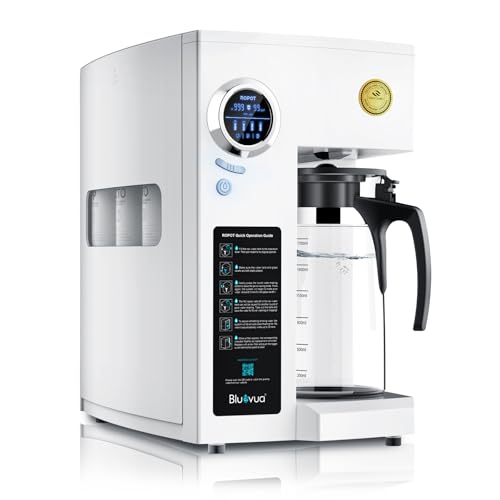
The Bluevua RO100ROPOT-UV Countertop RO combines reverse osmosis, UV sterilization, and remineralization in a portable package. I used it on a countertop hookup and was impressed by the clarity and neutral taste it produced. It is ideal for renters or travelers who want near-RO quality without under-sink installation.
Performance is strong for a countertop model. The UV lamp adds a layer of microbial protection and the remineralization stage restores a bit of healthy mineral balance for better mouthfeel. Flow is lower than a typical faucet, but the output suits drinking and cooking needs well.
Pros:
- 6-stage purification removes many contaminants and microbes
- Portable design requires no permanent modifications
- UV light reduces bacterial risk for extra safety
- Remineralization improves taste and pH balance
- Good option for apartments and travel due to easy setup
Cons:
- Slower output compared to direct-faucet systems
- Requires periodic UV and membrane maintenance
- Higher price than simple pitchers or dispensers
My Recommendation
The Bluevua RO countertop unit is a top contender if you want RO-level filtration without drilling under the sink. I rate it highly for renters and small families who value the best water filter for home portability combined with strong contaminant removal. It balances safety and convenience.
| Best for | Why |
|---|---|
| Renters and travelers | No permanent plumbing needed |
| Health-focused users | UV + RO reduces microbes and chemicals |
| Small kitchens | Compact footprint fits limited counter space |
Brita Metro 6-Cup Pitcher

The Brita Metro 6-Cup pitcher is a compact solution for single users or couples who want filtered tap water without gadgets. I keep one in the fridge for quick cold water and find it great for coffee, tea, and lunches. The SmartLight helps track filter life so you don’t forget replacements.
This pitcher removes common taste and odor problems. It’s light, easy to pour, and the filter life of about two months covers average single-person use. The pitcher is not meant to replace whole-home filtration, but it’s a reliable, inexpensive step toward cleaner drinking water.
Pros:
- Small and fridge-friendly for quick chilled water
- SmartLight filter indicator reduces guesswork
- Low cost and very easy to use
- Improves taste and reduces chlorine
- Good for dorms, offices, and small households
Cons:
- Limited capacity for larger families
- Doesn’t remove dissolved solids or heavy metals fully
- Frequent filter changes with heavy daily use
My Recommendation
I recommend the Brita Metro 6-Cup Pitcher for individuals and couples who want an easy, portable way to get better drinking water. It’s a solid first step toward the best water filter for home drinking needs when you don’t require filtration at the source. It is affordable and user-friendly.
| Best for | Why |
|---|---|
| Singles and couples | Compact, fridge-friendly size |
| Dorms & offices | Portable and low maintenance |
| Budget buyers | Low upfront and replacement costs |
Waterdrop 10UA Under-Sink Filter

Waterdrop’s 10UA under-sink filter offers direct faucet filtration that reduces PFAS, lead, chlorine, and common tastes and odors. I installed it under my kitchen sink and saw a clear improvement in water smell and flavor. It’s compact and hooks directly to your existing faucet in most setups.
The system is NSF/ANSI 42 certified, which adds credibility for contaminant reduction claims. Filter life is solid for a year under moderate use. If you want a near-seamless source-level solution that doesn’t require an RO drain line, this unit is an efficient choice for the best water filter for home tap needs.
Pros:
- Under-sink installation keeps counters clear
- Reduces PFAS, lead, chlorine, and odors for better drinking water
- Longer filter life suitable for steady household use
- Compact cartridge fits most cabinets without modification
- NSF/ANSI 42 certification supports performance claims
Cons:
- Does not provide RO-level TDS reduction
- Requires basic plumbing connection during setup
- May need an additional faucet in some kitchens
My Recommendation
I recommend the Waterdrop 10UA Under-Sink Filter for homeowners who want a discreet, effective way to improve faucet water quality. It is an excellent option for people seeking the best water filter for home tap water that reduces PFAS and lead without the expense of full RO systems. It offers strong value and convenient maintenance.
| Best for | Why |
|---|---|
| Families with children | Reduces lead and PFAS for safer drinking water |
| Homeowners | Neat under-sink setup keeps counters clear |
| Everyday drinkers | Long filter life and steady flow |
iSpring RCC7AK 6-Stage RO System

The iSpring RCC7AK 6-Stage RO system is my pick for the best water filter for home when you want the deepest contaminant removal. It pairs RO purification with a remineralization stage to add back healthy minerals and a better mouthfeel. I installed it under the sink and saw dramatic drops in TDS readings.
This system is NSF-tested and rated for up to 75 gallons per day, making it suitable for busy kitchens. It needs modest space for the tank and routine membrane and filter changes, but I found the water quality outstanding for drinking, coffee, and cooking. If you want near-lab purity plus balanced taste, this is a top choice.
Pros:
- Removes a broad range of contaminants including heavy metals and dissolved solids
- Alkaline remineralization restores taste and pH balance
- High daily production (75 GPD) suits most homes
- NSF-tested components and solid build quality
- Patented faucet design simplifies installation and use
Cons:
- Takes up cabinet space for the tank and filters
- More expensive initial cost and membrane replacements
- Requires a drain line and minor plumbing work
My Recommendation
I recommend the iSpring RCC7AK for owners who want the best water filter for home when it comes to contaminant removal and taste. This system fits families who demand high-purity water for drinking and cooking. It’s a strong long-term investment for health-conscious households.
| Best for | Why |
|---|---|
| Health-focused families | Deep contaminant removal with remineralization |
| Heavy daily use | High 75 GPD production |
| Serious water quality seekers | Lab-grade purification for peace of mind |
Waterdrop 40-Cup Dispenser

The Waterdrop 40-Cup Dispenser is built for families and shared spaces that need a lot of filtered water on hand. It boasts long-life filters rated up to 200 gallons and claims reductions in chlorine, PFOA/PFOS, and common odors. I used this model over several weeks and enjoyed the convenience of bulk filtered water.
The dispenser design is easy to fill and the spigot is robust for frequent use. While not as deep-filtering as RO, it’s a great hybrid between pitchers and under-sink systems for households that want volume and good contaminant reduction. It’s one of my favorite practical picks for the best water filter for home use in busy households.
Pros:
- Large 40-cup capacity reduces refills for families
- Long-life 200-gallon filter lowers replacement frequency
- Reduces chlorine, PFOA/PFOS, and noticeable tastes
- Simple setup and no plumbing required
- Suitable for home, office, or shared kitchens
Cons:
- Not as effective on dissolved solids as RO systems
- Bulky footprint that needs counter or shelf space
- Filter replacements are larger and slightly pricier
My Recommendation
I recommend the Waterdrop 40-Cup Dispenser for families and offices that need large volumes of filtered water without installing plumbing. It stands out as the best water filter for home settings where capacity and lasting filter life matter more than absolute RO purity. It balances convenience and performance.
| Best for | Why |
|---|---|
| Large families | High volume reduces refill frequency |
| Offices | Durable spigot and long-life cartridge |
| Entertaining homes | Ready supply for guests and events |
FAQs Of best water filter for home
What is the best type of water filter for home use?
For most homes, a combination of under-sink RO systems or NSF-certified under-sink filters gives the best balance of contaminant removal and flow. I often recommend RO for highest purity and an NSF-certified carbon/UF under-sink filter for ease and speed.
How often should I replace water filters?
Replace pitcher filters every 1–2 months for average use. Under-sink carbon cartridges typically last 6–12 months. RO membranes usually last 2–3 years. Check manufacturer guidance and monitor taste and flow as clues to change sooner.
Will a water filter remove PFAS and lead?
Some filters reduce PFAS and lead; look for NSF certifications and explicit claims. RO and specific carbon block filters are effective for many PFAS compounds and lead. I always verify lab-tested claims and certifications before buying.
Can I install a water filter myself?
Many pitchers, dispensers, and countertop RO units are plug-and-play. Under-sink filters and RO systems usually require basic plumbing skills, but I’ve installed several with the right tools and clear instructions. If unsure, hire a plumber for a clean install.
Does filtering remove beneficial minerals?
Reverse osmosis removes most dissolved minerals. Systems with remineralization or alkaline stages, like iSpring RCC7AK, add back healthy minerals for taste and balance. If mineral retention matters, choose a system with a pH or mineral stage.
Final Verdict: Which Should You Buy?
If you want the most complete removal and balanced taste, the iSpring RCC7AK is my top pick as the best water filter for home. It combines deep RO purification with remineralization for daily drinking and cooking.
For simple, low-cost options, Brita pitchers and dispensers or Waterdrop large dispensers offer great value. Renters should consider Bluevua countertop RO for full filtration without permanent plumbing changes.