
Best cutting boards for Japanese knives protect edges while offering a soft, stable cut surface.
I once watched a friend chip a prized single-bevel yanagiba on a cheap board. He blamed the knife. The truth was the board. The right cutting boards for Japanese knives solve that problem. They reduce edge wear, stop chipping, and give you a controlled, smooth cut. If you love thin, hard Japanese steel, you want a board that’s soft enough to preserve the edge but stable enough for precise work.

Shun Hinoki Cutting Board -…
MEDIUM CUTTING BOARD: The Shun Cutlery Medium Hinoki Cutting Board is expertly designed to be the perfect cutting surface for any knife. Medium-soft wood “gives” as you cut, helping to…

Shun Cutlery Small Hinoki Cutting…
SMALL CUTTING BOARD: The Shun Cutlery Small Hinoki Cutting Board is expertly designed to be the perfect cutting surface for any knife. Medium-soft wood “gives” as you cut, helping to…

Shun Cutlery Large Hinoki Cutting…
LARGE CUTTING BOARD: The Shun Cutlery Large Hinoki Cutting Board is expertly designed to be the perfect cutting surface for any knife. Medium-soft wood “gives” as you cut, helping to…
Shun Hinoki Medium Board

I keep this Shun Hinoki medium board on my counter for sashimi prep. The wood feels almost spongy under the blade. That’s exactly what you want for most high-hardness Japanese knives. The hinoki wood soaks up slight impacts and leaves less micro-damage on the edge than a hard maple or plastic surface.
Its size is roomy enough for filleting and general prep. The light scent of hinoki fades after a few uses but gives a pleasant fresh-wood feel. I find it very stable during long sessions and it does not grab the blade.
Pros:
- Very knife-friendly hinoki wood preserves edge life
- Soft surface reduces chance of chipping on thin Japanese blades
- Lightweight yet stable for sashimi and prep
- Natural antimicrobial properties of cypress family wood
- Attractive, minimal look that fits modern kitchens
Cons:
- Requires regular oiling to prevent drying
- Not ideal for heavy cleaving or pounding
My Recommendation
I recommend the Shun hinoki medium for cooks who own single-bevel yanagiba or delicate sujihiki. If you value blade life and fine slicing, this board keeps cutting boards for japanese knives in top condition. It’s best when used for fish, vegetables, and delicate proteins.
| Best for | Why |
|---|---|
| Delicate sashimi work | Soft hinoki preserves thin edges while giving smooth slices |
| Everyday home prep | Medium size fits most counters and tasks |
| Preserving blade life | Less wear equals fewer sharpenings |
Shun Hinoki Small Board
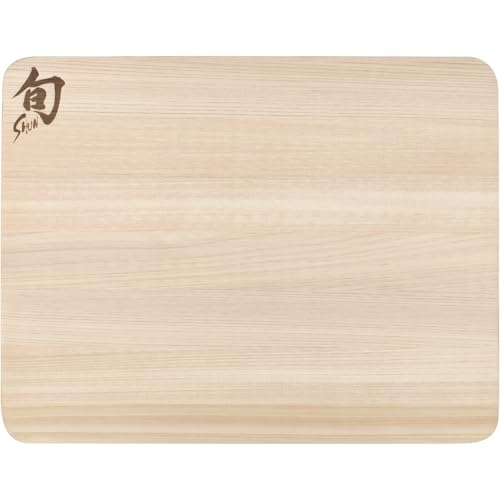
The Shun small hinoki board is my go-to for quick prep and delicate trims. Its compact size sits nearly flush on my counter. I use it for herbs, citrus, and finishing sashimi portions. The soft hinoki face eases the pull of a thin Japanese blade.
It handles small jobs with grace. The board is light enough to move to the sink and soft enough to keep single-bevel knives sharp. If you have limited space, this is an ideal companion to a larger board.
Pros:
- Compact and easy to store
- Preserves razor edges of Japanese knives
- Lightweight for frequent movement
- Good for precision tasks and garnishes
- Easy to oil and maintain
Cons:
- Too small for large roasts or big fish
- Can warp if left wet for long periods
My Recommendation
Buy the Shun small board if you often work with delicate cuts and need a compact surface. It is ideal for anyone who wants to protect the blade on their chef’s and sashimi knives. This model complements other cutting boards for japanese knives as a precision station.
| Best for | Why |
|---|---|
| Small kitchens | Compact size saves space without sacrificing softness |
| Herbs & garnishes | Precise control for fine cuts |
| Sashimi finishing | Preserves thin edges for clean presentation |
Shun Hinoki Large Board

The Shun large hinoki board gives me real workspace for big fish and multiple prep steps. It offers the same soft, edge-friendly surface but on a larger scale. The wider face reduces crowding and makes long, clean pulls with long knives easier.
I appreciate its balance between stability and gentleness. It handles rolling pins and long sashimi slices well. For anyone who regularly uses long Japanese knives, a board this size is a practical investment.
Pros:
- Large surface for big fish and multi-step prep
- Preserves edges on long blades like yanagiba
- Stable during long slicing motions
- Beautiful, uniform grain for presentation tasks
- Easy to clean after heavy sessions
Cons:
- Heavier and takes more storage space
- Higher price than small boards
My Recommendation
I recommend the large Shun hinoki for pros or serious home cooks who use long Japanese knives. It keeps cutting boards for japanese knives in optimal shape and gives you room to work without damage. This board is a workhorse for sashimi prep and large proteins.
| Best for | Why |
|---|---|
| Professional kitchens | Large size supports long blades and high volume |
| Home chefs who entertain | Room for multiple prep tasks at once |
| Long blade maintenance | Reduces edge wear across more surface |
Yoshihiro Hi-Soft Large

The Yoshihiro Hi-Soft large is a synthetic-style board made in Japan for sashimi chefs. It has a predictable, slightly springy feel I like for precision cuts. The material resists deep grooves and is gentle on the steel’s edge.
This board cleans easily and dries fast. It is lighter than dense hardwoods but has enough mass to stop thin blades from slipping. If you do a lot of fish work, it’s an excellent option to pair with your Japanese knives.
Pros:
- High-performance surface developed for sashimi
- Resists deep scoring and bacteria when cleaned properly
- Gentle on razor-sharp edges
- Made in Japan with attention to chef needs
- Stable under long slicing strokes
Cons:
- Not as warm-looking as wood for presentation
- Some synthetic surfaces still show cuts over time
My Recommendation
I suggest the Yoshihiro Hi-Soft large if you want a professional-grade synthetic alternative. It’s great for those who want low-maintenance options that still protect cutting boards for japanese knives. This model is best for chefs who prioritize sanitation and edge care.
| Best for | Why |
|---|---|
| Sanitary work | Synthetic surface cleans easily and dries fast |
| Fish professionals | Designed for sashimi and long slicing strokes |
| Edge preservation | Soft-yet-resilient surface reduces edge wear |
Yoshihiro Hi-Soft Medium
The Yoshihiro Hi-Soft medium offers the same pro-grade surface in a smaller footprint. I use this board when I want the synthetic ease of care but need less space. The medium size is a good middle ground between fragile small boards and large work surfaces.
It resists stains and odors better than porous hardwood. Paired with a quality whetstone routine, this board keeps cutting boards for japanese knives performing well over many sessions. It’s a solid, dependable pick for daily use.
Pros:
- Balanced size for daily kitchen tasks
- Durable surface that handles repeated slicing
- Stays cleaner than many hardwoods
- Protects delicate Japanese edges
- Lightweight and easy to store
Cons:
- Less traditional look than wood options
- Can show knife marks after heavy use
My Recommendation
Choose the Yoshihiro Hi-Soft medium if you want a practical balance of care and performance. It’s great for daily kitchen work and helps maintain cutting boards for japanese knives when you want a low-maintenance surface. I like it for mixed-use kitchens.
| Best for | Why |
|---|---|
| Daily cooks | Medium size fits most tasks and kitchens |
| Those avoiding wood maintenance | Synthetic is easier to sanitize and oil-free |
| Edge-conscious users | Soft surface reduces micro-chipping on Japanese blades |
YAMASAN Hinoki Medium

The YAMASAN Kyoto Uji hinoki is true Japanese cypress with a pleasant fine grain. It feels welcoming under the blade. The board has a bit more weight than the Shun medium, offering extra stability when doing long pulls with single-bevel knives.
I enjoyed the subtle aroma on the first few uses. It fades but leaves a clean feel. If you want an authentic Japanese hinoki experience that helps protect cutting boards for japanese knives, this board is an excellent match.
Pros:
- Authentic Japanese hinoki cypress for true softness
- Heavier build improves stability for long slicing
- Fine grain looks elegant for serving
- Natural antimicrobial qualities
- Made in Japan craftsmanship and fit
Cons:
- Needs careful drying to avoid warping
- Higher cost than generic wooden boards
My Recommendation
I recommend YAMASAN hinoki for those who want authentic materials and stability. It protects the edge on your favorite Japanese knives and gives a premium feel. If you prize tradition and performance, this board is a great pick in the cutting boards for japanese knives space.
| Best for | Why |
|---|---|
| Traditionalists | Authentic hinoki cypress delivers classic feel and look |
| Edge care | Soft wood protects thin, hard steels |
| Stability seekers | Heavier weight reduces blade slip |
Bamboo Set of 3 Boards

Bamboo boards offer a middle ground between wood and synthetic. This three-piece set includes sizes for meat, vegetables, and serving. I’ve used bamboo for years and find it hard, durable, and attractive. It handles heavy work well.
However, bamboo is harder than hinoki and can accelerate edge dulling on high-hardness Japanese knives. I use bamboo for general prep but not for final sashimi slicing. For cutting boards for japanese knives, bamboo is okay for many tasks but not ideal for preserving razor edges.
Pros:
- Durable and resists deep gouges
- Eco-friendly fast-growing material
- Set of three covers many tasks
- Attractive natural finish for serving
- Easy to clean and maintain with oiling
Cons:
- Harder surface can dull Japanese blades faster
- Edges may need more frequent honing
My Recommendation
Buy this bamboo set if you want versatility and durability. But use it alongside a softer board specifically for slicing with delicate Japanese knives. I keep bamboo for meats and bulk prep, then switch to a hinoki or hi-soft board when I need to protect cutting boards for japanese knives.
| Best for | Why |
|---|---|
| Everyday heavy prep | Hard bamboo stands up to knives and heavy use |
| Multi-task kitchens | Three sizes cover many needs |
| Eco-conscious buyers | Bamboo is fast-growing and renewable |
SHUMARU Mahogany Board

The SHUMARU mahogany edge-grain board is a luxury piece. Its thickness and weight make it feel very solid. Edge-grain boards provide forgiving surfaces that are friendly to Japanese steels. The mahogany gives warm tone and a premium look on the counter.
I find this board best for chefs who like display and function. It supports heavy duty work while offering some softness to protect edges. If you own prized cutting boards for japanese knives, this board pairs well as a main station for varied tasks.
Pros:
- Premium mahogany look and feel
- Edge-grain construction balances durability and gentleness
- Non-slip feet and ergonomic handles improve handling
- Thick profile reduces warping and flex
- Great as a showpiece for serving
Cons:
- Expensive compared to basic boards
- Requires oiling and careful care to maintain finish
My Recommendation
Pick the SHUMARU mahogany board if you want luxury plus performance. It’s ideal for hosts and home chefs who want a centerpiece that still respects their Japanese knives. Use it for general work, then shift to softer boards for delicate slicing to best protect cutting boards for japanese knives.
| Best for | Why |
|---|---|
| Serving & presentation | Beautiful finish for table-top use |
| General prep | Thick edge-grain resists warping and absorbs impact |
| Gift buyers | High-end look and handcrafted feel |
Buying and Care Tips I Use
I always match board material to the blade. For thin, hard Japanese steels I reach for hinoki or hi-soft. For heavy chopping I use bamboo or solid hardwood. This habit keeps my knives sharper and safer. I also rotate boards to let them dry fully between uses.
Care matters. I oil wooden boards monthly with mineral oil and avoid soaking them. For synthetic boards I use hot soapy water and air dry. These steps extend their life and keep cutting boards for japanese knives safe and effective.
FAQs Of cutting boards for japanese knives
Why are hinoki boards recommended for Japanese knives?
Hinoki is soft and springy. It reduces edge wear and lowers risk of chipping on thin, hard steels. The wood also has mild natural antimicrobial traits. That combination makes hinoki a top choice for keeping cutting boards for japanese knives in good condition.
Can I use bamboo with my Japanese knives?
Yes, but with caution. Bamboo is harder than many woods and can dull hard Japanese blades faster. Use bamboo for heavy prep and pair it with a softer board for final sashimi or delicate slicing.
Are synthetic boards okay for sashimi and sushi prep?
High-quality synthetic boards like the Yoshihiro Hi-Soft models are fine. They are easy to sanitize and gentle on edges. They are a practical choice in busy kitchens where cleanliness is key while protecting cutting boards for japanese knives.
How do I maintain a wooden hinoki cutting board?
Wipe it clean, avoid soaking, and oil monthly with food-grade mineral oil or board butter. Let the board dry upright. Regular light sanding will remove shallow cuts and keep the surface smooth for Japanese knives.
Do cutting boards for japanese knives need to be replaced frequently?
Not necessarily. If you care for them, they last years. Replace when deep grooves form or if warping creates instability. Deep grooves can trap bacteria and harm blades.
Final Verdict: Which Should You Buy?
If you own thin, hard Japanese blades, prioritize soft surfaces like hinoki or hi-soft synthetic boards to protect edges and prevent chipping. For large prep, combine a large hinoki or hi-soft with a harder board for heavy work.
In short, match the board to the task. Use softer boards for precision slicing to keep cutting boards for japanese knives performing at their best.