
Use a plunger, clear the P-trap, and snake the drain to restore flow quickly.
I’ve spent years fixing messy kitchen clogs as a homeowner and part-time handyman. In this guide I’ll show clear, practical steps for how to unclog a double kitchen sink with standing water. You’ll get safe methods, tools to use, mistakes to avoid, and tips to keep it from happening again. Read on and you’ll have working drains in one visit.

Why a double kitchen sink clogs and ends with standing water
A double kitchen sink can trap food, grease, and soap in either side or in the shared tailpiece. Over time those bits form a plug that blocks water flow. Standing water means the clog is past the sink strainer or in the P-trap or shared drain line. Knowing the likely cause helps you pick the right fix.
Common clog contributors:
- Food scraps that slip past the strainer.
- Grease and oil that cool and solidify.
- Soap scum mixing with debris.
- Hair and small objects in the drain.
Understanding where the block sits makes unclogging faster and safer. If the clog sits in one basin, the P-trap under that side is often the issue. If both basins back up, the clog may be in the shared tailpiece or main line.
:max_bytes(150000):strip_icc()/GettyImages-1320565239-9b3713b226bb46b0b700b0d83d99eb88.jpg)
Tools and materials you’ll need
Gather tools before you start. This saves time and avoids surprises.
Essential items:
- Plunger sized for kitchen sinks.
- Bucket and old towels to catch water.
- Adjustable wrench or channel-lock pliers.
- Drain snake or hand auger for deeper clogs.
- Gloves and safety goggles.
- Flashlight to inspect pipes.
- Baking soda and vinegar or an enzyme cleaner for organic build-up.
Optional helpful items:
- Wet/dry shop vacuum for stubborn standing water.
- Zip ties or rags to seal overflow holes.
- Rubber sink stopper to isolate one basin.
Having the right items makes how to unclog a double kitchen sink with standing water safer and faster.

Step-by-step: how to unclog a double kitchen sink with standing water
Follow these steps in order. Start with the least invasive methods and move to tools if needed.
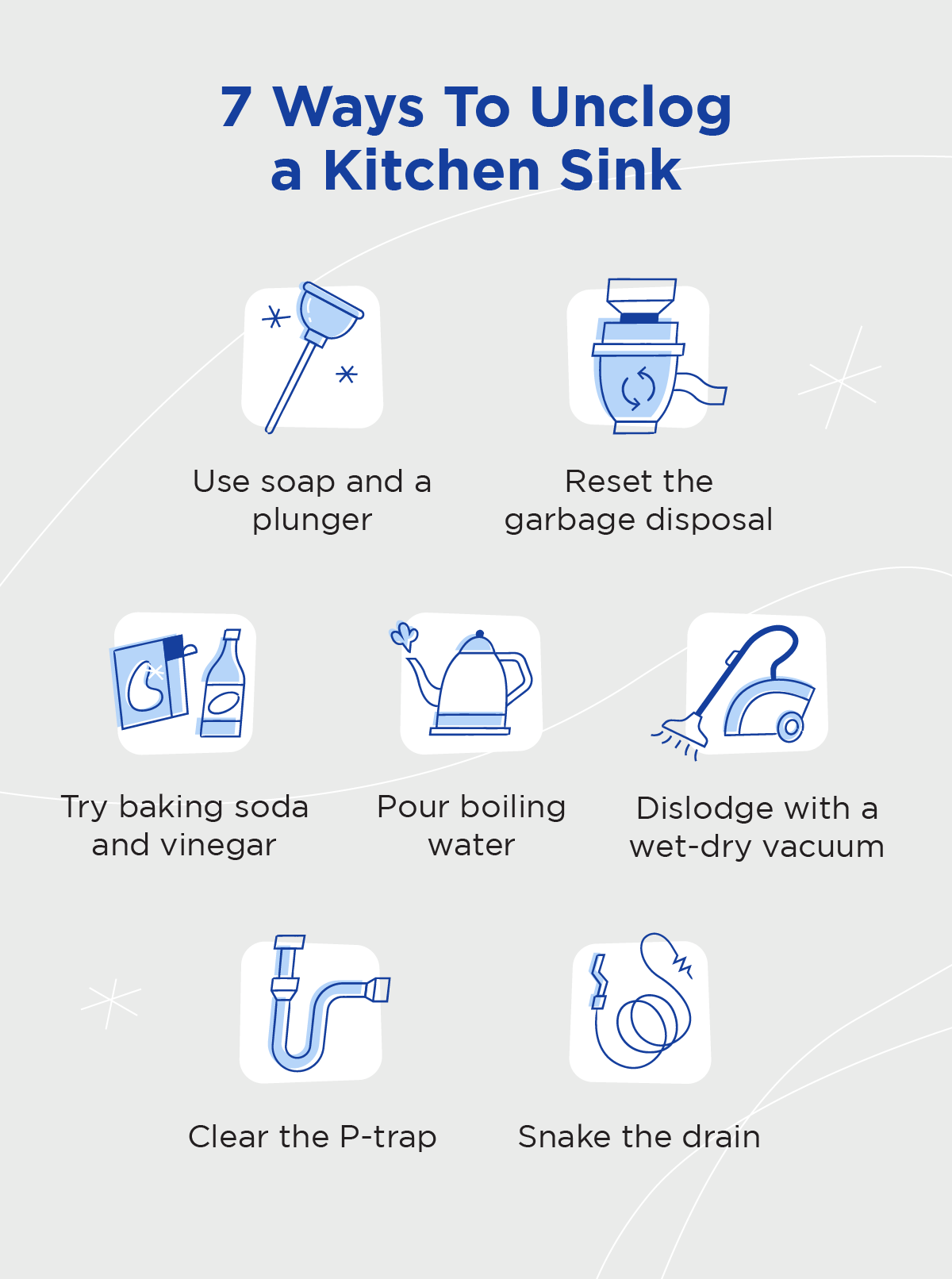
- Clear excess water
- Remove dishes and clear the counters.
- Use a cup or small container to bail standing water into a bucket.
- Dry the sink edges so tools sit steady.
- Block the overflow and isolate basins
- If your sink has an inside overflow, cover it with a wet rag or tape.
- Plug the opposite basin or leave it open based on where the clog is.
- Try the plunger
- Fit a sink plunger over the clogged drain. If using a double sink, seal the other basin with a wet towel or plug.
- Push and pull firmly for 15–30 seconds. Check if water drains.
- Repeat up to three times. Replace water as needed to keep the plunger cup sealed.
- Use baking soda and vinegar (for mild clogs)
- Pour 1/2 cup baking soda down the drain. Follow with 1/2 cup white vinegar.
- Wait 10–15 minutes; then flush with hot water.
- This helps dissolve light grease and soap build-up. It may not clear heavy blockages.
- Remove and clean the P-trap
- Place a bucket under the trap. Use pliers to loosen slip nuts.
- Remove the trap and dump its contents into the bucket.
- Clean the trap by hand or with a bottle brush. Reassemble and test drainage.
- Snake the drain for deeper clogs
- Feed a hand auger or drain snake into the tailpiece toward the main line.
- Rotate and push until you feel resistance. Break up or retrieve the clog.
- Pull the snake back slowly, clean it, and run hot water.
- Use a wet/dry vacuum if available
- Set the vacuum to liquid mode and create a tight seal over the drain.
- Turn the vacuum on to pull debris and water out.
- This can remove soft clogs near the top of the drain.
- Final flush and test
- Reassemble any removed parts. Tighten slip nuts by hand and then a quarter turn with pliers.
- Run hot water down both basins for several minutes.
- Check for leaks and make sure both sides drain freely.
If these steps do not clear the clog, stop and consider calling a professional. Heavy obstructions deeper in the sewer line need a plumber’s tools. Practicing these steps teaches you how to unclog a double kitchen sink with standing water safely and effectively.

Alternate methods and DIY tricks
Some situations call for different approaches. Try these when basic steps don’t work.
Enzyme drain cleaners
- Use enzyme cleaners for recurring organic build-up. They are gentler than caustic chemicals.
- Run them overnight for best results. They work slowly but safely.
Caustic chemical cleaners
- These can dissolve grease quickly but are harsh and can damage pipes or finishes.
- Use as last resort and follow label safety instructions.
Air blaster tools
- An air blaster sends a short burst of compressed air to move clogs.
- They are effective on mid-line blockages but require care to avoid pipe damage.
Professional augers and hydro-jetting
- Professionals use long augers or pressurized water to clear tough blockages.
- These methods solve major mainline clogs but need trained operators.
Quick hacks from experience:
- Remove and clean sink strainers weekly to reduce clogs.
- Run hot water after each dish wash to move grease.
- Avoid dumping grease down the drain; collect it in a jar and toss in the trash. These small habits reduce how to unclog a double kitchen sink with standing water occurrences.

Source: kashifiqbal.com
Common mistakes and safety tips
Avoid these pitfalls. They save time and protect your pipes.
Mistakes to avoid:
- Pouring boiling water on PVC joints; extreme heat can soften plastic.
- Mixing chemical cleaners; this can create toxic fumes.
- Forcing a stuck trap nut with too much torque; you can round the fitting.
Safety basics:
- Wear gloves and goggles when working under the sink.
- Put a bucket under the P-trap to catch spills.
- Keep pets and kids away while using tools or chemicals.
A careful, stepwise approach prevents damage and speeds up the process when you need to know how to unclog a double kitchen sink with standing water.
When to call a plumber
Call a professional if:
- Both basins and other sinks or toilets back up at once.
- You smell sewer gas or see sewage pooling.
- Snaking and P-trap cleaning fail to clear the clog.
- You find persistent leaks or damaged pipes.
A licensed plumber has long augers, camera inspection tools, and hydro-jetting to clear deep or stubborn blockages. If you’ve tried standard DIY steps for how to unclog a double kitchen sink with standing water and seen no progress, a plumber will save time and prevent damage.
Preventing future clogs
Simple habits stop most clogs before they start.
Routine prevention tips:
- Install and clean sink strainers daily.
- Wipe grease into a compost or trash container before rinsing.
- Run hot water after each use and weekly pour boiling water to flush light build-up.
- Use enzyme treatments monthly if you have slow drains.
Long-term upgrades:
- Install a garbage disposal with good grinding capacity, used correctly.
- Replace old traps and fittings if they corrode or leak.
Over time, these steps cut down how to unclog a double kitchen sink with standing water and keep your kitchen running smoothly.

Frequently Asked Questions of how to unclog a double kitchen sink with standing water
What is the first thing I should try when my double sink has standing water?
Start by removing standing water with a cup and bucket, then try a plunger. If the plunger fails, check and clean the P-trap.
Can baking soda and vinegar unclog a double kitchen sink?
Baking soda and vinegar help with mild organic clogs and deodorize the drain. They are less effective on heavy grease or solid obstructions.
Is it safe to use chemical drain cleaners in a double sink?
Chemical cleaners can work but are harsh and risky for pipes and finishes. Use them only as a last resort and with protective gear.
How do I know if the clog is in the P-trap or main line?
If only one basin backs up, the P-trap or tailpiece is likely the problem. If both basins and other drains back up, the clog is probably in the main line.
How deep should I snake a double sink drain?
For most kitchen drains, 6 to 25 feet of snake is enough. If the clog is deeper or you feel resistance you can’t clear, call a plumber.
Conclusion
You now have clear, safe steps for how to unclog a double kitchen sink with standing water. Start simple with a plunger and P-trap clean, then move to a snake or vacuum if needed. Use prevention tips to avoid repeat clogs. Try the methods today, and leave a comment about what worked for you or what challenge you faced. If you found this guide helpful, subscribe for more home repair tips and share your best clog-busting wins.