
Usually because of probe placement, calibration drift, battery or technique errors.
I’ve used and tested dozens of thermometers in home kitchens and small restaurants, so I know how confusing it can be when your readings don’t match expectations. This article explains why is my meat thermometer not accurate, step by step. You’ll learn the common causes, simple tests, calibration tips, and real-world fixes so you can trust your thermometer every time you cook.
Common reasons your meat thermometer is inaccurate
If you ask why is my meat thermometer not accurate, the answer usually lies in a few predictable problems. Most errors come from user technique, device limitations, or lack of calibration.
- Probe placement and depth matter. The sensor must reach the meat’s thickest part and avoid bone or fat, which read hotter or colder.
- Calibration drift and factory tolerances cause slow changes in accuracy over time. Cheap sensors can be off by several degrees.
- Dirty, damaged, or bent probes give poor contact with the meat. Residue and corrosion change readings.
- Batteries, loose connections, and poor seals affect digital electronics. Low power often means wrong or jittery numbers.
- Ambient conditions and cold-junction effects matter for some probes. Sudden temperature swings or very cold or hot grills can skew results.
- Tool type mismatch. Infrared guns read surface temps only. Leave-in probes differ from instant-read units in response time.
From years of testing, I found probe positioning and not calibrating to be the top two causes I see at home and in small kitchens. If you keep asking why is my meat thermometer not accurate, check placement and do a quick calibration test first.

How to test and calibrate your meat thermometer
Testing is fast and reliable. Use these two easy checks.
- Ice-water test
- Fill a glass with crushed ice and water. Insert the probe so the sensor tip is submerged but not touching glass or ice. The thermometer should read 32°F (0°C). If it’s off, adjust if your model allows, or note the offset.
- Boiling-point test
- Boil clean water and insert the probe into the steaming water without touching the pot. It should read close to the local boiling point (about 212°F / 100°C at sea level). Remember altitude lowers boiling point.
Digital models sometimes include a recalibration or offset feature. If yours does:
- Run an ice-water test.
- Record the difference from 32°F.
- Set the offset or mentally add/subtract that difference when cooking.
If your thermometer can’t be recalibrated and is off by more than 1–2°F, consider replacing it. Disposable or very cheap models often drift beyond reliable limits. Asking why is my meat thermometer not accurate often ends with one firm step: recalibrate or replace.
Types of thermometers and their accuracy limits
Different tools suit different jobs. Picking the right one avoids many accuracy complaints.
- Instant-read digital probe
- Designed for pop-in checks. Good accuracy when used correctly. Typical accuracy ±1–2°F.
- Leave-in oven probe
- Stays with the roast. Useful for large roasts. They can lag behind surface changes.
- Thermocouple probes
- Fast readings and high accuracy. Often used by professionals.
- Infrared (IR) thermometers
- Surface-only readings. Great for grills and pans but not for internal meat temperatures.
- Dial oven/analog probes
- No batteries but slower and harder to calibrate; accuracy varies.
When readers ask why is my meat thermometer not accurate with an infrared gun, the answer is clear: it’s the wrong tool for internal meat temperature. Use a probe for internal checks.

Practical tips and best practices I use and recommend
A few habits will make your thermometer reliable.
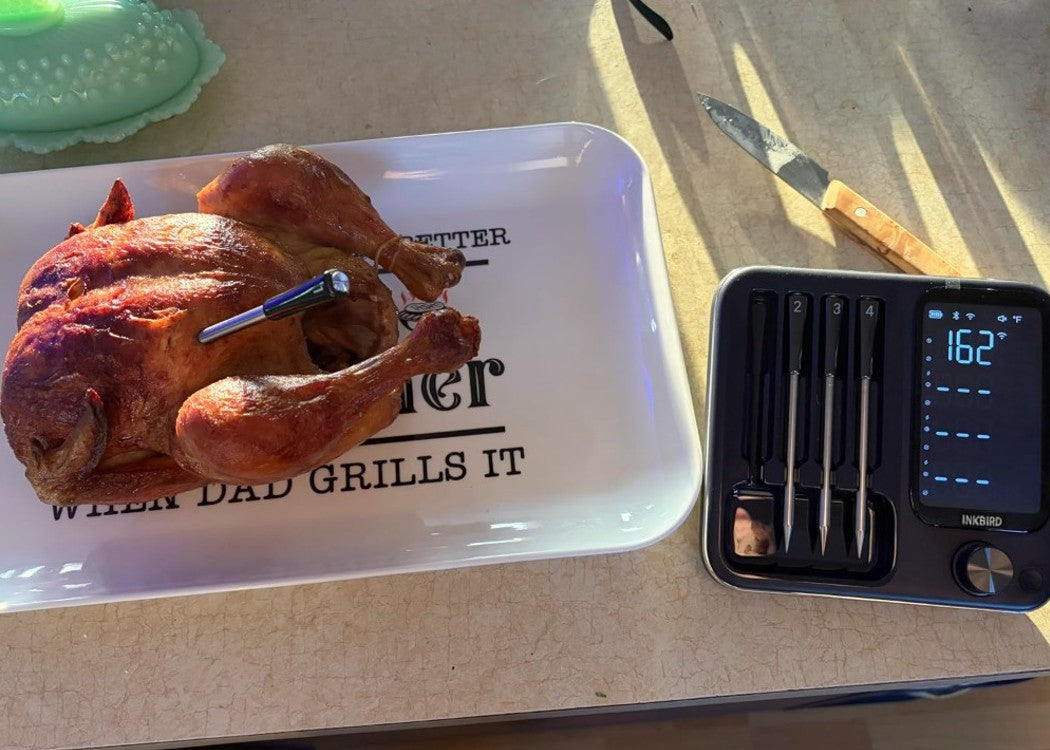
- Insert probe into the thickest part, away from bone and fat. For poultry, check the thigh and thickest part of the breast.
- Let the probe rest for the required time. Instant-read devices need a few seconds; thermocouples stabilize faster.
- Clean and dry probes after each use to maintain contact and prevent corrosion.
- Replace batteries regularly and check connectors. Keep spare batteries in the drawer.
- Run an ice-water test monthly or when accuracy is suspicious.
- Use the right thermometer for the job. Use a leave-in probe for roasts and an instant-read for quick checks.
Personal note: once I roasted a turkey and my dial probe read 165°F too early. The probe was touching a bone. After switching to a digital thermocouple and testing in ice water, my results matched expectations and the turkey came out safely cooked and juicy. That experience taught me to always double-check placement and run a quick calibration if temps feel off.
If you still wonder why is my meat thermometer not accurate after trying these tips, move to methodical testing: try a different thermometer on the same cut to compare readings.
:max_bytes(150000):strip_icc()/sea-tier-3-detail-thermoworks-blue-dot-alarm-thermometer-bluetooth-wireless-technology-wdickey-0650-88b26286085e4e638245a8d467f583f8.jpeg)
Quick questions people also ask
Why is my meat thermometer not accurate when used in a grill?
Grill hotspots, radiant heat, or open-air drafts can cool or heat the probe differently. Use a leave-in probe and avoid placing the sensor directly on grates or next to flames.
Why does my thermometer read lower than another thermometer?
Differences often come from probe location, calibration drift, or sensor type. Compare readings using an ice-water test to find the true offset.
Can altitude affect my thermometer accuracy?
Altitude affects water’s boiling point, not the thermometer itself. If you use boiling-point checks, adjust expected values for your elevation.
Frequently Asked Questions of Why is my meat thermometer not accurate
Why is my meat thermometer not giving consistent readings?
Inconsistent readings usually mean bad contact, a dirty probe, low battery, or a failing sensor. Clean the probe, replace the battery, and run an ice test to check consistency.
How often should I calibrate my meat thermometer?
Calibrate or test monthly if you use it often, and always test after a major drop, shock, or long storage. Calibration is simple and fast with ice water.
Is an infrared thermometer accurate enough for meat?
Infrared thermometers measure surface temperature only and can’t read internal doneness. Use them for searing or grill surface checks, not for internal meat temps.
My thermometer reads too high; can I fix it?
Try recalibrating or setting an offset if your model supports it. If it still reads too high after tests, replace it—sustained high readings often mean sensor failure.
Can bone contact ruin the temperature reading?
Yes. Bones conduct heat and can show higher temperatures. Always avoid touching bone when measuring internal temperature.
Why does my thermometer read differently in two parts of the same roast?
Large cuts have temperature gradients. The thickest, densest part takes longest to reach target. Measure several spots or use a leave-in probe in the thickest area for an accurate cooking decision.
Will freezing damage my thermometer?
Freezing can damage electronics or probe seals in some models. Check the manual; many digital probes tolerate freezing but are safer stored at room temperature.
Conclusion
Knowing why is my meat thermometer not accurate saves stress and improves food safety and flavor. Most problems come from placement, calibration drift, wrong tool choice, or battery and probe issues. Test with ice water, check placement, and pick the right thermometer for the job to get consistent, trustworthy readings.
Take action this week: run an ice-water test, check your probe placement, and store spare batteries nearby. If you found these tips useful, try them tonight and leave a comment about your results—or subscribe for more practical cooking gear advice.