
Use mild acids and abrasives, scrub gently, then rinse, dry, and oil the blade.
I’ve spent years restoring and caring for kitchen cutlery, so I know what works and what can damage a knife. This guide explains how to get rust off kitchen knives safely, step by step, with tools, methods, safety tips, and prevention advice you can use today. Read on and you’ll learn multiple reliable ways to remove rust and keep blades looking and performing their best.
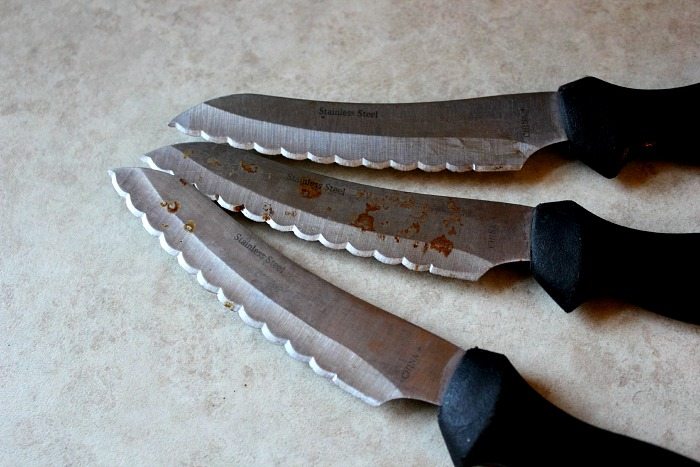
Why kitchen knives rust
Rust forms when iron in steel reacts with oxygen and moisture. Most kitchen knives contain some iron, so rust can appear when blades stay wet or sit in humid environments. Understanding this chemistry helps you choose the right method to remove rust and avoid future problems.
How to get rust off kitchen knives depends on the rust severity and the knife’s steel type. Light surface rust often wipes away with mild acids or a paste. Deep pitting may need more abrasive or professional attention. Knowing the steel type and rust depth improves your chances of success.
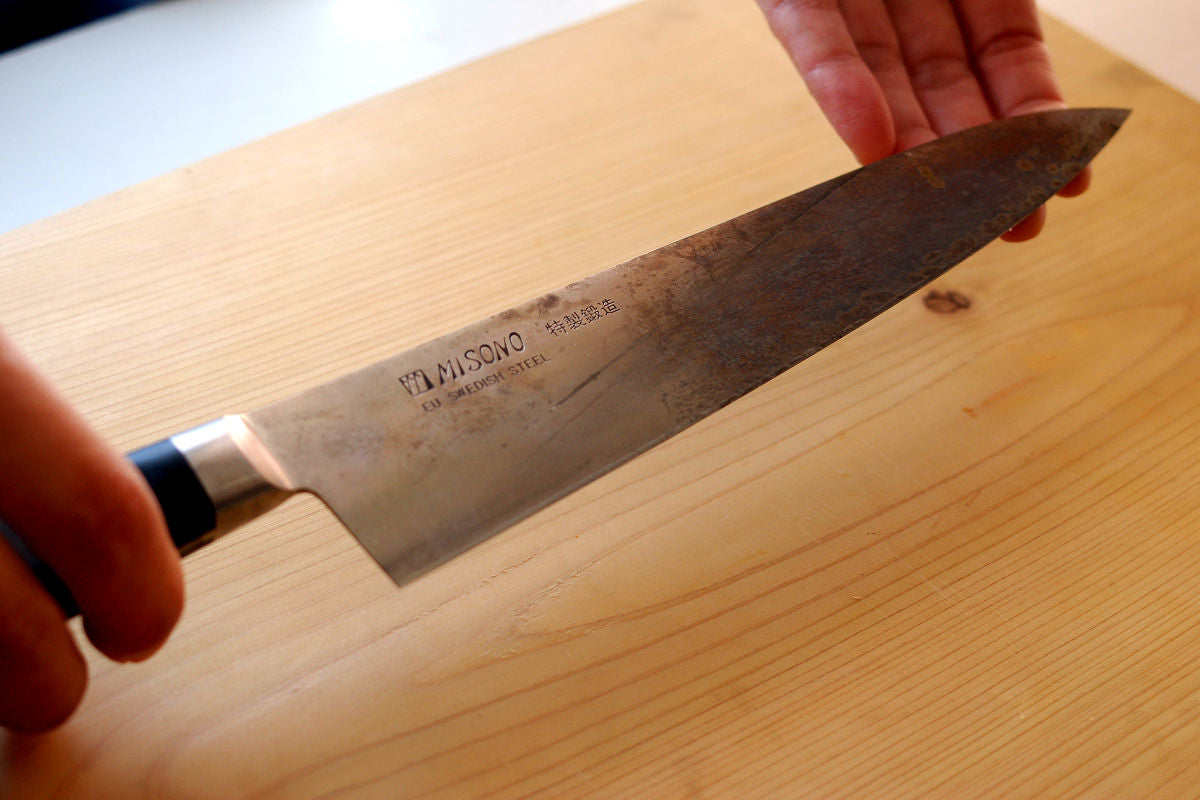
Is rust on knives dangerous?
Small amounts of surface rust are not usually a major health risk, but rust can harbor bacteria and affect food flavor. Heavy rust weakens steel and causes pitting, which can trap food and bacteria. Removing rust restores blade hygiene and performance, so learning how to get rust off kitchen knives is both a safety and maintenance step.

Tools and supplies you'll need
Gather simple, food-safe supplies before you attempt rust removal. Typical items that work well include:
- White vinegar for soaking.
- Baking soda for a gentle abrasive paste.
- Lemon juice and coarse salt for mild acid scrubbing.
- Non-scratch scrubbing pad, fine steel wool (0000 grade), or a rust eraser.
- Soft cloths, warm water, and dish soap for cleaning.
- Food-grade mineral oil to protect the blade after cleaning.
Having the right supplies makes how to get rust off kitchen knives easier and safer.

Step-by-step methods to remove rust
Below are practical methods ranked from mild to stronger. Choose based on how bad the rust is.
Vinegar soak (best for light to moderate rust)
- Submerge the rusty area in white vinegar for 5–15 minutes.
- Rub the blade gently with a soft cloth or 0000 steel wool.
- Rinse with warm water, dry thoroughly, and oil the blade.
Vinegar dissolves rust without harsh scrubbing. This is a reliable first approach to how to get rust off kitchen knives.
Baking soda paste (gentle and safe)
- Mix baking soda and water to a thick paste.
- Apply to rust spots and let sit 10–20 minutes.
- Scrub gently with a soft brush or cotton cloth, rinse, dry, and oil.
Baking soda is mildly abrasive and neutralizes acids. It’s a solid choice when learning how to get rust off kitchen knives without damaging the finish.
Lemon juice and salt (brightening and deodorizing)
- Sprinkle coarse salt on the rusted area.
- Rub with lemon half or apply lemon juice and let sit 5–10 minutes.
- Scrub, rinse, dry, and oil.
This method works well for small spots and leaves a fresh scent. Use it when you want a natural approach to how to get rust off kitchen knives.
Abrasive pads and rust eraser (for stubborn spots)
- Use a fine abrasive pad or a rubber rust eraser gently across rust.
- Work in the direction of the blade edge to avoid scratch patterns.
- Clean, dry, and oil after removing rust.
Be cautious: excessive abrasion can scratch finishes. This is for when gentler methods fail to remove rust on kitchen knives.
Chemical rust removers (only if necessary)
- Choose a food-safe rust remover if available.
- Follow manufacturer instructions closely and rinse thoroughly.
- Dry and oil the knife.
Chemical removers work fast but require care. Consider professional help for valuable or heavily pitted knives when learning how to get rust off kitchen knives.
.png?v=1764107549614&options=w_870,h_700)
Finishing, sharpening, and protection
After rust removal, finish and protect the blade to prevent return rust.
- Rinse and neutralize acids with soapy water.
- Dry completely with a lint-free towel and air-dry for a few minutes.
- Apply a thin coat of food-grade mineral oil or camellia oil.
- If needed, hone or sharpen the blade and polish it gently.
Regular maintenance is a key part of how to get rust off kitchen knives and keep them rust-free.

Common mistakes and safety tips
Avoid these frequent errors when removing rust from knives.
- Do not use harsh sandpaper or grinders on fine knives; you can ruin the edge.
- Avoid bleach and strong alkalis near food surfaces; they can damage steel and coatings.
- Never soak wooden handles in vinegar or water for long periods.
- Always wear gloves and work away from food prep areas.
Knowing what not to do makes how to get rust off kitchen knives safer and more effective.
Personal experience and lessons learned
Years ago I neglected a favorite carbon steel chef’s knife and let it sit wet. Surface rust grew into small pits. I tried bleach once and made the finish worse. Switching to vinegar soaks and mineral oil fixed most damage. Since then I learned to dry knives right away and oil carbon steel after use. These small habits keep me from repeating the mistake and show how to get rust off kitchen knives without losing value.
Frequently Asked Questions of how to get rust off kitchen knives
How long should I soak a knife in vinegar?
Soak for 5–30 minutes depending on rust severity. Check often; longer soaks can affect finishes on some blades.
Can I use steel wool on stainless steel knives?
Use very fine (0000) steel wool gently. Avoid heavy scrubbing to prevent scratches and edge damage.
Is rust on knives harmful to eat?
Small amounts of rust are unlikely to cause illness, but rust can harbor bacteria and affect flavor. Remove rust for hygiene and performance.
How do I prevent rust after cleaning?
Dry knives immediately, store in a dry place, and apply a thin coat of food-grade oil to carbon or mixed-steel blades.
Can I sharpen a knife after removing rust?
Yes. Remove rust fully, then hone and sharpen as needed. Re-etching or polishing may be necessary for deep pitting.
Conclusion
Removing rust from knives is usually simple with the right method and care. Use mild acids, gentle abrasives, and a clear post-clean routine: rinse, dry, and oil. Start with vinegar or baking soda, escalate only when needed, and prevent rust with good drying and storage habits. Try one of these methods tonight and keep your kitchen knives working well for years — if this helped, leave a comment or subscribe for more practical knife care tips.