
Best Japanese knife for cutting vegetables: imarku 7" Nakiri — razor sharp, precise, and easy to use.
I’ve stood at kitchen counters with dull blades and slow prep. A proper Japanese vegetable knife changes that. It slices cleanly, keeps your hands safe, and makes cooking faster. If you chop for family meals or run a small catering gig, the right Nakiri or Santoku turns a chore into a joy.
PAUDIN 7″ Nakiri Knife

I use the PAUDIN Nakiri when I need a wide, thin blade for vegetables. The high carbon stainless steel holds a keen edge. The straight blade lets me push-cut and chop with clean lines. It feels light, balanced, and easy on my wrist during long prep sessions.
The handle fits my hand nicely and resists slipping. I find the blade excellent for soft vegetables like tomatoes and herbs. It also manages denser vegetables with fewer passes. Maintenance is straightforward; I sharpen it at a shallow angle and it comes back quickly.
Pros:
- Thin blade slices vegetables cleanly and evenly
- High carbon stainless steel stays sharp longer
- Lightweight and well-balanced for long prep sessions
- Wide profile protects knuckles and scoops food
- Affordable entry into Japanese-style nakiri knives
- Ergonomic handle reduces hand fatigue
Cons:
- Edge rusts if not dried properly due to high carbon content
- Not suited for heavy boning or chopping bones
- Blade may chip if used on hard surfaces or frozen food
My Recommendation
I recommend the PAUDIN 7″ Nakiri for home cooks who want an easy-to-use vegetable knife. It gives quick, clean cuts for salads, stir-fries, and garnishes. If you value speed and a light touch, this blade will save time.
The PAUDIN is a strong pick among the Best Japanese knife for cutting vegetables options. It blends value with performance. I like it for everyday tasks. It’s a reliable choice for cooks learning to work with Japanese-style blades.
| Best for | Why |
|---|---|
| Budget conscious cooks | Great edge for price, good durability for daily use |
| Salad and herb prep | Thin, wide blade allows quick, even slicing |
| Learners of Japanese knives | User-friendly balance and easy sharpening angle |
imarku 7″ Nakiri Knife
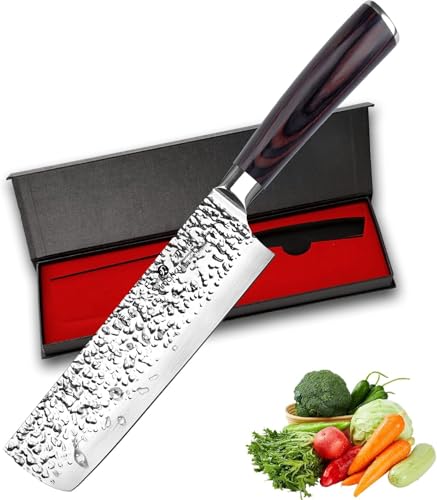
The imarku 7″ Nakiri is one of my go-to vegetable knives for speed and precision. The high carbon stainless delivers sharpness that slices with little force. The full-width blade helps me push-chop and create fine, uniform cuts. It’s built to handle daily chopping without tiring my hands.
I use this knife for fine chiffonade and large dice alike. The edge profile is forgiving when you’re learning to push-cut. It is resilient and easy to re-sharpen on a stone. For people seeking an accessible Japanese-style vegetable blade, this model is a top contender.
Pros:
- Very sharp out of the box for instant use
- Thin profile for precise vegetable cuts
- Durable steel that balances edge retention and ease of sharpening
- Comfortable handle reduces wrist strain
- Easy to clean and maintain
Cons:
- Edge is delicate; avoid twisting cuts on hard items
- May require more frequent honing than some premium steels
- Not ideal for heavy chopping of bones or frozen food
My Recommendation
If you prepare vegetables daily, the imarku 7″ Nakiri is a clear pick. I find it excellent for crisp, clean slices. It makes quick work of peppers, onions, and carrots. For the Best Japanese knife for cutting vegetables focus, this model stands out for its balance of price and performance.
I recommend it for cooks who want a reliable nakiri that feels like a pro tool. The edge stays dependable with routine honing. It’s a smart buy if you want speed, accuracy, and a satisfying push-cut. You’ll notice faster prep and cleaner plates with this knife.
| Best for | Why |
|---|---|
| Daily meal prep | Comfortable balance and long initial sharpness |
| Home chefs on a budget | Great value without sacrificing performance |
| Vegetable-centric meals | Thin blade perfect for delicate slicing |
imarku 7″ Santoku Knife
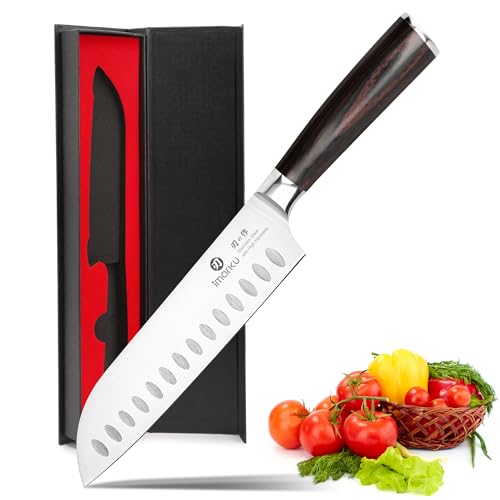
The imarku 7″ Santoku blends chopping, slicing, and dicing into one versatile blade. I reach for this knife when a variable edge is needed. The Santoku’s slightly curved profile delivers a short rocking motion and precise push cuts. It excels with mixed prep tasks where vegetables dominate.
The hollow edge helps prevent sticky food from clinging. The handle sits comfortably in my palm for sustained use. I often use this for mixed vegetable and protein prep. It is a strong pick among options for the Best Japanese knife for cutting vegetables when you need a multi-role kitchen tool.
Pros:
- Versatile for vegetables and light proteins
- Granton-style dimples reduce friction on sticky foods
- Well-balanced for controlled cuts
- Strong edge retention for frequent use
- Compact length suits small kitchens and home cooks
Cons:
- Not as specialized as a true nakiri for pure vegetable work
- Granton dimples can be harder to clean thoroughly
- Edge may chip if misused on hard materials
My Recommendation
I recommend the imarku 7″ Santoku to cooks who want one knife that covers many tasks. It’s a versatile workhorse for veggies, fish, and light meats. If you prefer an all-purpose tool with Japanese influence, this is a top option. I often pick it when I want fewer tools and faster cleanup.
For readers hunting the Best Japanese knife for cutting vegetables and more, this Santoku strikes a balance. It reduces the need to switch blades. The performance for mixed prep is excellent. Expect steady edge life and adaptable performance during busy nights.
| Best for | Why |
|---|---|
| One-knife households | Handles veggies and light proteins well |
| Small kitchens | Shorter length fits compact workspaces |
| Entertaining cooks | Fast prep across ingredients keeps service moving |
HOSHANHO 7″ Nakiri Knife

The HOSHANHO Nakiri is a robust nakiri with a classic profile. Its blade is slightly thicker than some, which helps with tougher veg like squash and potatoes. I rely on it when I expect heavier chopping. The handle is ergonomic and reassuring during longer sessions.
This blade is great for cooks who mix light and heavy veggie tasks. The edge is tough and forgiving if you push it on denser foods. I often use it for meal prep days where volume matters. It competes well as a Best Japanese knife for cutting vegetables option for those who want a tougher blade.
Pros:
- Sturdy blade for tougher vegetables
- Comfortable pakkawood handle offers good grip
- Wide blade useful for scooping and transferring food
- Sharp edge stays serviceable under heavier use
- Well suited to batch cooking and prep sessions
Cons:
- Heavier blade may tire users during long prep
- Not as nimble for delicate slicing like herbs or microgreens
- Pakkawood handle requires occasional maintenance to stay pristine
My Recommendation
I favor the HOSHANHO 7″ Nakiri if you routinely chop dense vegetables. It handles squash, potato, and root vegetables without fuss. If your cooking involves prepping large volumes, this blade saves time and stress. For the Best Japanese knife for cutting vegetables, this HOSHANHO fits cooks who need resilience and volume handling.
Choose this if you want a dependable, workhorse nakiri. I appreciate the balance between sturdiness and precision. It’s a smart pick when you want a knife that won’t balk at tougher tasks. It’s available and offers good value for the heavier-use home chef.
| Best for | Why |
|---|---|
| Batch cooks | Sturdy blade for sustained chopping |
| Root vegetable prep | Thickness handles denser produce well |
| Those who prefer classic look | Pakkawood handle adds traditional feel |
HOSHANHO 7″ Cleaver Knife

The HOSHANHO cleaver blends a heavy, flat profile with fine edge geometry. I use it when I want a chop that also slices. The broad face bashes and flattens when needed. It’s useful for Asian-style prep where a cleaver-sized blade is traditional.
This model works well for vegetables and light meatwork. I prefer it for larger squash and for controlling thick stems. The blade clears a cutting board quickly and scoops food easily. It’s a unique entry among Best Japanese knife for cutting vegetables picks because it pairs heft with a refined edge.
Pros:
- Large blade for fast volume prep
- Excellent for tough skins and fibrous veggies
- Wide face for scooping and transferring chopped food
- Robust construction that stands up to daily use
- Gives a confident feel for controlled heavy tasks
Cons:
- Too bulky for delicate slicing and herbs
- Requires storage space due to large blade
- Heavier weight can be tiring during fine prep
My Recommendation
If you need a blade that can both smash and slice, consider the HOSHANHO 7″ Cleaver Knife. I pick it for big jobs and for when I want speed with volume. It’s especially useful when prepping winter squash or lots of cabbage. For Best Japanese knife for cutting vegetables lists, this cleaver is right for cooks who want power alongside precision.
It’s not for every cook. But if your meal prep demands a rugged, wide blade, this is a top candidate. I like its multi-role nature. It brings both efficiency and a traditional cleaver feel to the modern kitchen.
| Best for | Why |
|---|---|
| Large family meal prep | Fast volume chopping and transfer |
| Tough-skinned produce | Heft and wide blade manage hard items |
| Traditional Asian dishes | Matches classic cleaver techniques and control |
DDF 7″ Santoku Knife

The DDF 7″ Santoku is light, nimble, and precise. I reach for this knife when speed and finesse matter. The blade slices thin and true. It’s ideal for thin rounds, julienne, and fast chopping where even cuts matter.
The handle is slip-resistant and works well even with wet hands. I find that the balance favors control over raw power. This Santoku stands among the Best Japanese knife for cutting vegetables picks when you want an agile and sharp tool for daily work.
Pros:
- Very nimble for fine and precise cuts
- Non-slip handle stays secure during prep
- Thin edge excels on tomatoes and soft produce
- Compact length fits small cutting boards well
- Affordable but practical for many cooks
Cons:
- Limited for heavy-duty tasks like frozen or bone work
- Smaller blade may feel short for large items
- Requires careful handling to avoid edge damage
My Recommendation
I recommend the DDF 7″ Santoku for cooks who value agility and precision. I use it for fine garnishes and quick stir-fry prep. Its light feel speeds up my hands and keeps cuts consistent. If you want the Best Japanese knife for cutting vegetables focused on finesse, this Santoku is a smart pick.
It’s excellent for everyday kitchen tasks where control matters. I find it especially useful for delicate produce and thin slicing. The knife offers strong value if you want a focused, precise Japanese-style blade.
| Best for | Why |
|---|---|
| Precision slicing | Thin edge and nimble balance |
| Small kitchens | Compact length fits limited space |
| Garnish and plating | Delicate cuts keep presentation clean |
FAQs Of Best Japanese knife for cutting vegetables
What knife style is best for vegetables: Nakiri or Santoku?
Both work well, but I prefer nakiri for pure vegetable work. Its straight edge lets you push-cut cleanly. Santoku is more versatile and handles light proteins too. Choose based on how often you cook mixed dishes.
How should I maintain a Japanese vegetable knife?
I hand wash and dry the knife right after use. Hone the edge weekly with a ceramic rod. Use a whetstone for full sharpening every few months depending on use. Avoid dishwashers and abrasive pads to protect the edge and handle.
What edge angle should I use for vegetable knives?
I sharpen nakiri and santoku around 15-18 degrees per side. That angle gives a sharp, durable edge for veggies. Thinner angles cut cleaner but require more care. Match angle to steel and your comfort with maintenance.
Can a Japanese knife cut through bones?
No. Most Japanese vegetable knives are not designed for bones. They have thin edges that can chip if used on hard materials. Use a cleaver or heavier butcher knife for bones and frozen items.
Which steel is best for the Best Japanese knife for cutting vegetables?
High carbon stainless steel is a good balance of sharpness and corrosion resistance. It holds an edge and is easier to maintain than pure carbon steel. I choose steels that sharpen well and resist staining for daily veggie work.
Final Verdict: Which Should You Buy?
Each blade here has strengths. For pure vegetable work, the imarku 7″ Nakiri stands out as the Best Japanese knife for cutting vegetables due to its thin, razor edge and balanced feel. It offers fast, clean cuts and easy maintenance.
If you want versatility, the imarku 7″ Santoku or DDF Santoku gives multi-use value. For heavy batch prep, choose HOSHANHO’s nakiri or cleaver. The PAUDIN is best for value seekers. Pick the knife that matches your cutting style and volume.