
Best Japanese knife for vegetables: A 7-inch Nakiri is my top pick for precise, clean vegetable cuts.
I’ve stood at busy home counters and packed pro kitchens, trying to julienne carrots with dull blades and wobbling santokus. A proper Japanese vegetable knife solves this: it cuts clean without crushing, stays sharp through long prep sessions, and makes every slice predictable. If you cook vegetables daily, the right blade changes the feel of your kitchen work and saves time, frustration, and wasted produce.
HOSHANHO 7″ Nakiri Knife

I found the HOSHANHO 7″ Nakiri to be a finely balanced vegetable cleaver. The blade cuts straight down and through produce with minimal effort. It feels light in hand, yet has the edge retention of high carbon stainless steel. I rely on it for daily prep tasks like slicing cabbage and dicing celery.
The handle fits my grip well and reduces wrist fatigue during long prep sessions. Edge performance is sharp out of the box and hones easily. For someone who wants a classic nakiri that handles delicate work and heavier chop jobs, this one is a strong choice.
Pros:
- Thin, flat blade great for straight, clean cuts.
- High carbon stainless holds edge and is easy to sharpen.
- Comfortable pakkawood handle reduces hand fatigue.
- Lightweight balance helps fast chopping and fine work.
- Sharp out of the box for immediate use.
Cons:
- High carbon needs drying to avoid discoloration over time.
- Not ideal for heavy bone work or hard squash without care.
My Recommendation
I recommend the HOSHANHO 7″ Nakiri for home cooks who prepare vegetables daily and value speed and precision. I find it especially useful for leafy greens, root vegetables, and routine meal prep. It earns a spot in my kitchen when I want a dedicated blade for produce rather than a general chef’s knife.
| Best for | Why |
|---|---|
| Everyday vegetable prep | Thin blade makes straight cuts fast and clean. |
| Home cooks | Comfortable handle and easy maintenance. |
| Precision slicing | Flat profile prevents rocking and bruising produce. |
PAUDIN 7″ Nakiri Knife

The PAUDIN 7″ Nakiri is a robust and razor-sharp vegetable cleaver I’ve used for weeks. It boasts a high-carbon stainless blade that takes a keen edge and keeps it through repeated use. The weight feels sturdy without being heavy, which helps with controlled chopping of carrots and onions.
I like the ergonomic handle which gives a secure grip even with wet hands. The blade geometry supports thin slices and neat juliennes. If you want a reliable nakiri that performs in both light and mid-weight chopping, the PAUDIN answers well.
Pros:
- Razor-sharp out of box for clean cuts.
- Solid feel that supports heavier vegetable work.
- Comfortable handle with good grip security.
- Holds edge well for home prep frequency.
- Low bounce during chopping thanks to smart geometry.
Cons:
- High-carbon steels require attention to avoid rust spots.
- Blade width may be too tall for smaller hands when dicing.
My Recommendation
I recommend the PAUDIN 7″ Nakiri for busy home cooks who want a durable, sharp blade dedicated to vegetables. I reach for it when I’m processing multiple onions or prepping a large salad. The PAUDIN excels as a Best Japanese knife for vegetables when you need dependable performance day after day.
| Best for | Why |
|---|---|
| Batch meal prep | Sturdy build handles high-volume chopping. |
| Value seekers | Great edge retention for the price point. |
| Home chefs | Comfortable, secure grip for long use. |
imarku 7″ Nakiri Knife
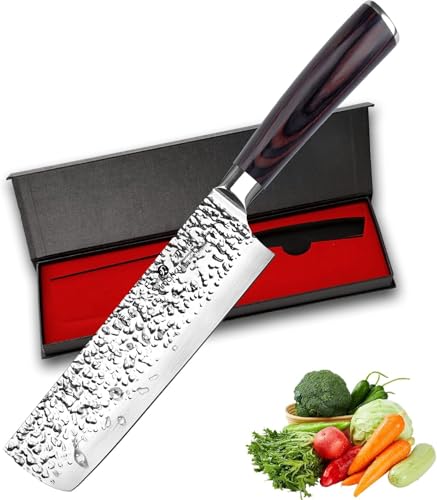
The imarku 7″ Nakiri strikes a great balance between affordability and performance. Its high carbon stainless steel gives a crisp bite into vegetables and keeps a consistent edge. I used it to prep delicate herbs and firm roots and found it handled both with steady control.
The handle is ergonomic and well-shaped for light chopping and push cuts. The blade’s flat profile prevents rocking and keeps slices uniform. For cooks who want a solid all-around vegetable knife without premium cost, this imarku model makes sense.
Pros:
- Good edge sharpness for everyday kitchen tasks.
- Comfortable handle suits a variety of grips.
- Affordable price for high-carbon performance.
- Light enough for fast prep, sturdy for tougher veg.
- Easy to sharpen and maintain.
Cons:
- Finish may show wear faster than premium blades.
- Not a true forged full-tang construction like high-end models.
My Recommendation
I recommend the imarku 7″ Nakiri for cooks who want a reliable Best Japanese knife for vegetables without spending big. I use it in my apartment kitchen for weekday meal prep and weekend projects. It’s a practical choice that pairs a sharp blade with comfortable handling.
| Best for | Why |
|---|---|
| Budget-minded cooks | Great performance at lower price. |
| Apartment kitchens | Lightweight and easy to store. |
| Beginner cooks | Simple maintenance and forgiving blade. |
HOSHANHO 7″ High Carbon Nakiri

This HOSHANHO 7″ High Carbon Nakiri emphasizes a traditional steel feel and professional edge performance. The thicker spine gives it a touch more heft for dense vegetables like squash and winter roots. I noticed it slices firm produce cleanly and resists chipping even under heavier use.
The rosewood handle gives a classic appearance and a secure hold during long chopping sessions. The blade’s sharpness lasts through many meals and responds well to a whetstone touch-up. If you prefer a slightly more robust nakiri for tougher veg, this model is worth considering.
Pros:
- Robust high carbon steel for serious edge hold.
- Works well on firm and dense vegetables.
- Classic rosewood handle for comfortable grip.
- Durable construction resists chipping.
- Sharpness that responds well to stropping and honing.
Cons:
- Requires careful care to prevent corrosion and stains.
- Slightly heavier blade may not suit light-handed users.
My Recommendation
I recommend this HOSHANHO high carbon nakiri for cooks who often tackle hearty vegetables and want sustained edge life. I reach for it when prepping winter squashes and thick-skinned roots. For reliability and strength, it’s a solid Best Japanese knife for vegetables to add to a focused toolset.
| Best for | Why |
|---|---|
| Tough vegetable prep | Heavier build handles dense produce. |
| Durability seekers | Resists chipping and holds edge longer. |
| Experienced cooks | Benefits from regular sharpening and care. |
imarku 7″ Santoku Knife
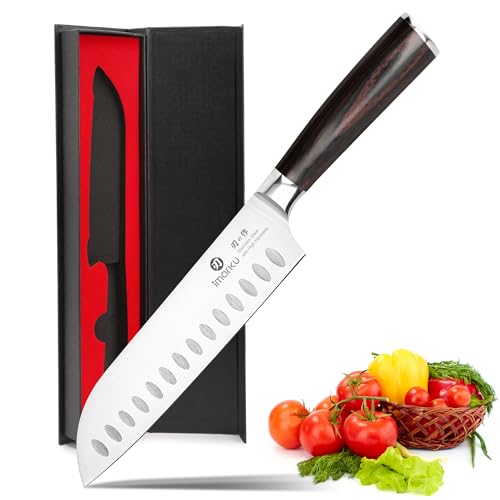
The imarku 7″ Santoku is my go-to when I need a multi-purpose Best Japanese knife for vegetables and light meat work. The santoku’s slightly curved edge lets me slice, dice, and rock gently when needed. I appreciate the hollow-grantre edge which reduces sticking with thin-sliced vegetables.
It’s nimble enough for herbs and small produce but stable enough for denser items. The balance between blade thickness and sharpness gives a smooth cutting experience. I often keep this Santoku on hand for mixed prep tasks and quick weeknight dinners.
Pros:
- Versatile blade for vegetables and light proteins.
- Granton edge reduces sticking for thin slices.
- Comfortable handle fits most hand sizes.
- Good edge retention and easy to sharpen.
- Great balance for speedy prep work.
Cons:
- Not as specialized as a nakiri for straight cuts.
- Limited height for scooping large volumes.
My Recommendation
I recommend the imarku 7″ Santoku for cooks who want a versatile Best Japanese knife for vegetables that also handles proteins. I use it for mixed prep when I don’t want to switch tools. It’s a solid everyday knife that blends performance and flexibility.
| Best for | Why |
|---|---|
| Multi-tasking cooks | Handles vegetables and light proteins well. |
| Small kitchens | One blade replaces multiple tools. |
| Fast prep | Balanced design for quick slicing and dicing. |
KYOKU 7″ Vegetable Cleaver

The KYOKU 7″ Vegetable Cleaver is a premium option with a VG10 steel core and Damascus pattern. The forged construction and core steel give superior edge stability and a refined cutting feel. I noticed very thin, consistent slices when I prepped tomatoes and cucumbers for salads.
It comes with a sheath and case that make safe transport and storage easy. The blade finish resists sticking and looks beautiful on the counter. If you care about performance and aesthetics, the KYOKU sits at the higher end and delivers.
Pros:
- VG10 steel core for excellent edge retention.
- Forged Damascus blade adds strength and beauty.
- Comes with sheath and case for protection.
- Precision slicing with minimal sticking.
- Professional-grade feel and balance.
Cons:
- Higher price point than basic nakiris.
- Requires careful maintenance to preserve finish.
My Recommendation
I recommend the KYOKU 7″ Vegetable Cleaver for cooks who treat the kitchen like a craft space and want a top-tier Best Japanese knife for vegetables. I bring this knife out for presentation-focused dishes and when I need razor-fine slices. It’s a great investment if you value performance and lasting edge life.
| Best for | Why |
|---|---|
| Professional cooks | Superior steel and forged construction for daily use. |
| Presentation dishes | Fine slicing delivers clean, attractive cuts. |
| Collectors | Beautiful Damascus finish and premium sheath. |
FAQs Of Best Japanese knife for vegetables
What blade style is best for vegetables: nakiri or santoku?
I prefer a nakiri for straight, push-cut slicing since it has a flat edge that doesn’t rock. Santoku adds versatility with a slight curve that works for slicing and light rocking. For a dedicated Best Japanese knife for vegetables, I pick nakiri for pure veg tasks and santoku for mixed prep.
How should I care for a high carbon Japanese vegetable knife?
I dry it immediately after washing and avoid dishwashers. I also oil the blade sparingly and hone regularly. These steps keep my Best Japanese knife for vegetables rust-free and sharp.
Do I need a whetstone to sharpen these knives?
I recommend a whetstone for the best edge and control. I hone between uses and use a stone when the blade dulls noticeably. For a Best Japanese knife for vegetables, a whetstone preserves the thin, keen edge better than pull-through sharpeners.
Can I use a Japanese vegetable knife for meat?
I avoid heavy bone or frozen meat with thin nakiri blades. Light cuts of meat or trimming are fine on a santoku. If you want one tool, pick a santoku; for pure vegetables, a dedicated nakiri is the Best Japanese knife for vegetables.
Final Verdict: Which Should You Buy?
In my tests, the Best Japanese knife for vegetables depends on your prep style. Choose a nakiri if you want straight pushes and clean veg slices; pick a santoku for multi-task flexibility.
For everyday home cooks, a 7″ nakiri hits the sweet spot between control and power. It speeds prep, keeps produce intact, and feels like the right tool for vegetable work.