
The best pans for delicate fish fillets combine gentle heat, a smooth surface, and room to turn fish without breaking it.
Cooking a thin cod, trout, or sole fillet can feel like handling wet paper. The fish sticks, tears, or falls apart when the pan heats too fast or the spatula slips underneath. I looked at pan shape, cooking material, heat control, oven use, and lifting tools to find useful options for home cooks. This guide covers frying pans, fish pans, grill pans, baking trays, and tools that can make delicate fish much easier to cook.
Qelunaro Cast Iron Fish Frying Pan

The Qelunaro fish pan uses cast iron to hold heat well during cooking. Its long fish shape gives a whole fillet more support than a small round skillet. That shape can help you cook fish with less crowding. It is a strong choice when you want a pan that can move from the stove to the oven.
Cast iron needs a little care, but it rewards patient cooking. I would preheat it slowly, add a thin layer of oil, and lower the heat before adding a fragile fillet. The broad cooking area can help create an even crust, though the heavy base takes longer to cool. For cooks who like hearty seared fish, this is one of the more durable best pans for delicate fish fillets.
Pros:
- Long shape supports fish fillets
- Cast iron holds steady heat
- Useful for stove and oven cooking
- Can create a crisp browned surface
- Durable design for frequent use
- Works well for larger portions
Cons:
- Heavy to lift and turn
- Needs seasoning and drying after washing
- May heat slowly compared with thin metal
Leefasy Stainless Steel Fish Baking Tray

The Leefasy tray is made for oven cooking, roasting, and serving. Stainless steel offers a firm surface for fish, vegetables, and seafood. Its tray shape can keep a delicate fillet level while you move it into or out of the oven. This makes it useful when you prefer baked fish over pan-fried fish.
I would coat the tray with oil or line it with parchment before adding fish. Stainless steel is not naturally nonstick, so this small step can prevent sticking and reduce tearing. The raised edges also help contain juices and marinades. If you need a simple oven pan for family meals, this tray offers useful space without the care needs of cast iron.
Pros:
- Good surface area for fish fillets
- Stainless steel resists rust
- Useful for baking and roasting
- Raised sides help hold cooking juices
- Easy to use for full meal prep
- Can double as a serving tray
Cons:
- Needs oil or parchment to reduce sticking
- Not designed for direct stovetop use
- May show baked-on marks over time
OXO Flexible Fish Fillet Turner

The OXO Flexible Blade Lifts Fish Fillets is a lifting tool rather than a cooking pan, but it solves one of the biggest fish problems. Its thin, flexible blade can slide under a fillet with less force. The slots allow oil and liquid to drain as you lift. That design can help keep a crisp crust from becoming soggy.
I like a flexible turner for fragile fish because it spreads support across more of the fillet. The long handle gives your hand space from hot oil, while the soft grip helps with control. It is also made for use with nonstick pans, which makes it a smart partner for the best pans for delicate fish fillets. No pan can save a fillet if the lifting tool is too thick or stiff.
Pros:
- Thin blade slides under fish easily
- Flexible edge supports fragile fillets
- Slots drain oil and cooking liquid
- Long handle keeps hands away from heat
- Safe for nonstick cookware
- Useful for eggs and pancakes too
Cons:
- Does not cook fish by itself
- Flexible metal may feel less rigid
- May not suit very heavy foods
Outset Cast Iron Fish Grill Pan

The Outset Cast Iron Fish Grill and Serving Pan has a long, narrow profile for fish. It is built for grill and oven use, so it can handle recipes that need high heat. Cast iron holds warmth well and can help brown the outside of a fillet. Its shape also makes it practical for serving fish at the table.
This pan suits cooks who enjoy grilled flavor but want more control than an open grate provides. The solid surface helps stop a thin fillet from dropping through grill bars. I would oil both the pan and the fish, then let the fish cook before trying to turn it. Like other cast iron cookware, it needs careful drying and regular seasoning to stay in good shape.
Pros:
- Long shape fits many fish portions
- Suitable for grill and oven cooking
- Retains heat for strong browning
- Protects small fish from grill gaps
- Can go from cooking to serving
- Built for repeated seasonal use
Cons:
- Heavy compared with aluminum pans
- Requires seasoning and careful cleaning
- Metal may react with acidic sauces if poorly seasoned
Weber Stainless Steel Grill Pan

The Weber Stainless Steel Grill Pan is made to hold smaller foods on a grill. It gives fish a stable cooking surface while letting heat and smoke reach the food. This setup works well for shrimp, flakes of fish, vegetables, and thin portions. Stainless steel also avoids the seasoning routine linked with cast iron.
For delicate fish, I would use medium heat and wait until the surface is hot before adding the fillet. A light oil coating can help reduce sticking during the first turn. The pan is a good fit for outdoor cooks who want fewer lost pieces between the grill bars. It does not replace a smooth nonstick skillet, but it adds useful grill control.
Pros:
- Stops small fish pieces from falling through grates
- Useful for outdoor grilling
- Stainless steel needs no seasoning
- Allows smoke and heat to reach the food
- Works for fish and vegetables
- Simple design is easy to understand
Cons:
- May need oil to limit sticking
- Not a full replacement for a skillet
- Grill use may leave dark marks
Fumusae Stainless Steel Breading Tray Set

The Fumusae set includes stainless steel trays made for breading, coating, marinating, and food prep. These are not frying pans, but they can improve the steps that happen before cooking. A breaded fish fillet needs a dry, even coating to form a crust. The trays give you separate spaces for flour, egg, crumbs, or seasoning.
I find a breading set useful when fish is soft and hard to handle. The shallow sides help keep crumbs in place, while the included tong can reduce direct pressure on the fillets. You can use the trays for marinating fish or preparing other foods as well. For shoppers building a full fish-cooking station, this set supports the best pans for delicate fish fillets without taking up much room.
Pros:
- Supports a clean breading workflow
- Includes four useful prep trays
- Stainless steel resists stains and odors
- Helps keep flour and crumbs organized
- Useful for marinating and food prep
- Included tong limits handling of soft fish
Cons:
- Not a stovetop cooking pan
- Shallow trays may spill when moved
- Needs washing after messy prep
Hestan Oval Tri-Ply Fish Pan

The Hestan Provisions Oval Fish Pan uses tri-ply stainless steel construction and has a 2.12-quart capacity. Its oval form is made to fit a whole fish or long fillets more naturally than a round pan. Tri-ply cookware usually spreads heat through more than one metal layer. This can help reduce hot spots when you cook fish over moderate heat.
The pan is induction compatible and dishwasher safe, which adds day-to-day convenience. Stainless steel still benefits from preheating, enough fat, and a gentle turner. I would choose this pan for cooks who want a refined piece for poaching, sautéing, baking, or serving. It is a strong premium option among the best pans for delicate fish fillets, especially when shape and heat response matter.
Pros:
- Oval shape fits long fish well
- Tri-ply body supports even heating
- Compatible with induction cooktops
- Dishwasher safe for easier cleanup
- Useful for sautéing and poaching
- Premium shape can move from kitchen to table
Cons:
- Stainless steel is not naturally nonstick
- Costs more than basic fish trays
- May need extra care to avoid sticking
Fish Seasoning Herb Blend

This fish seasoning herb blend is not a pan, but it can improve the final result from any fish pan. A good seasoning mix adds flavor without forcing you to handle the fillet many times. Herbs and spices can also create a dry surface, which supports better browning. It is suitable for grilling, baking, and pan searing.
I suggest patting fish dry before adding seasoning. Use a light coating so the natural taste of mild fish remains clear. Some blends may contain salt, so check the label before adding more salt to the recipe. This product works best as a supporting item for the best pans for delicate fish fillets, not as a cookware replacement.
Pros:
- Easy way to add flavor
- Works with baking and pan searing
- Can reduce the need for many wet sauces
- Useful for mild fish varieties
- Helps create a flavorful outer crust
- Saves time during meal prep
Cons:
- Not a pan or cooking tool
- Flavor may not suit every fish recipe
- Salt level must be checked before use
JVVFUU Slotted Fish Spatula
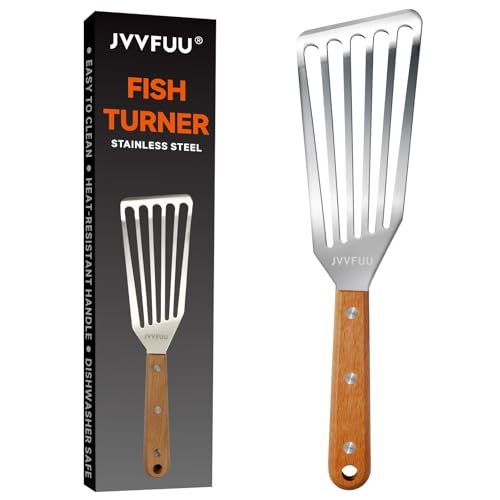
The JVVFUU fish spatula has a slotted stainless steel blade and a wood handle. Its long, narrow blade is shaped for sliding beneath fish. The slots let excess oil and sauce fall away as you lift. That matters when the fillet has a crisp skin that can soften in trapped grease.
The wood handle gives the tool a classic feel and can stay comfortable during short cooking tasks. I would hand-wash it and keep the handle dry to help preserve its finish. This spatula is a good match for stainless steel, cast iron, and coated skillets. It may be the small tool that prevents a good fillet from breaking during the final turn.
Pros:
- Long blade supports fish from end to end
- Slots help drain oil and sauce
- Stainless steel blade is firm and thin
- Wood handle offers a comfortable grip
- Useful with many pan materials
- Can lift fish with less pressure
Cons:
- Wood handle needs hand care
- Metal edge may scratch delicate coatings if misused
- Not as flexible as some specialty turners
Marinated Milk-Soaked Fish Fillets

This packaged marinated fish product is a prepared food item rather than a pan. It may appeal to shoppers who want a ready-to-cook seafood option for a fast meal. Milk-soaked preparation can give fish a tender texture and a mild savory taste. Always review the package label for ingredients, storage directions, cooking instructions, and allergen details.
Prepared fillets often contain extra moisture, so patting the surface dry can help reduce splatter. Use a gentle cooking temperature and avoid moving the fish until it firms up. A smooth nonstick pan or well-oiled stainless steel pan is usually easier for this type of product. I would view it as a meal shortcut that pairs with the best pans for delicate fish fillets.
Pros:
- Convenient option for a quick seafood meal
- Pre-marinated for simple preparation
- May offer a tender, mild texture
- Works with baking or gentle pan cooking
- Reduces seasoning work
- Useful for cooks with limited prep time
Cons:
- Not cookware
- Availability and package size may vary
- Must follow the label for storage and safe cooking
- May not suit people with milk allergies
My Recommendation
For most home cooks, I would start with the Hestan oval fish pan if the budget allows. Its long shape, tri-ply body, induction support, and dishwasher-safe design cover many daily needs. The Qelunaro and Outset cast iron pans suit cooks who want strong heat and a browned crust. For outdoor grilling, the Weber pan keeps small fish from falling through the grate.
The OXO and JVVFUU spatulas deserve special attention because a good turner is vital for fragile fish. The Leefasy tray fits oven recipes, while the Fumusae trays and seasoning blend support prep. The prepared fish product is best for convenience, not cookware. In my view, the best pans for delicate fish fillets work best when paired with a thin, broad spatula and gentle heat.
| Best for | Why |
|---|---|
| Premium everyday cooking | Hestan offers an oval tri-ply body, induction support, and easy cleanup. |
| High-heat grilling and searing | Outset cast iron holds heat and gives fish a stable cooking surface. |
| Oven-baked fish | Leefasy provides a broad stainless steel tray with raised edges for juices. |
How to Choose the Best Pans for Delicate Fish Fillets
The right pan can make fish cooking calm instead of stressful. I look first at the cooking method. A stovetop sear needs a pan that spreads heat well, while baked fish needs a tray with enough room and a small rim. Grilled fish needs support that stops the fillet from slipping through the grate.
Choose a Smooth Cooking Surface
A smooth surface helps fish release when it is ready to turn. Nonstick cookware often gives the easiest release, especially for thin fillets. Stainless steel can also work well, but it needs correct heat, enough oil, and patience. Cast iron can release fish beautifully after proper seasoning and preheating.
I never judge a pan by its label alone. A pan may claim to be nonstick, yet poor heat control can still cause food to stick. Avoid dragging fish across the surface. Let the bottom cook until it firms up, then slide a wide spatula beneath it in one smooth motion.
Think About Heat Control
Delicate fish does not need extreme heat. High heat can burn the skin before the center cooks. A heavy pan holds heat and stays steady, but it can also stay hot after you lower the burner. Thin stainless steel heats fast, so it needs closer attention.
For most fillets, medium to medium-low heat is a safe starting point. The exact level depends on the fish thickness, pan material, burner, and recipe. I use visual signs more than a fixed timer. When the edges turn opaque and the fish releases with a gentle nudge, it is often ready to turn.
Match the Pan Shape to the Fish
A round skillet works for small portions, but an oval or long fish pan can support larger fillets. The fish should lie flat without folding up the sides. Crowding creates steam and makes browning harder. It can also force you to move the fish before the crust has set.
Measure your cooktop and oven before buying a long pan. Some fish pans fit well in a wide oven but may cover two burners on a small stove. A large pan is not always better. Choose the size that leaves a little space around each piece without wasting heat.
Consider Pan Weight
Heavy cast iron feels stable on the stove. It is less likely to slide when you move a spatula under fish. The tradeoff is weight. If you have limited hand strength or often move pans from the stove to the table, stainless steel may feel easier.
A light pan can be useful too. It responds quickly when you lower the heat. Yet a very thin pan may develop hot spots. For delicate fish, I prefer a balanced body that feels solid but does not make lifting difficult.
Check Cooktop and Oven Compatibility
Induction cooktops require magnetic cookware. Cast iron and many stainless steel pans work, but not every stainless steel tray does. Check the product details before buying. Also confirm the maximum oven temperature if you plan to finish fish in the oven.
Handles matter in oven recipes. Some handles stay cool only on the stovetop, while others can handle oven heat. Keep oven mitts close, since cast iron and stainless steel handles can become very hot. Never assume a wood handle is oven safe unless the maker clearly says so.
Look at Cleanup Needs
Nonstick pans are often the simplest to clean. Use soft tools and avoid harsh scrubbers that can damage the coating. Stainless steel can handle more vigorous washing, though fish residue may need a short soak. Cast iron should not sit in water for a long time.
Dry cast iron right after washing. A very thin coat of oil can help protect the surface. If easy cleanup is your top concern, the Hestan pan has a clear advantage because its listed design is dishwasher safe. Even then, hand washing can help preserve the finish over many years.
How I Assess Fish Pans
I assess fish cookware by asking simple questions. Does the pan hold a fillet flat? Does it heat in a predictable way? Can I slide a turner underneath without crushing the fish? I also consider cleanup, storage, oven use, and the needs of a cook who may not have years of pan experience.
I separate cookware from accessories in this guide. The OXO and JVVFUU products are spatulas, and the Fumusae product is a prep set. The seasoning and prepared fish are food items. I include them because a successful fish meal depends on the full process, not just the pan.
Product details, sizes, and availability can change. Check the current Amazon listing for the latest price, shipping information, care instructions, and seller details before ordering. I also recommend checking the material and heat limits against your own cooktop and oven.
Tips for Cooking Fish Without Breaking It
Dry the Fillet First
Water on the surface creates steam and splatter. Pat the fish dry with a clean paper towel before seasoning. A dry surface browns more easily and helps the oil stay in the pan. This step takes only a few seconds but makes a clear difference.
Season Just Before Cooking
Salt can draw moisture from fish if it sits for a long time. For a quick pan meal, season just before the fish goes into the pan. Use a light hand with wet marinades. Too much liquid can make the fish steam instead of sear.
Preheat With Care
Warm the pan before adding oil. Do not leave an empty nonstick pan over high heat. With stainless steel or cast iron, use a moderate setting and give the pan time to warm. The oil should look fluid and glossy, not smoky.
Place the Skin Side Down
If the fillet has skin, place the skin side down first. Press it gently for a few seconds so it stays flat. Then leave it alone. Moving the fish too soon can tear the skin and cause the flesh to stick.
Use One Confident Turn
A hesitant turn is often worse than a quick one. Slide the spatula under the thickest part and support the rest of the fillet with the blade. Lift only as much as needed. Turn the fish once, then finish cooking without constant poking.
Watch the Center
Fish continues to cook after you remove it from heat. Take a thin fillet off when it looks just cooked through. A thick piece may need a little more time. For food safety, use a clean thermometer and follow current seafood safety guidance for the fish type and preparation.
Pan Materials Compared
Nonstick
Nonstick pans offer easy release and simple cleanup. They are often the first choice for beginners and for skinless fish. Use low to medium heat unless the maker gives different instructions. Protect the coating with wood, silicone, or approved plastic tools.
Stainless Steel
Stainless steel is strong, long lasting, and usually safe for high heat. It can make a lovely crust, but technique matters. Preheat the pan, add oil, and wait for the fish to release. Stainless steel is a good choice for cooks who want one pan for fish, meat, and vegetables.
Cast Iron
Cast iron gives strong heat retention and excellent browning. It works well for seared fish and grill recipes. The pan is heavy, and it needs seasoning care. It can also hold heat longer than you expect, so lower the burner early.
Carbon Steel
Carbon steel has some traits of both stainless steel and cast iron. It can become naturally slick with seasoning and usually weighs less than cast iron. It also needs drying and care after washing. This material suits cooks who want high heat and a responsive pan.
Common Buying Mistakes to Avoid
Do not buy a very small pan for large fish. A crowded pan traps moisture and makes turning harder. Do not choose a pan only because it has a high heat rating. Fish needs control, and a pan that runs too hot can ruin a thin fillet in moments.
Also, do not forget the turner. A broad, thin spatula may matter more than a small difference in pan material. Avoid metal tools on coatings unless the maker says they are safe. Finally, check storage space before choosing a long oval pan or a heavy cast iron model.
FAQs Of best pans for delicate fish fillets
What type of pan is best for delicate fish fillets?
A smooth nonstick pan is often the easiest choice for delicate fish. Stainless steel and well-seasoned cast iron can also work with proper preheating, oil, and a thin fish spatula.
Is stainless steel good for cooking fragile fish?
Yes. Stainless steel can cook fragile fish well when you preheat it gently, use enough oil, and wait for the fish to release before turning it.
Should I use cast iron for thin fish?
You can use cast iron for thin fish, especially when you want a browned crust. Preheat slowly and control the heat because cast iron stays hot for a long time.
How do I stop fish from sticking to a pan?
Dry the fish, preheat the pan, add a thin layer of oil, and avoid moving the fillet too soon. A flexible slotted fish spatula can also reduce tearing during the turn.
Can I cook fish in a grill pan?
Yes. A grill pan gives fish support and helps stop small pieces from falling through the grate. Oil the pan and fish, then wait until the surface firms before lifting it.
Final Verdict: Which Should You Buy?
The Hestan oval pan is my top pick for most cooks seeking the best pans for delicate fish fillets. Choose Qelunaro or Outset for cast iron heat, Leefasy for baking, and Weber for grilling. Add the OXO or JVVFUU spatula for safer turns.
The best pans for delicate fish fillets make cooking feel simple: use gentle heat, enough space, and one calm turn. Check current Amazon details before buying.