
The best pans for paella spread heat well, build socarrat, and serve a crisp, flavorful rice dish.
You may know the feeling: the rice cooks unevenly, the center stays wet, or the bottom burns before the seafood is ready. A true paella pan can solve those problems with a wide, shallow shape that lets rice cook in a thin layer. I compared steel, carbon steel, stainless steel, and enamel options for home cooks, families, and large gatherings. The picks below cover different sizes, cooktops, budgets, and care needs, so you can choose a pan that fits your kitchen and your favorite paella recipe.
Paelluxe 17-Inch Enameled Paella Pan

The Paelluxe 17-inch enameled pan gives you a broad cooking surface for large family meals. Its shallow form helps spread rice in a thin layer, which is key to even cooking and good browning at the base. The enamel finish also helps protect the steel from rust during normal use.
This pan suits cooks who want the look and function of a classic paella pan without the same level of upkeep as bare carbon steel. The 17-inch size can handle a generous batch, but it also needs a wide burner or a well-sized cooking area. I would check your stovetop and storage space before ordering.
Pros:
- Wide surface supports large paella portions
- Enameled finish resists rust better than bare steel
- Shallow shape promotes even rice depth
- Useful for family dinners and group meals
- Classic design makes serving easy at the table
Cons:
- Large size may not suit small stovetops
- Steel may heat unevenly on a small burner
- Enamel can chip if handled roughly
My Recommendation
I recommend this model for families who often cook for eight to ten people. It is one of the best pans for paella when you want a roomy surface and simpler care. The enamel coating removes much of the worry about rust, while the broad base gives rice space to cook instead of piling deeply.
| Best for | Why |
|---|---|
| Large family meals | The 17-inch surface gives you room for a large batch. |
| Lower-maintenance cooking | The enamel finish needs less seasoning care than bare steel. |
| Table serving | The wide, shallow shape looks attractive when brought to the table. |
Its value is strongest for cooks who need capacity and want to avoid frequent rust care. Availability and current specifications can change, so review the latest Amazon listing before purchase.
Garcima 16-Inch Carbon Steel Pan

Garcima is closely linked with traditional Spanish paella cookware, and this 16-inch carbon steel pan follows that familiar pattern. Carbon steel heats quickly and responds fast when you lower or raise the flame. Its wide, low profile helps you build a thin layer of rice and develop a toasted socarrat.
This pan is a strong choice for cooks who enjoy hands-on care and traditional results. Bare carbon steel needs drying and a light coat of oil after washing to help prevent rust. It may arrive with a protective coating, so follow the maker’s cleaning and preparation directions before your first meal.
Pros:
- Traditional carbon steel construction
- Fast heat response for flame control
- Wide shape encourages a thin rice layer
- Good size for medium and large servings
- Can develop a more natural seasoned surface over time
Cons:
- Requires drying and regular rust prevention
- May need seasoning before regular use
- Can warp if exposed to sudden temperature changes
My Recommendation
I would choose the Garcima 16-inch pan for traditionalists who want a classic carbon steel experience. It ranks among the best pans for paella for cooks who value quick heat response and a strong connection to Spanish-style cooking. It is less ideal for someone who wants a dishwasher-safe, no-care pan.
| Best for | Why |
|---|---|
| Traditional paella | Carbon steel matches the style of many classic paella pans. |
| Flame control | The metal responds quickly when you adjust the heat. |
| Seasoning fans | Regular oil care can improve the cooking surface over time. |
This is a worthwhile buy if you do not mind simple maintenance. Store it dry, avoid long soaking, and it can become a trusted pan for years of paella nights.
Paelluxe 18-Inch Enameled Paella Pan

The Paelluxe 18-inch model is made for cooks who think a normal dinner should feed a crowd. Its extra-wide surface lets you spread rice, chicken, vegetables, and seafood without creating a deep mound. That shape can help you manage liquid levels and promote more even cooking.
The enamel finish is useful for people who want less rust concern than they get with untreated steel. The pan is still large, so it works best with an outdoor burner, large gas range, grill, or another cooking setup that can heat the base well. Measure first, since an 18-inch pan needs serious storage space.
Pros:
- Very large cooking area for group meals
- Enameled surface helps resist rust
- Supports a shallow, classic paella layout
- Good choice for parties and outdoor cooking
- Easy to carry from kitchen to serving table with care
Cons:
- Too large for many apartment kitchens
- Needs a broad and even heat source
- Large steel cookware can be awkward to store
My Recommendation
This is one of the best pans for paella if you cook for a large group or host outdoor meals. I would not buy it for a one- or two-person household. For parties, though, the extra space is valuable because it helps keep the rice layer shallow and gives each ingredient room.
| Best for | Why |
|---|---|
| Large parties | The 18-inch diameter provides generous cooking capacity. |
| Outdoor burners | A large outdoor heat source can warm the broad base more evenly. |
| Rust-conscious cooks | The enamel coating reduces care linked to bare carbon steel. |
Buy this pan when capacity matters more than compact storage. It offers strong value for hosts who cook paella often and already have the right burner.
Paelluxe 13-Inch Enameled Paella Pan

The 13-inch Paelluxe pan offers a practical middle ground for smaller homes and modest meals. Its shallow body gives rice the broad exposure that a deep skillet cannot provide. The enamel coating also makes it less demanding than untreated carbon steel.
This size is a good fit for a small family or a meal shared by several people. It is easier to handle than a 17- or 18-inch pan, and it has a better chance of fitting on a standard range. Still, check burner coverage because a round burner may not heat the full base equally.
Pros:
- Compact size suits many home kitchens
- Enameled finish helps limit rust issues
- Shallow design supports even rice spreading
- Easier to lift and store than larger models
- Useful for smaller portions and weeknight meals
Cons:
- Limited capacity for large gatherings
- May need careful heat control on a small burner
- Enamel requires gentle handling to avoid chips
My Recommendation
I suggest this model for beginners, couples, and small families. It is among the best pans for paella for anyone who wants a traditional shape without committing to oversized cookware. The manageable size makes it less intimidating, while the enamel finish cuts down on daily care.
| Best for | Why |
|---|---|
| Small families | The 13-inch surface fits modest paella portions. |
| First-time buyers | It is easier to control and store than a very large pan. |
| Simple maintenance | The coated surface needs less rust prevention than bare steel. |
For most new paella cooks, this size is easy to live with. It gives you room to learn without taking over your kitchen.
GreenPan Bobby Flay 15-Inch Carbon Steel Pan

This 15-inch carbon steel pan arrives pre-seasoned, which gives new users a simpler start. Carbon steel offers the quick response that many cooks want when building a paella base. The wide shape leaves room for rice, broth, protein, and vegetables to cook in a fairly thin layer.
The 15-inch size works well for a family meal but remains easier to manage than a huge party pan. Pre-seasoning does not remove all care needs, so I would still dry it fully and apply a thin film of oil when needed. Its performance can improve as you use it and maintain the surface.
Pros:
- Pre-seasoned surface offers a convenient starting point
- Carbon steel responds quickly to heat changes
- 15-inch size fits many family meals
- Broad profile helps support crisp bottom rice
- Useful for cooks who enjoy multi-purpose steel cookware
Cons:
- Still needs rust prevention after washing
- Seasoning can change with acidic ingredients
- May not heat evenly on a narrow burner
My Recommendation
I would pick this pan for cooks who want carbon steel but prefer a head start. It belongs on a shortlist of the best pans for paella because it balances family capacity, heat response, and easier first use. It suits people who will care for the metal instead of leaving it wet in the sink.
| Best for | Why |
|---|---|
| New carbon steel users | Pre-seasoning makes the first cooking session more approachable. |
| Family dinners | The 15-inch size offers useful capacity without extreme bulk. |
| Fast heat changes | Carbon steel reacts quickly to burner adjustments. |
This pan offers good value when you want traditional steel performance with less setup. Treat the seasoning as a living surface, not a permanent coating.
Garcima Pata Negra 13.5-Inch Pan

The Garcima Pata Negra uses a restaurant-style carbon steel design in a convenient 13.5-inch format. Its low sides make it easy to spread rice and move ingredients across the surface. The steel also responds well when you shift from browning to simmering.
This pan suits cooks who want a more traditional tool for smaller batches. Like most bare carbon steel paella pans, it needs prompt drying and a light oil coating after cleaning. The Pata Negra style is especially appealing to people who want a pan that feels close to professional kitchen equipment.
Pros:
- Restaurant-style carbon steel construction
- Compact size works for smaller households
- Low sides make stirring and serving simple
- Quick response helps with staged cooking
- Strong choice for traditional Spanish recipes
Cons:
- Requires consistent drying and oil care
- May arrive with a protective coating to remove
- Not intended for deep sauces or large stews
My Recommendation
I recommend this model to experienced home cooks and serious beginners who want a traditional steel pan in a moderate size. It is one of the best pans for paella for small-batch cooks who care about classic shape and fast heat response. It is not the best match for anyone who wants a coated, low-maintenance surface.
| Best for | Why |
|---|---|
| Small traditional batches | The 13.5-inch size gives a classic layout without excess bulk. |
| Restaurant-style cooking | The Pata Negra design reflects professional kitchen cookware. |
| Experienced cooks | Carbon steel rewards users who understand drying and seasoning. |
Its value comes from focused performance rather than easy care. If you enjoy maintaining cookware, this pan can deliver a very satisfying cooking routine.
12-Inch Tri-Ply Stainless Paella Pan

This 12-inch pan takes a modern route with tri-ply stainless steel construction. A layered metal body can spread heat more evenly than a thin single-layer pan, while stainless steel avoids the rust care linked to bare carbon steel. The smaller diameter also makes it friendly to compact kitchens.
Stainless steel does not season in the same way as carbon steel, so ingredients may need more attention during the early cooking stages. A little oil, proper preheating, and gentle stirring can reduce sticking. This pan is a practical choice for cooks who want paella style with familiar stainless cookware care.
Pros:
- Tri-ply design is built for steady heat distribution
- Stainless steel resists rust and stains
- 12-inch size suits small kitchens
- Does not require traditional carbon steel seasoning
- Modern appearance works well for table service
Cons:
- Rice may stick more than on a seasoned steel pan
- Smaller size limits serving capacity
- Needs good heat control to avoid scorching
My Recommendation
I would choose this pan for apartment cooks, stainless steel fans, and anyone who dislikes seasoning routines. Among the best pans for paella, it stands out for a modern construction and manageable footprint. It is a good teaching pan, though cooks chasing the most traditional socarrat may prefer carbon steel.
| Best for | Why |
|---|---|
| Small kitchens | The 12-inch diameter is easier to fit and store. |
| Low-rust care | Stainless steel does not need the same oil routine as bare steel. |
| Steady heating | Tri-ply construction is designed to spread heat through layers. |
This pan offers useful everyday value when convenience matters. Check the current listing for exact cooktop compatibility and cleaning instructions.
Gourmanity 12-Inch Carbon Steel Pan

The Gourmanity 12-inch carbon steel pan offers a compact path to traditional paella cooking. Its 30-centimeter format is suitable for smaller servings and limited counter space. Carbon steel heats fast, so you can brown ingredients, add stock, and adjust the flame without much delay.
This pan is a good match for cooks who want a classic material at a more approachable size. It needs the usual care: wash gently, dry right away, and protect the surface with a thin layer of oil. The smaller base can also be easier to heat evenly on a standard home burner.
Pros:
- Compact 12-inch size is easy to handle
- Carbon steel provides quick heat response
- Good option for small servings
- Traditional shallow profile supports paella technique
- Can build seasoning through repeated use
Cons:
- Not suitable for large family portions
- Needs protection from moisture and rust
- May require initial preparation before cooking
My Recommendation
This pan is best for one or two people, small families, and cooks learning the basics. It is among the best pans for paella when you want carbon steel performance without a large, hard-to-store pan. I especially like it for weeknight portions where a giant pan would feel wasteful.
| Best for | Why |
|---|---|
| Couples | The compact cooking area suits smaller rice portions. |
| Small burners | A smaller base is easier to heat than an oversized pan. |
| Traditional technique | Carbon steel gives a familiar paella cooking feel. |
It offers strong value for small households. Just remember that the pan’s capacity is limited, so do not expect it to replace a party-size model.
Paelluxe 13-Inch Tri-Ply Pan With Lid

The Paelluxe 13-inch tri-ply stainless steel pan adds a lid to a broad, shallow cooking design. The layered body aims to spread heat steadily, while the lid can help during resting or when you want to hold warmth. Stainless steel also avoids the rust risk of untreated carbon steel.
A lid is not required for classic paella, since many recipes cook uncovered. Still, it can help when you need to finish firm ingredients, keep a meal warm, or rest the rice briefly. The 13-inch size gives a useful balance between family capacity and storage needs.
Pros:
- Tri-ply body is designed for even heat flow
- Included lid adds cooking and resting flexibility
- Stainless steel needs no carbon steel seasoning
- 13-inch diameter suits many home meals
- Modern design is easy to pair with other cookware
Cons:
- A lid can trap steam and soften the top layer
- Stainless steel may need oil to limit sticking
- Not as traditional as an uncovered carbon steel pan
My Recommendation
I recommend this pan for cooks who want one flexible tool for paella and related rice dishes. It is one of the best pans for paella for users who value a lid, steady heating, and easier stainless steel care. Remove the lid during most of the cooking if you want the dry surface and texture associated with classic paella.
| Best for | Why |
|---|---|
| Flexible home cooking | The lid helps with resting, warming, and finishing. |
| Small family meals | The 13-inch size balances capacity and storage. |
| Low-rust maintenance | Stainless steel avoids bare-steel seasoning duties. |
This is a practical value pick for cooks who want more than a single-purpose pan. Its extra lid makes it especially useful in a busy home kitchen.
Cuisinart 15-Inch Paella Pan With Lid
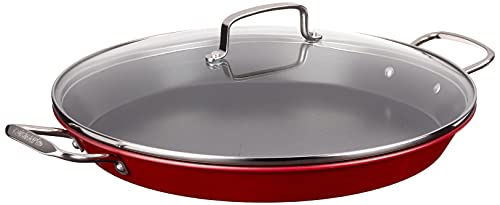
The Cuisinart ASP-38CR gives you a 15-inch paella-style cooking surface with a lid and a bright red finish. It is designed for cooks who want a wide pan but also like the convenience of covered cooking. The generous diameter works well for family portions and shared meals.
This model is appealing to shoppers who already trust mainstream cookware brands and want a pan that looks ready for the table. The lid can help hold heat after cooking, but I would use it with care if your goal is a dry, crisp top layer. Always confirm the latest care and cooktop details before buying.
Pros:
- 15-inch size offers useful family capacity
- Included lid supports resting and warming
- Bright red finish adds visual appeal
- Wide shape gives rice more room than a deep skillet
- Recognizable brand may simplify support and replacement questions
Cons:
- Lid may create extra steam during cooking
- Large pan needs suitable storage space
- Exact cooktop compatibility should be checked before purchase
My Recommendation
I would select this pan for families who want a roomy, colorful serving piece with a lid. It is among the best pans for paella for cooks who want flexibility more than strict traditional design. It is also a nice option when presentation matters and you plan to bring the pan straight to the table.
| Best for | Why |
|---|---|
| Family dinners | The 15-inch surface gives you room for a generous meal. |
| Covered resting | The lid helps retain warmth after the main cooking stage. |
| Colorful serving | The red finish creates an attractive table presentation. |
This pan gives good all-around value for a home cook who wants broad capacity and a lid. Use it uncovered when texture and socarrat are your top goals.
How to Choose the Best Pans for Paella
Choosing a paella pan is not only about diameter. The metal, depth, burner, serving size, and care routine all affect the final dish. I use five checks before I recommend any pan.
1. Match the Pan Size to Your Serving Goal
Paella cooks best when the rice forms a fairly thin layer. A pan that is too small forces the rice into a deep pile. That can make the center soft while the edges dry out.
For one or two people, a pan around 12 inches can work well. A 13- to 15-inch pan is more useful for a small family. A 16- to 18-inch model makes sense for parties, but only when you have a heat source large enough to warm the base.
Do not judge capacity by diameter alone. Ingredient depth, rice type, broth level, and your preferred texture all matter. If you like a wide layer and crisp bottom, choose more surface area rather than a deeper pan.
2. Understand Carbon Steel
Carbon steel is popular because it heats quickly and responds well to flame changes. That control helps when you brown meat first, soften vegetables, and then simmer rice. With use, oil can create a seasoned surface that feels smoother.
The trade-off is care. Water and air can create rust, especially after a long soak. Wash the pan by hand unless the product instructions say otherwise, dry it fully, and apply a very thin coat of cooking oil before storage.
Acidic ingredients such as tomatoes can affect a new seasoning layer. This does not mean you must avoid them. It means you may need to refresh the surface more often while the pan develops.
3. Consider Enamel for Easier Care
Enameled steel gives you the broad shape of a traditional pan with a protective coating. It helps reduce rust concerns and can make cleanup less stressful. That makes enamel a good fit for new cooks and busy families.
Enamel is not indestructible. Avoid dropping the pan, banging it against a sink, or using harsh tools that may damage the coating. Follow the care directions and allow the pan to cool before washing it.
An enamel pan may also heat differently from bare carbon steel. Use moderate heat at first, then adjust as you learn how the pan behaves on your burner.
4. Decide Whether Stainless Steel Fits Your Style
Stainless steel is attractive because it resists rust and does not need seasoning. Tri-ply construction can also provide a more stable heat pattern than thin steel. This makes it a sensible choice for cooks who want a modern pan with simple storage.
Stainless steel can be less forgiving when rice or protein sticks. Preheat it properly, add enough oil, and avoid moving rice too much once it begins to cook. A pan that releases food well still needs good technique.
If you enjoy traditional cookware care, carbon steel may feel more rewarding. If you want less maintenance, stainless steel may be the calmer choice.
5. Check Your Cooktop
A wide paella pan can extend beyond a home burner. The outer rim may stay cooler while the center becomes hot. This is one of the most common reasons a new cook sees uneven rice.
Gas ranges often give more flexible heat, but the burner still needs to cover the pan well. Electric and glass cooktops need special attention because the heating zone may be smaller than the pan base. Induction users must confirm that the pan has a magnetic base or is labeled for induction use.
For very large pans, an outdoor propane burner can be a better solution. A diffuser or ring may help distribute heat, but use only equipment that is designed for your pan and cooking setup.
How I Evaluate Paella Pans
I look first at the cooking shape. The best pans for paella should be broad and shallow, not narrow and deep. That form gives rice more contact with broth, air, and the hot base.
I also consider heat control. A pan should let you brown ingredients without losing control when the liquid goes in. Carbon steel often feels quick and responsive, while layered stainless steel may feel steadier.
Care is just as important as performance. A pan that makes excellent rice but rusts because it demands more work than you can give it may not be the right pan for you. I always match maintenance needs to the buyer’s habits.
Finally, I check size and real kitchen fit. Product photos can make a pan seem smaller than it is. Measure the diameter, handles, cabinet, sink, burner, and cooking surface before you order.
Tips for Better Paella at Home
Build Flavor in Stages
Start by heating the pan gradually. Add oil, then brown meat or seafood as your recipe directs. Remove delicate seafood if needed, so it does not overcook while the base develops.
Next, cook aromatics and vegetables. This step creates a flavor base that carries through the rice. Add paprika or other spices briefly, but watch them closely because dry spices can burn fast.
Use the Correct Rice Layer
Spread the rice across the pan instead of leaving it in a mound. You want the grains to sit in a fairly even layer. A thin layer improves the chance of even cooking and a tasty crust.
Once the rice simmers, avoid constant stirring. Stirring releases starch and can turn the dish soft. Let the pan do its work while you watch the liquid and heat.
Protect the Socarrat
Socarrat is the toasted rice layer at the bottom. It should taste nutty and crisp, not bitter or black. Near the end, raise the heat for a short time if your recipe calls for it, then stop before the bottom burns.
Your pan affects socarrat, but technique matters too. A broad pan, even heat, the right liquid ratio, and patience work together like a small orchestra.
Rest Before Serving
Allow the paella to rest for several minutes after cooking. This gives the rice time to settle and lets the flavors come together. A clean towel or lid may help retain warmth, but do not trap steam for too long if you want the top to stay dry.
Cleaning and Care Guide
Let a hot pan cool before washing. A sudden temperature change can stress enamel and may warp thin steel. Use warm water and a soft sponge rather than aggressive scouring tools.
For carbon steel, dry the pan immediately. Heat it briefly on the stove if needed to remove hidden moisture. Then spread on a tiny amount of oil and wipe away excess; the surface should look lightly coated, not wet.
For enamel and stainless steel, follow the product directions. Do not assume every pan has the same dishwasher or oven rating. Handles, lids, coatings, and bases can have different limits.
Store the pan where air can circulate. If you stack it, place a soft cloth or paper layer between cookware to reduce scratches. Good storage takes only a minute and protects your investment.
Common Paella Pan Mistakes
The first mistake is choosing a pan that is too small. A deep rice layer can cook poorly even when the recipe is sound. The second mistake is using high heat from the start and never lowering it, which can burn the base before the rice absorbs the broth.
Another mistake is stirring throughout the entire cook. Paella is not risotto. Once the ingredients are combined and the rice begins to simmer, less movement usually gives a better texture.
Some cooks also skip the care instructions. Bare steel left wet can rust quickly. Coated pans treated with metal tools can lose their finish. The right pan still needs the right habits.
FAQs Of best pans for paella
What size paella pan should I buy?
Choose a pan based on servings and burner size. A 12-inch pan suits small portions, while 13 to 15 inches works well for many families. Choose 16 to 18 inches for large gatherings only if your heat source can cover the base.
Is carbon steel or stainless steel better for paella?
Carbon steel offers fast heat response and traditional performance, but it needs drying and oil care. Stainless steel resists rust and needs less maintenance, though food may stick more easily. The best choice depends on whether you value tradition or convenience.
Can I use a paella pan on an induction stove?
Only use it if the manufacturer confirms induction compatibility. Many traditional steel pans have a base that does not work well on induction. Check the product listing and your cooktop instructions before buying.
Does a paella pan need a lid?
No. Classic paella usually cooks uncovered. A lid can help with resting, warming, or finishing firm ingredients, but it may trap steam and soften the rice surface.
How do I stop a carbon steel paella pan from rusting?
Wash it soon after use, dry it completely, and wipe it with a very thin layer of oil. Avoid storing it wet or soaking it for a long time. If small rust spots appear, remove them gently and reseason the pan.
Final Verdict: Which Should You Buy?
For most buyers, the Paelluxe 13-inch enameled pan offers the easiest balance of size, care, and value. Choose Garcima carbon steel for traditional results, or a larger Paelluxe model for parties. These are among the best pans for paella for different cooking needs.
Measure your burner first, then choose the material you will maintain. With the right pan and steady heat, homemade paella becomes simple, social, and deeply rewarding.