
The best pans for pasta and rice combine steady heat, easy draining, strong build, and simple cleanup.
You start dinner with one goal: tender pasta or fluffy rice without a sticky mess. Then the pot boils over, the rice catches, or draining hot water feels like a small kitchen workout. I have tested cookware by looking at heat control, size, handles, lid fit, cleaning, and daily comfort. The picks below include true cooking pots, multi-cookers, and useful straining tools. Together, they help solve the most common pasta and rice problems in a busy home kitchen.
Gotham Steel 5-Qt Stainless Steel Pasta Pot

The Gotham Steel 5-quart stainless steel stock pot is the closest match to a classic pasta pan in this group. Its tall shape gives noodles room to move, which can reduce clumping while they cook. The 5-quart size suits a small family, meal prep, or a generous batch of spaghetti. Stainless steel also gives this pot a solid feel and a clean look.
I like this style for cooks who want one pot for more than pasta. You can use it for rice, soup, vegetables, eggs, and small batches of stock. The tall walls help limit splashes, while the wide top makes stirring easy. As with most stainless steel pans, low to medium heat and a little patience help prevent food from sticking.
Pros:
- Useful 5-quart size for daily family meals
- Tall shape gives pasta room to cook
- Stainless steel build feels sturdy and durable
- Works for pasta, rice, soup, and vegetables
- Easy-to-clean surface when handled with proper heat
- Neutral design fits most kitchen styles
Cons:
- Stainless steel may need oil or careful heat control
- May feel heavy when filled with hot water
- Users should confirm cooktop compatibility before purchase
My Recommendation
I recommend this pot for home cooks who want a traditional cooking vessel rather than a specialty gadget. It is especially useful for spaghetti, penne, rice, and one-pot meals for two to four people. If you want the best pans for pasta and rice with a simple, familiar design, this is a strong starting point. Its value comes from its broad use, not from a long list of electronic features.
| Best for | Why |
|---|---|
| Everyday pasta | The 5-quart body gives noodles useful cooking space. |
| Small family meals | It holds a practical amount without taking up much room. |
| Multi-use cooking | The pot also handles rice, soup, and vegetables. |
Anyday Silicone Clip-On Strainer

The Anyday silicone clip-on strainer is a smart add-on for cooks who already own a favorite pot. Instead of lifting a heavy stock pot to pour out boiling water, you clip the strainer to the rim and drain through the opening. This can make pasta draining safer and less tiring. It also saves cabinet space because you do not need a full-size colander for every meal.
Its silicone design is flexible, so it can adapt to many pot and pan rims. Still, fit matters, and I would check the rim size before ordering. It works best when you pour slowly and keep a firm grip on the pot handle. This is not a cooking pan by itself, but it can turn an ordinary pot into one of the best pans for pasta and rice from a draining standpoint.
Pros:
- Drains pasta without a separate colander
- Reduces lifting of heavy hot pots
- Compact design stores in a small drawer
- Flexible silicone helps protect many cookware rims
- Useful for vegetables and other wet foods
- Fast to use during busy meal prep
Cons:
- It does not cook food on its own
- Fit may vary between different pot rims
- Small foods may need a finer mesh strainer
My Recommendation
I suggest this strainer for apartment cooks, older adults, and anyone who dislikes wrestling with a full colander. It is also helpful when sink space is tight. Pair it with a 4- to 6-quart pot for pasta, noodles, and boiled vegetables. For the best pans for pasta and rice, safe draining is just as important as even heating, and this tool handles that part well.
| Best for | Why |
|---|---|
| Safe pasta draining | It lets you drain while the food stays in the pot. |
| Small kitchens | Its slim shape needs less storage space than a colander. |
| Light meal prep | It works quickly for pasta, vegetables, and noodles. |
Boao Two-Piece Pot Strainer Set
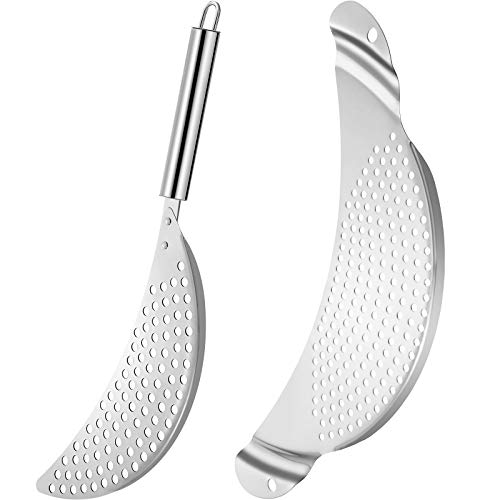
The Boao two-piece pot strainer set gives you a simple way to drain food from pans up to about 10 inches wide. Its handle-based design rests over the pot while water passes through the strainer. I find this style useful for cooks who want more control than a clip-on piece provides. Two strainers also give you a spare or a choice of size for different pans.
This set can help with pasta, noodles, vegetables, and some rice dishes. It is best for draining smaller portions because a hand strainer does not offer the same support as a large colander. You should also keep the strainer steady and avoid filling it beyond its comfortable weight. When used with the right pan, it is a low-cost part of a practical pasta setup.
Pros:
- Two pieces offer flexible sizing
- Fits pans up to approximately 10 inches
- Helpful for draining small pasta portions
- Needs less storage room than a large colander
- Simple design has no buttons or moving parts
- Can strain vegetables and noodles as well
Cons:
- Not ideal for very large family-size batches
- Requires a steady hand during draining
- May not suit every pan shape or rim
My Recommendation
I recommend this set for students, couples, and cooks who prepare one or two servings at a time. The two sizes make it easier to match different pots and pans. It is not a replacement for a large pasta pot, but it can support the best pans for pasta and rice when you need a quick, space-saving drain. Its strongest feature is simple control at a modest price.
| Best for | Why |
|---|---|
| Small pasta batches | The compact strainers suit one or two servings. |
| Limited storage | They take up less space than a full colander. |
| Multiple pan sizes | Two pieces give you more fit options. |
Microwave Grill Pan and Cookware

This microwave grill pan serves a different role from a stovetop pasta pot. It targets quick cooking in a microwave and may suit small meals, reheating, and simple grilled foods. For a single person, that compact approach can feel very convenient. It can also reduce the number of dishes used for a fast lunch.
I would not choose this as my main pan for boiling pasta or cooking rice from dry grains. Microwave cookware often has different limits from metal stovetop pans, and you should follow the maker’s instructions closely. It may work well for reheating cooked pasta or making a small side dish, but it does not replace a deep stock pot. Consider it a useful supporting item rather than one of the best pans for pasta and rice in the traditional sense.
Pros:
- Useful for quick microwave meals
- Compact size suits small kitchens
- Can reduce dish use during reheating
- Helpful for single servings
- Supports fast meal prep when time is short
- Offers a different cooking method from stovetop pans
Cons:
- Not a full replacement for a pasta pot
- May not suit dry rice or large pasta batches
- Users must follow microwave safety directions
My Recommendation
This cookware is best for students, office workers, and single cooks who rely on a microwave. It makes sense as a second tool for reheating or small meals. I would pair it with a true pot if you cook pasta and rice often. Among the best pans for pasta and rice, this one is a niche choice, but it can still add value in a compact kitchen.
| Best for | Why |
|---|---|
| Microwave meals | It focuses on quick cooking without a stovetop. |
| One serving | The smaller format fits solo meal portions. |
| Reheating pasta | It can help warm leftovers with fewer dishes. |
Paoli Stainless Steel Colander Set

The Paoli set pairs a 1.5-quart fine-mesh colander with a mixing bowl. That pairing is useful when you rinse rice, wash berries, clean vegetables, or drain small pasta portions. The fine mesh helps hold smaller grains that could slip through wide holes. Stainless steel also resists food stains and odors better than many plastic strainers.
The included bowl gives the colander a place to sit, so rinse water does not spread across the counter. I like that detail for rice preparation, where repeated rinsing can become messy. Its capacity is better for side dishes than for a large pot of spaghetti. It belongs in a kitchen collection that supports the best pans for pasta and rice, especially when clean rinsing matters.
Pros:
- Fine mesh helps hold rice and small grains
- Includes a bowl for cleaner countertop work
- Stainless steel resists stains and food odors
- Useful for fruit, vegetables, pasta, and quinoa
- Compact 1.5-quart size stores easily
- Dishwasher-safe design simplifies cleanup
Cons:
- Too small for draining a large pasta batch
- Fine mesh may take longer to rinse clean
- It supports cooking but does not replace a pan
My Recommendation
I recommend the Paoli set for rice lovers, meal preppers, and cooks who rinse grains often. It is also a handy prep tool for small households. Choose it beside a deep pot, not instead of one. For anyone building a complete setup around the best pans for pasta and rice, this set adds neat, controlled rinsing and draining at a reasonable size.
| Best for | Why |
|---|---|
| Rinsing rice | The fine mesh helps keep grains inside the basket. |
| Small pasta portions | The bowl catches water and protects the counter. |
| Food prep | It also handles fruit, vegetables, and quinoa. |
Kafoor 9-Inch Fine Mesh Strainer

The Kafoor 9-inch fine mesh strainer offers a wide surface and a long, comfortable handle. Its fine stainless steel mesh works well for rice, quinoa, tea, pasta pieces, and dry ingredients. The larger diameter lets you rinse more food at once than a tiny sieve. It is a versatile tool for cooks who want one strainer for both cooking and baking tasks.
A rubberized handle can make hot-food work feel more secure, but you still need to keep the strainer balanced. This tool is better for scooping, rinsing, and controlled draining than for holding a full pot of spaghetti. I would use it with a saucepan or medium pot for small servings. It helps complete the workflow around the best pans for pasta and rice without taking much drawer space.
Pros:
- Wide 9-inch surface handles useful portions
- Fine mesh holds rice and quinoa
- Stainless steel construction supports repeated use
- Thermoplastic rubber handle improves comfort
- Works for pasta, tea, flour, and dry foods
- Useful for rinsing and skimming
Cons:
- Does not drain a full stock pot alone
- Fine mesh needs careful cleaning
- Long handle may need extra drawer space
My Recommendation
The Kafoor is best for cooks who rinse grains, sift ingredients, and strain small servings. It is a good match for rice bowls, quinoa salads, and quick noodle meals. I would choose it when versatility matters more than a built-in draining system. Used beside the best pans for pasta and rice, it becomes a useful all-around kitchen helper.
| Best for | Why |
|---|---|
| Rice and quinoa | Fine mesh helps prevent small grains from escaping. |
| Multi-purpose prep | It also sifts flour and strains tea. |
| Small portions | The wide bowl gives better coverage than a tiny sieve. |
Anyday Black Sesame Clip-On Strainer
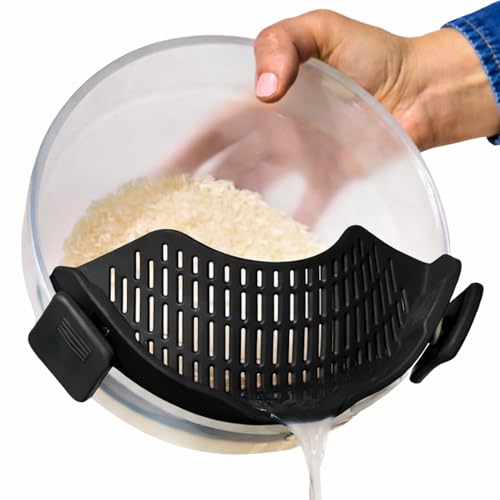
This Anyday clip-on pot strainer uses a dark black sesame finish and a compact shape. It clips to a compatible pot and creates a controlled opening for draining. That means fewer transfers from pot to colander and less steam near your hands. For weeknight pasta, this small step can make the final stage much calmer.
I would check the product fit before buying, since clip-on strainers work best with suitable rims. The design is convenient for pasta and vegetables, but it is not a replacement for a fine-mesh rice sieve. Pouring slowly remains important, especially with a heavy pot. It is a practical accessory for people who already own one of the best pans for pasta and rice.
Pros:
- Fast clip-on draining method
- Helps reduce hot-water splashes
- Compact and easy to store
- Useful for pasta and boiled vegetables
- Attractive black finish
- Can reduce the need for a separate colander
Cons:
- Requires a compatible pot rim
- Not designed for cooking food
- May not suit fine rice or tiny grains
My Recommendation
This strainer suits busy home cooks who want quick draining with fewer dishes. It is a good choice for pasta nights, vegetable sides, and compact kitchens. I would not buy it as the only rice tool, but it pairs well with a deep stainless steel pot. If safe, simple draining is your priority, it can improve the daily use of the best pans for pasta and rice.
| Best for | Why |
|---|---|
| Weeknight pasta | The clip-on design speeds up the draining step. |
| Less mess | It can reduce splashes and counter spills. |
| Small kitchens | The compact body stores with little effort. |
Ninja PossibleCooker Pro Plus 8.5-Qt
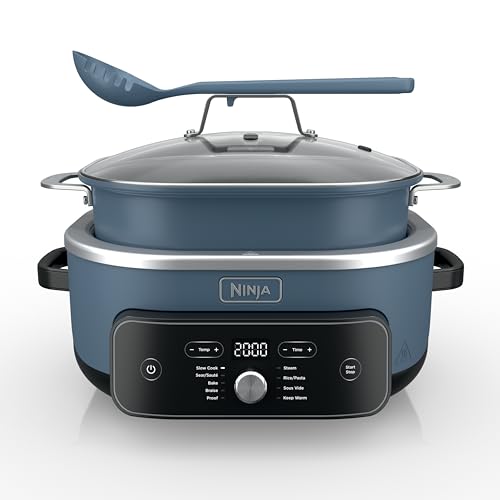
The Ninja PossibleCooker Pro Plus is the most substantial cooking appliance in this review. Its 8.5-quart capacity gives families room for large rice dishes, pasta sauces, soups, stews, and party food. A multi-cooker can reduce the need for several separate pots. It is a strong choice for anyone who cooks in large batches or wants one appliance to handle many tasks.
The larger size also brings more weight and storage needs. I would leave room on the counter before buying, and I would read the current care instructions for the cooking vessel and lid. For rice, use the correct liquid ratio and avoid stirring too much during the cook. For pasta, it is excellent for sauce and one-pot recipes, though a traditional stock pot may still drain noodles more easily.
Pros:
- Large 8.5-quart capacity suits families
- Useful for rice, pasta sauce, soup, and stew
- Supports batch cooking and meal prep
- Can replace several single-use cooking tools
- Good option for entertaining and gatherings
- Offers more cooking flexibility than a basic pan
Cons:
- Takes more counter and cabinet space
- May feel too large for one or two people
- Needs a separate draining tool for some pasta dishes
My Recommendation
I recommend the Ninja for families, hosts, and serious meal preppers. It is best when you want large portions and several cooking functions in one appliance. It may be more than a casual pasta cook needs, but it stands out among the best pans for pasta and rice for capacity and range. If you have the space, its broad use can justify the higher investment.
| Best for | Why |
|---|---|
| Large families | The 8.5-quart size supports generous meals. |
| Batch cooking | It gives you room for make-ahead dishes. |
| One-pot recipes | It handles rice, sauce, soup, and stew in one vessel. |
Anaeat Three-Piece Fine Mesh Strainers
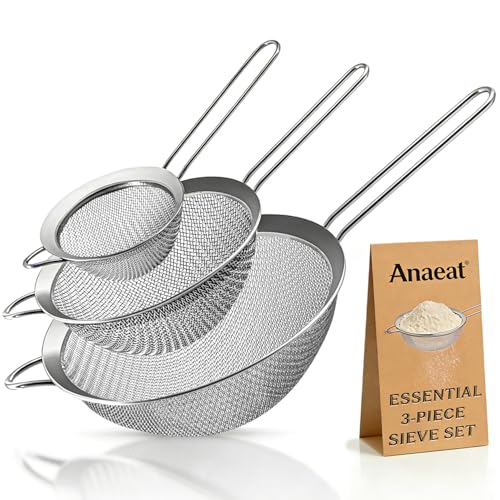
The Anaeat set includes three fine-mesh strainers in different sizes. That range is useful because a small sieve works for tea or spices, while a larger one handles rice, pasta, and rinsed vegetables. The stainless steel mesh feels suited to regular kitchen work. Multiple sizes also mean you do not need to force one tool into every job.
This set is especially helpful for cooks who prepare rice, quinoa, flour, sauces, and loose tea. The smallest piece will not replace a colander, and even the largest may not hold a full family pasta batch. I like the set as a support tool for a pan collection, not as a pan itself. It adds flexibility around the best pans for pasta and rice and helps reduce wasted ingredients.
Pros:
- Three sizes cover many kitchen tasks
- Fine mesh holds rice and small food pieces
- Useful for pasta, tea, flour, and sauces
- Stainless steel supports repeated use
- Helpful for both cooking and baking
- Small pieces can fit into narrow bowls
Cons:
- The set does not include a cooking pan
- Largest strainer may be small for large pasta meals
- Fine mesh needs prompt rinsing after use
My Recommendation
This set is best for cooks who want one flexible straining kit rather than one large colander. It suits rice rinsing, small pasta portions, baking, and tea. I would choose it for a well-stocked kitchen or a new apartment setup. Alongside the best pans for pasta and rice, the size range makes daily prep more precise and less wasteful.
| Best for | Why |
|---|---|
| Rice rinsing | Fine mesh helps keep grains from washing away. |
| Baking prep | The smaller sieves work for flour and sugar. |
| Small food tasks | Different sizes match tea, sauces, and portions. |
Two-in-One Stainless Steel Washing Bowl

This two-in-one stainless steel washing bowl combines a basin with a colander. The square, 12.8-inch format gives you a broad area to rinse rice, vegetables, fruit, and food for a family meal. It can also hold pasta while water drains into the sink or another bowl. The design saves a step because you can wash and drain in the same setup.
I see this as a prep and draining station rather than a heat pan. Stainless steel should handle regular kitchen use, but you should confirm the maker’s care guidance before placing it in a dishwasher or near high heat. Its larger footprint may be welcome for families but less convenient in a small sink. It is a useful companion to the best pans for pasta and rice when you need to rinse a larger amount of food.
Pros:
- Combines a washing bowl and colander
- Large 12.8-inch format supports family prep
- Useful for rice, pasta, fruit, and vegetables
- Stainless steel resists many food odors
- Helps keep rinsing water contained
- Can reduce the number of separate kitchen tools
Cons:
- It is not designed for stovetop cooking
- Large shape may crowd a small sink
- Storage may take more room than a round sieve
My Recommendation
I recommend this bowl for families, meal preppers, and anyone who rinses large amounts of rice or produce. It is also handy when you want to drain pasta without placing a hot pot in the sink. Choose it as a prep companion, not as your main pan. In a complete kitchen built around the best pans for pasta and rice, it offers useful capacity and cleaner workflow.
| Best for | Why |
|---|---|
| Family food prep | The wide bowl holds more produce and grains. |
| Rinsing rice | The colander section lets water drain with ease. |
| Kitchen organization | One item performs two related prep jobs. |
How to Choose the Best Pans for Pasta and Rice
The right pan depends on how you cook, not only on the brand name. A person who makes spaghetti twice a week needs a different tool from someone who cooks rice for a family of six. I look at capacity first because an overcrowded pan can ruin texture. Then I check heat control, shape, handle comfort, lid design, and cleanup.
Choose the right capacity
A 3- to 5-quart pan works well for many small households. It gives pasta enough water and leaves room for stirring. A larger 6- to 8-quart pot suits family meals and long noodles. For rice, avoid filling the pan too high because grains expand and foam can rise.
Look for even heat
Rice needs steady heat after the liquid reaches a boil. A thin base may create hot spots, which can burn the bottom before the top becomes tender. Stainless steel with a strong base, aluminum, or a quality multi-cooker can spread heat more evenly. I also prefer pans that respond quickly when I lower the burner.
Think about pan shape
Tall pots hold plenty of water and help prevent pasta from spilling during a boil. Wide pans work well for rice because they spread grains into a more even layer. A wide sauté pan can also reduce sauce faster. The best pans for pasta and rice often have a balanced shape rather than one shape that tries to do everything.
Check the lid
A snug lid helps rice steam and finish with a soft, even texture. A vent can reduce boil-over, but it should not be the only feature you trust. I still leave room in the pan and use lower heat after boiling. For pasta, a lid helps water boil faster but should come off when foam rises.
Consider draining
Some pasta pots include a built-in strainer. Others need a colander or clip-on accessory. A separate strainer gives more flexibility, but it also creates another item to wash. If hot pots feel hard to lift, a clip-on strainer can make a major difference. Safety and comfort matter as much as speed.
Match the pan to your cooktop
Before buying, check whether the pan works on gas, electric, glass, or induction. Induction cooktops need a magnetic base. Glass tops need smooth bottoms that will not scratch when moved. If you use an oven, verify the temperature limit for the pan, handles, lid, and coating.
Use the right material
Stainless steel offers durability and strong browning, but it rewards careful heat control. Nonstick pans clean easily and suit delicate rice dishes, though coatings need gentle tools and proper heat. Aluminum heats fast and often costs less. Multi-cookers offer convenience, but they need more counter space and may not drain pasta as simply as a pot.
Tips for Better Pasta and Rice
I always start with enough water for pasta, then salt it once it begins to heat. Stir noodles soon after adding them so they do not settle together. Save a little pasta water before draining if you plan to finish the noodles in sauce. This creates a smoother sauce and gives the dish a more polished finish.
For rice, rinse when the recipe calls for it, then measure water with care. Bring the mixture to a gentle boil, cover the pan, and lower the heat. Avoid lifting the lid again and again because steam is part of the cooking process. Let the rice rest off the heat before fluffing it with a fork.
Do not fill a pot to the rim. Pasta water can foam, and rice can expand more than new cooks expect. Use a burner that matches the pan base instead of sending flames up the sides. These simple habits help even the best pans for pasta and rice perform better.
FAQs Of best pans for pasta and rice
What type of pan is best for cooking pasta?
A deep stainless steel stock pot works well for pasta. Choose a size that leaves room for water and stirring. A 4- to 8-quart pot suits most home meals.
Can I cook rice in a pasta pot?
Yes, but a wide saucepan or multi-cooker may give better control. Rice needs steady heat and a close lid. Use the correct liquid ratio for the rice type.
Are clip-on strainers safe for draining hot pasta?
They can be useful when they fit the pot correctly. Hold the pot handles firmly and pour slowly. Never rely on a loose or poorly matched strainer.
Is stainless steel good for rice?
Yes. Stainless steel lasts for years and handles high heat well. Use low heat after boiling and avoid letting the pan sit dry on the burner.
Do I need a colander for pasta?
No. A built-in or clip-on strainer can drain pasta. A full colander is still helpful for large batches and for washing produce.
Final Verdict: Which Should You Buy?
For most homes, the Gotham Steel 5-quart pot is the best overall choice. Add the Anyday clip-on strainer for easy draining. Large families should consider the Ninja PossibleCooker Pro Plus for batch meals.
The best pans for pasta and rice should match your portions, cooktop, and storage space. Choose steady heat, safe handles, and simple cleanup for better meals in 2026.