
The best pots for glass top stove cooking have flat bottoms, steady heat, safe handles, and a gentle finish.
A glass cooktop looks sleek, but it can show every scratch, spill, and hot spot. I know the worry: you lift a heavy stockpot and wonder if the bottom will damage the surface. The right pot makes that fear fade. I looked at bottom design, weight, coatings, lids, size, care, and daily use to find practical picks for soup, pasta, sauces, tea, and family meals. These options cover ceramic nonstick, stainless steel, and heat-resistant glass, so you can match the pot to your cooking style.
SENSARTE Ceramic Stock Pot

The SENSARTE Ceramic Nonstick Stock Pot is a strong all-around choice for a glass top stove. It comes in several sizes, from a small 2.6-quart option to a large 11-quart pot. That range helps you choose a pot that fits both your burner and your meal size. The flat cooking base should sit smoothly on a level cooktop when you select the right size.
I like this pot for soup, pasta, chili, stew, and one-pot family meals. Its ceramic nonstick surface can make stirring and serving easier, while the white finish gives the kitchen a clean look. The included lid helps hold heat and moisture during a slow simmer. As with any coated pot, I would use low to medium heat, soft utensils, and hand washing when possible.
Pros:
- Several sizes suit small and large meals
- Ceramic nonstick surface helps food release
- Free from PFOA, PFAS, and PTFE according to the listing
- Induction compatible for use on more than one cooktop
- Matching lid helps retain heat and moisture
- Useful shape for pasta, soup, and stew
Cons:
- White ceramic finish may show stains over time
- Coated surfaces need gentle tools and careful heat control
- Large sizes may feel heavy when full
My Recommendation
I recommend the SENSARTE to cooks who want one versatile pot for a glass top stove. It suits families, meal preppers, and anyone who often makes soup or pasta. The size choices are useful because a small household does not need to store an oversized stockpot. The smooth coating also helps cooks who dislike food sticking to the base.
This is one of the best pots for glass top stove use if you want a light, easy-clean option with a modern finish. I would not treat it like bare stainless steel, though. Use gentle care to preserve the ceramic surface. Its broad size range gives it good value, and availability may vary by size on Amazon.
CAROTE 8-Quart Tri-Ply Stock Pot

The CAROTE 8-quart Full Clad Tri-Ply Stainless Steel Stock Pot is built for cooks who value strength and even heating. Its tri-ply construction uses layers of metal to spread heat across the base and sides. That design can reduce the sharp hot spots that cause food to scorch. Stainless steel also gives this pot a durable cooking surface without a nonstick coating.
An 8-quart capacity works well for broth, large batches of pasta, corn, soup, and holiday cooking. The lid helps keep steam inside, and the stockpot shape gives you room to stir without splashing. On a glass cooktop, I would lift rather than slide this pot, especially when the base or cooktop has grit. The steel finish is easy to inspect and does not hide food residue.
Pros:
- Large 8-quart capacity for family-size cooking
- Tri-ply construction supports even heat distribution
- Stainless steel offers strong long-term durability
- No nonstick coating to wear away
- Useful for boiling, simmering, and making stock
- Matching lid helps control evaporation
Cons:
- Food may stick if the pan is not preheated correctly
- Steel can develop water spots or discoloration
- Full 8-quart loads may be heavy to lift
My Recommendation
I would choose this CAROTE pot for a serious home cook who wants one workhorse stockpot. It is especially useful for big households, batch cooking, and cooks who prefer stainless steel over ceramic coatings. Its large size can handle meals that would overflow a saucepan. The tri-ply build also gives it a more balanced feel than a thin, light pot.
For shoppers comparing the best pots for glass top stove, this model stands out for durability and capacity. It may need a little practice because stainless steel rewards proper heat and timing. If you want a pot that can serve for years with simple care, this is a sensible pick. Always check the manufacturer’s care directions before using high heat or a dishwasher.
CAROTE Nonstick Saucepan Set

The CAROTE 1.5-quart and 3-quart saucepan set solves a common kitchen problem: using a large pot for every small task. The two sizes cover oatmeal, gravy, melted butter, warm milk, rice, and small servings of soup. Their nonstick cooking surfaces can make delicate foods easier to stir and pour. Smaller pans also place less weight on a glass cooktop than a full stockpot.
I find a two-pan set more useful than one oddly sized pot because each saucepan has a clear job. The 1.5-quart pan is handy for quick sauces and reheating. The 3-quart pan gives more room for pasta sauce, vegetables, and side dishes. The lids help reduce mess, but I would still use silicone or wood tools and avoid sharp metal edges.
Pros:
- Two practical sizes cover many daily tasks
- Nonstick surface supports easy food release
- Smaller bases are easy to position on a glass burner
- Lids help hold heat and reduce splatter
- Good choice for sauces, milk, grains, and side dishes
- Compact set saves storage space compared with a full cookware set
Cons:
- Not large enough for big batches or whole-family pasta
- Nonstick coating needs gentle care
- Small handles and lids may become warm during use
My Recommendation
This CAROTE set is best for singles, couples, students, and small families. It also suits a cook who already owns a stockpot but lacks good saucepans. The two sizes make everyday cooking faster because you do not need to heat a large vessel for a small portion. The nonstick finish is helpful when you make creamy sauces or warm foods that tend to cling.
Among the best pots for glass top stove, this set offers excellent daily convenience rather than maximum capacity. It is a smart choice for a small kitchen or a first apartment. Handle the coating with care, and these pans can cover a surprising number of meals. Confirm the current package details before ordering, since set contents can change.
ZUFRIEDENIA 5-Liter Glass Cooking Pot

The ZUFRIEDENIA 5-liter glass pot offers something metal pots cannot: a clear view of the food as it cooks. You can watch milk rise, sauce bubble, and tea change color without lifting the lid. The 5-liter, or about 5.3-quart, size is large enough for many family meals while staying smaller than a large stockpot. That makes it useful for soups, pasta, vegetables, and gentle simmering.
Clear cookware can make cooking feel more controlled because you can see the bottom and sides. It also looks attractive when you serve food straight from the pot. However, I would pay close attention to the product’s stove-use directions and avoid sudden temperature changes. Never place hot glass on a cold, wet, or very hard surface, and inspect it for chips before use.
Pros:
- Clear body makes food easy to monitor
- 5-liter capacity suits family-size portions
- Useful for soup, pasta, tea, and sauce
- Lets you see bubbling and simmer strength
- Attractive design for serving at the table
- Helpful for cooks who want less lid lifting
Cons:
- Glass needs careful handling to avoid thermal shock
- May not suit high-heat searing or rapid temperature changes
- Clear surfaces can show stains and mineral marks
My Recommendation
I recommend this glass pot to cooks who enjoy watching food cook or who often prepare tea, milk, broth, and simmered dishes. It is also a nice choice for anyone who wants a visual tool in the kitchen. The medium-large size gives you room without the bulk of an 8- or 11-quart pot. It can make gentle cooking feel less like guesswork.
This is one of the more unusual best pots for glass top stove options, but it needs more care than steel or coated aluminum. Choose it when visibility matters more than rough daily handling. Follow the included instructions, use moderate heat, and avoid sudden temperature shifts. Its value is strongest for careful cooks who want clear, attractive cookware.
CAROTE 21-Piece Ceramic Cookware Set

The CAROTE 21-piece ceramic cookware set is aimed at shoppers who want to refresh a kitchen in one order. A set like this can cover frying, sautéing, boiling, and simmering without mixing several brands. Its ceramic nonstick surfaces may help reduce the need for excess oil and make cleanup easier. The range of pieces also gives you more control when cooking several parts of a meal.
This set makes sense for a new home, a wedding gift, or a cook replacing worn pans. I like the idea of matching pieces because storage feels less cluttered and the sizes work as a group. On a glass cooktop, choose the pan closest to the burner size and lift it instead of dragging it. Ceramic coatings perform best with low or medium heat, soft utensils, and gentle cleaning.
Pros:
- Large set covers many common cooking jobs
- Ceramic nonstick surfaces support easy release
- Useful option for a new kitchen
- Matching cookware creates a neat look
- Several sizes help match food volume to the burner
- Can reduce the need for extra oil in many recipes
Cons:
- More pieces require more cabinet or drawer space
- Ceramic coating can lose performance with harsh care
- Set contents should be checked before purchase
My Recommendation
I would choose this CAROTE set for someone who needs a complete cookware refresh. It is best for first-time homeowners, families, and cooks who want matching pots and pans. The broad selection saves the trouble of buying each piece one at a time. It also gives you a saucepan or skillet for nearly every stage of a meal.
If you are searching for the best pots for glass top stove and want a full collection, this set deserves attention. It offers convenience, but it also asks for careful storage and cleaning. Use pan protectors if pieces nest together, and avoid sliding them across the cooktop. The set can deliver strong value when you need many pieces at once.
Kitchen Academy 12-Piece Nonstick Set
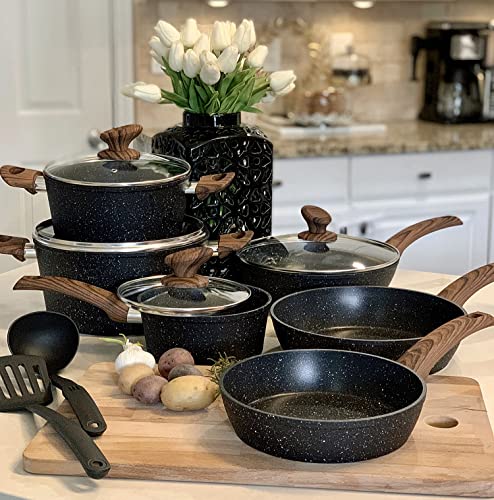
The Kitchen Academy 12-piece nonstick cookware set gives you a useful middle ground between a single pot and a very large collection. It includes pieces for common tasks, and its induction-compatible design may work across different cooktops. Nonstick cooking can help with eggs, sauces, vegetables, and quick family meals. The set is practical for cooks who want a simple starter kit without a crowded cabinet.
I see this set as an everyday workhorse for a rental, apartment, or first kitchen. The mix of pots and pans lets you cook a main dish and a side at the same time. The pieces are often easier to handle than heavy stainless steel cookware, which matters when you move them on and off a glass surface. Use low to medium heat and avoid metal tools to help protect the coating.
Pros:
- Useful 12-piece selection for everyday cooking
- Nonstick surface can simplify cleanup
- Induction-compatible design adds flexibility
- Good starter choice for apartments and new kitchens
- Several pieces support cooking a full meal
- Usually easier to lift than very heavy steel pots
Cons:
- Nonstick performance depends on careful use
- Set may include pieces some users rarely need
- Not the first choice for hard searing or very high heat
My Recommendation
The Kitchen Academy set is best for students, renters, small families, and first-time cooks. It gives you enough variety to learn many recipes without a large investment. I especially like it for people who want easy cleanup after busy workdays. The induction-ready feature also helps if you move to a different home later.
For the best pots for glass top stove on a budget, this set is a practical contender. It does not replace the rugged feel of professional stainless steel, but it covers daily cooking well. Treat the coating kindly and store the pieces so their bottoms do not rub. Check the current listing for exact sizes and included accessories.
Crystalbru 2-Liter Clear Glass Simmer Pot

The Crystalbru 2-liter clear glass simmer pot is a compact choice for small portions and gentle heat. Its borosilicate glass body lets you see what is happening inside. The included lid and strainer add useful flexibility for tea, infused water, sauces, and simmer pots. Anti-scald handles can make short tasks more comfortable, but I still recommend using oven mitts when the pot is hot.
This pot is also designed for home fragrance projects, such as simmering citrus, herbs, and spices. That dual use makes it more interesting than a standard saucepan. The 2-liter capacity works for one or two people but may feel small for a full family meal. Keep the heat moderate and follow the maker’s instructions closely because heat-resistant glass still needs protection from sudden temperature changes.
Pros:
- Clear borosilicate glass supports easy viewing
- Compact 2-liter size suits small households
- Strainer adds value for tea and infused liquids
- Lid helps control steam and scent
- Useful for cooking and home fragrance
- Anti-scald handles improve handling comfort
Cons:
- Small capacity limits family-size cooking
- Glass requires careful heating and cooling
- Not suited to rough storage or careless handling
My Recommendation
I recommend Crystalbru for someone who wants a small, clear pot for tea, sauce, milk, or a simmer pot. It is a good fit for singles, couples, and people who enjoy natural home fragrance. The strainer makes it more useful than a basic glass vessel. It also makes a thoughtful gift for a tea drinker or home cook who likes to see the cooking process.
This is among the best pots for glass top stove when the main goal is gentle simmering in a small batch. It is not the right tool for boiling a large pot of pasta. Buy it for its clear view and flexible use, not for heavy-duty cooking. Proper temperature control will have the biggest effect on safety and service life.
1.5-Liter Glass Simmer Pot

This 1.5-liter glass cooking pot is made for small, simple jobs. It can handle sauce, soup, milk, tea, and a small potpourri simmer. The clear body lets you check the liquid level and watch for bubbling without removing the lid. Its 50-ounce capacity is useful when a full saucepan would feel wasteful.
I like a pot this size for breakfast oatmeal, reheating soup, and warming drinks. It takes up little space and should be easy to move when empty. The lid helps keep heat in, but I would open it slowly because hot steam can escape at the rim. Use the pot only as directed for stovetop cooking, and avoid a sudden move from hot burner to cold counter.
Pros:
- Small 1.5-liter capacity suits quick portions
- Clear glass makes the food easy to monitor
- Useful for milk, tea, soup, and light sauces
- Compact shape fits smaller kitchens
- Lid helps reduce splatter and heat loss
- Can serve as a cooking or potpourri simmer pot
Cons:
- Too small for large meals or batch cooking
- Glass needs care during heating and cooling
- May require mitts because handles can get hot
My Recommendation
This pot suits a single cook, student, or couple who makes small servings. It is also useful as a second pot for warming a sauce while another dish cooks. The clear design helps new cooks learn how simmering looks. If your kitchen has limited storage, the compact size is a real benefit.
It can be one of the best pots for glass top stove for light daily tasks, especially when visibility matters. I would not buy it as the only pot for a large household. Instead, pair it with a larger stockpot for a balanced setup. Its value comes from its small footprint and simple, focused purpose.
1.5-Liter Clear Glass Simmer Pot

This 1.5-liter clear glass simmer pot offers another compact way to cook and warm small amounts. It has a heat-resistant glass body, a lid, and anti-scald handles. The see-through design is handy when you want to watch a sauce thicken or keep an eye on a simmer. Its size also makes it a natural choice for potpourri and home scent recipes.
Compared with a dark metal saucepan, this pot gives a better view of color and texture. That can help when warming milk or making a delicate tea blend. The small capacity keeps the pot easy to store, but it also limits its role to light cooking. I would use gradual heat, keep the base clean, and avoid placing the hot pot on a cold stone or wet surface.
Pros:
- Clear design shows food while it cooks
- Heat-resistant glass supports gentle stovetop tasks
- Anti-scald handles make short transfers easier
- Compact 50-ounce size saves storage room
- Good for tea, milk, sauce, and soup
- Can support potpourri and fragrance use
Cons:
- Limited volume for family cooking
- Requires careful attention to thermal shock
- Not designed for heavy searing or rough use
My Recommendation
I would pick this clear glass pot for small, gentle recipes and home fragrance. It is best for people who value visibility and do not need a large vessel. The handles and lid add daily convenience, while the compact body suits a small burner. It is also a nice backup pot for warming a side dish.
For shoppers seeking the best pots for glass top stove, this model makes sense when you want a narrow purpose and a clear view. It should not be confused with a high-heat stockpot. Use it slowly and carefully, as the maker directs. If the current Amazon price is close to similar models, compare the handle design and included lid before buying.
What Makes a Pot Safe for a Glass Top Stove?
The bottom matters most. I look for a flat, smooth base that makes broad contact with the cooking zone. A warped or rough base can heat poorly and may scratch the glass if a user slides the pot. The pot should also sit level instead of rocking when empty.
Weight matters too. A heavy pot is not automatically bad, but a heavy pot full of water can be hard to lift. I prefer handles that feel secure and stay comfortable enough to move the pot without dragging it. If the pot is too wide for the burner, the edges may heat more slowly and the meal may cook unevenly.
Many glass cooktops work with stainless steel, aluminum, ceramic-coated metal, and other cookware types. Induction is different from a standard radiant glass cooktop, so always check compatibility. A product that says “induction compatible” can work with induction, but the cooktop manual remains the final guide. The same rule applies to glass cookware: use it only if the maker clearly states that it is safe for your stove.
How I Chose These Pots
I judged each option by the needs that matter in a real kitchen. First, I checked the stated stove compatibility and the type of cooking surface. Then I considered capacity, base design, heat control, lid quality, handle comfort, cleaning needs, and likely storage space. A beautiful pot is not a good pick if it is too heavy or too wide for your burner.
I also separated coated cookware from bare stainless steel and glass. Ceramic nonstick can offer easy release, but it needs gentle care. Stainless steel can last a long time, but it needs proper preheating. Glass gives a clear view, but it calls for slow heat changes. Those trade-offs help explain why no single pot wins for every cook.
Product listings and care directions can change, especially with newer 2026 inventory. I suggest checking the current Amazon page for exact dimensions, included lids, heat limits, and warranty terms before ordering. This is not a substitute for the manual that comes with your cooktop. When in doubt, choose a pot with a smooth flat base and a size close to your burner.
Key Features to Check Before Buying
Flat and Clean Bottom
Run your hand over the outside base before placing a new pot on the cooktop. It should feel smooth and free of burrs, grit, or loose parts. Clean both the burner and pot base before use. Even a small grain of salt can act like sand under a pan.
Correct Size
A two-quart saucepan is a better match for a small burner than an 11-quart stockpot. A pot that matches the heating zone usually cooks more evenly. It also reduces wasted heat around the sides. I measure both the pot base and the burner ring rather than relying only on the rim diameter.
Heat Control
Glass cooktops can stay hot after you turn the control down. That means a thick pot may keep cooking for a while. Start at a moderate setting and adjust early. This habit helps prevent scorched food and protects many coated surfaces.
Handle Design
Look for handles that give you a firm grip and enough space for your fingers. A lid handle should be easy to hold with a dry mitt. If the pot is large, helper handles can make lifting safer. Never slide a full pot across the glass surface.
Lid Fit
A good lid should sit steadily without rocking. It should help keep steam inside but still allow safe venting if designed that way. Glass lids make it easier to monitor food, while metal lids can be lighter and less fragile. Hold the lid by the knob or handle, not by a hot rim.
Coating and Care
Nonstick and ceramic surfaces are convenient, but they are not indestructible. Use wood, silicone, or approved plastic utensils. Avoid steel wool, harsh scouring powder, and sudden cold water on a hot pot. Even when a listing says dishwasher safe, hand washing may help preserve the finish.
Which Material Is Best?
Stainless steel is the best fit for durability. It handles boiling, simmering, and large meals well. It can also tolerate tools that would damage a coated pan, although I still avoid careless scraping. The main learning point is heat control: add food after the pan reaches the right temperature, not while it is aggressively hot.
Ceramic nonstick is often the easiest for cleanup. It works well for sauces, eggs, grains, and foods that cling. It may be a better choice for a busy cook who wants less scrubbing. Keep the heat moderate and replace the pot if the cooking surface becomes badly damaged.
Traditional nonstick cookware can also be convenient for daily meals. It is often light and easy to use on a glass surface. Its coating needs the same care as ceramic nonstick: no sharp tools, no extreme heat, and no stacking without protection. Read the exact care label because coating rules differ by product.
Heat-resistant glass gives you a clear view, which is its main advantage. It can be pleasant for tea, milk, sauce, and gentle simmering. It is less forgiving than metal if exposed to a sudden temperature change. Never assume that ordinary glass is safe for a stovetop; the product must be made and labeled for that use.
Best For Comparison
| Best for | Why |
|---|---|
| Large family meals | CAROTE 8-quart tri-ply stock pot offers sturdy stainless steel construction and generous capacity. |
| Easy cleanup and flexible sizes | SENSARTE ceramic stock pot provides a nonstick surface and several size choices. |
| Small, visible simmering | Crystalbru and the 1.5-liter glass pots let you watch tea, milk, sauce, and fragrance blends. |
Tips for Protecting Your Glass Cooktop
I always wipe the cooktop before setting down a pot. Food crumbs and dry salt can scratch the surface when trapped under cookware. I also lift the pot with both hands instead of sliding it from one burner to another. This small habit protects the cooktop and keeps the pot base clean.
Do not place a hot pot on a cold, damp counter without checking the maker’s directions. This matters most with glass cookware, but fast temperature changes can stress many materials. Use a heat-safe trivet when needed. Keep the cooktop clear of plastic, paper, and cloth while a burner is hot.
Do not boil a pot dry. A dry pot can overheat quickly and may damage food, coating, handles, or the cooktop. Stay nearby when boiling milk, pasta water, or a thick sauce. Turn the burner down once the liquid reaches a steady boil.
Clean spills after the surface cools to a safe temperature. Sugar and syrup deserve quick attention because burned sugar can be hard to remove. Follow the cooktop maker’s cleaning advice instead of using a sharp blade without guidance. A soft cloth and a cooktop-safe cleaner are usually a safer starting point.
How to Use a New Pot for the First Time
Remove all packaging and wash the pot with warm water and mild dish soap. Check the base for rough spots, labels, or packing dust. Read the included instructions before putting it on the burner. This step takes two minutes and can prevent a costly mistake.
Start with a simple test, such as heating water at a moderate setting. Watch how quickly the pot responds and whether the handle becomes warm. Learn how the lid vents steam. After that, try a meal that does not require high heat.
For stainless steel, use enough water or cooking fat for the recipe and avoid leaving food unattended. For ceramic or nonstick surfaces, use soft tools. For stovetop-safe glass, heat gradually and avoid cold contact while hot. These habits are simple, but they protect both cookware and cooktop.
FAQs Of best pots for glass top stove
What type of pot is safest for a glass top stove?
A pot with a flat, smooth, stable bottom is usually the safest choice. Stainless steel, ceramic-coated metal, and approved nonstick cookware can work well. Always confirm that the pot matches your cooktop type and follow both manuals.
Can I use stainless steel pots on a glass cooktop?
Yes, stainless steel is commonly used on radiant glass cooktops. Choose a pot with a smooth, flat base. Lift it instead of sliding it to reduce the risk of scratches.
Are glass pots safe on a glass top stove?
Only use glass pots that the maker clearly labels for stovetop cooking. Heat-resistant borosilicate glass is not the same as ordinary glass. Use moderate heat and avoid sudden temperature changes.
What pot size works best on a glass burner?
Choose a base that is close to the size of the heating zone. A small saucepan works well on a small burner, while a stockpot belongs on a large zone. Oversized pots can heat slowly at the edges.
How do I stop pots from scratching my glass cooktop?
Keep both surfaces clean and dry. Check the pot base for rough spots, and never slide a full pot. Lift cookware with two hands and use a safe trivet after cooking.
Final Verdict: Which Should You Buy?
For most homes, I would buy the SENSARTE Ceramic Stock Pot. It combines useful sizes, easy food release, and broad everyday use. The CAROTE tri-ply pot is better for large batches and long service.
The best pots for glass top stove have smooth bases and fit your cooking needs. Choose carefully, use moderate heat, and lift—not slide—every pot.