
The best pots for induction stove use magnetic bases, even heat, strong lids, and easy-clean designs.
If your old pot sits cold on an induction cooktop, you are not alone. Induction heat is fast, safe, and precise, but it only works with cookware that contains magnetic metal. I tested the key features that matter most, including base contact, heat control, handle comfort, lid fit, size, and cleanup. This guide compares practical picks for soup, pasta, sauces, meal prep, and family cooking. It also explains how to choose the best pots for induction stove use without wasting money on a pot that will not heat.
Kirecoo 8-Quart Stainless Steel Stock Pot
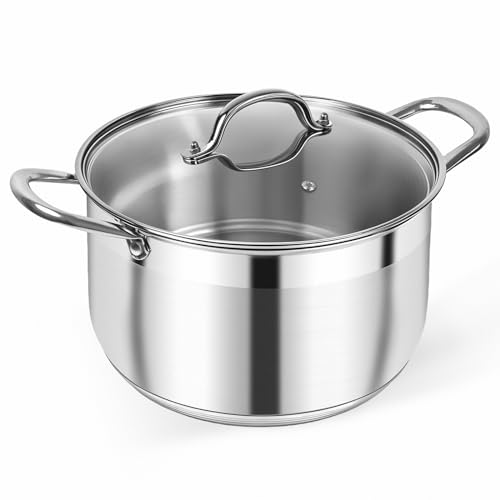
The Kirecoo 8-quart stainless steel stock pot is a useful choice for large batches. Its size suits soup, chili, pasta, broth, corn, and family meal prep. The stainless steel body gives it a clean, classic look that fits almost any kitchen. Its visible lid also lets you watch food without lifting the cover.
I like this pot for cooks who need room but do not want a huge restaurant-style vessel. The induction-ready base should make it a practical match for many induction cooktops, though your burner must be large enough for the base. The wide shape can help water boil more evenly than a narrow, tall pot. Use low to medium heat after boiling to protect food and reduce scorching.
Pros:
- Large 8-quart capacity for family meals
- Stainless steel construction is durable and easy to sanitize
- Visible lid helps monitor cooking progress
- Useful for soup, pasta, stock, and steaming tasks
- Induction-compatible design suits modern cooktops
- Neutral finish matches most cookware
Cons:
- Large size may feel heavy when full
- Stainless steel can show water spots
- Food may stick if the pan is not preheated correctly
My Recommendation
I recommend the Kirecoo for families, batch cooks, and anyone who often prepares soup or pasta. It gives you more working space than a small saucepan while keeping the design simple. For shoppers seeking the best pots for induction stove cooking at a useful family size, this is a strong starting point. Remember that a full 8-quart pot can be heavy, so use both handles and avoid overfilling it.
| Best for | Why |
|---|---|
| Family soup | The 8-quart size handles generous portions. |
| Pasta nights | The tall capacity gives noodles room to move. |
| Meal prep | It supports large batches with a simple steel body. |
SENSARTE 1.5-Quart Nonstick Saucepan

The SENSARTE 1.5-quart saucepan fills a small but important gap in the kitchen. It works well for oatmeal, gravy, melted butter, baby food, rice, and one or two servings of vegetables. The Swiss granite-style nonstick coating helps food slide out with less effort. A stay-cool handle adds comfort during short cooking jobs.
This is the type of pot I reach for when a large stock pot feels silly. The compact shape heats quickly and takes little storage space. Its induction-compatible base can work on suitable induction burners, but keep the burner size close to the pan base for best results. Use wood, silicone, or nylon tools to help preserve the coating.
Pros:
- Compact 1.5-quart size for small portions
- Nonstick surface supports easy release
- Stay-cool handle improves handling comfort
- Includes a lid for simmering and holding heat
- Useful for sauces, oats, and reheating food
- PFOA-free coating is a helpful shopping feature
Cons:
- Too small for family-size meals
- Nonstick coating needs gentle utensils and care
- Small base may not suit a very large induction zone
My Recommendation
I suggest this SENSARTE saucepan for students, couples, solo cooks, and small kitchens. It is also a smart second pot for a busy cook who needs to prepare sauce while another burner holds pasta. Among the best pots for induction stove use, this one stands out for quick, small tasks. Its value is strongest when you want simple cleanup and do not need much capacity.
| Best for | Why |
|---|---|
| Small servings | The 1.5-quart size avoids wasting space and energy. |
| Quick sauces | The nonstick surface helps with stirring and release. |
| Small kitchens | The compact body stores easily in a cabinet. |
6-Piece Stainless Steel Nonstick Cookware Set

This 6-piece stainless steel cookware set is aimed at shoppers who want several basic pieces at once. A set can simplify a first kitchen, a new apartment, or a cookware refresh. The nonstick cooking surfaces may make eggs, sauces, and lighter foods easier to handle. Its induction-ready design gives it flexibility across gas, electric, and induction cooking when the manufacturer’s instructions permit.
I see the main benefit in variety rather than one standout pot. A coordinated set can reduce the need to guess whether each piece works on your cooktop. Still, inspect the included sizes before buying because a six-piece count may include lids or accessories. Keep heat moderate, avoid metal tools, and hand-wash if the care instructions recommend it.
Pros:
- Provides several matching cookware pieces
- Useful for building a first kitchen
- Nonstick surfaces can simplify food release
- Stainless steel exterior offers a clean appearance
- Induction-compatible design adds cooktop flexibility
- May cost less than buying each piece separately
Cons:
- Included piece sizes may be limited
- Nonstick parts require careful maintenance
- Sets can take more cabinet space than expected
My Recommendation
I recommend this set for renters, students, newly married couples, and anyone starting from an empty kitchen. It can cover several daily tasks without making you shop for every item separately. If you want the best pots for induction stove cooking plus matching pans, this set may offer good value. Check the exact contents and warranty before ordering, since set layouts can differ by listing.
| Best for | Why |
|---|---|
| New kitchens | Several coordinated pieces cover common cooking jobs. |
| Budget updates | A set may reduce the cost of replacing old cookware. |
| Mixed meals | Multiple pieces let you cook sides and mains together. |
Amazon Basics 8-Quart Stainless Steel Stock Pot

The Amazon Basics 8-quart stock pot is a practical large-capacity option. It is made for soups, pasta, seafood, vegetables, and stock. The glass lid gives a clear view of the food and may help reduce unnecessary lid lifting. Its silver stainless steel finish looks familiar and works with most kitchen styles.
The listed oven-safe and dishwasher-safe features add convenience for busy homes. Always confirm the current care and temperature limits before moving the pot from the cooktop to the oven. On induction, the flat base should sit fully on the cooking zone for steady contact. Like most steel pots, it performs best when you control heat instead of leaving the burner on high.
Pros:
- Large 8-quart capacity suits group cooking
- Glass lid makes food easy to monitor
- Stainless steel body offers everyday durability
- Oven-safe design expands cooking options
- Dishwasher-safe care can save time
- Good choice for pasta and liquid-heavy meals
Cons:
- Glass lid needs care to avoid chips or cracks
- Large pot may be awkward in a small sink
- Steel cooking surfaces can need soaking after sticky foods
My Recommendation
This Amazon Basics pot suits families and budget-minded cooks who want a no-fuss stock pot. It is especially useful if you cook large pasta portions or freeze soup for later. I consider it one of the best pots for induction stove shoppers who value capacity and easy dishwasher cleanup. Its simple design may not satisfy someone seeking premium tri-ply construction, but it covers core tasks well.
| Best for | Why |
|---|---|
| Large pasta meals | The roomy body gives pasta and water space. |
| Busy households | Dishwasher-safe care can reduce cleanup work. |
| Oven recipes | The oven-safe design supports more cooking methods. |
Cuisinart 1.5-Quart Stainless Steel Saucepan

The Cuisinart 1.5-quart saucepan is a compact steel pot with broad kitchen appeal. It is sized for sauces, rice, oatmeal, small vegetables, and reheating. The stainless steel body avoids the care limits linked with many nonstick surfaces. Its cover helps keep moisture in while food simmers.
This pot also offers compatibility with induction, electric, and gas cooktops, which is useful if you move or replace your range later. The cool-grip handle should make short tasks more comfortable, while the oven-safe design adds flexibility. Stainless steel rewards good technique: warm the pot, add enough liquid or fat, and use moderate heat. That small routine can prevent many sticking problems.
Pros:
- Compact size works for sauces and single servings
- Stainless steel construction is durable
- Compatible with induction, electric, and gas cooktops
- Oven-safe design supports finishing recipes
- Dishwasher-safe construction simplifies cleanup
- Cool-grip handle improves everyday comfort
Cons:
- 1.5-quart capacity is not suited to large meals
- Steel may require technique to prevent sticking
- Metal finish can show fingerprints and spots
My Recommendation
I would choose this Cuisinart for cooks who want a dependable small pot instead of a coated one. It is a strong fit for sauces, grains, and daily reheating. For shoppers comparing the best pots for induction stove use, this model offers useful long-term versatility across several cooktops. It costs more than some basic small pots, but its broad compatibility and sturdy design support regular use.
| Best for | Why |
|---|---|
| Daily sauces | The small capacity gives good control over portions. |
| Multi-cooktop homes | It works across common cooktop types. |
| Long-term use | Stainless steel avoids replacing a worn coating. |
Tri-Ply Stainless Steel 6.5-Quart Stock Pot
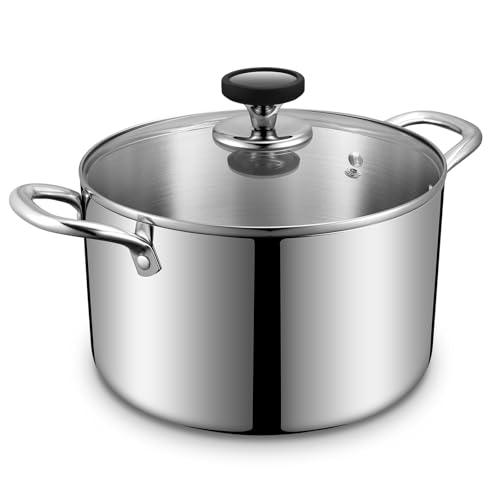
This 6.5-quart tri-ply stock pot targets cooks who want more even heat than a very thin pot may provide. Tri-ply construction commonly uses layers of stainless steel and a heat-conducting metal core. That layered design can help spread heat across the base and sides. The 6.5-quart capacity is large enough for soup, spaghetti, stew, and moderate batch cooking.
The visible lid makes it easier to watch simmering food. Double handles can also help when moving a partly filled pot, although I still advise using care with hot liquid. The pot is listed as dishwasher safe, but hand washing often keeps stainless steel looking better. If your induction burner is smaller than the pot base, the center may heat faster than the edges.
Pros:
- Tri-ply design may improve heat distribution
- 6.5-quart size balances capacity and handling
- Visible lid supports easy cooking checks
- Double handles help with lifting and control
- Dishwasher-safe design adds convenience
- Useful for pasta, soup, and stew
Cons:
- Tri-ply construction can make the pot heavier
- Higher sides may be less convenient for shallow foods
- Stainless steel still needs proper heat control
My Recommendation
This is a good match for serious home cooks who prepare food often but do not need a very large 8-quart pot. I like the middle-ground size for a couple, small family, or meal-prep cook. It deserves a place among the best pots for induction stove cooking when even heating and sturdy handling matter. Consider it a useful upgrade from a thin basic pot, especially if you simmer often.
| Best for | Why |
|---|---|
| Even simmering | Tri-ply layers can spread heat more consistently. |
| Small families | The 6.5-quart size offers room without excess bulk. |
| Frequent cooking | Strong handles and steel construction suit regular use. |
BEZIA 6-Quart Nonstick Stock Pot

The BEZIA 6-quart nonstick stock pot is designed for cooks who want generous space with easier food release. Six quarts works well for soup, curry, stew, beans, and pasta for a small family. The nonstick interior can make stirring and serving less stressful. Its included lid helps hold steam and heat during a slow cook.
This pot may appeal to anyone who dislikes scrubbing stainless steel after a long simmer. Nonstick cookware needs a softer touch, so I would avoid metal spoons, sharp scraping, and high empty-pan heat. Confirm the exact oven and dishwasher instructions before use. On an induction range, place it flat and avoid dragging it across the glass surface.
Pros:
- 6-quart capacity suits family-size recipes
- Nonstick interior supports easier food release
- Useful for soup, curry, beans, and stew
- Lid helps retain moisture during simmering
- Induction-compatible design fits modern kitchens
- Usually easier to clean than uncoated steel
Cons:
- Coating can wear if used with metal tools
- High heat may shorten nonstick life
- Large filled pot can be difficult to lift
My Recommendation
I recommend BEZIA for families who cook wet dishes and prefer simple cleanup. It is especially useful for cooks who are new to stainless steel and want a more forgiving interior. Among the best pots for induction stove use, this one favors comfort and easy release over searing strength. Buy it if you are willing to follow nonstick care rules and replace coated cookware when the surface shows serious wear.
| Best for | Why |
|---|---|
| Easy cleanup | The nonstick surface can reduce stuck-on food. |
| Soup and stew | Six quarts gives wet recipes plenty of room. |
| New cooks | The forgiving surface makes daily cooking less stressful. |
P&P CHEF 4-Quart Tri-Ply Stock Pot

The P&P CHEF 4-quart tri-ply stock pot is a practical middle-size option. It gives more room than a saucepan but takes less space than a large stock pot. The tri-ply build is intended to support balanced heating, which can help with rice, soup, pasta, and sauce. Its lid keeps heat in and can help food cook with less liquid loss.
I see this size as a sweet spot for couples and small families. It is easier to lift and wash than an 8-quart model, especially after cooking a thick stew. Stainless steel has no delicate coating, so you can use it for many years with normal care. To reduce sticking, let food release naturally instead of scraping too soon.
Pros:
- Useful 4-quart size for everyday family meals
- Tri-ply design supports steady heat distribution
- Stainless steel interior handles many cooking tools
- Smaller footprint fits modest kitchens
- Lid helps control moisture and simmering heat
- Good for cooks who want a durable uncoated pot
Cons:
- Not large enough for big-batch canning or stock
- Steel may need soaking after heavy cooking
- Tri-ply construction may cost more than basic steel
My Recommendation
I recommend this P&P CHEF pot for couples, small families, and cooks who want one flexible daily pot. The 4-quart capacity feels less bulky than a stock pot but still handles real meals. It is one of the best pots for induction stove users who want tri-ply construction in a manageable size. Its value is strongest for steady stovetop use rather than very large batch cooking.
| Best for | Why |
|---|---|
| Couples | Four quarts covers meals without excess size. |
| Small kitchens | The compact body is easier to store and wash. |
| Daily cooking | Tri-ply steel supports soup, rice, and pasta tasks. |
CAROTE 8-Quart Full-Clad Tri-Ply Stock Pot

The CAROTE 8-quart full-clad tri-ply stock pot is built for cooks who need both capacity and heat control. Full-clad construction means the layered material extends through the pot body rather than sitting only in the base. In daily cooking, that design can help the sides respond more evenly when you simmer or reduce food. The 8-quart size is well suited to family gatherings and batch recipes.
This pot makes sense for a kitchen that cooks from scratch often. It can handle soup, stock, pasta, stew, and large vegetable batches. The tradeoff is weight, since a large full-clad pot with food inside becomes a serious load. Use the handles with both hands, keep the pot centered on the induction zone, and allow it to cool before washing.
Pros:
- Full-clad tri-ply design supports even heating
- Large 8-quart capacity handles batch cooking
- Stainless steel build offers strong durability
- Useful for stock, soup, pasta, and stew
- Premium structure may reduce hot spots
- Works well for cooks who use a pot often
Cons:
- Full size and weight may challenge some users
- Higher price than basic stock pots is possible
- Stainless steel requires care to keep it bright
My Recommendation
I recommend CAROTE to experienced home cooks who value full-clad construction and large capacity. It is a strong choice when you make stock, sauce, or soup in big batches and want a pot that feels substantial. For shoppers searching for the best pots for induction stove cooking with premium-style heat control, this model deserves close attention. Its value depends on how often you cook large meals, because occasional users may not need the extra weight.
| Best for | Why |
|---|---|
| Batch cooking | Eight quarts gives plenty of working capacity. |
| Serious home cooks | Full-clad layers support more even heating. |
| Stock makers | The deep body holds bones, vegetables, and liquid. |
SENSARTE Ceramic Nonstick Stock Pot

The SENSARTE ceramic nonstick stock pot is available in several capacities, from a small 2.6-quart option to a very large 11-quart model. That range makes it easier to choose a size that matches your cooking habits. The ceramic-style nonstick surface is designed for easy release and simple cleanup. It is also marketed as free of PFOA, PFAS, and PTFE, which may appeal to shoppers seeking a different coating type.
This pot is a good fit for soup, pasta, stew, and gentle simmering. Ceramic nonstick cookware still needs care, even when its coating is described as durable. Use low or medium heat, soft utensils, and avoid sudden temperature changes. The white finish looks bright, but it may show stains faster than dark cookware.
Pros:
- Several sizes support different household needs
- Ceramic nonstick surface promotes easy food release
- Useful for soup, stew, pasta, and casseroles
- Listed without PFOA, PFAS, and PTFE
- Induction-compatible design suits modern ranges
- Light interior makes food easy to see
Cons:
- Ceramic coating can lose performance over time
- White exterior may show marks and stains
- Large sizes can be heavy when filled
My Recommendation
I recommend this SENSARTE pot for cooks who prefer ceramic nonstick cookware and want size choices. It works well for gentle recipes where easy release matters more than high-heat browning. Among the best pots for induction stove options, it is appealing to families that want a roomy pot with a bright interior. Follow the care guide closely, since the coating will last longer with mild heat and soft tools.
| Best for | Why |
|---|---|
| Ceramic coating fans | The interior offers an alternative to traditional nonstick. |
| Different family sizes | Several capacity choices make matching easier. |
| Easy-release meals | The smooth surface helps with soup and casserole cleanup. |
How to Choose the Best Pots for Induction Stove
Choosing induction cookware starts with one simple test. A magnet should stick firmly to the bottom of the pot. Induction cooktops create a magnetic field, so the cookware needs a magnetic layer, usually cast iron, carbon steel, or magnetic stainless steel. A pot may look like stainless steel and still fail if its base is not magnetic.
Next, check the bottom shape. A flat base makes full contact with the glass cooking surface. A rounded or badly warped base may heat poorly or cause the cooktop to shut off. The pot should also match the size of your induction zone. A small pan on a large zone may not heat across the whole surface, while a very large pot may extend beyond the active area.
Material
Stainless steel is a popular choice because it resists rust and handles daily use well. Tri-ply and full-clad designs add layers that may spread heat more evenly. Nonstick pots make cleanup easy, but their coatings need gentle care. Ceramic nonstick cookware offers another smooth surface, yet it also needs moderate heat and soft utensils.
Capacity
A 1.5-quart saucepan suits sauces and small servings. A 4-quart pot works well for couples and small families. A 6- to 8-quart stock pot is better for pasta, soup, and meal prep. Do not fill any pot to the rim. Leave room for bubbling liquid, stirring, and safe lifting.
Lid and Handles
A good lid should sit securely and have a handle that stays comfortable. Glass lids help you see food, but they need more care than solid steel lids. Side handles should feel firm and offer enough room for an oven mitt. When a pot is full of hot liquid, even a strong handle does not remove the need for caution.
Cleaning and Care
Read the care label before using the dishwasher or oven. Stainless steel can often handle stronger tools, but gentle cleaning still protects its finish. Never heat an empty nonstick pot on high. Avoid sudden cold water on a hot pan, as thermal shock can damage some cookware and glass lids.
Induction Cooking Tips for New Users
Induction heat moves quickly, so start lower than you would on gas. A setting of medium may bring water to a boil faster than expected. Once food boils, lower the setting to maintain a calm simmer. This saves energy and helps protect both food and cookware.
Keep the bottom of the pot clean and dry. Small grains of salt, burnt food, or grit can scratch a glass cooktop when you move the pan. Lift cookware instead of sliding it. I also suggest keeping a magnet near your kitchen drawer so you can quickly check any new pot before buying it.
Some induction ranges make a soft hum or clicking sound. That can be normal, especially with layered cookware or certain power settings. If the cooktop shows an error, center the pot and confirm that the base is magnetic. Always follow the instructions for your exact range, since burner controls vary by brand.
FAQs Of best pots for induction stove
What makes a pot induction compatible?
An induction-compatible pot has a magnetic base. Test it with a magnet before buying. The magnet should stick firmly to the bottom, not just the side.
Can stainless steel pots work on induction?
Yes, but not every stainless steel pot works. The base must contain magnetic metal or a magnetic induction plate.
Are nonstick pots safe for induction stoves?
Yes, if the pot has an induction-ready base. Use low to medium heat and soft utensils to protect the nonstick coating.
What pot size is best for induction cooking?
Choose a size that matches your burner and cooking needs. Small saucepans suit sauces, while 6- to 8-quart pots suit soup, pasta, and meal prep.
Do induction pots heat faster?
Induction can heat compatible cookware very quickly. Start with moderate power and lower it after the food reaches a boil.
Final Verdict: Which Should You Buy?
For most families, I would choose the CAROTE 8-quart full-clad tri-ply pot for its capacity and heat control. For small tasks, the Cuisinart or SENSARTE saucepan is easier to manage.
The best pots for induction stove cooking match your burner, budget, and meal size. Check magnetic compatibility, use gentle care, and choose a flat base for reliable results.