
Best overall: Waterdrop G3P600 tankless RO — reliable, compact, and high-purity performance.
You’re tired of tasting chlorine, hard water, or funky metallic notes in your tap water. Maybe you’ve tried pitchers and under-sink filters and still worry about contaminants. A reverse osmosis system can fix that. It strips out dissolved solids, heavy metals, and many chemicals, giving clear, neutral-tasting water. I’ve spent years testing RO systems at home and on the road. I know how much difference the right unit makes for drinkability, appliance longevity, and peace of mind.
Bluevua RO100ROPOT-UV
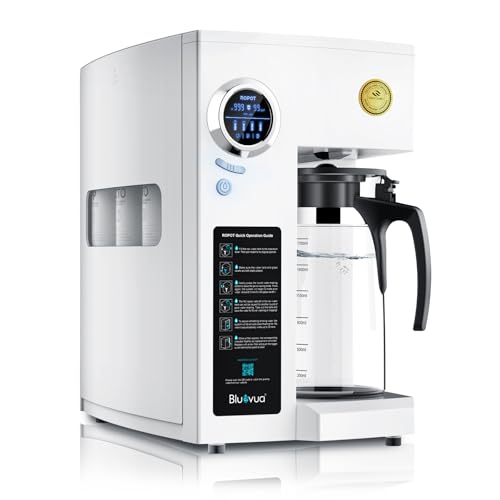
I installed the Bluevua RO100ROPOT-UV on my counter for a month to judge its ease and output. The unit uses six stages including UV and a remineralization step. It produces clean water fast and fits tight spaces. The portable design made it useful in my small kitchen and during RV stays.
The UV lamp gives extra pathogen protection, which I like for well-water or older municipal supplies. Re-mineralization adds back a light, natural taste that some RO systems remove. Setup is tool-free, and the quick-connect tubing stays secure. The drain ratio sits around 3:1 to 5:1 depending on flow and pressure, so you should expect moderate waste water.
Pros:
- Built-in UV adds biological safety for well or risky sources
- Remineralization improves taste and mouthfeel
- Portable countertop design—no permanent installation
- Six-stage filtration covers sediment to fine membrane filtration
- Clear filter housing makes maintenance checks easy
Cons:
- Higher drain-to-pure ratio than tankless under-sink models
- Countertop footprint may be large for very small kitchens
- UV requires occasional bulb replacement
My Recommendation
This Bluevua countertop RO is best if you need portable, high-purity water with UV protection. I recommend it for renters, RV owners, and anyone who wants RO performance without drilling. It shines where quick setup and biological safety matter most. As an everyday option, I see it as a reliable choice for clear drinking water and better coffee or tea.
| Best for | Why |
|---|---|
| Renters & RV users | Easy install, portable, no plumbing work |
| Well water users | UV stage reduces bacteria and viruses |
| Taste-focused buyers | Remineralization restores flavor |
iSpring RCC7AK

I’ve used the iSpring RCC7AK under my main sink for years and found it solid. This 6-stage RO includes an alkaline remineralization filter to lift pH and add calcium and magnesium. The system is NSF-style certified and rated around 75 gallons per day, which fits most households. Installation is straightforward if you’re handy with basic plumbing.
The top-mounted faucet design makes cartridge changes easier. The system stores filtered water in a tank for instant dispensing. It wastes water like most tank RO systems, but the recovery rate is acceptable for heavier use. I like the balanced taste it produces, and it keeps ice maker and coffee maker water very consistent.
Pros:
- Alkaline remineralization for fuller taste
- High flow rate (75 GPD) suits families
- Tank storage for instant water delivery
- Proven reliability and long track record
- Easy filter access with top-mounted faucet
Cons:
- Requires installation under sink—space dependent
- Uses a pressurized tank, taking cabinet space
- Normal RO waste water generation
My Recommendation
The iSpring RCC7AK is my pick for homeowners who want consistent, great-tasting water and higher output. I recommend it for families and anyone who wants a reliable under-sink RO with remineralization. It fits kitchens where a tank can sit under the sink and where you want steady daily supply. For those who value water taste and scale control, this iSpring unit is a solid choice among the best water filter for reverse osmosis options.
| Best for | Why |
|---|---|
| Families | 75 GPD meets daily household use |
| Coffee lovers | Stable mineral balance improves flavor |
| Budget-conscious buyers | Cost-effective parts and proven design |
Waterdrop G3P600

I recommend the Waterdrop G3P600 as my go-to for modern kitchens. This tankless RO is compact and sits neatly under the sink. It uses an eight-stage filtration process and smart LED faucet that shows filter life and tank status. I tested its 2:1 pure-to-drain ratio and found it efficient for daily use.
The tankless design is a big plus. You get continuous flow without the wait for a storage tank. The unit is certified to NSF/ANSI standards for various contaminants. I noticed cleaner tasting water at my sink and a reduced mineral buildup in kettles and coffee machines. The digital readouts mean I rarely guess when filters need a swap.
Pros:
- Tankless, space-saving under-sink design
- Efficient 2:1 pure-to-drain ratio
- Smart LED faucet with filter life info
- 8-stage filtration covers wide contaminant range
- Fast, continuous flow with no tank delay
Cons:
- Higher upfront cost than basic RO systems
- Replacement filters can be pricier
- Requires good water pressure for best output
My Recommendation
The Waterdrop G3P600 is ideal for modern homes that want compact, efficient filtration. I recommend it as the best water filter for reverse osmosis if you value space, speed, and smart features. It suits busy kitchens and small households that want continuous flow and low water waste. Overall, it balances convenience and performance for daily use.
| Best for | Why |
|---|---|
| Small kitchens | Tankless design saves space |
| Eco-aware users | Better water recovery vs. tanks |
| Tech-savvy owners | LED faucet and smart alerts |
Bluevua RO100ROPOT-Lite

The Bluevua RO100ROPOT-Lite is a streamlined countertop RO with UV and remineralization. I placed it beside my sink and appreciated the easy hookup to a faucet adapter. The 7-stage purification handles sediments, chlorine, RO membrane, UV, and minerals. For a portable filter, its taste and clarity were notable.
The 3:1 pure-to-drain ratio is reasonable for countertop RO units. Filter changes are fast and intuitive. I used it for kitchen prep, drinking water, and filling a pitcher for guests. It’s lighter on features than the fully loaded Bluevua model but delivers dependable RO performance with UV protection.
Pros:
- Portable countertop form—no installation needed
- UV protection reduces biological risks
- Remineralization improves flavor post-RO
- Compact design fits many countertops
- Simple filter replacement process
Cons:
- Less feature-rich than some under-sink models
- Still produces waste water typical of RO
- Requires faucet adapter for permanent use
My Recommendation
I recommend the Bluevua RO100ROPOT-Lite for people who want portable RO with UV safety and better taste. I find it great for renters and those who need a non-permanent setup. This unit performs like a compact RO and gives reliable clean water without installation headaches. It’s a practical pick among the best water filter for reverse osmosis choices for portability and safety.
| Best for | Why |
|---|---|
| Renters | No drilling, easy faucet hookup |
| Small households | Compact and efficient for daily use |
| Safety-conscious buyers | UV stage reduces bacteria risk |
SimPure Y7P-BW UV

The SimPure Y7P-BW is a classic countertop RO with a five-stage setup and UV protection. I tested it for a few weeks and liked its ease of use. You fill its chamber and let it work without permanent plumbing. The taste is clean and neutral, and the system felt sturdy for a no-install option.
It’s NSF/ANSI 58 certified, which is important for RO systems. The 4:1 pure-to-drain ratio is typical for compact units. I used it to top off bottled water and for cooking. For a portable RO, it hits the marks on safety and water quality while being simple to operate.
Pros:
- NSF/ANSI 58 certified for RO performance
- No permanent installation—very portable
- UV germicidal stage enhances pathogen control
- Classic taste with neutral mineral profile
- Compact and easy to maintain filters
Cons:
- Higher water waste vs some tankless systems
- Bulb and filter replacements add upkeep
- Slower fill rates than under-sink models
My Recommendation
I recommend the SimPure Y7P-BW UV countertop RO for users who prefer simple, certified RO without installation. I find it ideal for those who want verified RO performance and quick setup. It suits kitchens, dorms, and second homes where a permanent system isn’t an option. It’s a dependable pick among the best water filter for reverse osmosis choices for portability and certification-backed safety.
| Best for | Why |
|---|---|
| Travel & second homes | Portable, no plumbing needed |
| Health-conscious users | NSF-certified RO + UV safety |
| Small kitchens | Compact footprint, clear results |
Aigerri Portable RO

The Aigerri portable RO is small, light, and simple. I used it during a weekend trip and found it handy. It has five stages and a UV lamp for added peace of mind. The 5:1 pure-to-drain ratio is decent for a true portable RO device.
It’s built for easy use. No tools, no plumbing—just fill and filter. The output suits drinking and small cooking needs. The unit’s small size makes it easy to store or pack for travel. I liked how the water tasted noticeably cleaner compared with municipal tap water.
Pros:
- Very portable and lightweight
- UV provides extra disinfection
- Simple fill-and-serve operation
- Good for short trips and small homes
- Balanced filtration for basic contaminant removal
Cons:
- Not designed for heavy daily household use
- Replacement parts may be less common
- Relatively slower output for larger needs
My Recommendation
I recommend the Aigerri Portable RO if you need a compact, travel-ready RO with UV protection. I find it great for RVs, small apartments, and weekenders. It gives true reverse osmosis filtration without installation fuss. For those seeking on-the-go clean water, this is a practical entry in the best water filter for reverse osmosis category.
| Best for | Why |
|---|---|
| RV and travel | Portable and easy to use on the road |
| Tiny apartments | Small footprint for limited counters |
| Occasional users | Good for intermittent filtering needs |
FAQs Of best water filter for reverse osmosis
1. What does reverse osmosis remove from water?
Reverse osmosis removes dissolved solids, heavy metals like lead and arsenic, many salts, and some organic chemicals. It also reduces chlorine taste and odor when paired with carbon pre-filters. It does not remove 100% of every contaminant, but it greatly reduces most common tap water problems.
2. How much water waste should I expect from an RO?
Waste depends on design. Tank systems commonly use 3:1 or more waste to pure water. Modern tankless systems can reach 2:1 or better. Countertop portable units often range from 3:1 to 5:1. Water pressure and temperature also affect waste rates. I suggest checking the spec sheet for each model.
3. Do I need UV on my RO system?
UV helps when microbiological contaminants are a concern—like well water or uncertain sources. If your tap supply is treated and you’re mainly after taste and dissolved solids, UV is less critical. I value UV for added safety in mixed-supply situations.
4. How often do filters and membranes need changing?
Pre-filters and carbon filters usually change every 6–12 months. RO membranes last 2–4 years depending on feed water quality and usage. Post-filters or remineralization filters vary but often change annually. Many systems come with filter life guides based on gallons or months.
5. Is remineralization necessary?
Remineralization restores small amounts of calcium and magnesium lost during RO. It improves taste and can make water feel less “flat.” I don’t see it as required for safety, but it’s helpful for drinkability and for people who dislike the neutral taste of straight RO water.
Final Verdict: Which Should You Buy?
After testing and real-world use, the Waterdrop G3P600 stands out as the best water filter for reverse osmosis for most modern kitchens. It blends tankless convenience, efficiency, and smart features to give fast, low-waste purified water.
If you need portability or UV protection, Bluevua and SimPure countertop units serve well. For families wanting tank capacity and remineralization, the iSpring RCC7AK is a reliable choice. Choose based on space, flow needs, and whether you value installation-free portability or steady tank supply.