
A typical kitchen garbage can holds about 10 to 13 gallons, with many options from 5 to 50+ gallons.
I’ve spent years helping people pick the right trash can for busy kitchens, small apartments, and family homes. This guide explains how big is a kitchen garbage can, which sizes fit different households, how to measure capacity, and practical tips from real-use experience so you can choose the best fit with confidence.
:max_bytes(150000):strip_icc()/SPR-trash-can-sizes-6830748-303bdbe0c16f4e0abc4ca2fed989c394.png)
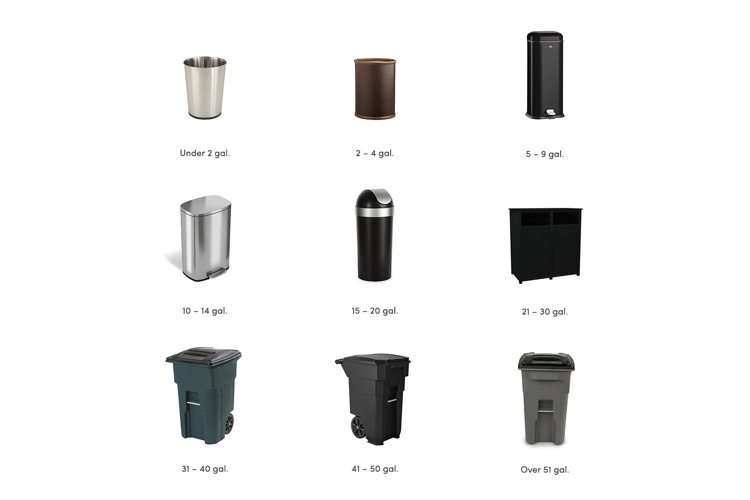
Common kitchen trash can sizes and what they mean
Most kitchen cans are sized by volume in gallons or liters. Size affects how often you empty it, what bag fits, and how the can fits in your space.
- 5 to 8 gallons — Good for small kitchens, dorm rooms, or countertop use. Compact and easy to hide.
- 10 to 13 gallons — The common standard for many homes. Works well for one to three people.
- 15 to 20 gallons — Better for families who cook often or generate more waste.
- 20 to 30 gallons — For larger households or open kitchens with heavy use.
- 30 to 50+ gallons — Rare in residential kitchens; used when bulk waste or space allows.
How big is a kitchen garbage can in practice depends on your routine, not just the number. A 13-gallon can may feel tiny if you cook daily and compost, or large if you rarely cook.
Typical dimensions by type
Volume tells how much waste fits, but dimensions tell how it fits under cabinets or in corners. Below are rough typical sizes. Measure your space first.
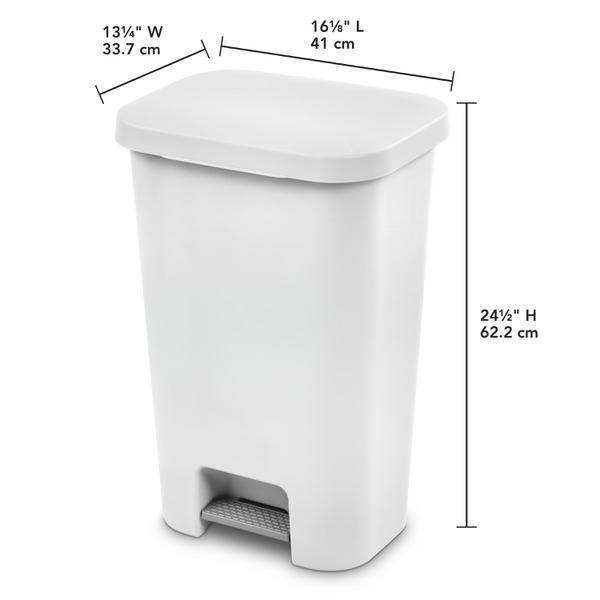
- Step trash can, 13 gal — About 12 to 14 inches wide, 10 to 12 inches deep, 25 to 28 inches tall.
- Slim/rectangular 10–13 gal — Roughly 10 inches wide, 12 to 18 inches deep, 24 to 27 inches tall.
- Under-sink pull-out, 10–20 gal — Built to fit cabinet width; bin widths vary from 8 to 18 inches.
- Bucket-style 5–8 gal (countertop) — 8 to 11 inches wide, 8 to 11 inches deep, 10 to 16 inches tall.
- Large utility can 30+ gal — 18 to 24 inches wide, 18 to 24 inches deep, 30 to 40 inches tall.
If you ask how big is a kitchen garbage can for under-cabinet use, focus on height and width first. Many models list exact internal and external dimensions.
How to choose the right size for your kitchen
Choosing the right size means matching habits and space. Ask a few simple questions and test an option before you buy.
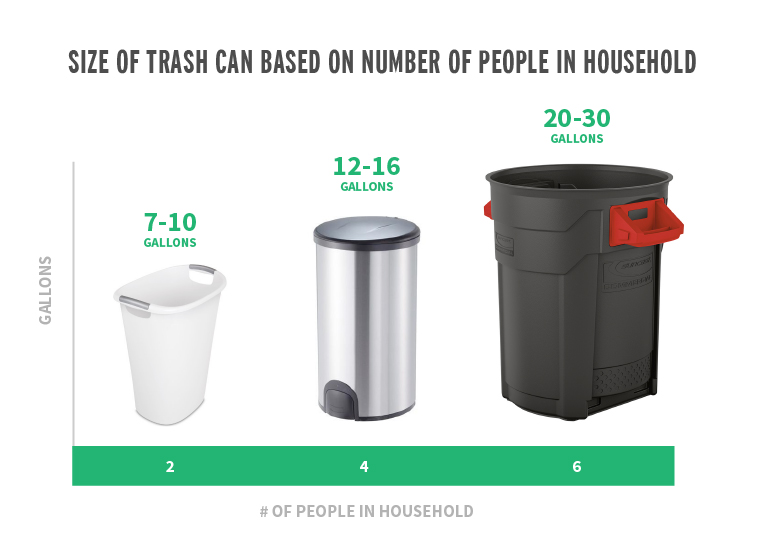
- Household size — One person can usually use 10–13 gallons; a family of four often needs 20+ gallons.
- Cooking frequency — Frequent cooks produce more food waste. Go bigger if you cook fresh meals daily.
- Recycling and composting — If you separate waste, smaller kitchen cans work because waste is sorted.
- Emptying frequency — If you prefer weekly trash days, select a larger can to avoid overflow.
- Space constraints — Measure cabinet openings, floor corners, and walkway clearances.
From experience, people often overestimate how large a can they need. Start with a medium can and adjust after two weeks.
Measuring and testing capacity: how to measure your trash needs
A practical test beats guesswork. Measure your real waste over a set period.
- Step 1 — Track your weekly trash for two weeks in daily bags or a box.
- Step 2 — Note how many standard kitchen bags you use each week.
- Step 3 — Divide total weekly gallons by the number of trash pickups to find required bin volume.
Example: If you use four 13-gallon bags per week and have two pickups, 26 gallons capacity is ideal. I once tracked my household waste and realized a 13-gallon can was enough because most food scraps went to compost. Tracking saved money and space.

Garbage bags, fit, and compatibility
Bag confusion leads to wasted money and poor fit. Match bag size to can volume and shape.
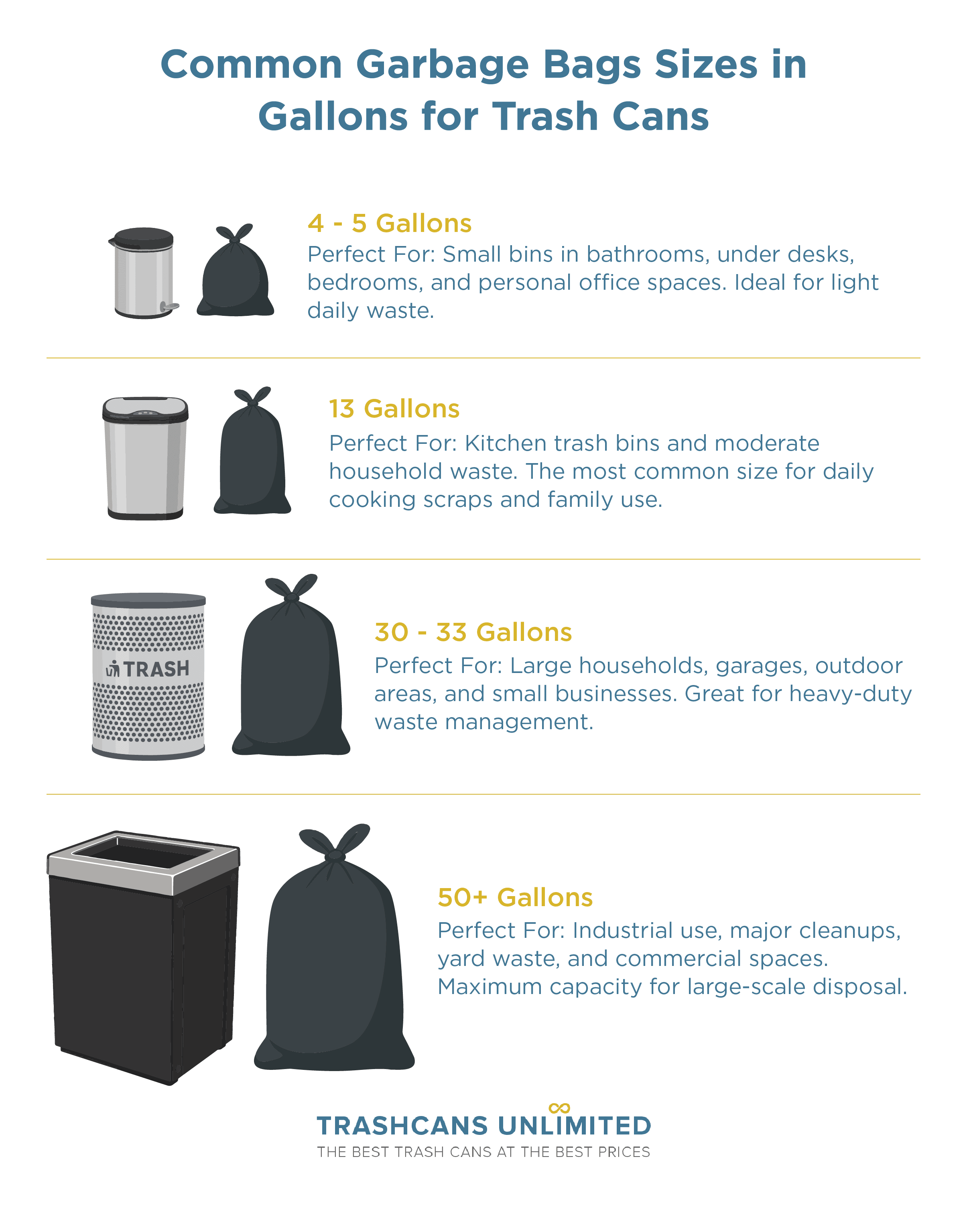
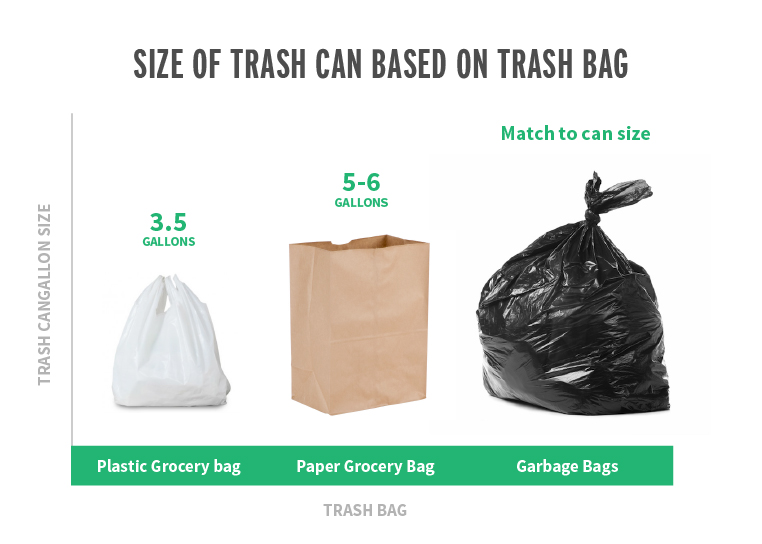
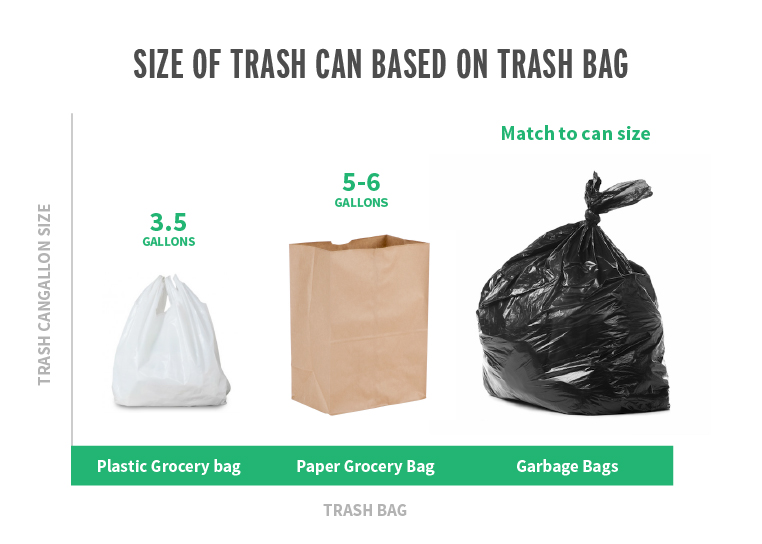
- Use gallon sizing to pick bags. A 13-gallon can needs 13-gallon bags or slightly larger.
- For slim cans, check bag circumference; some bags are too wide and bunch up.
- Drawstring bags help with sealing and lifting heavier loads.
- Consider reusable liners or washable can liners for odor control and fit.
If you’ve ever bought bags that slip into the can, you know it’s annoying. I learned to test one bag before bulk buying to ensure a good fit.
Placement, maintenance, and practical tips
Where you place the can affects hygiene and convenience. Small changes help daily life.
- Best spots — Near prep zones, not under the sink if smell is an issue, and not blocking traffic.
- Odor control — Empty often, use liners, baking soda, or charcoal pouches to reduce smells.
- Cleaning — Rinse and disinfect the can monthly to avoid stains and pests.
- Accessibility — For people with mobility limits, choose step or touch-free models that open easily.
I positioned my can near the prep area and added a compost bucket on the counter. It reduced trips to the can and kept food scraps separated.
Environmental and cost considerations
Choosing how big is a kitchen garbage can also affects waste costs and the planet. A better fit often reduces waste and saves money.
- Material longevity — Steel and thick plastic last longer and reduce replacement waste.
- Buy the right size — Oversized cans invite more waste; undersized cans lead to extra trips and bag use.
- Local rules — Some areas require separate recycling or compost bins; check local guidelines.
- Cost trade-offs — Cheaper cans may fail sooner. A slightly pricier durable can can save money long term.
Be honest: a can that suits your routine reduces needless bag purchases and landfill trips.
Quick search questions people also ask
Here are short answers to common quick queries related to how big is a kitchen garbage can.
What size garbage can fits under a standard kitchen cabinet?
Most under-cabinet pull-out bins are 10 to 20 gallons and built to fit 12- to 18-inch-wide cabinets. Measure cabinet opening height and depth before buying.
Is a 13-gallon can big enough for a family?
A 13-gallon can is enough for one to three people who empty often or compost. Families of four or more usually prefer 20+ gallons.
How do I measure if a bag will fit my bin?
Check the bag’s width and height compared to the can’s rim circumference and depth. Test a single bag first to avoid bulk returns.
Frequently Asked Questions of how big is a kitchen garbage can
What is the most common kitchen trash can size?
The most common size is 10 to 13 gallons. It suits many households and fits standard kitchen layouts.
How tall is a typical 13-gallon trash can?
A typical 13-gallon trash can is about 24 to 28 inches tall. Exact height varies by lid and design.
Can a small kitchen use a 5-gallon can effectively?
Yes, a 5-gallon can works well for small kitchens or for those who compost and recycle regularly. It’s best for quick emptying routines.
Should I size my can by household members or by cooking habits?
Both matter, but cooking habits often decide. Frequent cooking and food prep create more waste than household count alone.
How can I tell if my garbage can will fit a standard kitchen bag?
Compare the can’s volume to the bag’s gallon rating and test one bag before buying in bulk. Look for bag dimensions that list width and height for best results.
Conclusion
Choosing how big is a kitchen garbage can comes down to matching capacity to your space and habits. Measure your space, track your waste for a short period, and pick a size that reduces trips without crowding your kitchen. Small tests, like trying a bag fit and tracking weekly trash, will save time and money.
Try one change this week: measure how many bags you use and compare that to can sizes here. If this helped, leave a comment, subscribe for more practical home tips, or share your trash can story.