
Coat your scoop with oil, water, or chill the dough to stop sticking fast.
I bake often and I have solved the common kitchen pain: how to keep cookie dough from sticking to the scoop. I will walk you through proven tricks, share mistakes I made, and show easy steps that work for any cookie recipe. Expect simple tools, quick fixes, and a repeatable routine so your scoop slides cleanly every time.
Why cookie dough sticks to the scoop
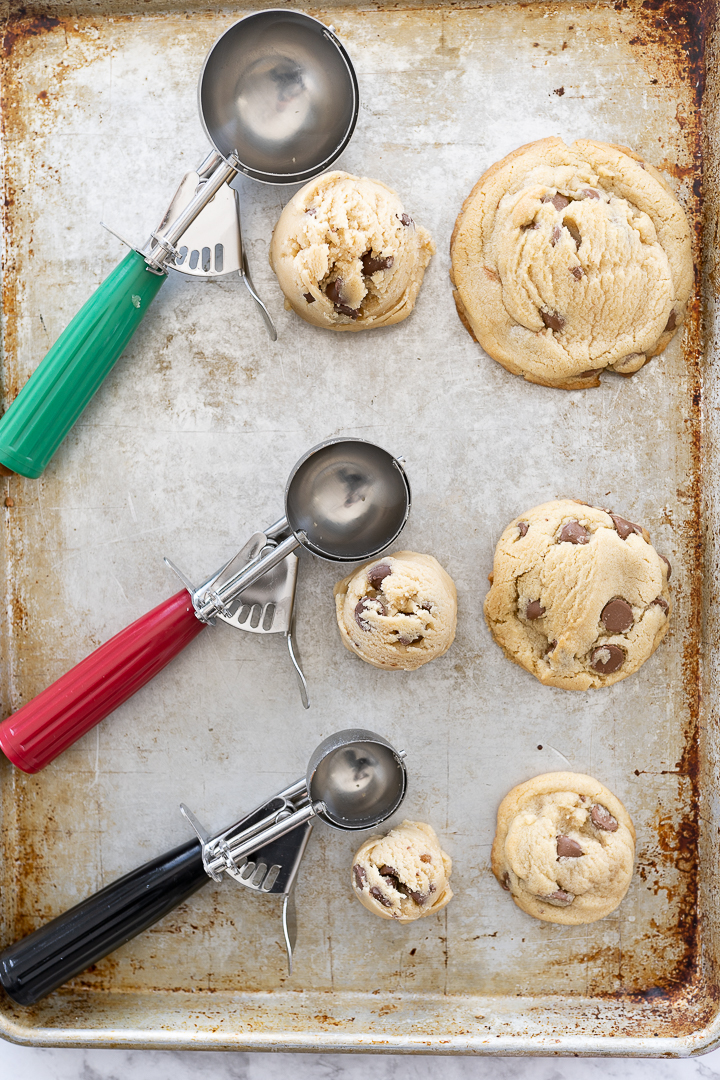
Cookie dough sticks to scoops for a few clear reasons. Many recipes have high butter or sugar content. Sticky dough is soft and tacky at room temperature. The scoop meets the dough and creates suction, so the dough clings.
Understanding why helps you pick the right fix. Cold dough is firmer and less sticky. A thin barrier between dough and scoop stops adhesion. Small changes make scooping faster and cleaner.
Tools and scoops that reduce sticking
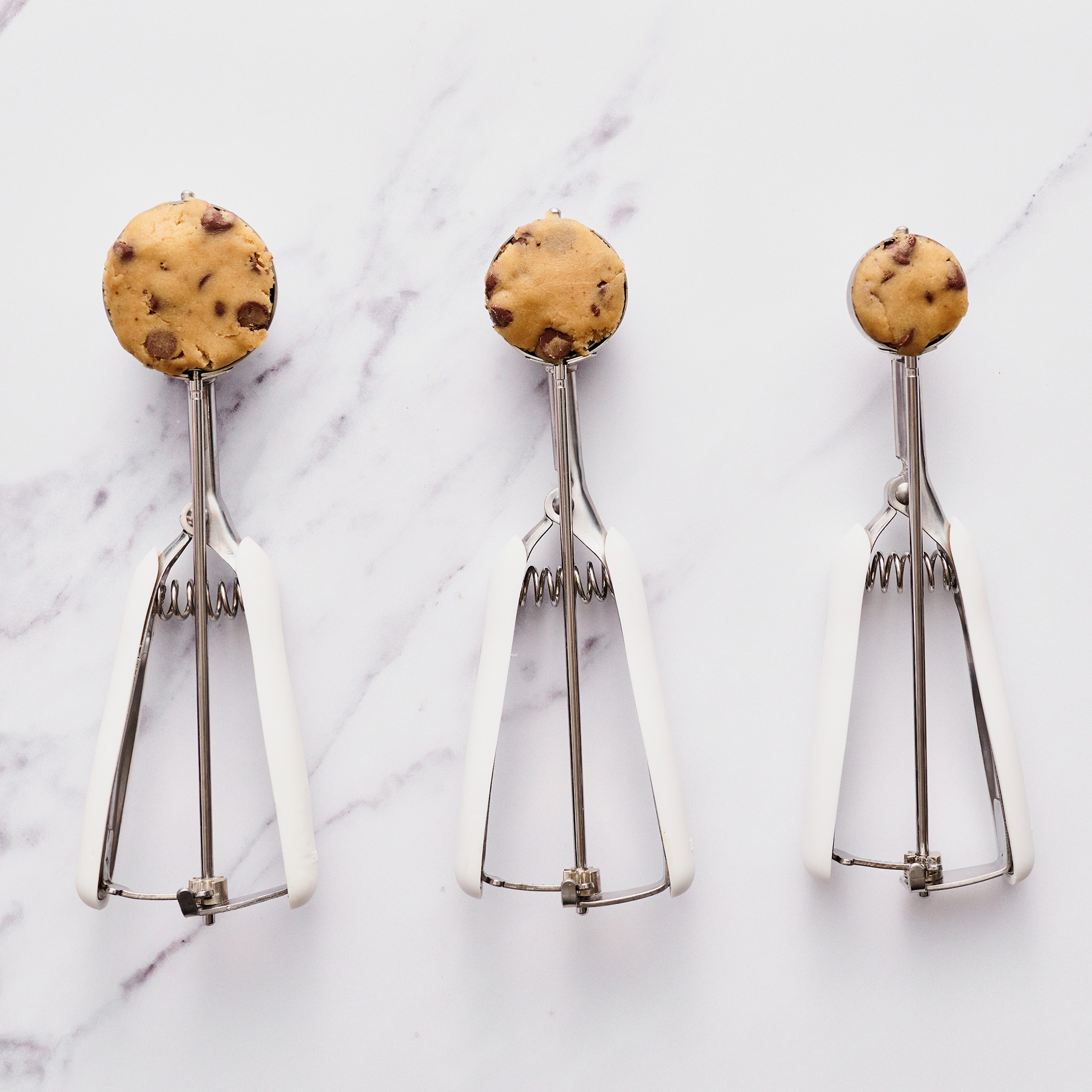
Choose the right tool to make scooping easier. Use a sturdy cookie scoop with a release arm for heavy dough. Try a silicone scoop for sticky dough; silicone is less likely to cling. A standard spring-loaded metal scoop works well when paired with a quick prep step like oiling or wetting.
I keep two sizes on hand. One metal scoop for uniform cookies. One silicone scoop for soft or high-moisture dough. Swap tools based on dough texture. This habit cut my baking time in half.

Proven methods to keep dough off the scoop
Use one or combine several methods for best results. These are simple and reliable.
- Chill the dough. Cool dough for 15 to 30 minutes to firm it. Firm dough releases easily from the scoop.
- Lightly oil the scoop. Rub a small amount of vegetable oil on the scoop before each batch. The oil forms a thin barrier and helps the dough glide off.
- Dip the scoop in hot water. Heat soft water, dip and shake off excess, then scoop. Warm water briefly melts surface dough so it slides free.
- Use nonstick spray. Spray the scoop with a light coating of cooking spray. Reapply every few batches.
- Flour the scoop. Dust the scoop with a little flour for very wet doughs. Tap off extra flour to avoid changing cookie texture.
- Wet your hands. For sticky scoops, run fingertips under water and lightly touch the scoop. This can be faster in a busy kitchen.
I use oil for sugar cookie dough and hot water for chocolate chip. Mixing methods gives consistent results. Try one method, then tweak for your recipe.
Step-by-step process for consistent scooping
Follow these steps for repeatable success. The steps answer how to keep cookie dough from sticking to the scoop with a clear routine.
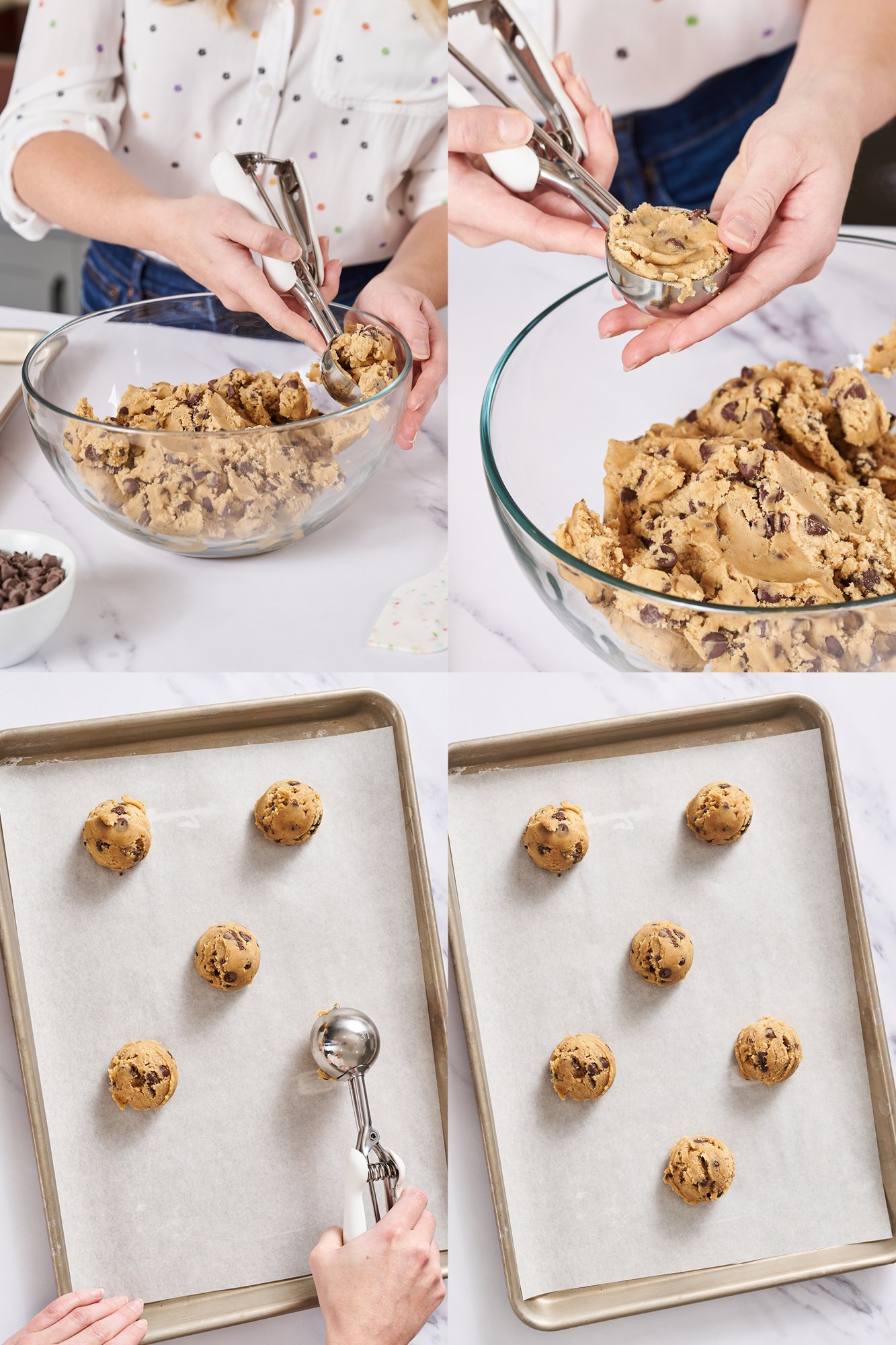
- Chill or rest the dough for at least 15 minutes if recipe allows.
- Pick your scoop and prep it: oil, spray, or dip in hot water.
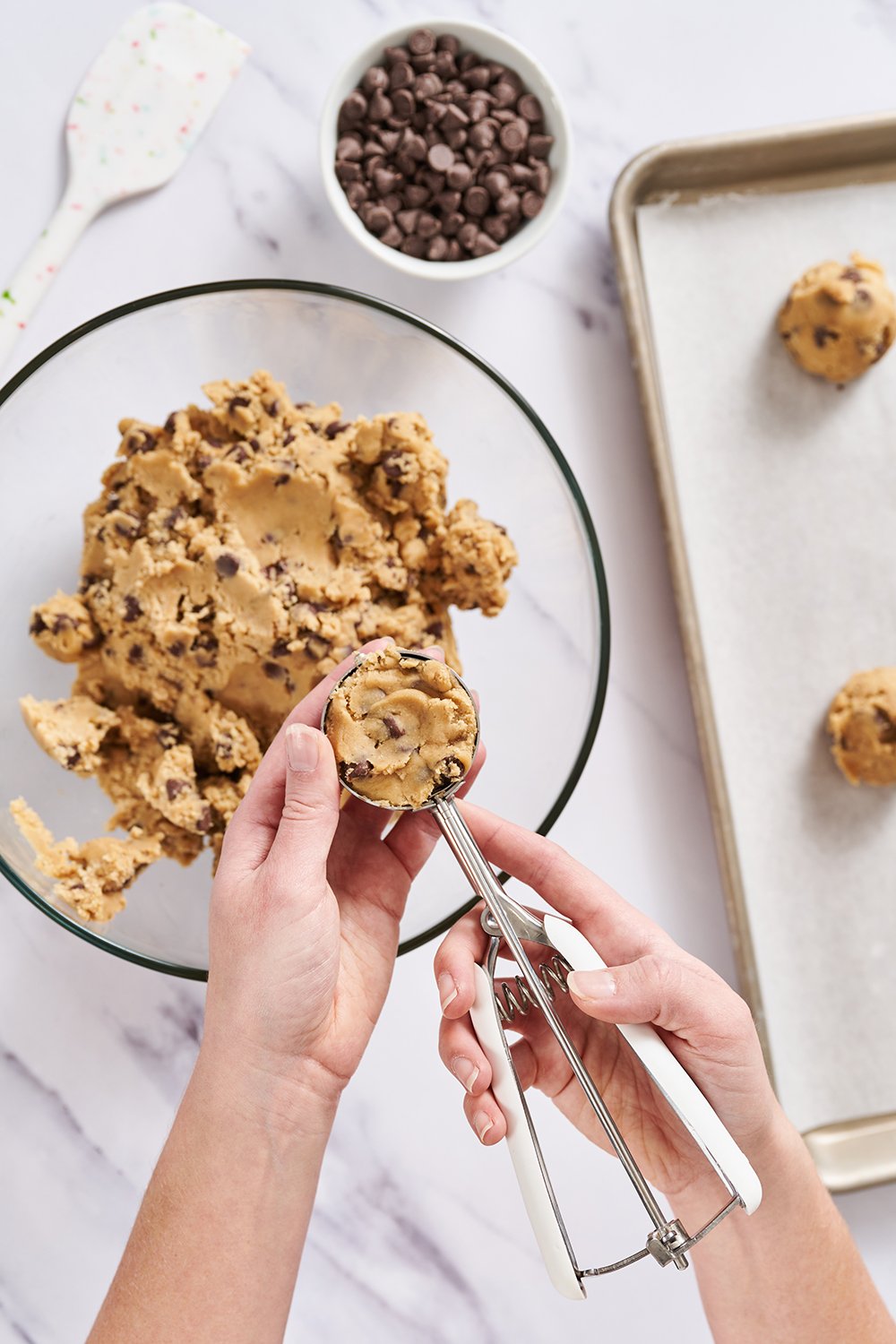
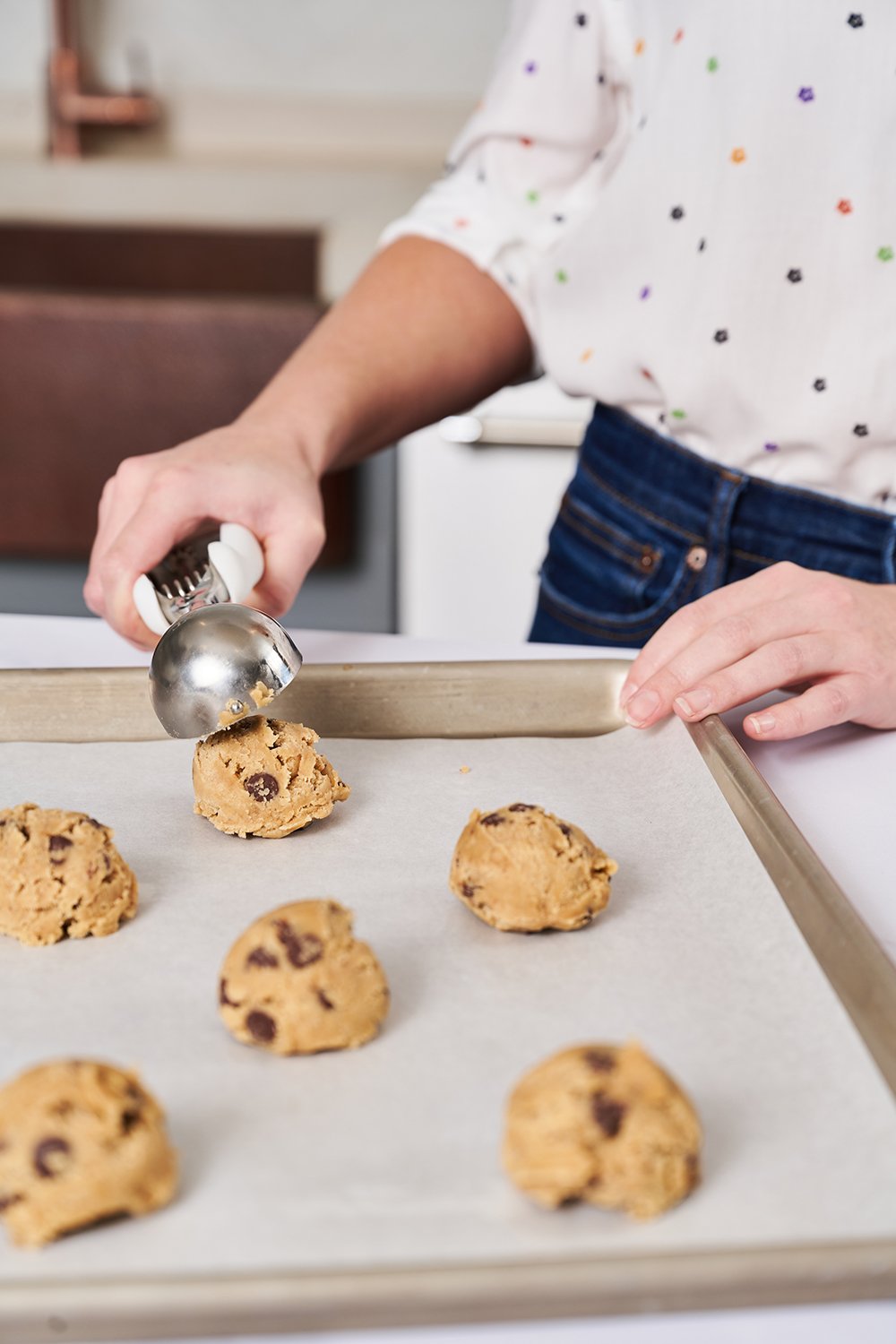
- Scoop with steady pressure. Tap the scoop against the bowl rim to level off.
- Release dough onto the baking sheet. If it sticks, re-prep the scoop and continue.
- Repeat re-prep every 6 to 12 scoops depending on dough tackiness.
This sequence keeps work moving. I time the chilling while preheating the oven to save minutes.

Adjustments for different dough types
Different doughs need different tweaks. The method you choose depends on moisture, butter content, and temperature.
- High butter doughs. Chill first and use a metal scoop oiled lightly. Cold butter firms the dough.
- Sticky or high-sugar doughs. Use silicone scoops or flour the scoop lightly. Sugar can act like glue when warm.
- Chilled dough that's too stiff. Let sit 5 minutes at room temp, then use a warmed scoop. This prevents breakage.
- Drop cookie batters. Use a spoon and wet hands or oil the spoon for a smooth release.
I learned that adaptation beats a single rule. Tweak by feel and note what works.
Troubleshooting: common problems and fixes
If dough still sticks, try these quick fixes. These are practical and fast to test.
- Dough flattens on baking sheet. Use chilled dough and a lower oven rack. That keeps shape.
- Scoop fills but won’t release. Wipe and reapply oil or dip in hot water. A clean barrier restores release.
- Uneven cookie size. Use the same scoop and fill level every time. Rinse or re-oil between batches if needed.
- Dough tears when scooping. Let it rest 5 to 10 minutes. Softer dough needs brief tempering.
I kept notes on my first ten cookie batches. That record helped me spot which fix worked with which recipe.

Personal tips, mistakes, and lessons learned
I have baked hundreds of batches. Here are small lessons that save time and frustration.
- Don’t overflour the scoop. Too much flour changes cookie texture and taste.
- Avoid too much oil. Excess oil can darken edges or make cookies spread.
- Rotate methods by batch. I oil for butter cookies and use hot water for chewy cookies.
- Keep two scoops ready. One prepped, one in use speeds up baking.
- Clean the scoop regularly. Dried dough buildup undermines nonstick tricks.
These tips come from trial and error. They are simple and highly effective.
Quick checklist before you start baking
Use this checklist to prevent sticky scoops and wasted time.
- Chill dough when possible
- Prep scoop with oil, water, or spray
- Have two scoops ready
- Use the right scoop material for the dough
- Reapply barrier every 6 to 12 scoops
Follow the checklist and you will notice smoother batches and cleaner pans.

Frequently Asked Questions of How to keep cookie dough from sticking to the scoop
Why does cookie dough stick to a metal scoop more than silicone?
Metal can form a tight seal with sticky dough. Silicone is slightly textured and less likely to cling, so it often releases dough more easily.
How long should I chill dough to stop sticking?
Chill for 15 to 30 minutes for most doughs. Very soft or buttery dough may need 30 to 60 minutes for best results.
Will oil change my cookie texture or taste?
A light coating of oil on the scoop will not change cookie texture or taste. Too much oil can make cookies spread, so use a small, even coating.
Is it safe to dip the scoop in hot water repeatedly?
Yes, it is safe and effective. Wipe excess water before scooping to avoid adding moisture to the dough.
Can I use flour to stop sticking for all cookies?
Flour can help very wet doughs, but use sparingly. Excess flour can alter cookie texture and flavor.
Conclusion
Keeping cookie dough from sticking to the scoop is simple with a few habits. Chill dough when you can, prep the scoop with oil, water, or spray, and choose the right tool for the job. Test a method, keep notes, and adjust by dough type for the best results. Try one tip in your next batch and see how much faster and neater your baking becomes. If you liked these tips, leave a comment, share your favorite trick, or subscribe for more baking help.