
Attach cabinets to wall studs using a ledger, long screws, a level, and shims for a secure fit.
I’ve installed cabinets in dozens of kitchens and helped many homeowners learn how to mount kitchen cabinets to wall without costly mistakes. This guide walks you step-by-step through planning, tools, safe fastening, troubleshooting, and finishing. Read on for clear, tested methods that make the job straightforward and lasting.
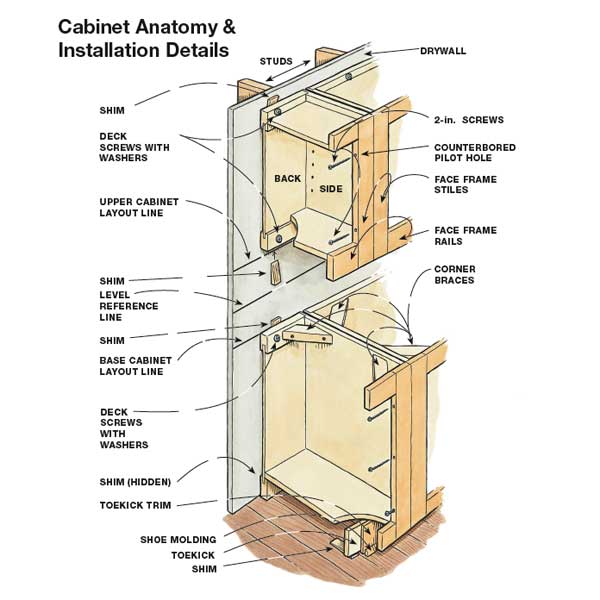
Tools and Materials Needed
Before you begin, gather the right tools and materials. Having everything ready saves time and prevents errors when you mount kitchen cabinets to wall studs.
- Tape measure: for accurate layout and spacing.
- Stud finder: to locate studs for secure attachment.
- Level (4 ft recommended): to get cabinets perfectly straight.
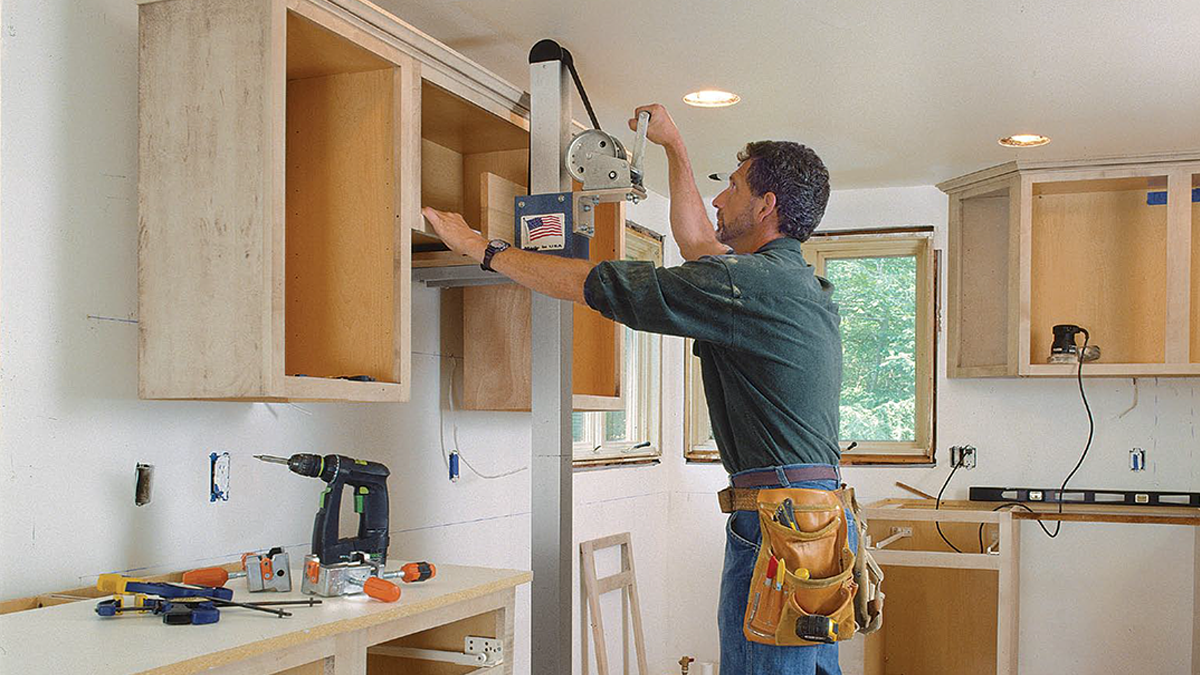
- Clamps or cabinet jacks: to hold cabinets while fastening.
- 3 1/2-inch cabinet screws (or 2 1/2–3 1/2 structural screws): for securing through the cabinet back into studs.
- Ledger board or temporary support: to carry cabinet weight during installation.
- Shims: to adjust gaps and level cabinets.
- Drill, driver bits, and countersink bit: for pilot holes and driving screws.
- Screwdriver and impact driver (optional): for final fastening.
- Pencil and masking tape: for marking and protecting finishes.
- Safety gear: gloves, safety glasses, dust mask.

Preparing the Wall and Cabinets
Good prep makes mounting cabinets safe and fast. This step covers layout, stud checks, and cabinet prep before you mount kitchen cabinets to wall.
- Find studs: Scan the wall with a stud finder and mark stud centers with pencil and tape.
- Mark cabinet height: Standard upper cabinet height is 54 inches from finished floor to bottom of cabinet, or 18 inches above a 36-inch countertop. Adjust for your design.
- Draw a level line: Snap a chalk or pencil line where the bottom of the cabinets will sit.
- Inspect cabinets: Check cabinet backs for factory-reinforced rails. If none, plan to add a plywood strip where you’ll fasten.
- Remove doors and hardware: Lighten the cabinets and protect doors while mounting.
- Plan for obstacles: Note outlets, switches, vents, and pipes. Relocate or use outlet extenders as needed.
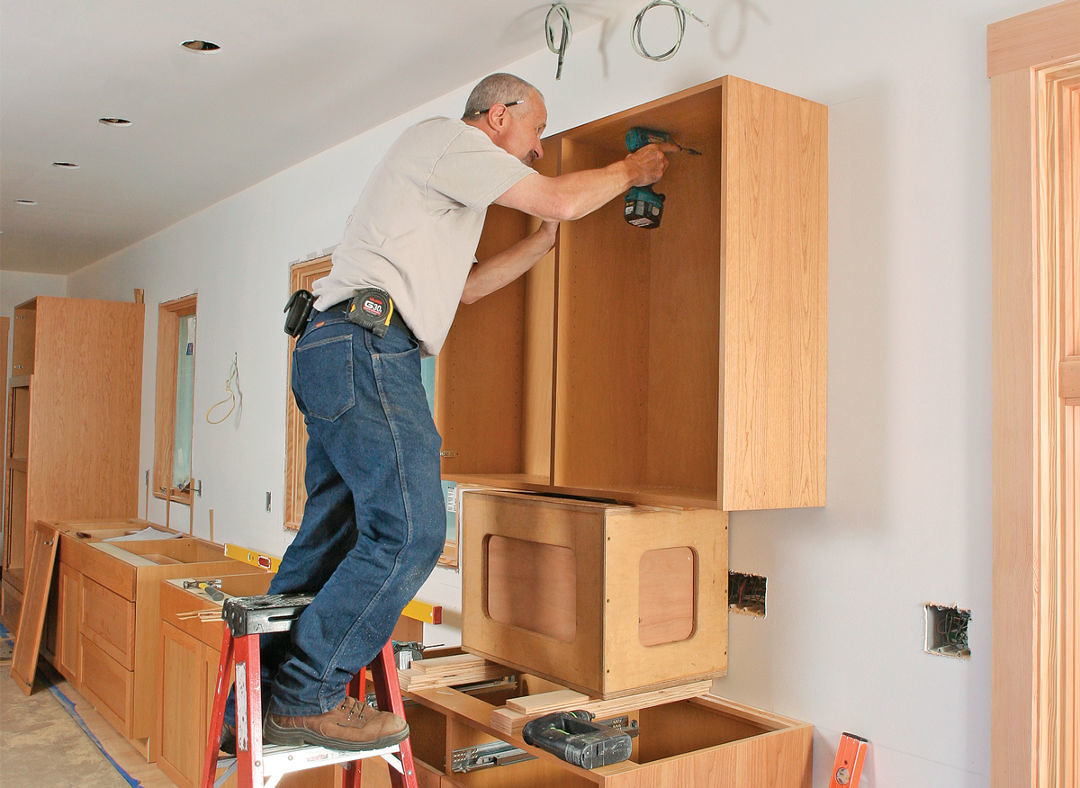
Step-by-Step: How to Mount Kitchen Cabinets to Wall
Follow these clear steps to mount kitchen cabinets to wall safely and accurately. Read each step before you act.
- Install a ledger board
- Screw a temporary ledger to the wall on the level line. The ledger supports the cabinet weight while you fasten.
- Dry-fit cabinets
- Place the first cabinet on the ledger and check fit. Use shims at the top or bottom to adjust.
- Level and clamp
- Level the cabinet front-to-back and side-to-side. Clamp the cabinet to the ledger and adjacent wall if needed.
- Fasten through the cabinet back into studs
- Drill pilot holes through the cabinet back at the stud locations. Drive 3 1/2-inch screws through the cabinet back into the studs. Use at least two screws per stud—top and middle for upper cabinets.
- Join adjacent cabinets
- Butt cabinets together and drive clamping screws through the face frame or use cabinet jigs. Check that doors stay aligned as you tighten.
- Continue the run
- Remove the ledger after the first run is secure, then repeat for the next cabinets. Always re-level and re-check plumb.
- Secure tall and base cabinets
- For tall cabinets, screw at multiple stud points top and bottom. For base cabinets, align them on the floor and fasten through the back into studs.
- Reinstall doors and hardware
- Reattach doors, hinges, and pulls. Adjust hinges for even reveal and gaps.
- Finish with trim and fillers
- Install crown molding, fillers, and end panels for a clean look.
Throughout, keep checking level and plumb. Small errors compound quickly, so fix them immediately. My experience shows stopping to shim and re-level pays off by avoiding misaligned doors later.

Securing Upper Cabinets Safely
Safety and support matter most when you mount kitchen cabinets to wall higher up. Use these safety tips.
- Use a ledger board: It holds the cabinet weight while you position and fasten.
- Fasten to studs: Never rely on drywall alone. If studs miss the cabinet back, add a plywood cleat or rail.
- Use proper screws: Long structural screws that penetrate at least 1 1/2 inches into studs are best.
- Consider a helper: Two people reduce risk and speed alignment.
- Use a torque-limited driver: To avoid over-driving screws and stripping cabinet material.
Troubleshooting and Common Mistakes
Even with care, problems can arise when you mount kitchen cabinets to wall. Here are fixes for frequent issues.
- Cabinets not level
- Use shims behind the cabinet base or top until level. Refasten once plumb.
- Missing studs at required spacing
- Add a horizontal plywood rail screwed to studs, then fasten cabinets to that rail.
- Cabinet backs too thin for screws
- Reinforce with a 3/4-inch plywood strip glued and screwed inside before mounting.
- Doors rubbing or misaligned
- Check cabinet face frames for twist. Adjust hinge plates and use shims to correct gaps.
- Heavy loads causing sag
- Add blocking between studs or a continuous cleat to spread weight.

Finishing Touches and Hardware Installation
After mounting, finish details make kitchens look polished. These steps complete the job.
- Install crown molding and toe kicks to hide gaps.
- Add fillers between cabinets and walls for a tight fit.
- Apply silicone behind backsplashes where cabinets meet wall for water protection.
- Install shelving and preload heavier items into base cabinets, not upper ones.
- Test all doors and drawers for smooth operation and adjust hinges as needed.

Maintenance, Load Limits, and Safety
Knowing limits keeps cabinets safe for years. Follow these simple rules after you mount kitchen cabinets to wall.
- Respect weight limits: Upper cabinets typically support lighter loads—store heavy pots in base cabinets.
- Inspect annually: Check screws and tighten any that have loosened.
- Avoid overloading shelves: Add shelf supports or plywood backing if you store heavy items in uppers.
- Use child-safe latches if you store hazardous items in reachable cabinets.
- For renovations, re-check fastening when walls are opened or changed.
People Also Ask (PAA) — Quick Answers
How long does it take to mount kitchen cabinets to wall?
A single experienced installer can hang a run of upper cabinets in a few hours; full kitchen installs typically take a day or more depending on prep, walls, and trim.
What size screws should I use when mounting cabinets?
Use 3 1/2-inch structural screws or cabinet screws that penetrate at least 1 1/2 inches into studs for a secure hold.
Can I mount cabinets to drywall without studs?
Avoid relying on drywall anchors for full cabinet loads; instead, install a plywood rail or find studs. Anchors alone are not safe for full-size cabinets.
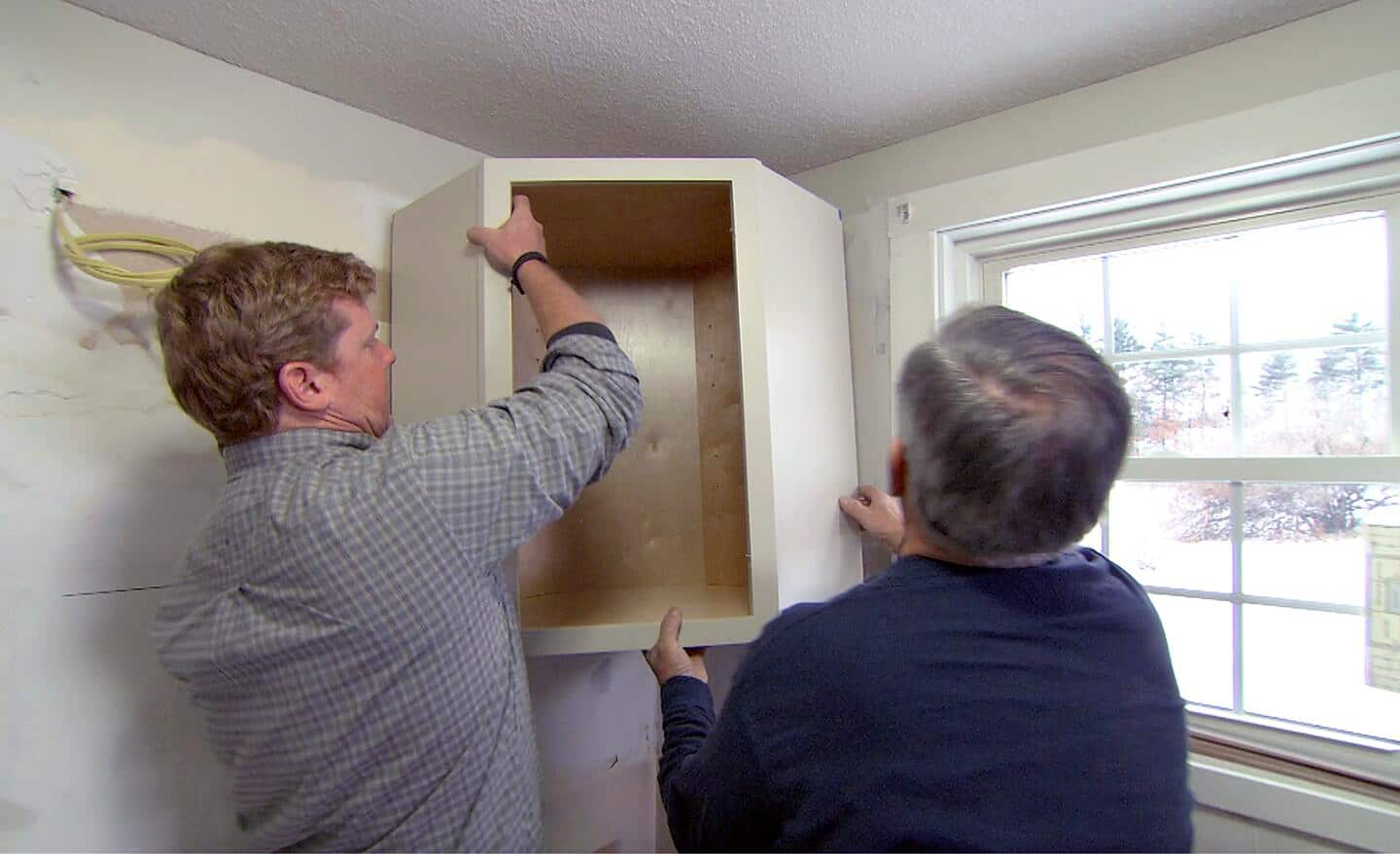
Frequently Asked Questions of how to mount kitchen cabinets to wall
What is the best height to mount upper cabinets?
Standard is 54 inches from the finished floor to the bottom of upper cabinets with a 36-inch base counter, giving 18 inches of backsplash space.
How do I find studs for mounting cabinets?
Use a reliable electronic stud finder, confirm by tapping or drilling a small pilot hole, and mark stud centers with pencil and tape.
Can one person mount kitchen cabinets to wall alone?
A single person can with a strong ledger board, cabinet jack, or clamps, but having a helper makes alignment and safety easier.
How deep should screws go into the stud?
Screws should penetrate at least 1 1/2 inches into solid wood studs for a secure hold.
Do I need to remove cabinet doors before mounting?
Removing doors makes cabinets lighter and easier to maneuver. It also prevents damage and helps with alignment.
Conclusion
Mounting kitchen cabinets to wall is a skill you can learn with the right steps, tools, and patience. Start with accurate layout, secure to studs, use a ledger for support, and check level and plumb continuously. If you take your time and follow these tested steps, your cabinets will look great and stay safe for years. Try one cabinet at a time, learn from small runs, and share your results or questions below — I’d love to help.