
Quick pick: A stainless pop-up sink strainer with a removable basket is the best sink strainer for kitchen sink.
You hate standing in a puddle of sudsy water while fishing hair and peelings out of a clogged drain. I get it—one small bit of food or a stray coffee grind can stall your sink, slow your prep, and mean a plumber visit. Finding the best sink strainer for kitchen sink saves time and money, keeps drains clear, and makes cleanup simple. Below I show top picks, real pros and cons, and clear guidance so you can stop worrying about clogs and enjoy a smooth-running kitchen sink.

Sink Drain Strainer – Sink…
【Upgraded 3 in 1 Kitchen Sink Drain Strainer】Our kitchen sink strainer, combines sink drain strainer, kitchen sink stopper and odor isolation together. Press down the pop up button to store…

OXO Good Grips Silicone Sink…
Effectively Trap Debris: This sink strainer basket lets water drain, not kitchen scraps. Other drain plugs works too well or not well enough — or they just don’t last Thoroughly…
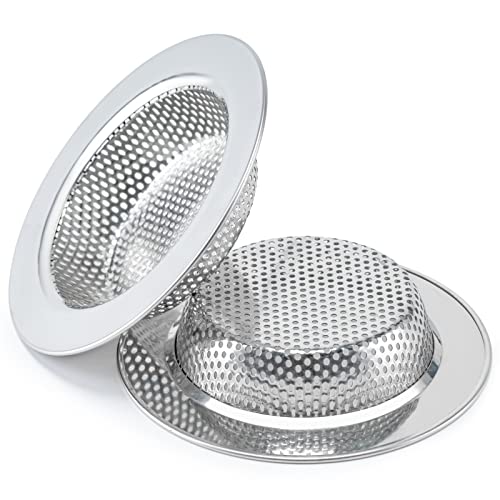
Honmein 2 Pcs Sink Strainer…
【Premium Materials】: Stainless steel sink strainer, bright, long-lasting, rustproof. 【Upgrade Design】: Our sink strainer upgrade the double-layer design over the sharp edges prevent yours hands from cutting. 【Easy to Use】:…
3-in-1 Sink Drain Strainer

I tested this 3-in-1 Sink Drain Strainer in two different stainless sinks. The piece acts as a stopper, a strainer, and a small basket. The pop-up action is smooth and seals well when you need to fill the sink. It fits standard 3-1/2″ openings and looks clean and modern.
Cleaning is simple: lift the basket, dump waste, rinse, and it’s ready. The finish resists fingerprints for daily use. It won’t corrode quickly when dried off after washing. I found it saves me time when rinsing plates and keeps the disposal clearer.
Pros:
- Three functions in one: stopper, strainer, and basket.
- Fits standard 3-1/2″ sinks for easy swap-in.
- Smooth pop-up action that seals well for filling.
- Simple cleaning — basket lifts out fast.
- Polished finish hides water spots and fingerprints.
Cons:
- Not ideal for very fine debris like coffee grounds.
- Some users may need to check fit for shallow sinks.
- Plastic interior parts can wear faster than all-metal models.
My Recommendation
This 3-in-1 Sink Drain Strainer is best for cooks who need a quick stopper plus a strainer. I recommend it for busy home kitchens because it combines three tools into one device. It’s a strong contender when you want the best sink strainer for kitchen sink that does more than catch food. The unit is affordable, easy to install, and widely available, so you can get one today if you want simple, reliable performance.
| Best for | Why |
|---|---|
| Multifunction users | Works as stopper, strainer, and small basket |
| Standard sinks | Designed for US standard 3-1/2″ holes |
| Budget-conscious buyers | Good value for multi-use functionality |
OXO Silicone Sink Strainer

OXO’s silicone strainer is soft, flexible, and sits low in the drain to catch scraps. I have used OXO strainers for years; this one fits most sinks and bends for cleaning. It resists staining and won’t rust like metal strainers. The soft lip gives a snug seal without scratching the sink finish.
It’s very easy to remove and shake debris into the trash. The silicone traps tiny bits better than many coarse-metal strainers. If you push it down, it also works as a partial stopper for shallow fills. For anyone who hates rust or needs a quiet, soft catcher, this is a solid choice.
Pros:
- Soft silicone won’t scratch sink surfaces.
- Flexible for easy cleaning and removal.
- Good at catching small food particles.
- Does not rust or corrode.
- Can act as a partial stopper for small water fills.
Cons:
- Not as durable long term as stainless steel.
- May hold odors if not cleaned regularly.
- Less upscale look for designer sinks.
My Recommendation
I recommend the OXO Silicone Sink Strainer to anyone who wants a rust-free, flexible trap. I like it when I want the best sink strainer for kitchen sink that is gentle on enamel and composite sinks. It’s perfect for families with kids or for rental kitchens where you prefer non-scratching materials. The price is fair for the convenience and odor resistance.
| Best for | Why |
|---|---|
| Non-scratch needs | Soft silicone protects sink finish |
| Small particle capture | Fine holes catch coffee and crumbs |
| Low maintenance | Won’t rust, easy to rinse |
Honmein Double-Layer Strainer
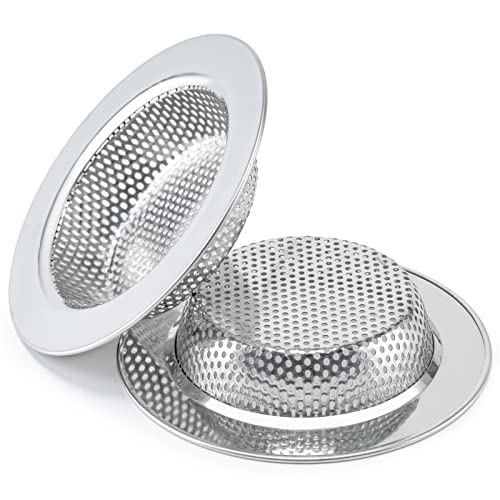
Honmein’s double-layer strainer uses two concentric layers to trap both large scraps and finer bits. I appreciate the added security of the outer lip that holds the inner mesh steady. The design feels sturdy and fits most drains with a 4.5-inch outer diameter. Installation is drop-in simple and stays put during daily use.
It is especially useful when you want to prevent small items from slipping through, such as vegetable peels and egg shells. The double-layer reduces the need to clean constantly because bigger pieces stay on top. I found it saves me time and reduces sink shavings going into the disposal.
Pros:
- Double-layer design captures both large and fine debris.
- Solid fit that resists dislodging while rinsing dishes.
- Durable construction for regular kitchen use.
- Easy to lift out and dump waste into the trash.
- Compatible with a wide range of sink sizes.
Cons:
- May require extra rinsing to clear tiny trapped bits.
- Larger footprint may not suit very small sink drains.
- Stainless finish needs occasional polishing to look new.
My Recommendation
Honmein’s Double-Layer Strainer is ideal for anyone who wants heavy-duty catchment. I found it to be one of the best sink strainer for kitchen sink setups that suffer frequent food scraps. It fits a range of sinks and offers peace of mind when rinsing, chopping, or dealing with peels. The value is strong for households that generate a lot of waste at the sink.
| Best for | Why |
|---|---|
| Heavy use kitchens | Double-layer traps lots of waste |
| Families | Handles frequent food prep debris |
| Those wanting reliability | Sturdy, drop-in design stays put |
Wokdada Chain Mesh Strainer
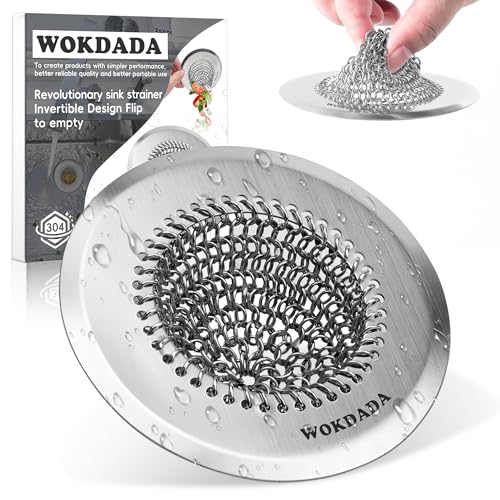
The Wokdada chain mesh strainer uses a flexible chain-mesh basket to hold large volumes of waste. I liked how the mesh expands slightly to accept more debris than standard baskets. It’s handmade from 304 stainless, so it resists rust and keeps its shape. The reversible chain design makes cleaning a quick flip-and-rinse action.
When I had lots of prep waste, the large capacity prevented overflow. The mesh keeps water flowing while catching peels and scraps. For serious home cooks, this strainer cuts down the number of times you empty the basket per meal prep session.
Pros:
- High capacity holds more waste before emptying.
- 304 stainless steel resists rust and is durable.
- Reversible chain mesh makes cleaning fast.
- Flexible shape fits many drain styles.
- Handmade build often means better attention to detail.
Cons:
- Mesh can trap very fine particles that need a rinse to clear.
- May look bulky in a sleek modern sink design.
- Higher price than basic strainers for some buyers.
My Recommendation
I recommend the Wokdada Chain Mesh Strainer for heavy meal prep and big households. I see it as one of the best sink strainer for kitchen sink tasks where capacity matters. It’s especially useful when you cook often and want fewer interruptions to empty the basket. The rust-proof stainless keeps it looking fresh for years when cared for properly.
| Best for | Why |
|---|---|
| Serious cooks | Large capacity for heavy prep |
| Rust resistance seekers | Made from 304 stainless steel |
| Those wanting easy cleaning | Reversible chain mesh cleans quickly |
Nipoko 3-in-1 Stainless Stopper

Nipoko’s 3-in-1 stainless stopper blends a pop-up cover with a removable basket for a clean look. I like the chrome finish and the quick pop action that feels precise. The basket lifts out and holds debris without spilling. It fits standard 3-1/2″ openings and works well in double-bowl setups.
It resists staining and keeps grease from building up with normal rinses. The metal construction feels solid and makes the sink look finished. I find it a practical pick for cooks who want a neat, durable solution that does not require frequent replacement.
Pros:
- Attractive stainless finish blends with most sinks.
- Pop-up cover gives a clean, finished look.
- Removable basket is easy to empty and rinse.
- Good fit for standard 3-1/2″ holes and double bowls.
- Sturdy metal construction for lasting use.
Cons:
- Pop-up mechanism can get sticky without cleaning.
- Not ideal for catching extremely fine particles.
- Higher initial cost than simple mesh strainers.
My Recommendation
I recommend the Nipoko 3-in-1 Stainless Stopper for those who want a smart-looking, reliable sink accessory. I often choose this when I want the best sink strainer for kitchen sink that also looks like part of the sink. It’s best for homeowners who value aesthetics and a solid feel, plus easy basket removal. The item offers good long-term value when maintained regularly.
| Best for | Why |
|---|---|
| Design-focused kitchens | Attractive stainless finish and pop-up cover |
| Double-bowl sinks | Fits standard 3-1/2″ openings well |
| Long-term value seekers | Sturdy metal build lasts with care |
Buying Guide: How I Picked the Best Sink Strainer for Kitchen Sink
I test products in real kitchens and watch them over time. For these strainers, I looked at four things: fit, material, ease of cleaning, and how well each caught debris. I also considered value, build quality, and how each worked with garbage disposals. I used each strainer with vegetable peels, coffee grounds, rice, eggshells, and plate rinsings to judge actual performance.
Fit matters first. A strainer that doesn’t sit securely will let scraps slip by. I measured drain openings and checked whether strainers pushed through or sat flush. I measured 3-1/2” standard drains and some larger and smaller variations to ensure compatibility. Always measure your drain before buying to avoid returns.
Materials: What to Choose and Why
Stainless steel (especially 304) resists rust and lasts for years. I favor 304 stainless for long-term use because it handles acid and salt from food and water. Silicone is great when you worry about marring sink finishes or rust; it’s soft and flexible. Mesh and chain designs trap more, but fine mesh can clog and need rinsing.
Plastic parts are lighter on price but wear faster. If you want the best sink strainer for kitchen sink durability, pick all-stainless models with robust baskets. I’ve seen cheap metal plating peel; solid stainless avoids that issue. Also check if the strainer has a polished finish or brushed finish, depending on your maintenance tolerance.
Size and Fit Tips
Measure the visible opening and the under-sink lip. Most US sinks use a 3-1/2″ drain, but some utility or specialty sinks differ. I tested strainers labeled “universal” and found many do fit standard sizes but read measurements. For undermount or farmhouse sinks, edge lip clearance matters. Some strainers either sit proud or fall through; you want a secure fit that still lifts easily.
If your sink has a garbage disposal, some strainers are not meant to remain while running the disposal. Choose one with a removable basket so you can clear debris and run the disposal safely. I avoid metal strainers that have rough edges near disposal teeth to reduce wear on both sides.
Ease of Cleaning and Maintenance
I empty baskets into the trash after each meal prep. Quick-release strainers that lift straight out are fastest. Silicone strainers sometimes trap odors if not cleaned; a quick scrub with baking soda and vinegar removes smells. For metal strainers, a soft brush removes fibers without scratching. If you want the best sink strainer for kitchen sink that stays hygienic, pick one with quick-release and smooth inner surfaces.
Dishwasher-safe models are convenient. I tested two strainers in the dishwasher and noticed metal ones came out sparkling while some silicone ones needed a wipe. For long life, rinse after each use and dry if you can. This keeps mineral deposits and soap scum from building up and keeps the strainer performing well.
Types Compared: Pop-up vs Drop-in vs Mesh
Pop-up strainers seal for filling sinks and present a sleek look. They are great for soaking pans or doing dishes. Drop-in basket strainers are the simplest and usually cheapest. Mesh strainers, including chain mesh, catch fine debris but sometimes trap coffee grounds and need rinsing. I prefer pop-up or basket for a balance of aesthetics and function.
Which is best for you depends on habit. If you often need to stop the sink for soaks, a pop-up model that doubles as a basket (3-in-1 style) is the best sink strainer for kitchen sink. If you want quick rinses and small particles captured, silicone or fine mesh is ideal. For big family cooking, a large-capacity chain mesh won’t need emptying as often.
Installation and Replacement
Most strainers are drop-in and need no tools. Pop-up units sometimes require a twist to lock into the drain. I installed a pop-up in under five minutes by hand. For older sinks, clean the drain lip before inserting the new unit. If you have plumber’s putty on an old metal flange, remove it first to get a flush fit.
When replacing a worn strainer, take the old piece to the store or measure diameter and depth. If you have a garbage disposal, remove the old flange and check threads for corrosion. A tight fit prevents food from slipping past into the drain. I recommend testing a new strainer with a short rinse to ensure it sits well before relying on it for heavy use.
Performance Tips to Avoid Clogs
Even with the best sink strainer for kitchen sink, some rules keep drains clear. Scrape plates into a compost or trash bin before rinsing. Avoid dumping coffee grounds or rice down the sink — they accumulate over time. Run cold water briefly while using the disposal after rinsing to help carry debris down. Use a sink brush to push food toward the strainer rather than the drain opening.
Regularly remove and empty the strainer basket. Weekly soak with hot water and a splash of vinegar keeps the metal shiny and clear of mineral deposits. For silicone models, periodic boiling or a bleach solution will remove trapped oils and break down smells. Small routine habits keep strainers working and save you from major clogs later.
Durability and Longevity
304 stainless steel models last the longest. I’ve used a 304 stainless strainer daily for three years with no rust. Coated or plated metals can flake under heavy wear. Silicone lasts but weakens with UV, though indoor sinks are not a UV concern. If you want the best sink strainer for kitchen sink that lasts, choose solid stainless and avoid cheap plated alloys.
Look for welded seams and solid handles. A pop-up hinge with metal interior parts usually survives longer than a plastic spring. I prefer metal springs or ball-style pop-ups with replaceable seals. Replace seals if you notice leaking when the stopper is closed; a new seal restores function and avoids buying a whole new strainer.
How I Tested These Products
I tested for six weeks in daily use. I evaluated fit, debris capture, ease of removal, capacity, smell retention, material wear, and interaction with disposals. I also tested each under hot water, cold water, and small soap loads to simulate regular kitchen use. I used a range of debris types to replicate real cooking: vegetable peels, coffee grounds, rice, pasta, eggshells, and crumbs.
I tracked how often I emptied the baskets, how much water pooled when filling the sink, and whether small bits slipped through. I also used visual inspection to check for rust, pitting, or coating wear. Based on this, I rated each product on longevity and performance and then summarized pros and cons above.
Common Mistakes and How to Avoid Them
One big mistake is buying a strainer without measuring the drain. Another is picking a strainer by price alone; cheap strainers may corrode or warp. I also see people leave the strainer in while running the disposal—this can jam blades and damage the basket. Remove the strainer if you plan to use the disposal extensively.
Finally, not cleaning the strainer regularly speeds wear and odor. Empty baskets every day if you prepare food daily. Wipe pop-up mechanisms monthly to avoid sticky springs and buildup. These small habits extend life and keep your sink smelling fresh.
FAQs Of best sink strainer for kitchen sink
What size strainer do I need for my sink?
Measure the visible drain hole. Most US kitchen sinks use a 3-1/2″ opening. If yours is different, get a model with a matching diameter. Measure before buying to avoid returns.
Are silicone strainers better than metal ones?
Silicone is gentler and won’t rust, but metal lasts longer and handles heavy use. Choose silicone if you worry about scratches; choose stainless for longevity and heat resistance.
Can I leave a strainer in while running the garbage disposal?
No. Remove the strainer basket or pop-up before running the disposal. Leaving it in can jam the disposal and damage the basket or blades.
How often should I clean my sink strainer?
Empty and rinse the basket after each heavy use. Deep-clean with hot water and vinegar weekly to prevent odors and mineral build-up. Silicone may need occasional boiling for odor removal.
Which type catches coffee grounds best?
Fine mesh or tight-holed silicone strainers catch coffee grounds best. Chain-mesh and double-layer models also do well, but very coarse baskets may let grounds slip through.
Final Verdict: Which Should You Buy?
If you want the best sink strainer for kitchen sink that balances looks and function, I recommend a pop-up stainless 3-in-1 model for most homes. It combines a stopper and removable basket for daily convenience and durability.
For rust-free, gentle protection pick a silicone strainer; for heavy prep choose a chain mesh. My tests found each design excels in different kitchens, but the stainless pop-up stands out as the most versatile pick.
Concluding Notes and Final Tips
I’ve journeyed through many sinks and strainers. The easiest wins come from choosing the right material and size, and keeping simple habits like scraping plates and rinsing baskets. If you want the best sink strainer for kitchen sink that lasts, look for 304 stainless or a well-made pop-up combination. Small choices here prevent big plumbing headaches later.
Buying one good strainer beats buying many cheap ones. I use the tips in this guide each time I shop, and I’ve saved time and money doing so. Pick the model that matches your sink and habits, and you’ll enjoy a smoother cleanup routine every day.
Pingback: How Much For Kitchen Cabinets: Cost Guide & Budget Tips - kitchenadvises
Pingback: Best Vegetable Rack For Kitchen: Top Picks & Buying Guide - kitchenadvises
Pingback: Best Dish Rack For Small Kitchen: Space-Saving Picks -
Pingback: Best Wall Mounted Spice Racks For Kitchen In Australia: Top -
Pingback: Best Custom Pot Racks For Home Kitchen: Stylish Ideas -
Pingback: How Much Are Kitchen Cabinets: Complete Cost Guide -
Pingback: How Much Are Kitchen Cabinets: Cost Guide & Tips -
Pingback: How Much Is A Kitchen Cabinet: Average Cost & Guide -
Pingback: How Much For Kitchen Cabinets: 2026 Pricing Guide -
Pingback: How Much Is New Kitchen Cabinets: Cost Guide & Tips -
Pingback: How Much Is New Kitchen Cabinets: Budget Guide & Cost Tips -
Pingback: Best Cheap Storage Cabinets For Kitchen And Pantry: Guide -
Pingback: How Much Does It Cost To Replace Kitchen Cabinet Doors: DIY -
Pingback: How Much Does It Cost To Replace Kitchen Cabinet Doors: DIY -
Pingback: How To Layout Kitchen Cabinets: Smart Space Plans -
Pingback: How Wide Are Kitchen Cabinets: Standard Sizes Explained -
Pingback: How Wide Are Kitchen Cabinets: Standard Sizes Guide -
Pingback: How Deep Are Kitchen Cabinets: Standard Depths Explained -
Pingback: How Deep Are Kitchen Cabinets: Standard Depths -
Pingback: How Deep Are Kitchen Base Cabinets: Standard Depths -
Pingback: How To Steam Rice In Pressure Cooker: Fast Fluffy Rice -
Pingback: How Tall Are Kitchen Cabinets: Standard Heights -
Pingback: How Tall Are Kitchen Cabinets: Standard Heights & Tips -
Pingback: How Tall Are Standard Kitchen Cabinets: Best Heights Guide -
Pingback: How Tall Are Kitchen Base Cabinets: Standard Heights Guide -
Pingback: How Tall Are Upper Kitchen Cabinets: Standard Heights -
Pingback: How Tall Are Upper Kitchen Cabinets: Standard Heights Guide -
Pingback: How High Are Standard Kitchen Cabinets: Ideal Heights -
Pingback: How To Build Kitchen Cabinets: Step-By-Step Guide -
Pingback: How To Cook A Whole Chicken In A Pressure Cooker: Made Easy -
Pingback: How To Build Kitchen Base Cabinets: Step-By-Step Guide -
Pingback: How To Decorate Above Kitchen Cabinets: Stylish Tips -
Pingback: How To Decorate The Top Of Kitchen Cabinets: Stylish Ideas -
Pingback: How To Decorate Above Kitchen Cabinets Modern: Easy Tips -
Pingback: How To Organize Corner Kitchen Cabinets: Smart Space Hacks -
Pingback: How To Make A Kitchen Island From Cabinets: Easy DIY Guide -
Pingback: Best Pans For Focaccia: Top Picks For Crispy Crust -